
by admin | Oct 7, 2026 | Art & Design
In a world that constantly urges rapid decisions and quick fixes, it is easy to fall into the habit of focusing on isolated parts rather than the broader picture. This tendency to view problems or situations as discrete objects rather than interconnected systems limits our understanding and response to reality. By adopting a shift in perspective—seeing systems instead of objects—we open ourselves to deeper insights and more effective solutions across various fields, from business and ecology to personal relationships and societal structures.
At its core, seeing systems involves recognizing that elements do not exist in isolation but are part of a larger whole. Instead of perceiving a single object or event as an isolated entity, a systems perspective acknowledges the web of relationships, feedback loops, and dynamic interactions that shape the behavior of the entire system. This mindset is essential because many challenges we face are complex and multifaceted, influenced by factors that extend beyond the immediate zone of focus. When we understand the interconnectedness of these parts, we can better predict consequences and design interventions that address root causes rather than superficial symptoms.
Consider, for example, how a business might traditionally view a drop in sales as a standalone issue—an object that can be fixed with a particular promotional campaign or a pricing adjustment. However, a systems approach delves deeper into the cause-effect network affecting sales: customer satisfaction, product quality, supply chain efficiency, market trends, and competitor behavior. Each of these components influences the others, and changes in one can cascade through the entire system. By recognizing these links, businesses can identify leverage points that produce far-reaching improvements, rather than merely addressing surface problems.
This approach also applies profoundly to ecological concerns. Viewing a tree as a solitary organism ignores its role within a broader ecosystem. The tree interacts with soil microbes, fungi, insects, other plants, and animals, creating a complex network of dependencies. Ecologists who study these interactions understand that the health of an ecosystem depends on maintaining system balance and diversity. Conservation efforts based on this understanding target the system’s integrity rather than focusing solely on single species, leading to more sustainable outcomes.
Systems thinking fosters a mindset that appreciates complexity and nuance. This can be especially transformative in societal and organizational contexts where problems such as inequality, poverty, or workplace dysfunction are often viewed as isolated issues. For instance, poverty is not merely about a lack of income but is shaped by educational opportunities, healthcare access, community resources, social policies, and cultural norms. When these components are studied as parts of a larger system, solutions can be crafted to tackle multiple influencing factors simultaneously, thereby creating more resilient social structures.
The ability to see systems rather than just objects requires a shift in cognitive framing. It invites us to ask broader questions such as “How are these elements connected?” and “What patterns emerge from their interactions?” Rather than seeking linear cause-and-effect explanations, systems thinking embraces complexity and feedback loops, including unintended consequences that ripple through the system. This perspective encourages humility and openness, recognizing that simple fixes may be ineffective or even harmful when applied without regard for the system’s broader dynamics.
In the realm of education, this shift is equally vital. Traditional teaching methods often compartmentalize subjects and knowledge into distinct categories, encouraging students to memorize facts without connecting ideas across disciplines. However, complex global challenges like climate change, technological ethics, or public health crises cannot be solved with siloed knowledge. Educators who emphasize systems thinking help learners synthesize information from multiple fields, develop critical thinking skills, and understand how diverse forces interact in shaping outcomes.
Leadership practice also benefits immensely from this outlook. Leaders who see organizations as complex systems understand the importance of fostering communication flows, nurturing relationships, and paying attention to culture and values alongside financial metrics. They are more adept at anticipating the indirect effects of decisions and more likely to build resilient teams that adapt fluidly to change. This holistic view encourages a balance of short-term and long-term considerations, promoting sustainable success rather than temporary gains.
Technology and innovation, too, can be harnessed more effectively when embedded within a systems framework. Innovations often ripple through social, economic, and environmental domains. Introducing a new technology without considering its impact on existing infrastructures, user behaviors, and ecological footprints may lead to problems like digital divides, social disruption, or environmental degradation. Systems thinking pushes innovators to design with awareness of such complexities, ultimately leading to more responsible and inclusive advancements.
The practice of seeing systems instead of objects also nurtures empathy and interconnectedness. When people appreciate that their actions affect others—sometimes in far-reaching and unseen ways—it encourages accountability and collaborative problem-solving. This mindset aligns closely with principles found in indigenous worldviews and many spiritual traditions, which emphasize harmony with nature and community balance. By linking individual actions to collective well-being, systems thinking offers a powerful antidote to isolation and fragmented perspectives.
Deep systemic awareness enables more meaningful engagement with the fast-evolving challenges of the modern era. The accelerating pace of change in fields such as climate science, economics, and healthcare demands a flexible and integrative cognitive toolkit. Without this, policies and strategies risk being reactionary and piecemeal. Conversely, a systems approach nurtures adaptability and resilience, identifying patterns of emergent behavior and allowing for proactive, anticipatory planning.
The cognitive shift involved in adopting systems thinking can be cultivated through intentional practices. Mindfulness and reflective inquiry encourage individuals to step back from immediate details and observe broader patterns and interactions. Visual tools like causal loop diagrams or system maps can help make visible the invisible connections within complex networks. Collaborative dialogue that values diverse perspectives can further enrich understanding by bringing multiple dimensions of a system into focus.
Nevertheless, embracing this way of thinking is not without challenges. It requires tolerance for ambiguity and uncertainty, as systems are dynamic and often unpredictable. It can be uncomfortable to relinquish the illusion of control that comes with linear, object-focused thinking. Additionally, systems are vast and sometimes overwhelming, prompting a need for strategic focus on parts of the system where interventions are most effective. Leaders and practitioners must balance the depth of systemic insight with practical action, making iterative adjustments as new information emerges.
Despite these obstacles, the rewards of embracing systemic perspectives far outweigh the risks. Domains that have integrated systems thinking, such as public health and sustainability, demonstrate greater success in addressing complicated problems. For example, public health interventions that consider social determinants of health—including economic status, education, and environment—tend to produce better outcomes than those focusing narrowly on biomedical factors alone. Similarly, sustainable development policies that engage with social equity, economic viability, and environmental stewardship together are more likely to endure.
Ultimately, shifting from an object-centered worldview to one that sees dynamic, interconnected systems represents a profound evolution in how we perceive and engage with the world. It entails moving beyond reductionism and embracing complexity with curiosity, creativity, and a willingness to learn continuously. By doing so, humanity can cultivate wiser decisions, forge deeper relationships, and create healthier, more adaptive societies and environments.
This systems-oriented mindset stands as a vital paradigm for the 21st century, inviting us to look beyond immediate objects and fragmented issues toward integrated wholes. It calls for an expansion of vision—one that recognizes that no object exists in isolation, but always within a network of relations that animate and shape its existence. By learning to see and act within these systems, individuals and institutions alike can contribute more meaningfully to a sustainable and equitable future.

by admin | Oct 6, 2026 | Art & Design
Creativity rarely follows a straight path. Instead, it often takes unexpected turns, weaving through a complex web of thoughts and inspirations that do not adhere to a linear progression. This way of thinking defies conventional problem-solving approaches, which typically prioritize sequential logic and orderly steps. Embracing this alternative approach allows for a richer exploration of ideas, unlocking novel connections that might otherwise remain hidden. This concept, known as non-linear ideation, reshapes the way individuals and teams generate and develop innovative solutions.
Non-linear ideation challenges the traditional mindset that creativity and problem-solving must proceed in a step-by-step manner. Rather than starting from a fixed premise and moving logically towards a single solution, non-linear processes encourage jumping between related and unrelated concepts, drawing connections that may initially seem incongruous. This approach benefits creatively demanding fields such as design, entrepreneurship, writing, and research, where unique solutions often emerge from the interplay of diverse perspectives and seemingly unrelated stimuli.
One of the fundamental characteristics of non-linear ideation is its reliance on associative thinking—the ability to link ideas across different contexts and domains. Unlike linear reasoning, which follows a cause-and-effect trajectory, associative thinking acts more like a network, where nodes (ideas) can connect in multiple directions. This cognitive flexibility enables the discovery of metaphorical or lateral relationships that enrich the creative process. For example, solving a technological problem might draw inspiration from nature, art, or history, leveraging analogies that broaden the horizon of possible outcomes.
This approach is particularly effective in overcoming common barriers to creativity. When individuals attempt to generate ideas in a linear fashion, they often become constrained by existing frameworks, mental models, or a narrow focus on the task at hand. This rigidity can lead to “functional fixedness,” a phenomenon where one cannot see alternative uses or perspectives. In contrast, non-linear ideation encourages stepping outside conventional boundaries. By embracing randomness, serendipity, and even chaos, it fosters an environment where breakthrough insights can flourish.
Another compelling advantage of this process is its ability to accommodate complexity and ambiguity—two elements that are increasingly prevalent in today’s rapidly changing world. Linear thinking struggles when faced with multifaceted problems that lack clear parameters or when the path to a solution is obscured. Non-linear ideation thrives in such settings by allowing the thinker to explore multiple possibilities concurrently and revisit earlier ideas with new understanding. This iterative loop increases the potential for discovery by continuously refining and re-contextualizing the ideation process.
Practically, non-linear ideation can be facilitated through several techniques that encourage free association and divergent thinking. Mind mapping is one such method, allowing ideas to radiate from a central concept in multiple directions, creating a visual web of thoughts. Brainstorming sessions that discourage immediate judgment can also promote a non-linear flow of ideas, where the goal is to proliferate possibilities rather than converge prematurely. Other methods include improv exercises, random word triggers, or combining disparate concepts, all aimed at disrupting linear thought patterns and opening the mind to alternative pathways.
In addition to individual creativity, non-linear ideation enriches collaborative environments by inviting diverse viewpoints and interdisciplinary engagement. When team members bring different backgrounds and ways of thinking, the ideation process becomes a dynamic interplay that resists linear constraints. This diversity fosters an atmosphere where ideas are not forced into a single narrative but are allowed to coexist, evolve, and meld in unexpected ways. Such interaction often leads to hybrid solutions that are more robust and innovative than those produced by homogenous groups following a linear sequence.
The evolution of technology has also played a pivotal role in enabling non-linear ideation. Digital tools provide platforms for nonlinear exploration through visualizations, simulations, and real-time collaboration. Software that allows users to link documents, images, and concepts flexibly supports the associative network model of thinking. Moreover, AI-enhanced brainstorming assistants can introduce randomness and pattern recognition that stimulate the generation of connections humans might overlook. These technological advancements amplify the potential of non-linear ideation by making the process more accessible and computationally supported.
In educational settings, fostering non-linear ideation equips students with critical thinking skills suited to the complexities of the modern world. Traditional education systems often emphasize linear progression, focusing on mastering discrete facts and stepwise problem-solving. However, real-world challenges frequently demand adaptability, creativity, and the synthesis of disparate knowledge bodies. Incorporating activities that encourage open-ended thinking, experimentation, and interdisciplinary integration prepares learners to navigate uncertainty and contribute innovatively in their future professions.
Moreover, the cognitive science behind non-linear ideation reveals interesting insights about how the brain synthesizes information. Studies suggest that creative thought engages both hemispheres and various neural networks, often outside the deliberate focus of conscious awareness. Dreams, daydreams, and spontaneous insights represent moments where the mind operates beyond linear constraints, blending memories and experiences in fluid ways. Encouraging these states through relaxation, meditation, or playful distraction can enhance the capacity for non-linear ideation by loosening cognitive rigidity.
Despite its many benefits, non-linear ideation poses challenges, especially in contexts where decisions require clarity and precision. The open-ended and exploratory nature of this approach can lead to a sprawling array of ideas that make it difficult to identify actionable solutions. This potential for overload means that non-linear ideation must eventually be balanced with processes that refine, select, and implement ideas. Effective creativity management involves oscillating between divergent exploration and convergent evaluation to harness the full spectrum of innovation.
Understanding how to transition between non-linear ideation and linear execution is critical for maximizing creative output. While the generative phase benefits from fluidity and openness, the development phase requires structure and discipline to bring ideas to fruition. Techniques such as prototyping, testing, and iteration bridge these two modes, ensuring that the best ideas are not lost in the noise but are effectively translated into practical solutions. This balance highlights the complementary nature of linear and non-linear thinking, rather than positioning them as mutually exclusive.
In business and entrepreneurship, fostering an environment that values non-linear ideation can lead to more resilient and adaptable organizations. Companies that encourage employees to think laterally and explore unconventional ideas often enjoy a competitive edge by anticipating trends and responding nimbly to change. This culture of innovation requires leadership that tolerates ambiguity, embraces failure as learning, and provides spaces where diverse ideas can interconnect without premature judgment. By doing so, organizations unlock the hidden potential within their teams and fuel ongoing growth.
On a personal level, cultivating the habit of non-linear ideation empowers individuals to solve problems creatively and enrich their intellectual experiences. Practices such as journaling, engaging with art or literature, and exploring new disciplines can stimulate associative thinking. It also involves a mindset shift from seeking quick answers to valuing curiosity, patience, and openness to chance discoveries. These qualities not only enhance creativity but also foster resilience in the face of uncertainty and complexity.
The impact of non-linear ideation extends beyond creativity into areas such as innovation policy, urban planning, and social change. Complex societal issues resist linear solutions due to their scale and interconnectedness. Employing non-linear ideation allows stakeholders to envision alternatives, reframe problems, and mobilize collective intelligence in novel ways. It facilitates the weaving together of multiple narratives and interests, creating pathways to solutions that are adaptive, inclusive, and sustainable.
Ultimately, this approach to thinking serves as a counterbalance to a world that increasingly values speed and efficiency. While linear processes are indispensable for execution and clarity, non-linear ideation nurtures the depth and breadth of insight necessary to address the multifaceted challenges we face. By embracing unpredictability and the richness of associative thought, individuals and organizations alike can unlock untapped reservoirs of creativity that propel progress.
Non-linear ideation transforms the creative landscape by inviting complexity, plurality, and openness into the generative process. It challenges entrenched patterns and invites an interplay between chance and intentionality, producing ideas that are richer and more impactful. As the pace of change accelerates and problems grow more intricate, this mode of thought becomes not only advantageous but essential for innovation and meaningful advancement. Harnessing its power requires both a willingness to explore without rigid boundaries and the skill to bring emerging ideas into focused reality, crafting a dynamic balance that fuels continuous creation and discovery.
by admin | Oct 5, 2026 | Art & Design
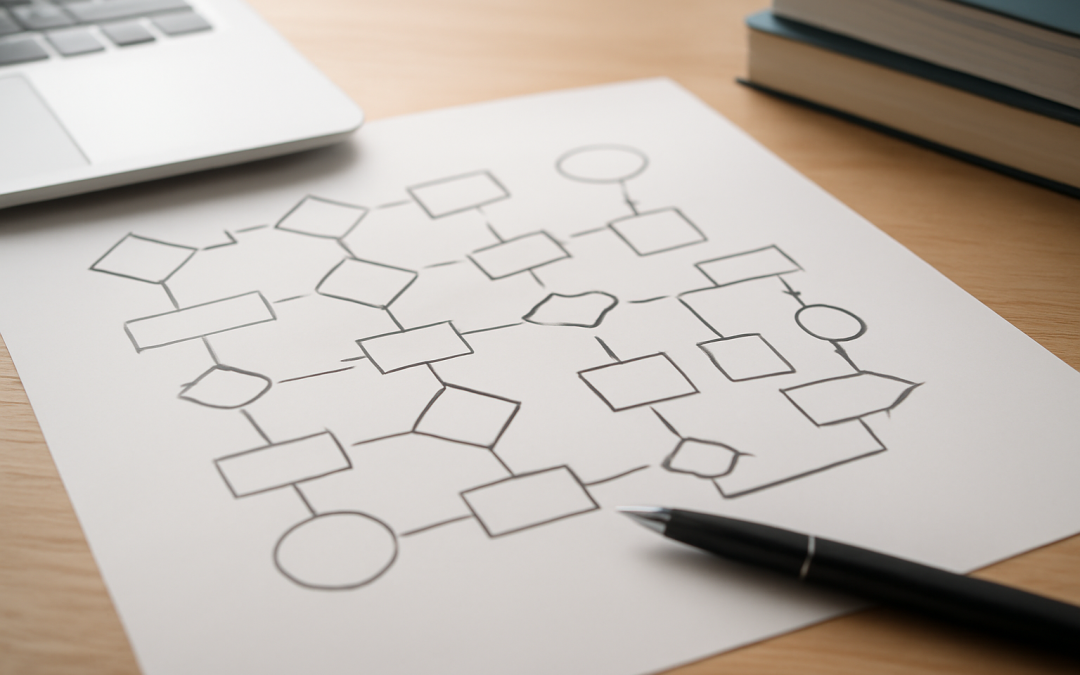
In the landscape of critical thinking and problem-solving, the ability to visually represent complex ideas plays a pivotal role. Diagrams offer a powerful method of communication that transcends language barriers and cognitive limitations, enabling individuals to grasp concepts, analyze relationships, and synthesize information more effectively. Visual logic, which involves the use of diagrams to structure and clarify reasoning processes, serves as an instrumental tool in disciplines ranging from mathematics and computer science to philosophy and business strategy. Together, diagrams and visual logic not only enhance understanding but also facilitate innovative solutions by providing clear, intuitive insights into otherwise abstract problems.
At its core, visual logic simplifies the cognitive load by externalizing thought processes into graphical formats that the brain can process more easily than dense text or verbal explanations alone. Patterns and structures become immediately apparent when data and ideas are presented visually. For example, flowcharts map out sequences of events or decisions, making it easier to trace cause and effect relationships. Venn diagrams illustrate the intersections and exclusions between different sets, offering a straightforward way to compare and contrast elements. These visual aids convert intangible concepts into concrete shapes and symbols, allowing for a more immediate and comprehensive comprehension of the underlying logic.
The effectiveness of diagrams lies in their ability to leverage spatial reasoning, a type of cognitive skill where individuals understand, manipulate, and interpret visual information. When reasoning about abstract problems—such as proving a theorem, optimizing a network, or designing a system architecture—diagrams act as cognitive scaffolds. Instead of juggling multiple variables and conditions mentally, creators and viewers can offload this complexity onto visual representations, which bring clarity to the intricacies of a problem. This approach helps in identifying relationships that may not be obvious from textual descriptions, uncovering hidden assumptions, or detecting anomalies and inconsistencies in arguments.
In structured problem-solving environments, diagrams facilitate a systematic exploration of possibilities. Take, for example, decision trees: these diagrams depict choices and their potential outcomes, allowing stakeholders to systematically evaluate risks, rewards, and probabilities. The ability to visualize options in an organized manner enhances both strategic planning and operational execution. Similarly, concept maps connect ideas through labeled links, helping learners and professionals map out how individual components relate within a greater framework. This interconnectedness nurtures holistic thinking, prompting individuals to consider context, dependencies, and broader impacts rather than isolated facts.
Another significant aspect of visual logic is its capability to support collaborative problem solving. When teams are faced with complex challenges, articulated diagrams serve as shared reference points, reducing ambiguity and fostering mutual understanding. Visual aids ensure that all participants engage with the same conceptual model, which improves communication and alignment. In multidisciplinary teams, where members bring diverse expertise and terminology, diagrams bridge gaps by translating specialized jargon into universally interpretable visual cues. This collective cognition can accelerate decision-making processes and enhance innovation, as team members build upon each other’s insights with greater clarity and efficiency.
In educational settings, the integration of diagrams promotes deeper learning by encouraging active engagement with content. Visual logic reinforces memory retention by linking abstract theories to memorable imagery and spatial arrangements. For students, visualizing problems and solutions nurtures critical thinking skills by inviting them to analyze, classify, and synthesize information. Educators can use diagrams to scaffold instruction, gradually increasing the complexity of relationships mapped out while helping students develop their reasoning abilities incrementally. Additionally, diagrams can serve as assessment tools, revealing students’ thought processes and highlighting conceptual misunderstandings that might not be apparent through traditional testing methods.
The rise of technology has further expanded the scope and sophistication of diagrams and visual logic. Interactive software tools allow users to construct dynamic visual models that can be manipulated in real-time, providing immediate feedback and enabling simulation of different scenarios. This digital evolution has transformed diagrams from static illustrations into living frameworks that adapt and evolve based on user inputs. For instance, in software development, UML (Unified Modeling Language) diagrams help designers and programmers understand and communicate system architectures effectively, ensuring coherence throughout the development lifecycle. Similarly, systems thinking models leverage such tools to capture complex interactions within ecosystems, economies, or organizational structures, making it possible to forecast outcomes and test hypotheses without real-world risks.
Despite their numerous advantages, diagrams must be designed carefully to avoid misinterpretation or cognitive overload. Overly complex or cluttered diagrams can confuse rather than clarify, leading to erroneous conclusions. Effective visual logic balances complexity with simplicity, using appropriate symbols, clear labels, and logical layouts that guide the viewer’s attention and facilitate comprehension. The use of color, spacing, and hierarchical structures plays a crucial role in enhancing readability and emphasizing key points. Moreover, cultural and contextual factors influence how individuals perceive and interpret visual information, requiring creators to consider their audience when developing diagrams for maximum accessibility and impact.
Moreover, the practice of constructing diagrams itself fosters intellectual rigor and creativity. When individuals translate abstract ideas into visual form, they engage in a process of externalization that surfaces gaps in understanding or logical inconsistencies. This articulation process compels one to organize thoughts coherently, rethink assumptions, and explore alternative perspectives. Thus, the act of diagramming is not merely representational but generative, as it stimulates new insights and sparks creative problem-solving. Through iteration and refinement of visual models, individuals and teams gain progressively sharper and more nuanced understanding, enabling breakthroughs that might be elusive through verbal or textual methods alone.
Visual logic also provides a bridge between qualitative and quantitative reasoning. Diagrams can represent both symbolic structures—such as logical propositions, relationships, or hierarchies—and numerical data in ways that facilitate integrated analysis. For example, network graphs combine nodes and edges to depict social or technological networks, revealing patterns such as clusters, hubs, and pathways that affect system behavior. By visualizing data and logic simultaneously, decision-makers gain a multifaceted view that supports balanced reasoning, avoiding pitfalls such as confirmation bias or overreliance on one type of information. This integrative capability makes diagrams indispensable in fields as diverse as data science, law, linguistics, and public policy.
In corporate environments, diagrams enhance strategic communication and organizational alignment. Executive leaders use visual tools like balanced scorecards, strategy maps, and process flow diagrams to articulate goals, track performance, and coordinate efforts across departments. Clear visualization of company structures and workflows reduces ambiguity regarding roles and responsibilities, enabling smoother operations and more agile responses to changing market conditions. Furthermore, visual strategy frameworks facilitate scenario planning and risk management by depicting contingencies and dependencies, empowering leaders to make informed decisions under uncertainty.
Philosophical and logical reasoning traditions have long employed visual logic to explore propositions, inferential relationships, and proofs. Diagrammatic reasoning offers a complementary approach to symbolic logic by providing concrete illustrations that enhance intuitive understanding. The use of Euler or Peirce diagrams, for instance, assists in mapping syllogistic reasoning and predicate relations, making complex logical constructs accessible. This approach supports both teaching foundational logic and advancing research in areas such as automated reasoning or artificial intelligence, where translating symbolic representations into computationally effective forms is critical. By integrating visual logic with formal systems, scholars and practitioners achieve a richer and more versatile toolbox for dissecting problems and constructing arguments.
Ultimately, the enduring value of diagrams and visual logic lies in their ability to make complexity navigable, foster communication, and energize intellectual creativity. As technology advances and the volume of information continues to expand exponentially, tools that help synthesize and clarify knowledge become ever more essential. Visual reasoning harnesses innate human cognitive strengths, providing a universal language that transcends disciplinary boundaries and cultural differences. Whether in education, business, science, or everyday decision-making, the thoughtful use of diagrams illuminates paths through complexity, empowers more thoughtful analysis, and drives more effective actions.
Mastery of visual logic transforms not only how individuals think but also how they interact with one another and with the evolving challenges of a fast-changing world. It cultivates a mindset oriented toward clarity, rigor, and innovation, equipping people to tackle multifaceted problems with confidence and insight. Encouraging wider adoption of diagrammatic reasoning across sectors promises to elevate collective understanding and foster more connected, agile, and informed communities. In an era defined by rapid change and intricate interdependencies, harnessing the power of diagrams to support sound reasoning is not merely advantageous—it is indispensable.

by admin | Oct 4, 2026 | Art & Design
In the midst of complex problem-solving and creative exploration, sketching emerges as more than just a method of visual expression—it becomes a powerful tool for thinking. When words fail to grasp the fluidity of an idea or when mental images remain elusive, sketching serves as an external brain, helping to clarify thoughts and reveal connections that would otherwise remain hidden. This process transforms abstract cognition into tangible form, fostering deeper understanding and innovation.
The act of putting pen to paper initiates a dialogue between the mind and the hand, allowing ideas to unfold in a nonlinear fashion. Unlike verbal thinking, which tends to follow a sequential path, sketching encourages simultaneous consideration of multiple elements and their relationships. This visual form of reasoning taps into our innate ability to interpret shapes, spatial arrangements, and visual metaphors. By externalizing thoughts through sketches, complex concepts become more manageable and open to exploration from different perspectives.
Moreover, the roughness and imperfection inherent in early sketches create a safe space for experimentation. Because sketching does not demand precision or finality, it invites trial and error, encouraging a playful yet purposeful approach to problem-solving. This freedom allows individuals to iterate rapidly, to abandon rigid assumptions, and to embrace evolving ideas. In this sense, sketching acts as a cognitive playground where creativity and analytical thinking coalesce.
Cognitive research underscores the importance of external representations for enhancing memory and problem-solving capabilities. When ideas are captured visually, they become less ephemeral, freeing cognitive resources to focus on higher-level tasks rather than mere retention. Sketching helps organize thoughts and provides a reference to revisit or revise, fostering continuous refinement. It bridges the gap between thought and action, facilitating a more embodied understanding of concepts, which is especially beneficial in fields such as design, engineering, and architecture.
An intrinsic part of this process is the engagement of spatial intelligence—the ability to visualize and manipulate objects mentally. Sketching leverages this skill by transforming intangible concepts into visual forms that can be observed, compared, and modified. This not only supports better comprehension but also enhances communication with others. A sketch can transcend language barriers, conveying ideas with immediacy and clarity that words alone often cannot achieve.
The practice cultivates a mindset that values ambiguity and exploration over premature conclusions. Many breakthroughs arise from moments of uncertainty, where initial sketches capture vague notions that evolve into refined solutions. Embracing sketching as a form of thinking encourages tolerance for complexity and ambiguity, which are often necessary for creative breakthroughs. As sketches develop over time, they accumulate layers of insight and context, documenting the journey of thought in a way that textual descriptions rarely can.
In educational contexts, integrating sketching into learning processes has proven effective for deepening understanding and engagement. Students who sketch during problem-solving or note-taking exhibit improved comprehension and long-term retention. This is partly because the act of sketching activates different neural pathways compared to passive reading or listening, creating a multisensory learning experience. The kinesthetic involvement brakes the cognitive monotony and supports active mental processing, enabling learners to construct meaningful mental models.
In professional environments, the benefits extend beyond individual cognition to collaborative settings. Sketches often function as shared artifacts around which teams can gather and collectively explore ideas. This visual common ground aids in aligning diverse perspectives, reducing misunderstandings, and accelerating decision-making. Whether during brainstorming sessions or design critiques, sketches spark dialogue by making abstract concepts approachable and concrete. Furthermore, the iterative nature of sketching aligns well with agile and dynamic work cultures, embracing flexibility and continuous improvement.
The digital age has expanded the possibilities of sketching, providing tools that enhance traditional methods without eroding the fundamental cognitive benefits. Tablets, styluses, and various software applications enable quick alterations, layering, and sharing of sketches, integrating them smoothly into modern workflows. However, despite these advancements, the tactile experience of hand-drawn sketches on paper retains unique advantages. The direct connection between hand and surface fosters a deeper mental engagement and reduces cognitive friction, underscoring that the medium complements rather than supplants the cognitive function of sketching.
In design disciplines, sketching bridges the gap between imagination and feasibility. By sketching, designers explore form, function, and ergonomics simultaneously, enabling a holistic understanding of potential solutions. This iterative process prevents early fixation on a single idea and promotes divergent thinking, crucial for innovation. Sketching also aids in visualizing spatial relationships, scale, and proportion, elements that might be difficult to grasp purely through verbal description or mental imagery.
Similarly, engineers and scientists utilize sketching to navigate complex systems and abstract phenomena. Diagrams and sketches help isolate variables, map interdependencies, and hypothesize mechanisms. The visual representation can reveal hidden patterns and prompt new questions, fueling scientific inquiry and technological advancement. In this way, sketching becomes a cognitive scaffold, supporting higher-order reasoning and discovery.
Artists and writers also benefit from sketching as a form of thinking, using it to capture fleeting impressions and emotions that later form the foundation of their works. For visual artists, quick sketches serve as memory aids and creative prompts, nurturing the flow of ideas. Writers employ sketching to outline narrative structures, character relationships, or thematic motifs, enriching the storytelling process. Across creative fields, sketching cultivates attentiveness and responsiveness to nuance, deepening the creative dialogue with one’s own mind.
Beyond professional and educational settings, incorporating sketching into everyday life enhances problem-solving and decision-making. When faced with tasks ranging from organizing schedules to planning projects, sketching aids in clarifying priorities and visualizing outcomes. This informal use brings the cognitive benefits of externalization into routine contexts, improving efficiency and reducing mental clutter.
It is important to recognize that sketching, as a thinking tool, does not require artistic talent or aesthetic polish. Its value lies in its capacity to make thinking visible and tangible, not in producing finished artworks. The often messy, provisional nature of sketches reflects the dynamic character of thought itself. Encouraging individuals to embrace imperfection and to view sketches as living documents fosters a mindset of continuous exploration and learning.
The symbiotic relationship between sketching and thinking also emphasizes the importance of slowing down cognitive processes to observe and reflect. In a culture increasingly driven by rapid information flow and digital distractions, sketching offers a moment of pause. It invites mindfulness, promoting deeper insight and clarity. This meditative aspect enhances mental well-being and supports sustained creative engagement.
In summary, engaging in sketching transforms it from a simple act of drawing into a sophisticated cognitive strategy. It serves as a bridge that connects intuition with analysis, imagination with reality, and individual mindsets with collective intelligence. By making thought visible, sketching empowers individuals to navigate the complexities of ideas, fostering innovation, clarity, and collaboration. The integration of sketching into both personal and professional practices holds profound potential for enhancing how we think, learn, and create.

by admin | Oct 3, 2026 | Art & Design
Problem-solving is an essential human skill that transcends professions, cultures, and disciplines. It is how we overcome obstacles, innovate, and adapt to changing circumstances. However, the way in which we approach problems can greatly influence the outcomes we achieve. One powerful approach involves thinking visually to solve problems. Visual thinking enables us to organize complex information, identify patterns, and communicate ideas more effectively than relying solely on verbal or linear reasoning. By tapping into the brain’s capacity to process visual data, we can approach challenges with clarity, creativity, and insight.
The human brain is inherently designed to process visual information rapidly and efficiently. Visual stimuli engage more neurons than textual or auditory information alone, which can make complex problems easier to comprehend and manage when visual elements are incorporated. Using visual representations such as diagrams, charts, maps, and sketches allows individuals to externalize abstract ideas, making them concrete and manipulable. This externalization helps reduce cognitive load, freeing mental resources for deeper analysis and synthesis. When dealing with multifaceted problems, this can be the difference between confusion and clarity.
One of the primary benefits of thinking visually is the ability to see relationships and connections that are not immediately obvious through words or numbers alone. For example, mapping out a problem using mind maps or flowcharts can reveal how different components interact or lead to consequences. Seeing these links can help identify root causes, dependencies, or bottlenecks that require attention. It can also facilitate brainstorming by creating a shared reference point for teams to build upon ideas collaboratively. As a result, visual tools often lead to more comprehensive and innovative solutions.
In many fields, visual thinking serves as a bridge between abstract concepts and practical implementation. Architects and engineers use sketches and blueprints to take intangible designs and transform them into physical structures. Similarly, software developers rely on diagrams such as UML to represent system architecture before writing code. These visual tools act as a medium for translating complex ideas into actionable plans. This approach not only improves problem-solving efficiency but also reduces errors and uncertainties by providing a clear framework for development and troubleshooting.
Moreover, visual thinking supports memory retention and learning. When information is presented visually, it tends to be remembered more effectively than text alone. This phenomenon, sometimes referred to as the picture superiority effect, highlights why educators often use diagrams or infographics to teach complex subjects. In problem-solving contexts, using visuals helps keep critical details accessible and top of mind throughout the decision-making process. This can lead to better tracking of progress and easier identification of gaps or inconsistencies in reasoning.
Another important aspect to consider is the role of creativity in problem-solving. Visual thinking nurtures creative exploration by encouraging individuals to experiment with different perspectives and representations. Sketching rough ideas or constructing models can spark new insights that might remain hidden when confined to linear verbal descriptions. By embracing ambiguity and iteration, visual thinkers cultivate a mindset conducive to innovation. This is particularly valuable in situations requiring novel approaches or dealing with ambiguous problems where standard solutions fall short.
Technology has further expanded the possibilities for visual problem-solving. Digital tools enable dynamic visualization, simulation, and manipulation of data, making it easier to explore complex scenarios. Interactive dashboards, virtual whiteboards, and 3D modeling software empower users to engage with problems in immersive and flexible ways. These technologies often accommodate collaboration over distances, fostering collective visual thinking among diverse stakeholders. As a result, teams can rapidly prototype and refine solutions in a shared virtual space, accelerating problem resolution.
Despite its many advantages, visual thinking is not always a natural inclination. Some individuals may struggle to translate their thoughts into visual forms or may feel intimidated by drawing or designing. However, visual thinking is a skill that can be developed with practice and intention. Starting with simple diagrams, such as lists or basic flowcharts, and gradually incorporating more sophisticated visuals can build confidence and proficiency. Additionally, adopting an iterative mindset—where visuals are continually refined rather than expected to be perfect from the start—can help ease the learning curve.
It is also vital to recognize that the power of visual thinking lies in its synergy with other problem-solving methods. Combining visual tools with verbal explanation, numerical analysis, and experiential knowledge creates a well-rounded approach. For example, using visuals to frame a problem, numerical data to analyze it, and dialogue to brainstorm solutions leverages diverse cognitive strengths. This integrative perspective encourages thorough understanding and robust problem-solving because it minimizes blind spots and leverages complementary modes of thinking.
In workplace contexts, fostering a culture that encourages visual problem-solving can enhance team effectiveness and innovation. Providing access to visual aids such as whiteboards, sticky notes, or visualization software can support this process. Encouraging open sharing of visual models and iterative discussion helps break down hierarchical barriers and empowers contributors at all levels. Leaders who champion visual thinking often find that complex projects unfold more smoothly as team members achieve shared understanding faster and communicate more clearly.
Visual thinking also plays a critical role in decision-making under uncertainty. Problems characterized by incomplete information, ambiguous outcomes, or conflicting priorities challenge purely analytical approaches. In these cases, creating visual scenarios or decision trees can help map out possibilities and consequences, providing a structured yet flexible framework for evaluation. Visual representations can highlight trade-offs and risks transparently, enabling decision-makers to weigh options more confidently and anticipate downstream effects.
Education and training programs are increasingly incorporating visual thinking to prepare individuals for real-world problem-solving. Encouraging students to sketch concepts, diagram processes, or create concept maps supports deeper engagement and comprehension. By fostering these habits early, learners develop transferable skills that can enhance critical thinking across disciplines. This approach aligns with how the brain naturally processes information and prepares future professionals to tackle complex, interdisciplinary challenges.
The integration of visual thinking with modern data visualization techniques is redefining how organizations solve problems. The explosion of big data presents challenges in extracting meaningful insights, and effective visualizations can uncover patterns obscured in raw datasets. Exploratory data analysis often relies on graphs or heat maps to reveal correlations or anomalies critical to decision-making. By thinking visually about data, problem solvers gain a more intuitive grasp of underlying dynamics that informs strategic direction.
While embracing visual thinking, it is important to be mindful of potential pitfalls. Overcomplicating visual models can lead to confusion or misinterpretation. Visual clutter or poorly designed diagrams may obscure rather than clarify. It is essential to maintain simplicity and clarity, ensuring visuals serve the goal of enhancing understanding rather than adding noise. Periodic review and feedback from others can help ensure that visual representations remain effective and accessible.
In a world that increasingly demands agility and innovation, thinking visually offers a powerful avenue for responding to complexity. It transforms abstract challenges into tangible constructs that we can see, manipulate, and share. This process not only improves clarity but also cultivates a collaborative spirit and creative mindset essential for tackling today’s multifaceted problems. By incorporating visual approaches into our problem-solving toolkit, we equip ourselves to navigate uncertainty with confidence and imagination.
Ultimately, thinking visually is more than a technique; it is a cognitive shift that elevates how we engage with information and ideas. Embracing this mindset empowers individuals and teams to break free from limiting mental models and discover new pathways to solutions. Through visual thinking, challenges become opportunities to innovate, communicate, and connect. The rewards extend beyond individual problems to foster a culture of clarity, collaboration, and continuous learning that drives lasting success in any endeavor.

by admin | Oct 2, 2026 | Art & Design
In a world characterized by relentless change and constant evolution, the ability to adjust seamlessly across different phases of life has become an essential skill. Whether facing technological advancements, career shifts, societal transformations, or personal challenges, cultivating lifelong adaptability enables individuals to thrive rather than merely survive. It is no longer sufficient to acquire knowledge once and rely on it indefinitely; instead, success and fulfillment often hinge on a continuous willingness to learn, unlearn, and relearn. This dynamic approach not only fosters resilience but also encourages growth, creativity, and openness in an ever-changing environment.
The foundation of lifelong adaptability begins with embracing a mindset that values flexibility and curiosity over rigid thinking and complacency. People who adopt this perspective tend to see change not as a threat but as an opportunity to explore new possibilities and expand their horizons. This outlook nurtures psychological resilience by reducing fear and resistance when confronted with uncertainty. Instead of clinging to familiar routines or outdated methods, adaptable individuals maintain a proactive attitude toward challenges, viewing setbacks as valuable lessons that contribute to their overall development. This mental agility often distinguishes those who flourish from those who falter in fast-paced contexts.
Furthermore, lifelong adaptability requires ongoing self-awareness and reflection. Recognizing personal strengths and limitations is a crucial step in determining how best to respond to new circumstances. Through introspection, individuals can pinpoint areas where growth is needed and seek out experiences or feedback that foster improvement. This process often involves being open to constructive criticism and acknowledging mistakes without defensiveness. Over time, such reflective practices contribute to enhanced problem-solving abilities and emotional intelligence, both of which are vital for navigating complex social and professional landscapes.
Education and skill acquisition also play pivotal roles in sustaining adaptability throughout life. The traditional notion of completing formal schooling early on and relying solely on that knowledge is increasingly obsolete. Instead, continuous learning — whether through professional development programs, workshops, online courses, or informal self-study — has emerged as an essential strategy for keeping pace with evolving demands. This commitment to education ensures that one’s skill set remains relevant and competitive, and it also stimulates cognitive vitality by challenging the brain to assimilate new information regularly.
In the workplace, adaptability has proven to be one of the most sought-after qualities by employers. Organizations face constant disruptions, including technological innovations, market fluctuations, and shifting consumer expectations. Employees who demonstrate adaptability by adjusting their responsibilities, adopting new tools, or collaborating across diverse teams contribute significantly to organizational resilience and success. Moreover, adaptable workers often experience greater job satisfaction and career longevity, as they can pivot effectively and seize emerging opportunities rather than becoming obsolete or marginalized.
Beyond professional contexts, lifelong adaptability is crucial for maintaining healthy relationships and social connections. As people age, their social circles may change dramatically due to relocations, shifts in family dynamics, or changing interests. The capacity to navigate these transitions with sensitivity, empathy, and open communication helps individuals preserve meaningful bonds and build new ones. Additionally, adapting to new social norms and cultural environments enhances one’s inclusivity and understanding, promoting harmony and cooperation in increasingly diverse communities.
Technological progress exemplifies an area where adaptability is particularly critical. Innovations continue to redefine how people live, work, and interact. Embracing new digital tools, platforms, and modes of communication requires a willingness to experiment and sometimes face initial discomfort or failure. Those who resist such changes may find themselves isolated or disadvantaged in various spheres. Conversely, individuals who remain adaptable can leverage technology to access information, connect globally, and create novel solutions, thereby enhancing their personal and professional lives.
Psychologically, the practice of lifelong adaptability correlates strongly with well-being and mental health. Clinging rigidly to past routines or resisting inevitable change can foster stress, anxiety, and feelings of helplessness. Conversely, openness to change encourages a sense of control and purpose, even in difficult times. This flexibility supports effective coping strategies, reducing the impact of adverse events and facilitating recovery. Furthermore, cultivating adaptability nurtures a mindset of growth, which is associated with higher self-esteem and motivation.
Developing adaptability is not a passive process but requires intentional effort and practice. One effective way to enhance this quality is by deliberately seeking out new experiences that push comfort zones and challenge existing beliefs. Travel, exposure to diverse cultures, learning new hobbies, or engaging in unfamiliar social settings can all serve as exercises in flexibility. By confronting novelty and uncertainty regularly, individuals can desensitize themselves to discomfort and build confidence in their ability to handle change.
Moreover, fostering adaptability involves cultivating specific skills such as problem-solving, critical thinking, and emotional regulation. The ability to objectively assess situations, weigh options, and make informed decisions supports effective responses to changing conditions. Emotional regulation strategies, including mindfulness and stress management, help maintain clarity and composure in the face of unpredictability. These competencies create a powerful toolkit that strengthens one’s capacity to adjust and persevere.
Interpersonal adaptability also merits attention as a fundamental component of lifelong flexibility. This entails the ability to understand and respond appropriately to others’ needs, communicate effectively, and cooperate in diverse team settings. Developing empathy and active listening skills supports harmonious interactions and smooths transitions during social change. Given the increasingly interconnected world, social adaptability can enhance both personal relationships and professional collaborations.
Culturally, societies that encourage and reward adaptability tend to be more innovative and resilient. Education systems and workplaces that emphasize creativity, curiosity, and lifelong learning over rote memorization and conformity nurture generations equipped to navigate complexity. This collective orientation toward adaptability contributes to economic vitality, social cohesion, and the ability to respond to global challenges such as climate change, pandemics, and technological disruption.
It is important to acknowledge that while lifelong adaptability is invaluable, it does not mean indiscriminate change or a lack of stability. Instead, it involves discerning which aspects of one’s life and thinking require flexibility and which core values or principles serve as anchors. This balance between stability and change enables individuals to maintain continuity and identity while evolving constructively. Knowing when to adapt and when to uphold certain commitments is itself a sophisticated and nuanced form of adaptability.
Challenges to adaptability often arise from fear of the unknown, attachment to the familiar, or perceived loss of control. Overcoming these hurdles can involve cultivating a sense of curiosity and reminding oneself of past successes in managing change. Building a supportive network of friends, mentors, or colleagues can provide encouragement and perspective during transitions. Additionally, setting realistic goals and breaking down complex changes into manageable steps makes the process less overwhelming.
Technology, globalization, and shifting social norms will continue to redefine many areas of life in unpredictable ways. Preparing to meet these ongoing changes requires a lifelong commitment to adaptability that transcends age, profession, or background. Individuals who cultivate this capacity are better positioned to seize new opportunities, recover from setbacks, and contribute meaningfully to their communities. In this sense, adaptability is not just a personal asset but a social imperative that fosters collective progress and well-being.
Developing lifelong adaptability also invites reconsideration of success and failure. When change is constant, rigid achievement benchmarks may lose relevance. Instead, success can be envisioned as the capacity to learn continuously, remain open-minded, and adjust course when necessary. Embracing failure as an integral part of growth rather than a definitive endpoint supports experimentation and innovation, both of which drive advancement in various domains.
In sum, lifelong adaptability represents an essential approach to navigating the complexities of modern existence. Far from being a static attribute, it is an active and evolving process that encompasses mental, emotional, social, and professional dimensions. By fostering curiosity, openness, reflection, and skill development, individuals can enhance their ability to respond effectively to change throughout their lives. The result is a richer, more resilient, and empowered existence that allows for continuous learning, engagement, and fulfillment in an ever-shifting world.
Ultimately, adaptability is a source of strength that sustains growth and transformation in the face of uncertainty. It invites individuals to approach life with flexibility and confidence, welcoming new challenges as chances to evolve. In this way, adaptability not only helps manage the demands of change but also enriches the human experience by unlocking potential and fostering resilience across the lifespan.