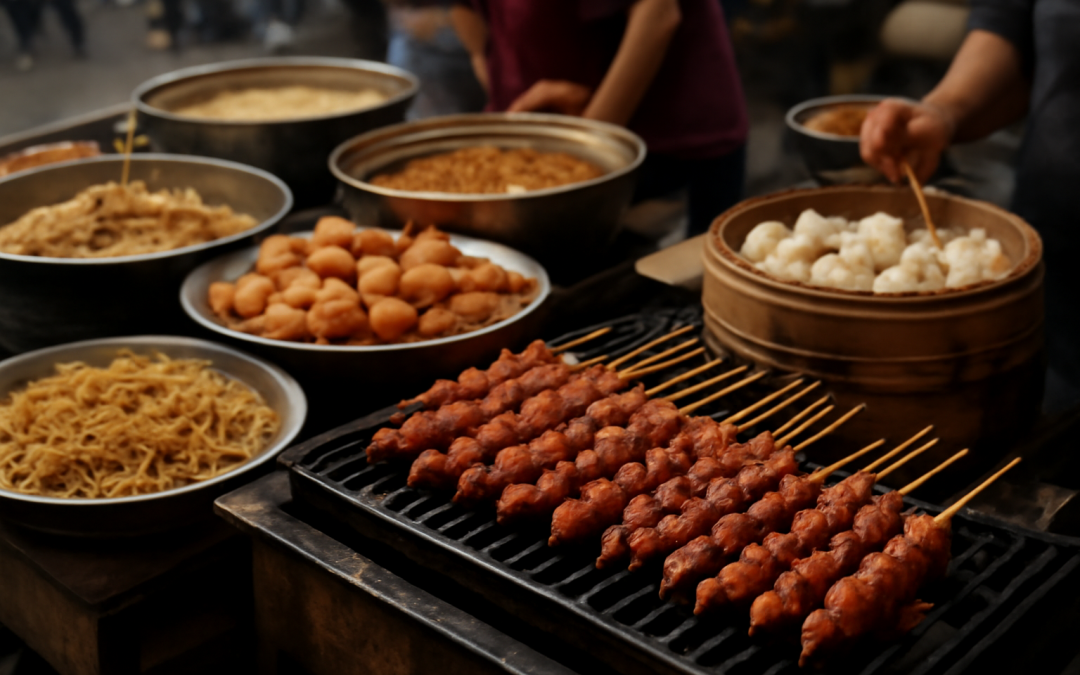
Street food has been an integral part of human civilization for centuries, reflecting the cultural, social, and economic fabric of societies across the globe. Its history is rich and varied, tracing back to ancient times when vendors offered ready-to-eat dishes to travelers, workers, and city dwellers in bustling marketplaces or along busy roadsides. Throughout history, street food has not only served as a convenient mode of nourishment but also as a powerful vehicle for cultural exchange, innovation, and community bonding.
In ancient civilizations, street food was often a practical solution to feeding large populations in urban centers. For example, in Ancient Rome, informally known shops called “thermopolia” were widespread. These establishments served hot ready-made meals and drinks to people who did not have kitchens at home or who needed a quick meal. Archaeological discoveries in Pompeii reveal elaborate counters with embedded jars where hot food was stored, underscoring how essential and popular street dining was during that era. Similar trends were observable in ancient China and Greece, where street vendors sold rice, noodles, and bread to busy city residents and travelers.
Throughout the Middle Ages, the tradition of street food persisted in various forms, adapting to local tastes and available ingredients. In medieval Europe, food stalls and market vendors flourished, especially in rapidly growing cities. Foods like pies, bread, and roasted meats were commonly sold, providing portable and affordable sustenance to workers and market-goers. Meanwhile, in the Middle East, street food vendors sold a variety of dried fruits, nuts, and spiced meats, often seasoned to reflect the rich culinary heritage of the region. These marketplaces became melting pots where social classes intermixed, united by the universal need for food on the go.
The expansion of trade routes during the Age of Exploration further enriched the diversity of street food worldwide. As merchants and explorers traversed continents, new ingredients, flavors, and cooking techniques spread rapidly. The Silk Road connected Asia with Europe and introduced spices like cinnamon, pepper, and cardamom to new regions. Street vendors adopted these exotic ingredients, creating hybrid dishes that bore influences from multiple cultures. In the Americas, indigenous native foods like maize, beans, and chili peppers became staples for vendors, contributing to the burgeoning street food scenes in emerging colonial cities.
The Industrial Revolution spurred a profound shift in urban life and food consumption patterns. As masses of people migrated to cities to work in factories, the demand for inexpensive, accessible food skyrocketed. Street vendors capitalized on this by offering simple, hearty meals that catered to workers facing tight schedules and limited budgets. This era saw the popularization of iconic street foods that remain beloved today—items such as fish and chips in Britain, pretzels in Germany, and hot dogs in the United States. Vendors used mobile carts and stalls, enabling them to navigate the crowded city streets and reach customers quickly.
In Asia, street food culture saw parallel development with distinct regional flavors defining each locale. Japan’s yatai stalls offered skewered meats, dumplings, and noodle dishes, fostering a vibrant nighttime economy for urban dwellers. In India, the rich diversity of spices and cooking techniques gave rise to a plethora of street foods—from samosas and chaat to dosas and kebabs—each region contributing unique flavors and ingredients. Southeast Asia became synonymous with lively street markets where vendors prepared fragrant curries, grilled seafood, and rice noodles in open-air kitchens that buzzed with activity and aromas.
The 20th century brought innovations that continued to elevate the role of street food in global cities. The rise of automobiles and mobile food trucks changed the dynamics of how food was sold outside formal restaurants. Vendors started experimenting with fusion dishes, blending fast food concepts with traditional recipes, which broadened the culinary appeal to diverse customer bases. In many developing countries, street food became a vital part of the informal economy, providing livelihoods to millions while also serving as a primary source of affordable nutrition for low-income populations.
The globalization of cuisine in recent decades has dramatically influenced the evolution of street food. Traveling chefs and food enthusiasts exposed international audiences to previously regional specialties, and social media platforms amplified the visibility of vibrant street food scenes from Tokyo to Mexico City to Marrakech. Today, the exchange of culinary ideas transcends borders, allowing street food to continuously reinvent itself. Dishes like tacos, bao buns, and kebabs have become global staples, often reinterpreted by local vendors using indigenous ingredients and techniques.
Importantly, street food’s history is intertwined with social and political contexts. In some regions, it has been a form of resistance and empowerment, showcasing indigenous ingredients and culinary traditions in the face of cultural homogenization. Vendors often gather in informal networks, creating communities that support each other economically and socially. Meanwhile, governments and urban planners have increasingly recognized street food’s significance, seeking to regulate, preserve, and promote it as part of vibrant urban culture and tourism.
Despite the challenges posed by modern concerns over food safety and hygiene, many cities have implemented successful initiatives that balance public health with the preservation of traditional street food culture. Improved infrastructure, standardized training for vendors, and the establishment of designated street food zones have helped elevate the status of street food from informal fare to celebrated culinary heritage. This transition underscores the enduring relevance of street food as both a reflection of cultural identity and an essential ingredient of urban life.
Throughout its long history, street food has always been more than just a meal. It represents an inclusive social phenomenon where people from all walks of life converge to share flavors, stories, and experiences. It reflects the adaptability of human societies, how they use food to sustain themselves, innovate, and express cultural identity. The enduring appeal of street food lies in its authenticity, accessibility, and creativity—qualities that have allowed it to thrive for thousands of years across continents and civilizations.
In conclusion, the history of street food is a testament to the dynamic interplay between culture, economy, and human ingenuity. From ancient thermopolia in Rome to bustling night markets in Asia and food trucks in modern cities, street food has continually evolved while maintaining its essential role as a cornerstone of daily life and cultural expression. Its journey across time and geography illustrates that food is not only fuel but also a powerful connector of people and traditions. As it continues to adapt and flourish in the modern era, street food remains a vibrant and indispensable part of the global culinary landscape.