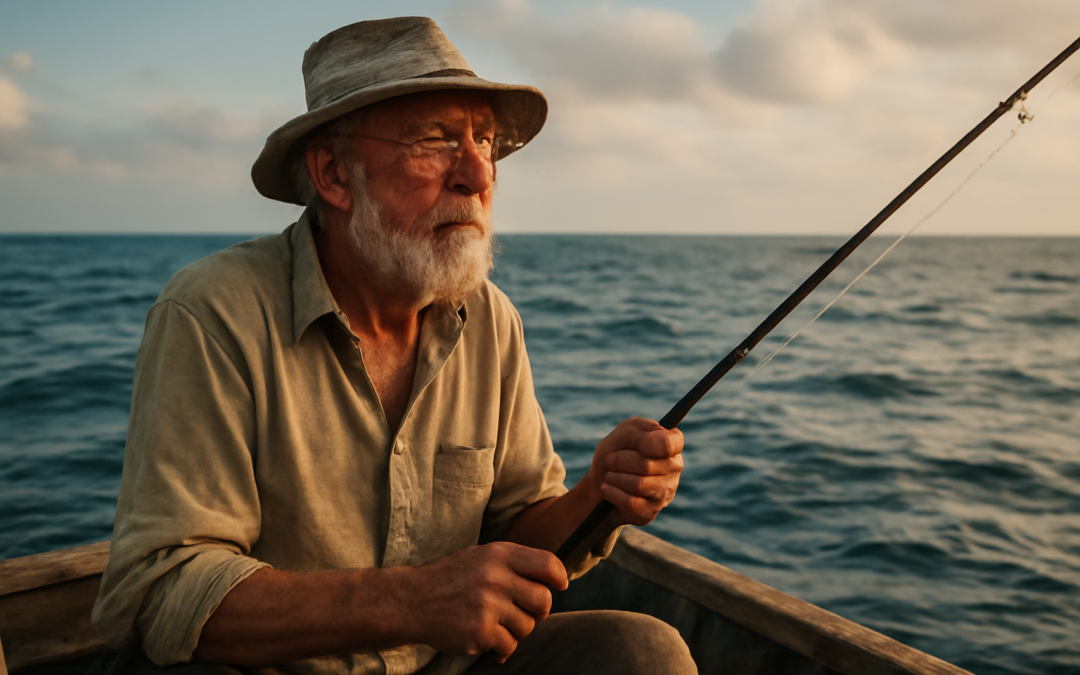
Ernest Hemingway’s novella captures the quiet, unyielding spirit of human endurance through the story of an old fisherman named Santiago, whose relentless struggle with a giant marlin becomes a profound metaphor for the resilience of the human soul. This iconic work, often lauded for its sparse prose and symbolic depth, paints a picture of perseverance that resonates deeply with readers who appreciate the rawness of man versus nature. The narrative centers on Santiago’s solitary battle on the open sea, where endurance alone dictates the boundaries between triumph and defeat, honor and despair.
From the very beginning, the story immerses readers in the life of an aging fisherman who has endured an extended period without catching fish. Santiago’s loneliness and physical decline contrast sharply with his mental fortitude and skill, qualities that Hemingway elevates as the essence of true strength. The old man’s environment reflects his internal state—the vast, indifferent sea offers both a stage for conflict and a silent judge of his worth. Santiago’s intimate knowledge of the ocean and its creatures illustrates a harmony born of respect and hardship, underlying the novella’s meditation on endurance.
The relationship between Santiago and the giant marlin is the heart of the narrative and serves as a symbolic confrontation between man’s spirit and the challenges imposed by nature. Santiago sees the fish not just as prey but as a worthy opponent, a creature that commands respect for its size, strength, and tenacity. This respect is central to the story because it elevates the fisherman’s struggle beyond a mere physical contest into a moral and existential endeavor. The long, grueling battle with the fish, during which Santiago’s endurance is tested to the limit, reveals his steadfast dedication and refusal to surrender despite overwhelming odds.
Hemingway’s prose style in this novella is deceptively simple but powerfully evocative, enabling readers to feel the physical exhaustion, mental determination, and quiet dignity of Santiago. The economy of language mirrors the starkness of the setting—the endless sea and the sparse life of the fisherman—and reinforces the themes of struggle and survival. Each sentence contributes to a build-up of tension that culminates in the triumph and tragedy at the story’s climax, making readers reflect on the nature of success and what it means to endure beyond tangible achievements.
Endurance alone defines Santiago’s character, shaping his identity and providing meaning to his existence. While he may be physically worn and mentally tested, it is this endurance that distinguishes him from mere misfortune. The struggle represents an existential assertion that, regardless of outcomes, the effort and willingness to engage in life’s battles is itself a form of victory. In this, Hemingway offers a powerful commentary on human dignity, suggesting that the true measure of a person lies in their ability to persevere through suffering and setbacks without losing their sense of honor or self-respect.
The novella also explores themes of isolation and companionship. Santiago’s solitude on the sea intensifies the significance of his internal monologue and memories, which serve as fuel for his endurance. His thoughts often drift to the boy who once fished with him, the community that has abandoned him, and the natural world that is both adversary and ally. These reflections underscore the loneliness inherent in human experience but also highlight the inevitability of facing life’s challenges alone at crucial moments. Through Santiago, Hemingway poignantly illustrates that endurance is not just a physical trial but also an emotional and spiritual journey.
The old man’s physical suffering throughout the narrative is a vivid reminder of mortality and the limitations imposed by age and nature. Santiago’s hands are cut and bleeding, his body battered by the relentless sun and exertion, and his strength wanes as the battle drags on. Yet, his willpower remains unbroken. This tension between body and spirit adds a layer of complexity to the simple surface story of a man and a fish. It invites readers to consider how endurance can transcend physical decline and serve as a testament to the indomitable human spirit.
Hemingway’s portrayal of nature in the novella is multifaceted, avoiding simplistic dichotomies of good and evil. The sea is both beautiful and brutal, sustaining life but indifferent to human suffering. The marlin, though an adversary, is also a symbol of perfection, purity, and natural grandeur. Santiago’s respect and almost reverential attitude towards the marlin suggest a worldview that embraces the inherent value of all things, even when they stand in opposition to human desires. This balance between respect and struggle intensifies the story’s exploration of endurance, showing it as a harmony between challenge and admiration rather than a conquest.
The narrative’s pacing reflects the rhythms of the sea and the unfolding battle, punctuated by moments of intense action and quieter introspection. These shifts allow readers to experience the ebb and flow of Santiago’s hope and despair, his focus and distraction. Hemingway masterfully uses this pacing to mirror the unpredictability of endurance itself—sometimes steady and unwavering, other times faltering and uncertain. Through this dynamic, the novella offers a profound meditation on the nature of persistence as more than a linear progression but a complex, evolving journey.
Symbolism runs deep throughout the story, with numerous elements reinforcing the central theme of endurance. Santiago’s skiff, the sun, the stars, and even the sharks that eventually attack the marlin all contribute to the narrative’s layers of meaning. The sharks, in particular, represent the forces that threaten to diminish the fruits of endurance, illustrating how adversity often comes in waves. Despite Santiago’s efforts and triumph in killing the marlin, the attack by the sharks reminds readers that endurance is not always rewarded with lasting success. Yet, Santiago’s refusal to give up during these final trials demonstrates that the act of enduring itself retains intrinsic value.
The novella’s conclusion is poignant and open to interpretation, leaving readers to ponder the implications of Santiago’s ordeal. The old man returns to shore physically defeated but morally unvanquished, bearing the remains of the great fish as proof of his battle. The respect he commands from the local fishermen and the renewed interest of the boy signify a kind of renewal and recognition born from perseverance. This ending reinforces the idea that endurance is a journey with no simple victories or losses, but rather a continuous affirmation of life’s meaning through struggle.
Critical reception of the novella has consistently highlighted its thematic focus on endurance, the minimalist style, and the symbolic richness of the story. Readers and scholars often regard Santiago’s struggle as an allegory for the broader human condition, noting how the novella explores the intersection of physical exhaustion, mental resilience, and existential purpose. The story resonates across different cultures and eras because the fundamental message of endurance transcends specific contexts, tapping into a universal aspect of human experience.
The power of Hemingway’s storytelling lies in its ability to encapsulate a complex emotional and philosophical landscape within the confines of a brief narrative. The themes of solitude, pride, respect, and endurance alone are woven seamlessly into the compact structure, allowing readers to reflect on the essence of what it means to fight and to persevere. This narrative economy invites deep engagement, prompting readers to revisit the text multiple times to uncover new facets of Santiago’s character and his epic struggle.
Santiago’s endurance is also a reflection of Hemingway’s own literary philosophy, which emphasizes stoicism, restraint, and moral courage. The novella embodies the “code hero” archetype that defines much of Hemingway’s work—the individual who, despite suffering and loss, acts with grace and integrity. Santiago’s dignity in the face of overwhelming adversity serves as a model for confronting life’s challenges with quiet strength and resolve, making the novella a timeless study in character and spirit.
Furthermore, the novella speaks to the human relationship with nature, portraying it not as a hostile force to be conquered but as a realm to be understood and respected. Santiago’s enduring respect for the creatures and environment around him underscores a broader ecological awareness that remains relevant today. His endurance is as much about coexistence and balance as it is about conquest, offering a nuanced perspective that enriches the story’s message and appeal.
The work’s enduring legacy is testament to its multi-layered narrative and profound thematic heart. Readers continue to find inspiration in the old man’s journey, drawn to the vivid portrayal of human endurance in the face of loneliness, pain, and uncertainty. The novella’s reputation as a classic is secured by its ability to touch on timeless truths through the lens of a simple yet deeply moving story.
In the end, enduring despite the inevitability of suffering and loss becomes the novella’s central triumph. Santiago’s battle is not just against the marlin but against the erosion of spirit that comes with age, failure, and solitude. Through endurance alone, the old man asserts his dignity, preserves his identity, and leaves a legacy that challenges readers to reconsider what true victory means. This enduring message ensures that Hemingway’s work remains a powerful exploration of the human capacity to persevere, making it as relevant now as it was when first published.