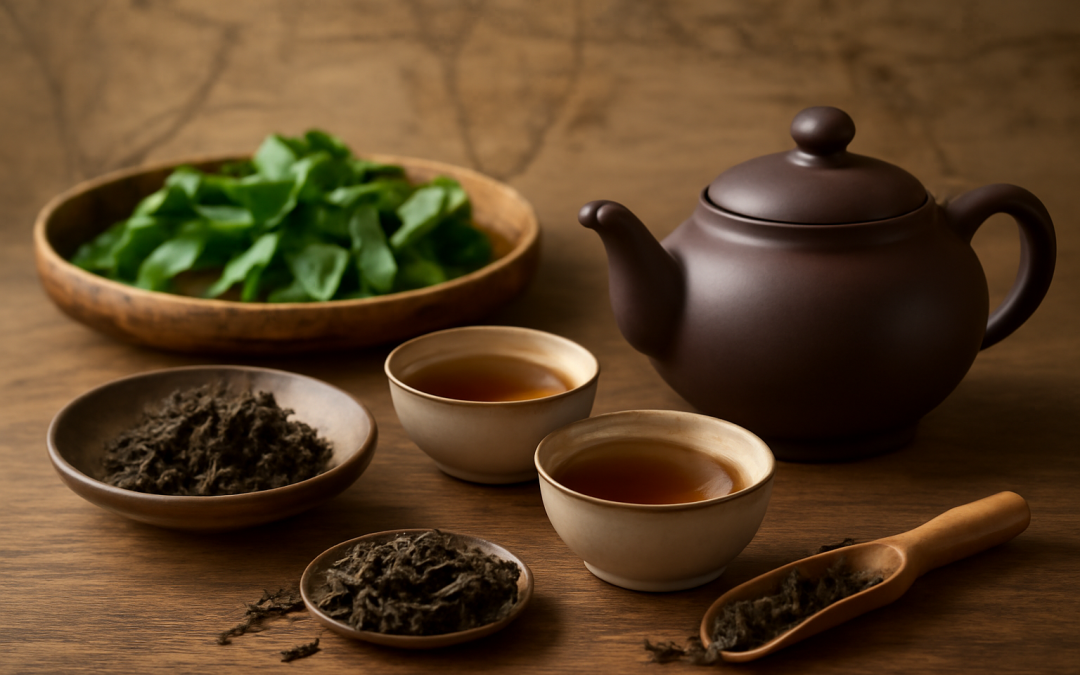
Tea, one of the world’s most beloved beverages, boasts a history steeped in tradition and cultural significance that traces back thousands of years. Originating in ancient China, this remarkable drink journeyed across continents, evolving from a medicinal tonic to a societal ritual and eventually becoming a global commodity. Its story encapsulates more than just a beverage; it reflects the intertwined experiences of trade, cultural exchange, and human curiosity. Understanding the tea history from China to the world reveals a fascinating narrative of innovation, diplomacy, and enduring cultural impact.
The origins of tea lie deep in ancient China, where legend credits Emperor Shen Nong around 2737 BCE with discovering tea quite by accident. According to traditional accounts, a few tea leaves fell into his boiling water, and upon tasting the infusion, he found it to have a refreshing and revitalizing quality. While the story is more myth than historical fact, it highlights the Chinese recognition of tea’s unique effects and its early integration into daily life. By the Han dynasty (206 BCE–220 CE), tea was already gaining popularity as a beverage and was noted in medical treatises for its restorative properties.
Tea’s rise in Chinese society during the Tang dynasty (618–907 CE) marks a critical epoch in its history. This period saw tea transcend its medicinal roots to become a central feature of Chinese culture and leisure. The esteemed poet Lu Yu authored “The Classic of Tea,” the first comprehensive treatise on tea cultivation, preparation, and tasting. This work not only detailed methods for growing and preparing tea leaves but also framed tea as a subject worthy of scholarly attention and aesthetic appreciation. The Tang dynasty’s promotion of tea ceremonies helped to establish tea as a symbol of refinement and hospitality.
Following the Tang era, the Song dynasty (960–1279 CE) witnessed further developments in tea culture. New methods of preparation emerged, including powdered tea whisked with hot water to create a frothy drink, an early glimpse of methods that would later influence tea practices in Japan. Tea gatherings became highly ritualized social events where poets, artists, and scholars convened to celebrate beauty and cultivate friendships. This artistic connection helped solidify tea’s position not only as a drink but as a cultural cornerstone.
It was during the Yuan dynasty (1271–1368 CE) and later the Ming dynasty (1368–1644 CE) that tea culture expanded beyond China’s borders. Mongol and then Ming rulers, while maintaining Chinese traditions, also encouraged trade and contact with neighboring regions. The Ming dynasty, in particular, standardized loose leaf tea preparation, moving away from the powdered tea favored in previous eras. This shift made tea easier to produce, transport, and enjoy, thus facilitating its spread to new markets.
The Silk Road played a pivotal role in introducing tea to Central Asia, the Middle East, and eventually Europe. As merchants traveled caravans laden with silk, spices, and porcelain, tea made its way into foreign lands where it was initially an exotic curiosity. The intricate trade networks that connected China to these regions became conduits not just for goods but for cultural knowledge, allowing tea to transcend its geographical origins.
Tea’s entry into Japan is one of the most significant milestones in its international journey. Brought by Buddhist monks returning from China during the Tang and Song dynasties, tea was initially used to aid meditation and spiritual practice. Over time, Japanese culture developed its own elaborate tea ceremony, known as chanoyu, which integrates Zen principles of tranquility, respect, and simplicity. This ceremony has had a profound influence on Japanese aesthetics and social rituals, underscoring tea’s capacity to adapt and adopt local customs.
European engagement with tea began in earnest during the Age of Exploration. Portuguese and Dutch traders first encountered tea in the early 16th century in China and Japan but were somewhat slow to adopt it themselves due to unfamiliarity and limited supplies. However, by the 17th century, the British East India Company recognized the potential of tea as a highly marketable commodity. Tea rapidly gained popularity among the British aristocracy and middle classes, symbolizing sophistication and social refinement.
The British thirst for tea catalyzed far-reaching economic and political consequences. To satisfy growing demand, the British established extensive trade links with China, importing large quantities of tea, often paid for with silver spurred on by the profits of the opium trade. This dynamic culminated in the Opium Wars of the mid-19th century, conflicts triggered by resistance to British narcotics trade but also underscored by tea’s pivotal role in global commerce. The treaties that followed opened China’s ports to foreign trade and marked significant shifts in the balance of power in East Asia.
In response to rising tea demand, the British began cultivating tea on plantations in their colonies, most notably India and Ceylon (modern-day Sri Lanka). These colonial plantations aimed to reduce dependence on Chinese tea and secure the supply chain. The Indian Assam and Darjeeling teas, along with Ceylon’s distinctive black teas, quickly became staples of global markets. The expansion of tea agriculture in these colonies also profoundly affected local societies, economies, and environments.
Meanwhile, in America, tea’s history took a revolutionary turn. Originally a popular beverage among the colonists, tea became intertwined with the tensions between the American colonies and British authorities. The Boston Tea Party of 1773, a protest against the British tea tax, marked a defining moment in the struggle for American independence. This event illustrates tea’s role not only as a commodity but as a powerful symbol in political discourse and identity.
As tea entered the modern era, new technologies and innovations transformed its production, distribution, and consumption. The invention of the tea bag in the early 20th century revolutionized convenience, making tea accessible to even broader audiences worldwide. Advances in transportation and packaging further fueled the globalization of tea, allowing it to become a daily ritual for millions in diverse cultures.
Today, tea remains deeply ingrained in countless societies across the globe, celebrated in endless variations—from delicate green teas to robust black teas and fermented pu-erh varieties. Its enduring appeal lies not only in its flavor and health benefits but also in its rich cultural associations. In regions as diverse as China, India, Japan, Britain, and the Middle East, tea ceremonies, social practices, and culinary traditions continue to evolve, reflecting the beverage’s ability to connect the past with the present.
The journey of tea from China to the world is a testament to humanity’s shared history of exchange, adaptation, and appreciation for the simple pleasures of life. It illustrates how a modest leaf, nurtured by generations, can create a legacy spanning continents and centuries. Tea is more than a drink; it is a bridge linking civilizations and a mirror reflecting the ever-changing currents of culture and commerce. Its history invites us to explore the profound ways in which everyday experiences carry the imprints of collective memory and global interaction.