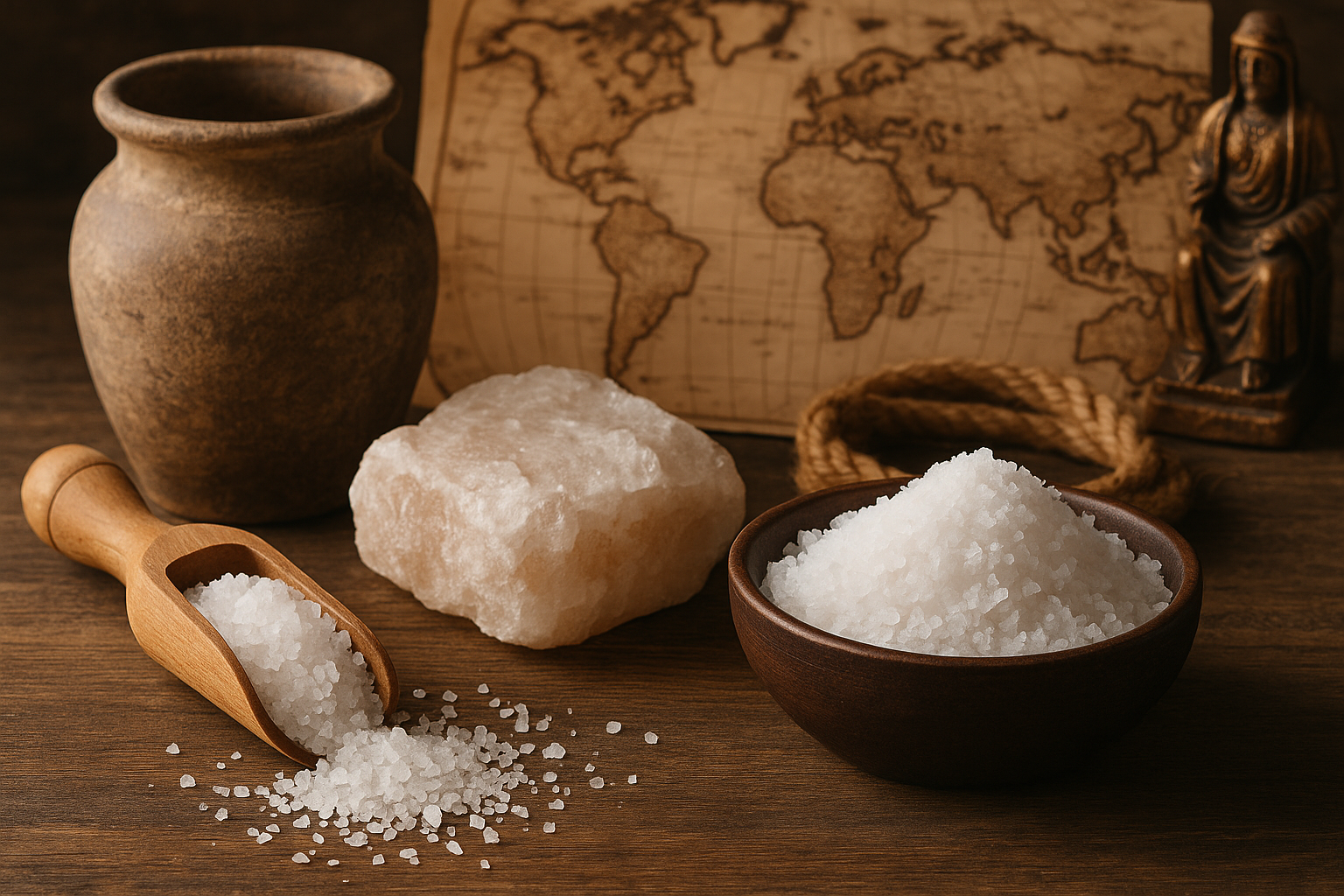
From the earliest days of human existence, salt has played an indispensable role in shaping societies, economies, and even the course of history itself. This simple mineral, often overlooked as a mere seasoning or preservative in modern times, was once a prized commodity that could determine the wealth and power of entire civilizations. Its significance can be traced back thousands of years, where it was not only essential for survival but also deeply intertwined with cultural rituals, political structures, and global trade.
The value of salt arose initially from its critical role in preserving food. Before the advent of refrigeration, salt was one of the few reliable means to prevent spoilage, particularly of meat and fish. Early humans quickly discovered that by curing food with salt, they could extend its shelf life, facilitating long-term storage and enabling travel over greater distances without the risk of starvation. This practical necessity elevated salt from a mundane mineral to a resource of survival, influencing settlement patterns and encouraging the development of specialized extraction techniques.
Historical evidence suggests that salt production dates back to prehistoric times. Archaeological finds across different continents reveal that Neolithic communities harvested salt deposits from evaporated sea water or mined rock salt. Ancient sites are dotted with remnants of salt extraction facilities, pointing to how early societies mastered the art of creating saltflats or extracting the mineral from salt springs. Even in these early days, salt trading networks began to emerge, connecting regions rich in salt resources with those lacking them, heralding the beginning of economic interconnectedness driven by this essential mineral.
In many ancient civilizations, salt became much more than a food preservative. It was deeply embedded in social and religious customs and often considered sacred or symbolic of purity. For example, in ancient Egypt, salt was used in the mummification process, reflecting its role in preserving life beyond death. Similarly, salt offerings were common in various religious rites, symbolizing incorruptibility and divine favor. Its symbolic significance meant that salt held an important cultural place, reinforcing its status beyond mere utility.
The economic influence of salt in human civilization cannot be overstated. Some societies effectively controlled salt production and trade routes, thereby wielding immense power. The famous city of Timbuktu prospered partly due to its strategic position in the trans-Saharan salt trade. Caravans laden with salt would traverse formidable deserts, exchanging the mineral for gold and other goods, fueling the wealth and grandeur of empires such as Mali. In Europe, salt was often so valuable that it was reserved as royal prerogative, with taxing and monopolizing salt becoming common sources of revenue.
Salt also holds a notable place in the history of political conflict and social change. Its importance to daily life meant that attempts to control or restrict access often sparked resistance or rebellion. The phrase “worth one’s salt” originates from the Roman practice of paying soldiers with salt allowances, underscoring how indispensable the mineral was. Centuries later, salt taxes imposed by rulers, such as the infamous salt tax in pre-revolutionary France, contributed to social unrest that helped ignite the French Revolution. Similarly, salt was a focal point in India’s struggle for independence, with Mahatma Gandhi’s Salt March in 1930 symbolizing nonviolent resistance against British colonial rule.
The technological advancements related to salt extraction and processing reveal the ingenuity of human societies. From simple evaporation pans in ancient saltworks to more sophisticated mining techniques developed over millennia, the methods evolved alongside cultural and economic demands. Salt was produced from natural deposits, seawater evaporation, and mining sources, depending on geographic availability. Innovations in these methods ensured stable and increased supply, which, in turn, supported growing populations and expanding empires.
Beyond its preservation and economic value, salt has played a crucial role in human health and nutrition throughout history. Recognized as essential for bodily functions, salt helps regulate fluid balance and transmission of nerve impulses. In some regions, where diets were deficient in iodine, iodized salt became a key public health revolution in the 20th century, drastically reducing the incidence of goiter and other iodine deficiency disorders. This evolution from a dietary necessity to a tool of preventive medicine highlights the profound ways in which salt has contributed to human well-being.
The cultural legacy of salt extends into language and folklore worldwide. Its presence in idiomatic expressions, proverbs, and traditional customs reflects its lasting imprint on human thought and society. Ancient tales often depict salt as a gift from the gods or a test of character, underscoring its revered status. In many cultures, salt was a symbol of hospitality—offering salt to guests signified friendship and trust. These traditions, passed down through generations, demonstrate how deeply salt has permeated human consciousness beyond its physical uses.
Salt’s role in the expansion of civilizations is also evident in its connection to urban development and infrastructure. Towns and cities frequently arose near salt sources or along salt trade routes, becoming hubs of commerce and culture. Workers in salt production often lived in these settlements, forming distinct communities with economic specialization. Over time, governments imposed regulations and safeguards to manage salt resources, recognizing their strategic importance. This blend of economic, social, and administrative practices around salt helped shape the trajectory of urbanization and governance.
Global exploration and colonialism further amplified the importance of salt in world history. European powers, driven by the need to control valuable resources, sought to dominate salt-rich regions during the Age of Discovery. Strategic points along coastlines and inland salt deposits became targets for colonization and conflict. The establishment of salt works in the Americas, Africa, and Asia under colonial rule altered local economies and often disrupted traditional ways of life. Yet, despite these upheavals, salt remained a foundational element in local cuisines, cultures, and economic systems across continents.
In the modern era, the advent of industrialization transformed salt production, making it more accessible and affordable. Large-scale mining and chemical processes enabled mass production to meet the demands of growing populations and emerging industries. Salt is no longer a scarce commodity only available to the elite but a ubiquitous part of daily life worldwide. However, despite technological advances, the historical significance of salt continues to influence modern culture and global trade networks.
The environmental aspects of salt production have also gained attention in recent decades. Harvesting salt through solar evaporation in coastal regions depends heavily on climate conditions, making some saltworks vulnerable to changes in weather patterns and rising sea levels. Furthermore, salt mining and processing have impacts on local ecosystems, prompting efforts toward sustainable extraction practices. Understanding these challenges links modern salt production back to its historical roots—an evolving relationship between humans, natural resources, and the environment.
Looking back, it is clear that this mineral has been a powerful agent in the development of human societies. Its multifaceted role—as a preserver of food, an economic asset, a cultural emblem, and a tool of political influence—demonstrates its unique place in human history. Even today, salt’s legacy persists, reminding us that some of the simplest substances can have the most profound effects on civilization. The journey of salt from ancient times to the present encapsulates a story of human ingenuity, survival, and interconnectedness that continues to resonate across the globe.