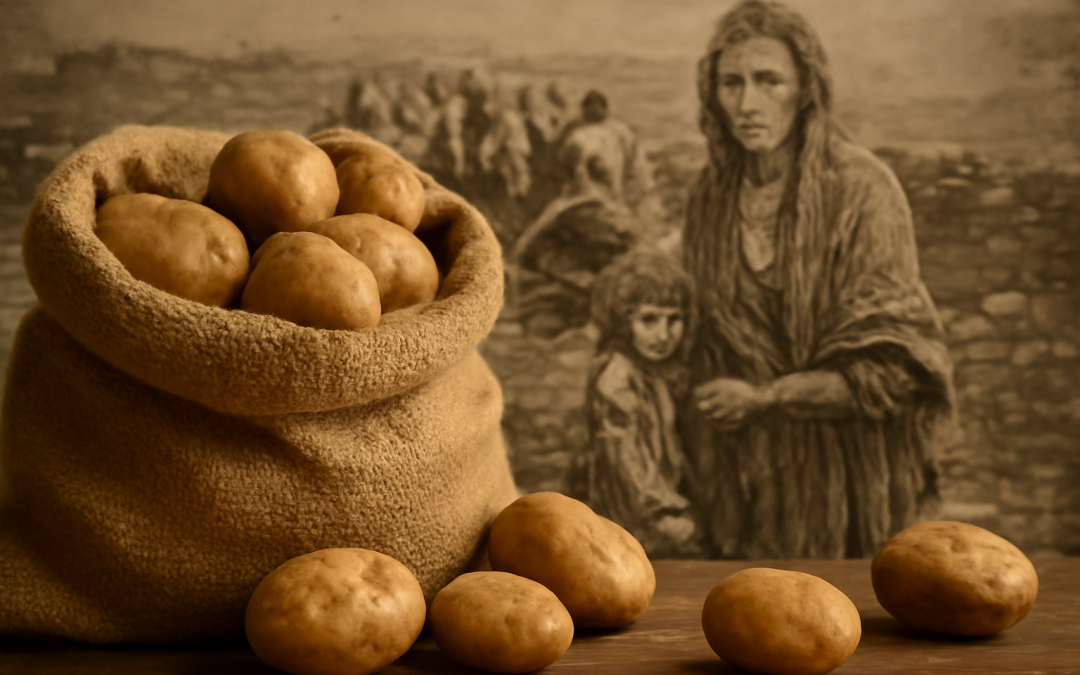
The story of the potato is deeply intertwined with human history, especially in regard to its role in shaping economies, societies, and even geopolitics. Originating in the Andean region of South America thousands of years ago, the potato transformed from a humble tuber into a staple food that would dramatically influence the lives of millions. Its journey from the remote mountains of Peru and Bolivia to becoming a crucial agricultural product in Europe and beyond showcases not only the adaptability of this crop but also its capacity to alleviate hunger and, paradoxically, to contribute to one of the most devastating famines in history.
The domestication of the potato is believed to have occurred around 8,000 to 5,000 BCE by indigenous peoples in the Andes Mountains. It quickly became a vital food source due to its nutritional density, ease of cultivation, and ability to thrive in harsh climates where other crops struggled. This early cultivation led to a variety of potato species adapted to different altitudes and environmental conditions. The ingenuity of Andean farmers in developing sophisticated agricultural techniques, such as terracing and irrigation, allowed them to sustainably grow potatoes and sustain large populations.
When Spanish explorers arrived in South America in the late 15th and early 16th centuries, they encountered the potato and recognized its value as a food source. It was transported back to Europe where it was initially met with skepticism and even suspicion. Early European societies were unfamiliar with the tuber’s appearance and cultivation methods, and some considered it to be unfit for human consumption. Despite these initial reservations, the potato gradually gained acceptance, particularly after famines and food shortages highlighted the limitations of traditional cereal grains like wheat and rye.
By the 18th century, the potato had become a crucial crop in many European countries, especially Ireland. Its ability to grow in poor soils and produce high yields made it an attractive option for subsistence farmers. For the Irish rural poor, reliant on small plots of land, the potato provided a reliable and calorie-rich sustenance that could be grown season after season. In fact, historians argue that without the introduction of the potato to Ireland, the population growth seen in the 18th and early 19th centuries would have been impossible.
However, reliance on a single crop also brought vulnerabilities. The potato is genetically limited, and the dominance of a few potato varieties left crops susceptible to disease. This proved catastrophic in the mid-19th century when Phytophthora infestans, commonly known as the potato blight, arrived in Europe. The fungus-like organism spread rapidly, decimating potato crops and leading to massive food shortages. While the blight affected several countries, its impact was most devastating in Ireland, where over half the population depended almost entirely on potatoes for sustenance.
The resulting crisis, often referred to as the Great Famine or the Irish Potato Famine, lasted from 1845 to 1852. The consequences were devastating: approximately one million people died from starvation and related diseases, and another million were forced to emigrate in search of better conditions. This mass migration profoundly altered the demographic, social, and political landscape of Ireland and resonated throughout the world, particularly in America, where many Irish immigrants established significant communities.
The famine was not merely a natural disaster but was exacerbated by a constellation of social, political, and economic factors. Ireland’s status as a British colony meant that much of the land was controlled by absentee landlords whose interests often clashed with those of the tenant farmers. Roughly 75% of the Irish population were tenant farmers, living in poverty and vulnerable to crop failures. British government policies during the famine, including adherence to laissez-faire economic principles and inadequate relief efforts, have been widely criticized for their role in deepening the tragedy.
Land tenure and export practices played a critical role in shaping the severity of the famine. Despite widespread hunger, large quantities of food were exported from Ireland to Britain during the famine years. This paradox underscored the systemic inequalities and economic priorities that failed to protect the rural poor. The famine intensified Irish nationalist sentiments, feeding into broader movements for land reform and political independence from Britain.
The Great Famine also left a lasting cultural impact. It has been memorialized in literature, art, and collective memory as a watershed moment in Irish history. It symbolizes not only suffering and loss but also resilience and the human consequences of social injustice. The diaspora that ensued contributed to the global spread of Irish culture and identity, creating deep connections between Ireland and its emigrant communities around the world.
On an agricultural and scientific level, the potato blight catalyzed changes in crop management and plant pathology. The event highlighted the risks associated with monoculture—the practice of growing a single crop species over a wide area. In the decades following the famine, efforts were undertaken to develop blight-resistant potato varieties and diversify agricultural practices. This period marked an important advancement in understanding the importance of biodiversity and agricultural sustainability.
Globally, the story of the potato and the Great Famine offers important lessons about food security and the relationship between agriculture, society, and governance. It illustrates how a single crop can sustain populations but also how dependence on it without adequate safeguards can lead to disaster. Today, the potato remains one of the world’s most important staple foods, feeding billions across varied climates and cultures. Modern breeding programs continue to build on the knowledge gained from historical crises to enhance crop resilience and productivity.
The legacy of the Great Famine also informs contemporary debates on food justice and rural development. It reminds policymakers and citizens alike that addressing hunger involves more than food production—it requires attention to equity, land rights, social support systems, and responsive governance. The tragic history of this period cautions against neglecting the human dimension of agricultural policy and highlights the ethical responsibility to protect vulnerable communities from avoidable suffering.
In weaving together the threads of botany, history, politics, and human experience, the potato’s journey from Andean fields to European tables and the dark shadow of the famine encapsulates a profound chapter of human endeavor and adversity. The tuber’s resilience and adaptability are mirrored by the strength and endurance shown by those who depended on it, survived its failure, and carried forward its cultural significance. Understanding this history enriches appreciation for a common food item and inspires reflection on the complex interplay between environment, society, and survival.
Ultimately, the history surrounding the potato and the Great Famine is a powerful reminder of the profound impact that agricultural crops can have on human civilization. It underscores the importance of science, governance, and social responsibility in safeguarding food supplies and supporting communities. Despite the immense tragedy faced during the mid-19th century, the potato’s enduring presence on dining tables worldwide stands as a testament to human innovation, resilience, and the ongoing quest to nourish the growing needs of populations around the globe.