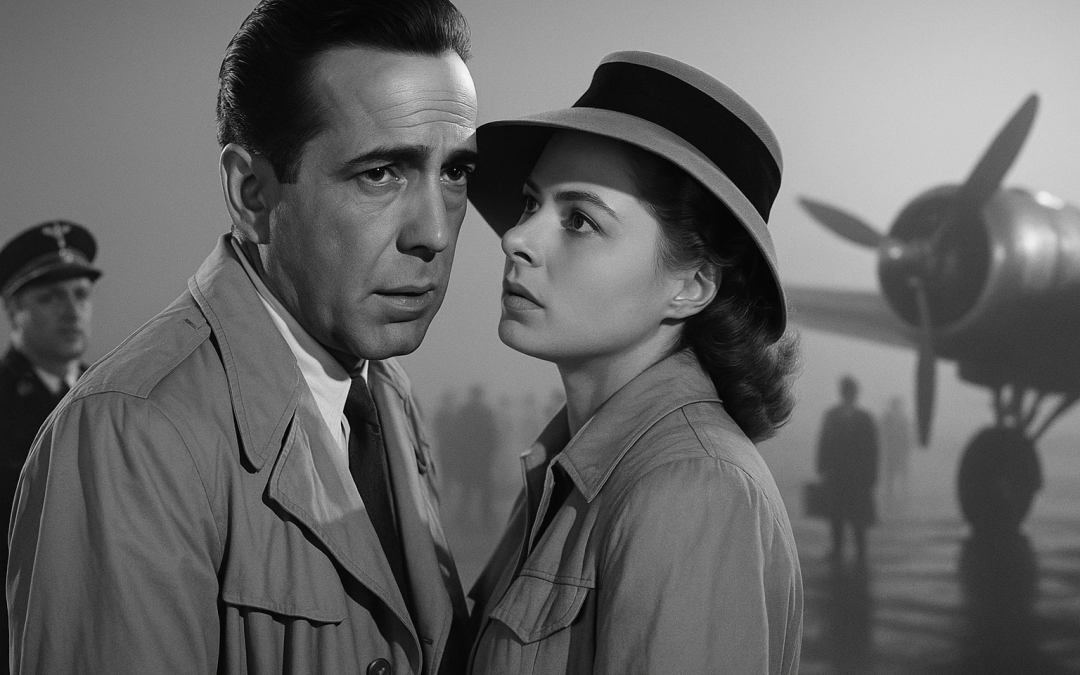
Few films have managed to capture the intricate dance between personal sacrifice and political upheaval as poignantly as the story set in the bustling Moroccan city of Casablanca during World War II. This classic cinematic piece, renowned for its timeless romance and the enduring spirit of resistance, continues to resonate with audiences decades after its initial release. At its heart, the narrative explores the intersection of love and loyalty under extraordinary circumstances, skillfully weaving a tale that transcends its wartime backdrop to touch on universal themes of courage, loss, and hope.
The characters are the lifeblood of this story, each representing different facets of a world fraught with conflict and moral ambiguity. Humphrey Bogart’s portrayal of Rick Blaine, the cynical nightclub owner who claims neutrality but harbors depths of passion and principle, offers a profound study of a man grappling with personal demons and larger ethical dilemmas. His character arc is compelling, shifting from detached indifference to active participation in the fight against oppression. Meanwhile, Ingrid Bergman’s role as Ilsa Lund embodies vulnerability and strength, caught between love and duty, memory and reality. Their interactions crackle with a chemistry that has become legendary, lending emotional weight to the film’s political tension.
Beyond the central romance lies a rich tableau of secondary characters who bring to life the complexity of a city caught between freedom and tyranny. Captain Louis Renault, with his opportunistic charm and gradual moral awakening, adds layers of nuance to the narrative. The presence of Victor Laszlo, the heroic resistance leader, provides a stark counterpoint to Rick’s initial detachment, personifying the relentless spirit of defiance against fascist forces. These characters populate a microcosm of a world at war, where alliances are fragile, and loyalty is constantly tested.
One of the most striking elements of the story is how it captures the atmosphere of uncertainty and tension prevalent in 1940s Casablanca. The city becomes a character in itself, a melting pot of refugees, spies, and exiles, all navigating the precarious political landscape. The sense of confinement and surveillance permeates the scenes, heightening the stakes for each decision made by the protagonists. Cinematography and set design work hand-in-hand to evoke this mood, employing shadows and tight framing to mirror the claustrophobic reality of life under authoritarian watch.
The film’s dialogue remains a benchmark for sharp, memorable writing. Lines like “Here’s looking at you, kid,” and “We’ll always have Paris” have entered the cultural lexicon, symbolizing the bittersweet nature of remembered love and lost opportunities. The script balances moments of levity with profound emotional and ideological conflicts, allowing the characters’ humanity to shine through even in their darkest moments. The interplay of wit, romance, and gravity creates a rhythm that keeps the audience engaged and invested.
Another noteworthy aspect is the depiction of resistance as a collective effort rather than an isolated act. While the romantic subplot centers on personal sacrifice, the broader narrative underscores the imperative of standing against oppression for the greater good. This duality enriches the story, offering commentary on the importance of individual choices within the broader currents of history. It challenges viewers to consider the costs of inaction and the moral complexities involved when personal happiness conflicts with political responsibility.
The role of music in enhancing the emotional resonance cannot be understated. The haunting melody of “As Time Goes By” punctuates the narrative, serving as a recurring motif that binds memories and present realities. It symbolizes the persistence of love amidst chaos and strife, evoking a sense of longing that permeates the film’s atmosphere. This careful integration of music reinforces the themes without overwhelming the story, adding a layer of lyrical depth to the viewing experience.
Cinematically, the film employs techniques that have influenced generations of filmmakers. The use of chiaroscuro lighting highlights the film noir aesthetics, emphasizing moral ambiguity and the interplay of light and shadow in both the physical and ethical sense. Scenes are often framed to highlight the isolation of the characters or the intricate power dynamics at play, using visual storytelling to complement the narrative’s emotional and political complexity. These choices contribute to the film’s enduring visual legacy and its status as a masterpiece of classic cinema.
Examining the story through a modern lens reveals its timeless relevance. The themes of exile, displacement, and the struggle against authoritarianism are as pertinent today as they were during its original era. The tension between personal desires and collective responsibility remains a potent narrative driver, resonating with contemporary audiences facing their own global challenges. Additionally, the film’s nuanced portrayal of resistance avoids simplistic heroism, instead acknowledging the painful trade-offs and sacrifices involved.
Moreover, the depiction of Casablanca itself offers insightful reflections on colonialism and international politics during World War II. The city, international zone controlled by the French Vichy government, operates under a shadow of looming conflict, making it a fascinating setting where individuals from various backgrounds intersect. This multicultural milieu and its inherent tensions underscore the geopolitical complexities that define the period, enriching the story beyond its romantic core.
The film also presents a subtle critique of neutrality and moral ambiguity through Rick’s transformation. His initial apathy, rooted in personal heartbreak and disillusionment, evolves into a conscious choice to aid the resistance. This character development challenges the notion of detachment in the face of injustice, advocating for the necessity of moral courage. It serves as a reminder that silence and inaction can have profound consequences and that engagement with the world’s struggles is often a painful but essential journey.
The climax, in which Rick makes a heartbreaking decision to let Ilsa go with her husband for the sake of a greater cause, encapsulates the story’s complex interplay of love and duty. This moment is a powerful example of how art can depict sacrifice not just as a grand heroic gesture but as a deeply personal loss. It refuses easy resolution, instead embracing the ambiguity and sorrow that often accompany meaningful choices in times of crisis.
This intricate blend of romance and political resistance has cemented the film’s place in cinematic history, influencing countless works that explore similar motifs. Its ability to marry intimate human drama with sweeping historical forces sets it apart as a unique and enduring cultural artifact. It invites reflection on how personal relationships are inevitably shaped by the political environments in which they unfold, and how individuals navigate these turbulent waters with varying degrees of courage and compromise.
In sum, the film is much more than a love story set against wartime; it is a meditation on the complexities of human emotion entwined with the demands of conscience and the harsh realities of history. Its characters remain compelling because they embody the contradictions and struggles faced by many in times of upheaval. The narrative’s balance of hope and melancholy, personal and political, ensures it continues to captivate and inspire successive generations who grapple with similar themes in their own lives.
The enduring legacy of this cinematic classic lies in its profound exploration of what it means to love and to resist. It challenges viewers not only to root for the characters’ happiness but also to recognize the sacrifices required to uphold justice and freedom. This dual focus elevates the film from mere entertainment to a poignant reflection on the human condition, reminding us that sometimes the greatest acts of love involve letting go, and that resistance often comes with heartbreaking costs.
Ultimately, the power of the story is found in its universal appeal and emotional truth. It speaks to the resilience of the human spirit when confronted with adversity and the indomitable desire to find meaning through connection, even in the darkest of times. Through its unforgettable characters, evocative setting, and richly layered narrative, the film remains a cinematic triumph that continues to offer insights into the enduring tension between the calls of the heart and the demands of history.