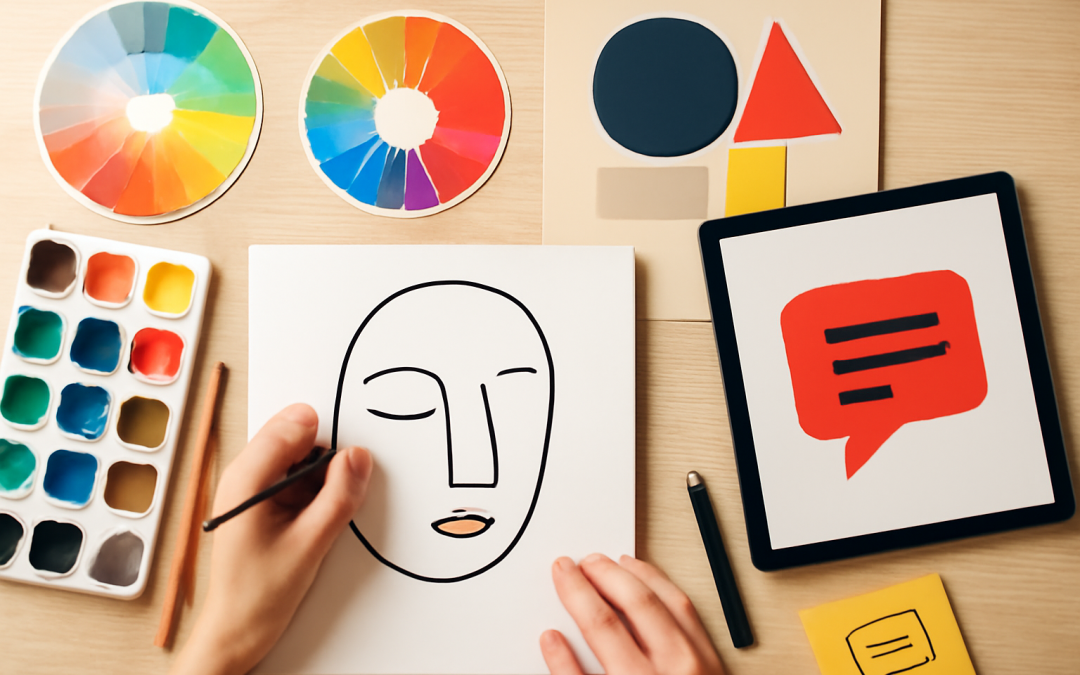
The intricate interplay between art, design, and communication is a fascinating domain that permeates not only cultural and creative industries but also society at large. Each of these disciplines, while distinct in practice and purpose, shares a fundamental connection: the expression and transmission of ideas, emotions, and information. Art, with its roots in human creativity and emotional depth, communicates through symbolism and aesthetics, engaging viewers on a personal and often profound level. Design, conversely, merges function with form to create solutions that facilitate understanding, usability, and interaction. Communication acts as the bridge that links these visual and conceptual languages to their audiences, enabling messages to resonate effectively across different contexts and cultures.
Art’s primary function historically has been to provoke thought, evoke emotion, and capture the human experience. Whether through painting, sculpture, photography, or contemporary digital media, art communicates by transcending words, often addressing the intangible aspects of life such as beauty, tragedy, joy, and conflict. The subjective nature of art allows for a multiplicity of interpretations, fostering dialogue between the creator and the viewer. This dialogue can be deeply personal, revealing individual perspectives, or universally relatable, tapping into shared human conditions. The communicative power of art lies in its ability to operate on multiple levels — visually, symbolically, and emotionally — effectively engaging diverse audiences.
Design, on the other hand, highlights the importance of clarity and purpose in communication. Graphic design, industrial design, user interface design, and architectural design systematically organize visual and spatial elements to enhance comprehension and facilitate interaction. Unlike art, where ambiguity can be a feature, design aims to minimize confusion and maximize usability. This goal demands a precise balance between aesthetics and functionality, molding how messages are conveyed across various mediums. In design, the communicative intent is embedded in the choice of typography, color schemes, composition, and ergonomic considerations, all of which work cohesively to create meaningful experiences for users or viewers.
The synergy between art and design is particularly evident when these fields intersect to solve communication challenges. In advertising and branding, for instance, artistic creativity is harnessed to design compelling visuals that grab attention and deliver clear messages. The emotional resonance derived from artistry helps brands build identity and loyalty, while design principles ensure these messages are accessible, consistent, and memorable. This hybrid approach leverages the strengths of both disciplines to produce communication that is not only visually striking but also strategically effective.
Moreover, the evolution of digital media has intensified the relationship between art, design, and communication. The proliferation of digital platforms demands rapid and impactful communication that embraces multimedia and interactivity. Artists and designers now operate in a space requiring fluency in technological tools, behavioral insights, and content strategy. Digital art installations, interactive websites, and social media campaigns exemplify how these fields converge to craft immersive experiences that transcend traditional boundaries. Such innovations allow messages to be more dynamic and tailored to different audiences, transforming passive viewers into active participants.
Communication is not merely the end result but the process that molds both art and design. Understanding the target audience is foundational; it shapes the content, style, and delivery in ways that ensure meaning is not lost or misunderstood. Effective communication requires empathy, cultural awareness, and an appreciation for context. For artists and designers, this means adapting their expressions and solutions to resonate across demographic and cultural differences. The use of symbolism in art, for example, may vary significantly between cultures, necessitating thoughtful consideration to retain clarity and respect. Similarly, design must accommodate diverse user needs, including accessibility for people with disabilities, to communicate inclusively.
Historical examples underscore how shifts in societal communication needs have driven changes in art and design. The emergence of print media transformed the dissemination of art and design, making it more accessible and widespread. Movements such as Bauhaus emphasized functionalism and the integration of art and technology to communicate the modern world’s demands. In parallel, public art and design became tools for social commentary and activism, demonstrating how communication extends beyond commerce and aesthetics to influence thought and behavior. These developments illustrate that the relationship between these fields is dynamic, evolving alongside technological advancements and cultural paradigms.
The psychological impact of visual communication also illustrates its critical role. Human brains are wired to process images faster than text, making art and design powerful mediums for capturing attention and conveying complex information succinctly. This cognitive advantage is exploited in educational materials, public safety graphics, and healthcare communication to improve understanding and retention. The deliberate use of color psychology and visual hierarchy in design directs the viewer’s focus, facilitating efficient message processing. Artists, whether consciously or intuitively, manipulate these elements to impact emotions and attitudes, underlining the shared objective of communicating meaning through visual stimuli.
In professional contexts, the collaboration between artists, designers, and communicators often leads to groundbreaking projects. Creative teams integrate varied expertise to develop campaigns, products, or environments that tell cohesive stories and establish emotional connections. This process involves iterative feedback loops where communication strategies inform artistic and design choices, which are then refined to optimize impact. The multidisciplinary nature of such collaborations reflects the interconnectedness of art, design, and communication in producing work that is greater than the sum of its parts.
Ethical considerations also arise within this triad, especially regarding how messages are constructed and perceived. With the immense influence of visual communication on public opinion, artists and designers carry responsibility in representing truth and promoting inclusivity. Misrepresentation, cultural appropriation, or manipulation can distort communication and cause harm. Therefore, an awareness of ethical standards and a commitment to integrity are essential for maintaining trust and fostering genuine dialogue through artistic and design expressions.
Furthermore, the educational domain benefits significantly from an integrated approach to art, design, and communication. Teaching students to think critically about how to convey ideas visually equips them with skills necessary in numerous career paths. It encourages creativity while emphasizing purposeful communication, fostering innovation that can address complex real-world challenges. The development of visual literacy — the ability to interpret and create meaningful images — empowers individuals to participate more actively in cultural and civic life.
The globalized world also accentuates the importance of these disciplines working in harmony. Cross-cultural communication relies heavily on visual cues that transcend language barriers. Art and design, when thoughtfully employed, can bridge gaps and foster understanding among diverse populations. International organizations, for example, use clear and culturally sensitive design in their campaigns to mobilize support and disseminate information worldwide. This ability to communicate across borders highlights the universal language of visual expression and its power in uniting human experiences.
Technology continues to redefine the boundaries between art, design, and communication. Artificial intelligence, virtual reality, and augmented reality are expanding the possibilities for immersive storytelling and interactive communication. Artists and designers experiment with these tools to create environments where messages are not just seen or heard but experienced. These advancements invite new forms of engagement and invite questions about the future role of human creativity in the communication process.
Ultimately, the relationship between art, design, and communication is foundational to how humans share knowledge and connect emotionally. Each discipline contributes unique strengths — art brings emotional depth and symbolic richness, design offers clarity and utility, and communication provides context and purpose. Together, they form a continuous cycle where ideas are conceived, shaped, and received in meaningful ways. Understanding this relationship is crucial for anyone seeking to harness the full potential of visual media, whether in the arts, business, education, or social advocacy.
The enduring dialogue between these fields invites ongoing exploration and innovation. As society grows increasingly visual and interconnected, the ability to create and interpret visual communication becomes more vital. The fusion of art and design within the framework of communication enriches how messages are crafted and perceived, enhancing human interaction on multiple levels. This interconnectedness is a testament to the power of creativity as both a tool for personal expression and a mechanism for collective understanding. Recognizing and nurturing this bond offers endless opportunities for advancing culture, technology, and social cohesion in the years to come.