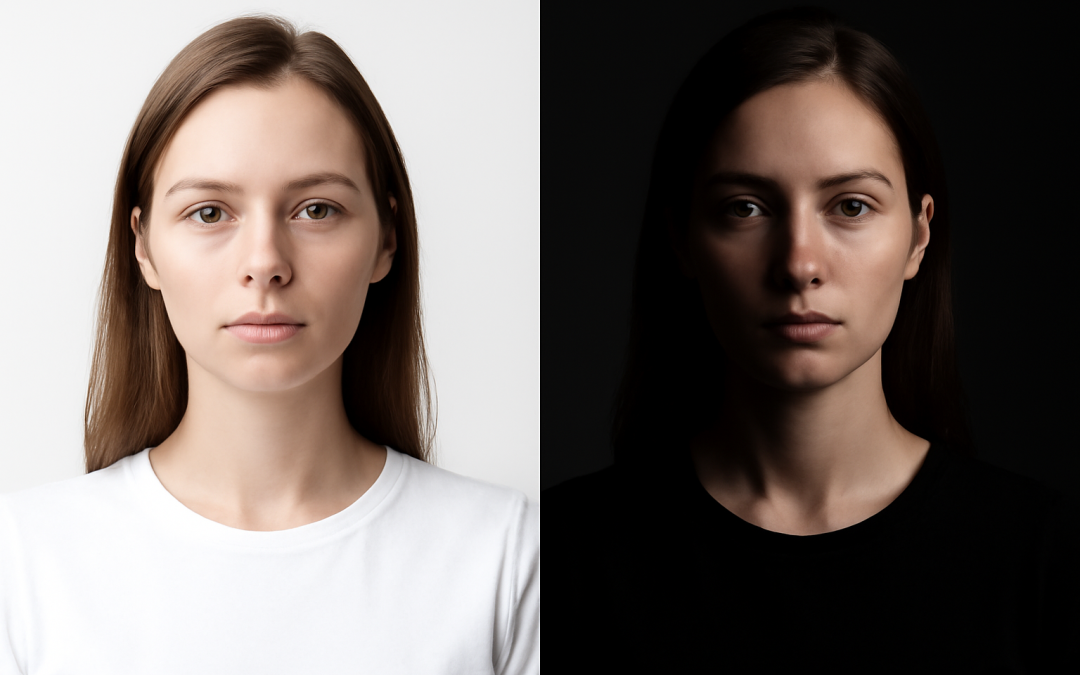
In the world of visual art and photography, the interplay between light and shadow plays a critical role in shaping the mood, tone, and storytelling of an image. Among the various techniques employed, high-key and low-key value schemes stand out as two fundamentally contrasting approaches that manipulate brightness and contrast to evoke different emotional responses and highlight distinct elements within a composition. Understanding these two methods not only enhances a creator’s ability to control the narrative of an image but also expands the aesthetic possibilities across different media.
High-key value schemes are defined by their bright, light-dominant tones. Typically featuring a predominance of whites and pale hues, these schemes convey an atmosphere of openness, airiness, and optimism. The lighting used in high-key compositions is soft and diffused, minimizing shadows and creating an evenly illuminated scene. This technique is frequently employed in portrait photography to give subjects a youthful, clean, and vibrant appearance. The lack of harsh shadows and the predominance of light tones produce a sense of purity and tranquility, often making high-key imagery popular in commercial photography, fashion, and advertising where a positive and uplifting feel is desired.
The essence of a high-key value scheme lies not just in brightness but in minimizing contrast. This quality reduces the image’s visual weight, making it feel light and effortless. For instance, in product photography, the high-key approach can be used to highlight clarity and detail without distractions, allowing the viewer’s attention to focus solely on the object rather than the surrounding environment. This technique can also communicate softness and delicacy, making it ideal for subjects such as babies, brides, or delicate objects where the intention is to evoke gentleness and innocence.
In contrast, low-key value schemes employ a predominantly dark tone range with deep shadows and minimal lighting. This approach creates an intense atmosphere, rich in mystery, drama, and psychological depth. The lighting setup in low-key photography typically involves a single or few focused light sources to illuminate specific parts of the subject while plunging the rest into shadow. By concentrating light sparingly and using strong contrasts between light and dark, low-key schemes emphasize texture, form, and volume, often revealing emotional complexity or tension within the scene.
Low-key images tend to evoke a theatrical or moody quality, making them a powerful tool in genres such as film noir, portraiture, and fine art photography. The dramatic interplay of shadow not only sculpts the subject but also invites the viewer to look beyond the obvious, suggesting hidden meanings or inner turmoil. This value scheme is particularly effective in creating a sense of intimacy or solitude, as the darkness encroaching upon the subject can symbolize isolation, danger, or secrecy, resonating deeply on an emotional level.
Both high-key and low-key schemes rely on controlling light, but they serve opposite narrative purposes. While high-key imagery feels open and accessible, low-key imagery restricts visual information, requiring the viewer to engage more actively with the composition. Because of this fundamental difference, each technique offers unique advantages depending on the story the artist wishes to tell or the mood they want to establish.
One essential distinction between the two lies in how they influence the perception of space and form. High-key images often appear flatter and more simplified due to reduced shadow definition. This flattening effect draws attention to the subject’s overall shape and color without embellishment from shadows. It creates a clean and minimalistic aesthetic which can make environments feel spacious and uncluttered. On the other hand, low-key techniques utilize shadows to add dimensionality and depth, sculpting the subject with pronounced highlights and darkness that explain its contours and texture more vividly.
The psychological implications of value schemes deserve attention. High-key visuals tend to communicate safety, optimism, and positivity. Brightness universally correlates with clarity and openness, tying high-key styles to emotions like joy, hope, and purity. This can be observed in the frequent use of high-key lighting in scenes depicting happiness, celebration, or innocence. Conversely, low-key imagery taps into a set of primal responses to darkness, often associated with fear, mystery, or seriousness. It hints at the unknown, the hidden, or the subconscious, providing a powerful vehicle for storytelling that delves into complex and sometimes unsettling themes.
When artists carefully select between these value schemes, they essentially choose a palette of emotional signifiers. A high-key scheme might be chosen early in a creative project to establish a hopeful beginning or a bright moment within a narrative, while a low-key scheme could mark tension, climax, or reflection. These choices influence how audiences interpret a scene, shaping their emotional journey through the artwork or photograph.
From a technical standpoint, executing high-key and low-key value schemes requires distinct considerations. High-key photography often demands meticulous control over exposure to avoid overexposing highlights and maintain detail in bright areas. Lighting setups usually involve multiple light sources or reflectors to ensure even illumination. The background in high-key images is typically white or very light to support the bright theme, and post-processing might be necessary to reduce contrast further and isolate shadows.
Low-key photography, in contrast, involves precise placement of lights to create well-defined shadows and controlled illumination. The exposure must be balanced to retain detail in the darkest zones without crushing blacks. This often means careful metering and selective lighting that isolates parts of the subject while plunging the rest into darkness. Black or dark backgrounds are preferred to amplify the scheme’s effect, making the subject emerge from the shadows.
Different mediums beyond photography also adopt these schemes with tailored adjustments. In painting, for example, the choice between high-key and low-key influences the palette selected by the artist. High-key paintings may use pastel tones and a predominance of light colors to create freshness and vibrancy, while low-key paintings often incorporate earth tones, deep blues, and blacks to infuse a sense of mystery and depth. Cinematographers use high-key lighting to create scenes full of life and clarity, whereas low-key lighting and value schemes are staples in thrillers and horror movies to build tension and suspense.
In design, understanding these value schemes has practical applications in branding and visual communication. High-key designs can signal approachability, modernity, and cleanliness, making them popular for healthcare, tech startups, and wellness brands. Low-key designs, on the other hand, often communicate luxury, sophistication, and exclusivity, finding favor in industries such as fashion, luxury goods, and fine dining. The strategic use of these schemes supports a brand’s identity beyond words, with immediate visual impressions influencing consumer perception.
Despite their differences, both high-key and low-key value schemes require mastery over tonal balance to be effective. Neither extreme—complete brightness without depth, nor utter darkness without visibility—can stand compellingly on its own. The transition between light and dark must be deliberate and nuanced to maintain visual interest and convey intended emotion. High-key schemes must avoid becoming washed out or bland, just as low-key schemes must ensure clarity within shadows to avoid losing important details.
The versatility of these value schemes also allows for creative experimentation. Photographers and artists often blend elements of high-key and low-key within a single composition to juxtapose contrasting ideas or themes. For example, a portrait may feature a bright, high-key background to symbolize purity but use low-key lighting on the subject’s face to reveal complexity or vulnerability. Such hybrid approaches demonstrate the fluidity of the value systems and their potential to deepen narrative layers.
In education, learning to distinguish and purposefully use high-key and low-key value schemes forms a foundational skill for artists and photographers. Students are encouraged to study the emotional impact of lighting and practice adjusting exposure, light placement, and background to cultivate an intuitive understanding of tonal storytelling. Through this, they develop the capacity to visually articulate mood and atmosphere without reliance on color or detail alone.
In conclusion, the exploration of high-key and low-key value schemes reveals much about the power of light and shadow in shaping visual language. Each scheme, with its unique attributes and emotional resonances, serves as a vital tool for artists, photographers, and designers aiming to create compelling, impactful images. Whether seeking to evoke joy and clarity or mystery and intensity, mastering these contrasting approaches allows creators to guide viewer perception and stir profound emotional responses through the seemingly simple act of balancing light and darkness. Through thoughtful application, these fundamental concepts continue to inspire and define visual storytelling across creative disciplines.