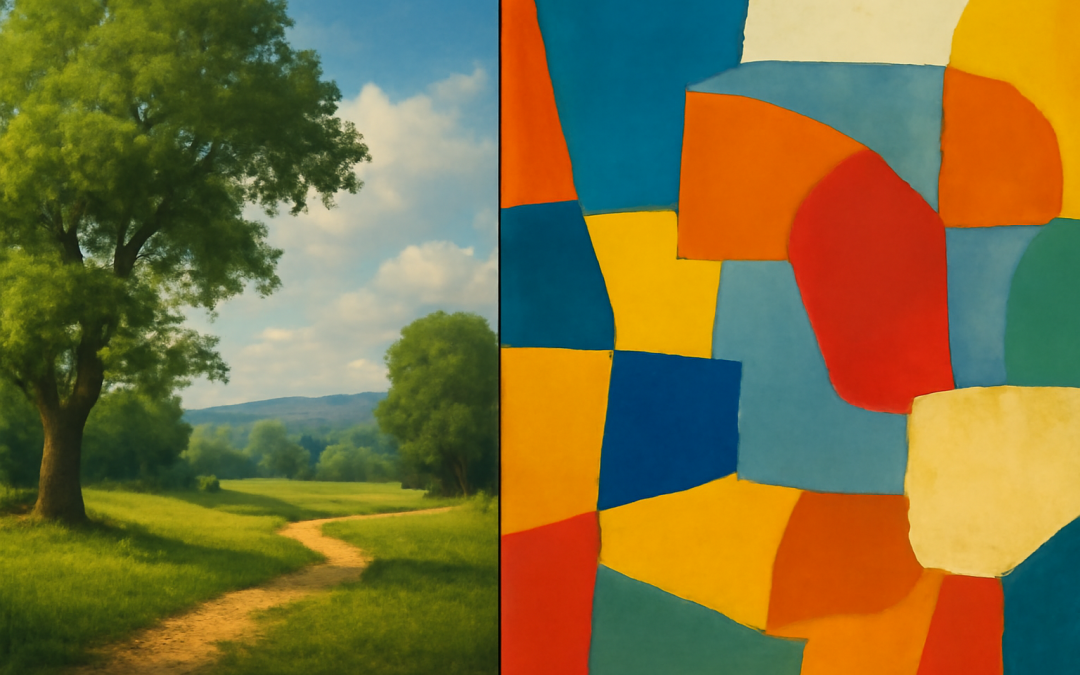
The evolution of artistic expression has long been marked by gradual yet profound changes that reflect both cultural shifts and individual innovation. The journey from detailed, representational artwork to increasingly abstract forms illustrates a complex interplay between artists’ desires to capture reality and their later ambitions to transcend it. This transformation did not occur abruptly but rather unfolded over centuries, with artists continually negotiating the boundaries between depicting the visible world and exploring the invisible forces that underlie it.
In earlier periods, particularly during the Renaissance, art was deeply rooted in realism. Painters and sculptors sought to represent the human form, landscapes, and everyday scenes with extraordinary precision and clarity. The mastery of anatomical accuracy, light, and perspective defined the era’s artistic achievements, reflecting a belief that art’s highest purpose was to imitate nature as closely as possible. These works were often created within tight social and religious frameworks, with patrons commissioning pieces that emphasized fidelity to observed reality for educational, devotional, or decorative purposes.
However, as intellectual and philosophical currents evolved, so too did the criteria that defined art’s value. The 19th century presaged a departure from strict realism, with movements like Impressionism challenging the notion that art must replicate every detail precisely. Instead, Impressionists focused on capturing fleeting moments, the play of light, and subjective experience, thus prioritizing personal perception over objective representation. This marked an early push towards abstraction, as artists began to emphasize mood and atmosphere rather than exact likeness.
The progression toward abstraction accelerated significantly in the early 20th century, influenced by rapid changes in technology, transportation, and communication, which reshaped society’s understanding of time, space, and reality. Movements such as Cubism, pioneered by Pablo Picasso and Georges Braque, fragmented forms and presented multiple perspectives simultaneously. This dismantling of traditional perspective posed a direct challenge to realism, offering viewers a new way to engage with art that evoked intellectual interpretation rather than mere visual enjoyment.
Meanwhile, abstract art movements like Suprematism and De Stijl sought to reduce art to its most fundamental elements—color, shape, and line—removing representational content altogether. Artists such as Kazimir Malevich and Piet Mondrian believed that by doing so, they could express universal truths and spiritual purity unattainable through realistic depiction. These explorations signaled a radical shift: art was no longer about copying nature but about interpreting deeper realities or creating entirely new visual languages.
The shift from realism to abstraction was neither a linear progression nor universally embraced. Many artists and critics debated the value of departing from recognizable subjects. Some saw abstraction as overly intellectualized and disconnected from everyday experience, while others viewed it as the pinnacle of artistic freedom and innovation. The tension between representation and abstraction continued to fuel creativity, spawning a vast array of styles and approaches that blurred boundaries and questioned previous conceptions of what art could be.
In addition to stylistic experimentation, technological advancements played a crucial role in supporting the move toward abstraction. The invention of photography, for instance, diminished the need for artists to serve as mere recorders of visual reality. Freed from this responsibility, painters and sculptors began to explore form, color, and composition as ends in themselves. Likewise, the rise of industrial materials provided new possibilities for sculptors working in abstract modes, as metal, glass, and plastic could be manipulated in ways traditional mediums could not.
Political and social upheavals also influenced this artistic shift. The chaos of the World Wars, the breakdown of traditional social orders, and the rise of new ideologies compelled artists to search for means of expression that transcended conventional narratives. Abstract art, with its lack of explicit content, could speak to universal human conditions and emotions without being tied to any particular ideology or event, allowing for a kind of universal communication that resonated broadly during uncertain times.
At the mid-20th century, Abstract Expressionism became a dominant force in the art world. Artists like Jackson Pollock and Mark Rothko emphasized spontaneous, gestural brushwork and large fields of color that conveyed emotion and subconscious states. This movement underscored the artist’s role as a creator of unique, personal experiences rather than a mere observer of the external world. The focus on process and the materiality of paint marked a further step away from realism towards the exploration of internal realities.
The subsequent decades continued to expand the possibilities of abstraction, encompassing Minimalism’s extreme reduction of form and Conceptual Art’s focus on ideas over visual content. Yet even within these movements, the echoes of representational art remained visible, as some artists sought to reconcile abstract aesthetics with recognizable elements, thereby enriching the dialogue between realism and abstraction.
In contemporary art, the boundaries between realism and abstraction have become increasingly porous. Many artists employ a hybrid approach, combining realistic imagery with abstract techniques to imbue their work with layered meanings. This synthesis allows for complex reflections on identity, memory, and perception, demonstrating that the relationship between these modes of expression is dynamic and multifaceted rather than oppositional.
The transition from realism to abstraction reflects a broader cultural narrative about how humans understand and interpret their world. While realism grounds us in the tangible and observable, abstraction invites us to engage with intuition, emotion, and speculation. Together, they form a continuum of artistic inquiry that continues to challenge and expand the limits of visual expression.
Ultimately, the movement away from strict representation towards abstraction marks a fundamental shift in how art functions and communicates. It signals a move from art as a mirror reflecting reality to art as a medium for exploring myriad dimensions of experience beyond the visible. This evolution enriches not only the visual landscape but also our capacity for empathy, imagination, and intellectual engagement with the complexities of human existence.
As artists continue to explore the tensions and intersections between the real and the abstract, their work remains a testament to the enduring power of creativity to transform perception. The journey from realism to abstraction is not merely a stylistic progression but a profound meditation on the nature of reality itself, revealing that the truths art seeks to convey are as varied and complex as the human experience it strives to express.