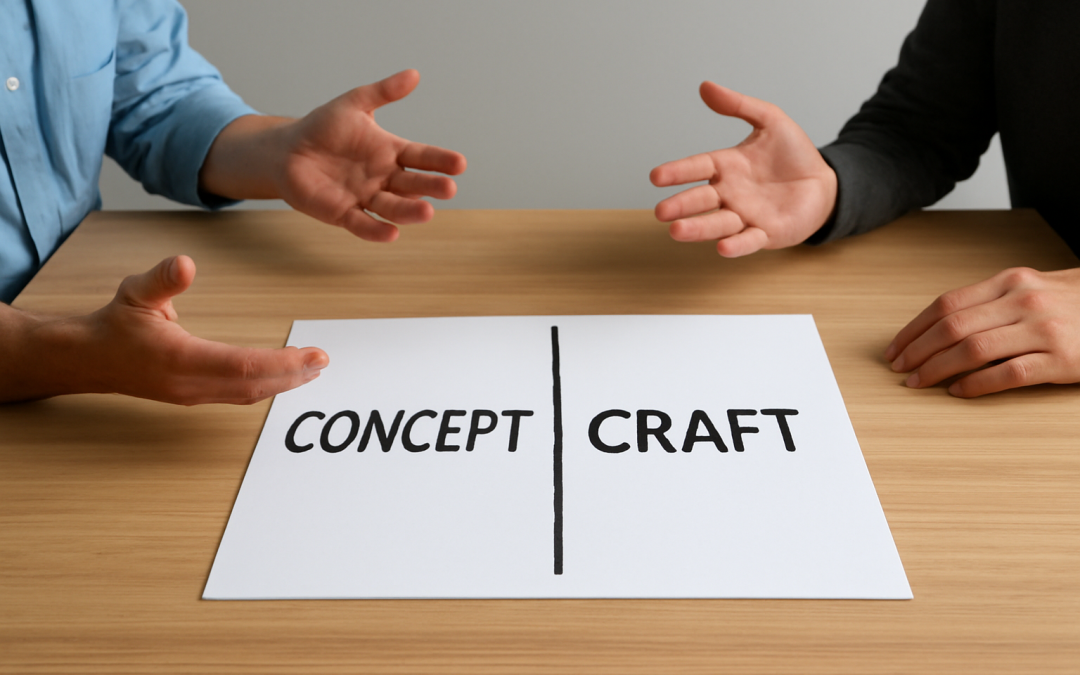
In the realm of creative expression, whether in writing, visual arts, design, or filmmaking, the ongoing discourse about prioritizing concept versus craft has always been a source of compelling debate. At its core, this discussion revolves around the significance of an initial idea compared to the skillful execution of that idea. While some assert that groundbreaking concepts ignite innovation and provoke thought, others emphasize the irreplaceable value of talent and technical mastery in materializing those concepts effectively. Both perspectives hold merit, yet the interplay between concept and craft reveals deeper nuances about creativity and artistic success.
Concept, by definition, is the foundation of any project—it is the blueprint or the spark that inspires creation. Without a solid concept, a work may lack direction, purpose, or resonance. A powerful idea can challenge societal norms, evoke strong emotions, or initiate new ways of thinking. It is this originality and intellectual engagement that often elevate art beyond mere decoration or entertainment. For example, revolutionary novels, memorable films, or iconic artworks frequently owe their lasting impact to the initial concept’s ability to resonate with universal human experiences or challenge existing paradigms.
However, even the most extraordinary concept can falter if it is not supported by skillful craft. Craft encompasses the technical proficiency and refined techniques necessary to breathe life into an idea. Writing with eloquence, painting with precision, or editing a film with a keen sense of rhythm are all facets of craft that ensure the audience’s experience is immersive and compelling. Craft is what transforms a concept from an abstract thought into a tangible and emotive form. It shapes coherence, readability, visual appeal, and emotional depth, making the work accessible and meaningful to its audience.
Neglecting craft in favor of concept can lead to works that feel incomplete or overly ambitious without clarity. An innovative idea presented clumsily—whether through poor narrative structure, awkward dialogue, uninspired visuals, or technical flaws—can disengage audiences or obscure the message. The challenge often lies in the fact that concept and craft are interdependent; one amplifies the other. Excellence in craft can amplify the power of a concept, while a compelling concept can, to some extent, compensate for technical imperfections by captivating the audience’s imagination.
The balance between these elements can vary by discipline and intention. In avant-garde art, for instance, the concept might deliberately seize precedence, with traditional craftsmanship set aside to emphasize raw ideas or experimental form. Such works often stimulate intellectual reactions rather than aesthetic pleasure. Conversely, commercial art or mainstream entertainment tends to rely heavily on craft to deliver a polished product that appeals broadly, sometimes prioritizing style or execution over conceptual depth. Yet even in commercially successful creations, memorable works often arise from the fusion of a great concept executed with superior craft.
The debate also extends to creative education and professional practice. How should emerging artists be trained? Should emphasis be placed on fostering originality and encouraging innovation in ideation, or on honing technical skills and mastering established techniques? Ideally, education nurtures both, urging creators to cultivate strong conceptual thinking while refining their abilities to manifest those ideas effectively. Many institutions now recognize that neither aspect alone suffices to produce work that is both meaningful and engaging.
Moreover, the relationship between concept and craft reflects evolving technological and cultural contexts. Advances in digital tools have altered the landscape profoundly, enabling conceptually rich ideas to be realized more efficiently, but they also raise questions about the dilution of craftsmanship. With technology offering shortcuts, there is concern that some creators may rely too heavily on software capabilities rather than developing core skills. On the other hand, technology can expand the boundaries of craft, allowing new forms of expression and innovation that enhance conceptual possibilities.
In addition, the subjective nature of artistic appreciation complicates the debate. Audiences’ preferences vary widely; some might prioritize intricate execution and technical virtuosity, while others are drawn primarily to provocative ideas or emotional resonance. The tension between concept and craft can also mirror cultural values. Some societies may celebrate conceptual boldness and innovation above all, while others prize tradition and mastery of technique more highly. Consequently, the evaluation of work often depends on which values and criteria dominate a particular context.
Examining historical examples further illuminates this dynamic. Consider the works of Renaissance masters who combined groundbreaking concepts about human anatomy and perspective with unmatched technical skill, producing art that endures centuries later both for its innovation and its craftsmanship. On the other hand, movements like Dada or Abstract Expressionism challenged conventions heavily relying on concept to question the nature of art, sometimes eschewing traditional craft standards. These cases show that neither concept nor craft alone guarantees lasting impact, but their successful integration often defines masterpieces.
Moreover, the creative process itself is shaped by the interplay between concept and craft. Initial ideas frequently evolve through iterative refinement during execution, influenced by practical constraints, technical limitations, or unexpected discoveries made while working. Craftsmanship allows creators to test and develop their concepts in tangible forms, opening possibilities for innovation through experimentation. Likewise, an adept craftsman may draw inspiration from the process of creation itself, deepening conceptual insights.
Ultimately, placing one above the other too rigidly restricts the holistic nature of artistic endeavors. A focus on concept alone can risk producing work that seems pretentious, inaccessible, or underdeveloped; an exclusive focus on craft can yield technically perfect but uninspired or derivative work. Both elements must coexist, each informing and enhancing the other, to produce art that resonates deeply, stands the test of time, and inspires reflection and engagement.
In assessing creative works or guiding artistic development, a nuanced perspective is essential—recognizing when concept should lead and when craft should refine, and appreciating how their synergy drives meaningful innovation. This balanced approach fosters not only originality and technical excellence but also the capacity to communicate effectively and move audiences emotionally and intellectually. The continuous dialogue between the power of ideas and the skill of execution remains a vibrant testament to the complexity and richness of human creativity.