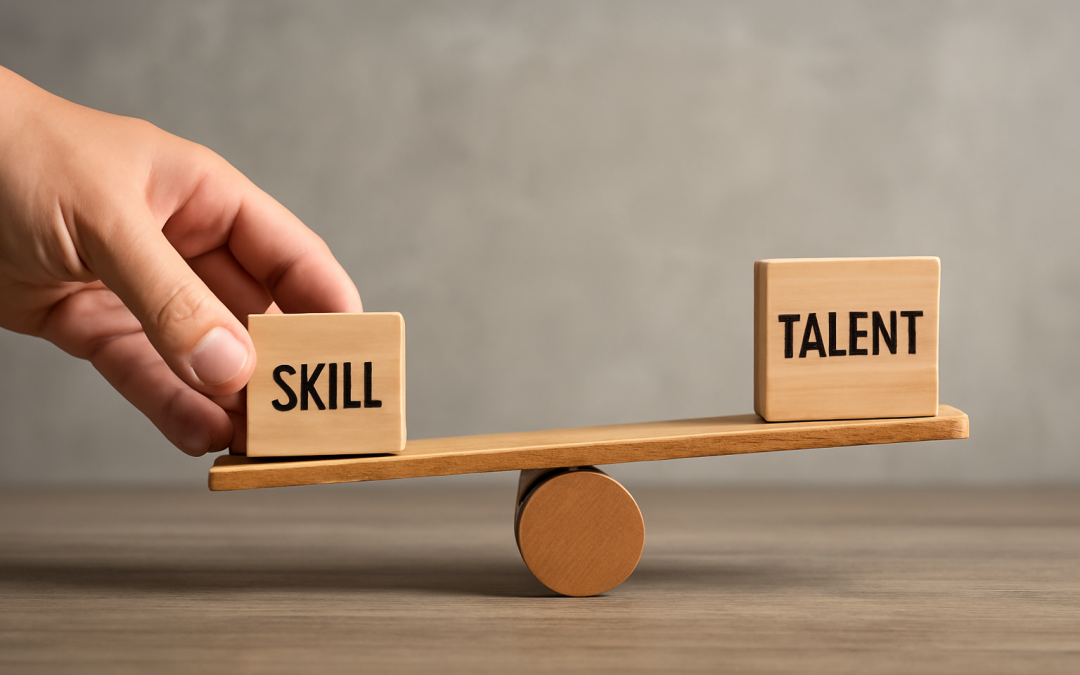
The idea that someone’s success is dictated either by their innate talent or by acquired skill is a debate that has long divided thinkers, educators, and professionals across various fields. On the surface, talent appears to offer a natural advantage—a sort of effortless mastery or predisposition toward a particular domain. Skill, on the other hand, suggests deliberate effort, practice, and learning that can be cultivated over time regardless of initial ability. However, this dichotomy between skill and talent is often oversimplified, creating misunderstandings about what it takes to achieve proficiency or excellence. By exploring the nuances of these concepts, one can better appreciate how they interact and how one’s potential is not strictly defined by an innate capacity but rather shaped by continuous development.
Talent is commonly perceived as an inherited or natural aptitude that gives certain individuals an edge. People with talent in music, sports, art, or academics are often described as gifted or innately capable, making complex activities seem easy or intuitive to them. This perspective resonates because, in some ways, genetic and early developmental factors certainly influence how quickly a person might pick up a skill or how effortlessly they perform some tasks. For example, someone naturally tuned to recognize patterns may find certain mathematical concepts more accessible, while a person with excellent hand-eye coordination might excel early in physical activities. Nevertheless, equating talent with fixed potential can be misleading as it neglects the role of the environment, mindset, and deliberate practice.
Skill, unlike talent, is not something one is born with; it is cultivated through effort and experience. The human brain is incredibly adaptable, shaped by learning and repetition. This concept, often referred to as neuroplasticity, underlines that what one can learn and master is far from predetermined by genetics alone. Skill development is a process—a trajectory involving trial, error, feedback, and refinement. Many experts in psychology and education emphasize that even those without apparent natural talent can reach high levels of achievement if they engage in consistent and focused practice. This challenges the notion that skill levels are rigid, suggesting that with sufficient motivation and the right strategies, people can develop abilities that may initially seem out of reach.
One of the reasons the skill versus talent myth has persisted is that people tend to attribute success simply to one factor or the other, perhaps as a way of ordering complexity in human performance. If someone excels at a sport or a craft, it is tempting to say, “They were born with it.” Conversely, when someone struggles, the default judgment may be that the person “lacks talent.” Such attribution ignores how much effort, time, and deliberate practice actually contribute to the visible results. The reality is that many experts behind great performances have invested thousands of hours in honing their abilities. Research into expertise concurs that while some innate qualities can influence the upper limits or the rate of learning, time spent practicing remains a consistent predictor of proficiency.
The notion of deliberate practice further dismantles the talent myth. Deliberate practice is a structured, purposeful form of effort aimed specifically at improving performance. It involves identifying weaknesses and addressing them methodically, often under the guidance of a mentor or coach. This approach emphasizes quality over quantity and demands focused attention and resilience alike. Numerous studies illustrate how individuals applying deliberate practice obtain remarkable progression, regardless of their starting point. Michael Jordan, regarded as one of the greatest basketball players, was known for his rigorous and intentional training that surpassed raw talent alone. This underscores that skill acquisition is a dynamic process reliant on effort and feedback loops rather than innate ability alone.
Equally important is the role of mindset in framing the skill versus talent debate. Psychologist Carol Dweck’s research on fixed and growth mindsets highlights how beliefs about ability affect motivation and learning. A fixed mindset views talent as innate and immutable, leading individuals to avoid challenges and give up easily when faced with difficulty. Conversely, a growth mindset embraces the notion that skills and intelligence can be developed through perseverance and hard work. This perspective encourages learning from failure, experimenting with new methods, and continuously improving. Embracing a growth mindset can thus shift the focus away from comparing talent with skill and toward recognizing the power of development through sustained effort.
In educational settings, the misunderstanding around talent versus skill often has significant implications. Students labeled as “gifted” might receive disproportionate attention or resources, while others may be overlooked. This can create self-fulfilling prophecies, where students’ expectations about their own abilities limit their progress. When educators emphasize skill development and encourage persistent practice, they help create environments where all students can thrive, regardless of their initial abilities. By cultivating curiosity, resilience, and incremental learning, the educational system can better prepare students to build competencies that matter in real-world challenges.
The entertainment and sports industries also illustrate how the myths of talent overshadow the reality of skill acquisition. Many public narratives romanticize prodigies or “natural athletes,” creating an image that only the gifted can succeed. Yet, stories behind this glamour often reveal years of discipline, sacrifice, and deliberate refinement of skills. Ballet dancers, for instance, may show extraordinary grace and precision, but such artistry is the culmination of countless hours of training from a very young age. Similarly, musicians behind virtuoso performances typically engage in relentless practice well beyond what one might assume natural talent alone would account for. These examples highlight that talent is often only the starting point, while skill development propels mastery.
The workplace is another arena where people wrestle with the skill versus talent narrative. Hiring managers sometimes seek candidates who demonstrate “natural ability,” overlooking the importance of trainable skills and potential. This can result in missed opportunities to nurture employees who may not initially shine but who have the capacity to grow with support and continuous learning. Organizations that foster skill development through training, mentoring, and challenging projects tend to build stronger, more versatile teams. Encouraging a culture that values learning helps dissolve rigid distinctions between innate talent and acquired competence and leads to greater innovation and adaptability.
Furthermore, the biologically determined aspects of talent—such as physical attributes, cognitive processing speed, or sensory acuity—do play roles in certain contexts, but these are typically just one factor among many. Environmental influences, education quality, cultural support, access to resources, and personal motivation all interact to determine long-term outcomes. The interplay of these numerous variables makes it difficult, if not impossible, to isolate pure talent as the dominant force. Instead, a holistic understanding views performance as a dynamic mixture of opportunity, effort, psychological factors, and yes, some innate predispositions.
Overemphasizing talent can also lead to detrimental effects such as complacency or fear of failure. When individuals believe their abilities should manifest effortlessly, they may react negatively to setbacks or challenges, interpreting them as signs of inadequacy rather than as opportunities to grow. In contrast, focusing on skill acquisition promotes the view that errors and difficulties are natural and useful parts of the learning journey. This perspective nurtures resilience—the capacity to recover from disappointments and remain committed to improvement—qualities often more valuable than a simple starting advantage in talent.
Modern psychological and neuroscientific research increasingly supports the view that many abilities thought to be purely talent-driven are highly plastic and malleable. For example, studies on musicians who began intense practice late in childhood compared to those who started younger reveal that while early starters often reach higher levels quicker, late starters can still achieve professional status with sufficient dedication. Similarly, in intellectual domains, persistent engagement with complex material can lead to significant cognitive enhancements. Such findings emphasize that time, effort, strategy, and environment are crucial ingredients in skill formation and challenge the deterministic outlook often associated with the talent myth.
Another crucial angle often overlooked is the social and cultural dimension of skill and talent. Historical and cultural contexts shape what abilities are recognized, nurtured, or dismissed. For instance, a rare talent in one culture or time period might be unnoticed or undervalued in another. Furthermore, the social network supporting an individual—including mentors, peers, and role models—can provide crucial encouragement and opportunities. The cultivation of skill frequently depends on this social ecosystem, which provides feedback, challenges, and motivation. Recognizing the social context invites a more inclusive appreciation of achievement beyond simplistic talent narratives.
Taking all these factors into account leads to a more blended and realistic perspective that celebrates both potential and effort. While some natural predispositions might give certain individuals a head start, skill acquisition is a powerful force enabling people to rise to remarkable levels of competence. The focus shifts from wondering who was “born with it” to understanding what conditions allow people to flourish and how they can harness deliberate practice, mindset, and support to reach their goals. This outcome-oriented approach fosters greater equity and optimism, empowering anyone willing to invest in their growth.
In conclusion, the distinction between skill and talent is far more intertwined and complex than it is often portrayed. Rather than viewing them as mutually exclusive or as a hierarchy that favors one over the other, it is more accurate to consider talent as a potential that can be unlocked and greatly expanded through skill development. The myth that success is the product of either raw talent or mere hard work fails to capture the intricate dance of biology, psychology, environment, and determination that truly shapes human performance. Recognizing this not only demystifies achievement but also inspires more people to embrace lifelong learning and resilience, knowing that mastery is largely forged through dedication rather than destiny.