
by admin | Jul 14, 2026 | Reviews
Few novels capture the tumultuous spirit of adolescence quite like J.D. Salinger’s The Catcher in the Rye. Since its publication in 1951, the book has resonated deeply with readers navigating the unpredictable chasm between childhood innocence and adult complexity. At the heart of this narrative lies a profound exploration of teenage disillusionment, articulated through the voice of its protagonist, Holden Caulfield. Rather than depicting adolescence as a mere rite of passage, Salinger delves into the psychological and emotional storms that define this phase, exposing the often harsh realities that challenge youthful ideals.
Holden Caulfield emerges as a symbol of youthful alienation, his narrative voice threading through the novel with a mixture of cynicism, vulnerability, and confusion. His disillusionment is not just a reaction to individual experiences but a reflection of the broader societal landscape he inhabits—a world he frequently describes as “phony” and superficial. This pervasive distrust highlights the gap adolescents often perceive between their authentic selves and the social constructs they are pressured to conform to. In Holden’s eyes, adults have largely relinquished sincerity, adopting facades that betray genuine human connection, and it is this realization that fuels much of his internal conflict.
Throughout the novel, Holden’s encounters reveal the complexity of his disillusionment. Between his expulsions from prep schools and the aimless wandering of New York City, his journey is both physical and metaphorical. Each interaction, whether with former classmates, nuns, or his younger sister Phoebe, underscores a recurring tension between innocence and experience. Holden’s protective attitude toward children, particularly his fantasy of being “the catcher in the rye,” saving kids from falling off a cliff into adulthood’s corruption, articulates his desperate desire to preserve innocence—his own and that of others. This fantasy is emblematic of his struggle against an inevitable loss that all teenagers confront, making his plight universally relatable.
The theme of teenage disillusionment in the novel is further enriched by the raw and candid first-person narrative. Holden’s storytelling style is fragmented and informal, filled with digressions, slang, and a restless rhythm that mirrors the confusion of adolescence itself. This narrative approach invites readers into the immediacy of his experiences, making his disillusionment palpable and authentic. By employing such a distinct voice, Salinger not only captures the linguistic patterns of youth but also bridges the emotional gap between Holden and the reader, nurturing empathy and understanding rather than judgment.
Moreover, the novel does not shy away from exploring the darker aspects of teenage experience. Holden’s mental health, marked by depression, anxiety, and trauma, underlines the intensity of his alienation. His grief over the death of his younger brother Allie exacerbates his feelings of isolation, adding depth to his cynicism and mistrust. The portrayal of a teenager grappling with unresolved sorrow in a society ill-equipped to support him sheds light on the often overlooked emotional struggles swirling beneath the surface of adolescence. This nuanced depiction challenges any simplistic notions of teenage rebellion as mere angst or drama.
Salinger’s depiction of relationships in the novel further illuminates the theme of disillusionment. Holden’s difficulty forging meaningful connections underscores his sense of detachment. His encounters with both peers and adults oscillate between moments of genuine longing and stark disappointment. The contradictions in his interactions—such as his simultaneous desire for companionship and impulse to reject others—reflect the push-pull dynamic characteristic of adolescent identity development. The tension between dependence and autonomy is a crucible in which Holden’s identity is forged, revealing the broader challenge faced by teenagers as they navigate social expectations.
The setting of New York City also plays a significant role in amplifying Holden’s sense of disillusionment. The urban landscape, bustling and indifferent, becomes almost an antagonist in the story. Its impersonal nature contrasts sharply with Holden’s yearning for authenticity and human warmth. The city scenes emphasize his loneliness amidst the crowd, highlighting how physical surroundings can intensify emotional experiences. This portrayal resonates with many readers who have encountered similar feelings of invisibility or alienation in large, impersonal environments during their formative years.
In addition, The Catcher in the Rye challenges traditional coming-of-age narratives by refusing to offer tidy resolutions or simplistic moral lessons. Holden’s story resists linear progression or clear growth arcs; instead, it captures adolescence as a liminal space fraught with contradictions. This complexity mirrors real-life teenage experiences where hope and despair, clarity and confusion coexist. By resisting closure, the novel respects the ambiguity inherent in maturation, acknowledging that disillusionment is often an ongoing process rather than a discrete stage.
Literary critics have long debated the extent to which Holden’s disillusionment serves as a critique of post-war American society. The novel’s release during a period of burgeoning consumerism and conformity casts Holden’s rejection of “phoniness” as a subtle but pointed commentary on cultural values. His struggle can be read as emblematic of youth resistance against societal pressures to conform to materialism and superficial social norms. In this light, the novel transcends an individual teenager’s story and becomes a broader social critique, one that remains relevant as debates about authenticity and identity continue to evolve.
The enduring legacy of The Catcher in the Rye lies in its ability to articulate the often inarticulable emotions of adolescence. Through Holden’s voice, readers encounter the complexities of teenage disillusionment in all their intensity—alienation, loss, longing, and the quest for meaning. This emotional resonance ensures the novel’s place as a seminal work in American literature and as a touchstone for generations grappling with the rocky terrain of growing up. Its themes continue to inspire reflection on how society understands and supports the psychological struggles inherent in the transition from childhood to adulthood.
In essence, the novel offers more than a mere portrait of adolescent angst; it provides a profound meditation on the fragile boundary between innocence and experience. Holden Caulfield’s struggles highlight the universal challenge of preserving personal integrity in an often disheartening world. Through its candid exploration of teenage disillusionment, the story encourages empathy for the turbulence of youth and invites readers to confront their own perceptions of authenticity, maturity, and connection. The narrative’s power lies in its truthful, unvarnished look at what it means to stand on the precipice of adulthood, uncertain and vulnerable, yet determined to find one’s place in the world.
Ultimately, the novel serves as a reminder that disillusionment, while painful, is an essential part of growth. The loss of innocence that Holden mourns is not merely a surrender but a transformative step toward self-awareness. By navigating the difficult truths of adolescence with honesty and depth, the novel affirms the value of confronting discomfort in the journey toward authenticity. It leaves readers with a lingering understanding that while the path from childhood to adulthood may be fraught with disillusionment, it is also imbued with the potential for insight, empathy, and, eventually, acceptance.
by admin | Jul 13, 2026 | Reviews
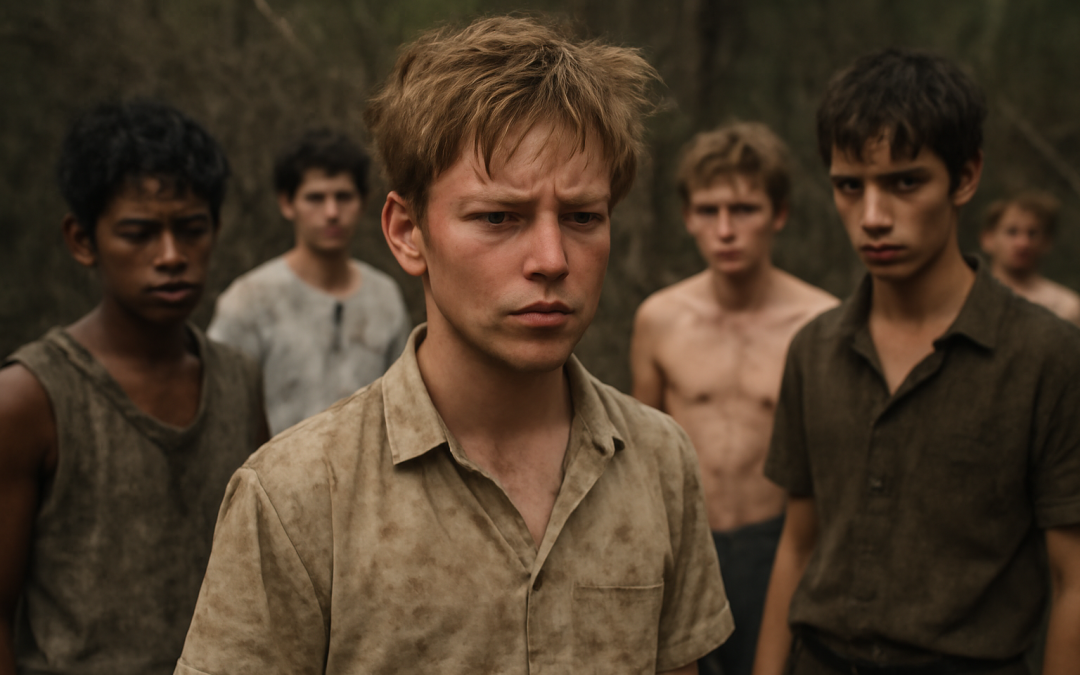
Few narratives delve as deeply into the fragility of social order and the primal instincts that lurk beneath the veneer of civilization as the story presented in *Lord of the Flies*. The novel is a grim exploration of humanity’s capacity for savagery when the structures of society dissolve. Through the eyes of stranded boys on a deserted island, the narrative investigates how quickly the rules that govern behavior can disintegrate, revealing raw ambition, fear, and violence as dominant forces. This enduring examination of civilization unraveling challenges readers to confront uncomfortable truths about what lies within us all.
The premise of the story is both simple and profoundly unsettling. A group of young boys, isolated from the adult world and stranded on an uninhabited island, attempt to govern themselves with the hope of rescue. Initially, these boys organize with a sense of order and purpose, establishing rules, electing leaders, and assigning duties. However, as the days progress and the reality of their predicament sinks in, the fragile social structure begins to break apart. The descent from order to chaos unfolds in a series of escalating conflicts, revealing the innate struggle between the impulse to live by society’s standards and the urge to succumb to baser instincts.
One of the most compelling aspects of this narrative is its portrayal of power dynamics. Leadership is central to the story, illustrated most notably through the characters of Ralph and Jack, whose contrasting visions of authority and survival frame the broader conflict. Ralph represents democratic ideals, striving to maintain order and focus on rescue. Jack, on the other hand, embodies the allure of savagery, prioritizing hunting and the thrill of exerting dominance. Their rivalry exposes the tension between civilization’s rules and the raw exertion of power which thrives in their absence. This duality drives much of the plot and effectively illustrates how leadership styles influence group cohesion or fracture.
The breakdown of civility is also deeply intertwined with the themes of fear and superstition. The boys’ imaginations conjure an ominous “beast” that symbolizes the darkness within themselves—an intangible menace that evokes panic and paranoia. This fear serves as a powerful catalyst for the erosion of reason and the rise of violent impulses. The symbolic beast represents the psychological shadow that humanity tends to suppress but cannot fully escape. The boys’ responses reveal how fear, when left unchecked, can undermine collective rationality and justify irrational and destructive actions.
Moreover, the novel uses its microcosm—a small group isolated from society—to address broader philosophical questions about human nature. Are humans inherently good, corrupted only by social conditions, or is there an intrinsic darkness in every individual waiting for the right circumstances to emerge? Through the gradual erosion of the boys’ civilized behavior, the story suggests that beneath the surface of learned morals and etiquette lies a more primal and dangerous set of impulses. The island becomes a pressure cooker, stripping away societal expectations and exposing these concealed tendencies.
The author’s use of symbolism enriches this narrative, giving it layers of meaning that resonate beyond the immediate plot. Objects like the conch shell, representing democratic order and communication, and the “Lord of the Flies” itself, a pig’s head on a stick, as an emblem of corruption and malevolent power, provide vivid metaphors that anchor the psychological and thematic elements of the story. These symbols evolve as the plot progresses, highlighting shifts in the boys’ mindset and the decay of civilization on the island. Such imagery invites readers to interpret the tale not just as a drama among children, but as an allegory for societal collapse.
Character development is crucial in conveying the novel’s message. Each boy on the island represents different facets of human nature and societal roles. Piggy, with his intellectualism and moral clarity, stands as a voice of reason and civility, yet he is marginalized and ultimately silenced, reflecting how rationality is often overpowered by chaos. Simon’s gentle spirituality and insight into the true nature of the beast contrast with the growing savagery around him, making his tragic fate a poignant commentary on innocence destroyed by collective hysteria. Through these characters, the story explores the complex interactions of intellect, morality, and instinct.
The narrative structure itself contributes to the sense of inevitability that permeates the story. The gradual descent into savagery is both paced and foreshadowed, with earlier small conflicts escalating into full-scale violence and tragedy. The island’s isolation intensifies this progression, with no external authorities to intervene, forcing the boys to confront their fears and failings on their own. This confined setting ensures that every action and reaction feels weighty, as the societal microcosm is stripped down to its barest elements.
In addition, the author’s prose is stark and unembellished, which serves to heighten the chilling atmosphere of the novel. The simplicity of the language contrasts with the complex themes, making the story accessible while intensifying the emotional impact. The depiction of the natural environment shifts from idyllic and enchanting to menacing, mirroring the transformation in the boys themselves and the dark forces at work beneath the island’s surface.
The novel also provides a keen insight into how group dynamics can spiral out of control. Peer pressure, the need for acceptance, and the desire for power all interplay to exacerbate conflicts. The boys’ descent is marked by the abandonment of universally held principles and the rise of tribalism and violence. This progression echoes historical instances of social breakdown, where the collapse of institutions leads to chaos and brutality. By placing children—a symbol of innocence—at the center, the story underscores the precarity of order and how fragile the constructs of society truly are.
Furthermore, the element of hope and rescue persists throughout the narrative, maintaining a tension that keeps the reader invested. The characters’ initial optimism gradually fades, replaced by desperation and fear, which underscores the devastating consequences of losing faith in collective ideals. Yet, the conclusion offers a sobering reflection on human nature, leaving readers to grapple with the unsettling reality of the novel’s moral implications.
This story remains profoundly relevant in contemporary discussions about the nature of authority, the roots of violence, and the limits of social cohesion. Its exploration of civilization unraveling is a cautionary tale that warns against assuming that societal norms and ethical behavior are permanent fixtures. Instead, it presents a challenging perspective: that without vigilance, the thin line separating order from chaos can easily be crossed, revealing the darker dimensions of humanity.
In summation, the narrative offers a haunting examination of what happens when the constructs that uphold societal stability collapse. Through its vivid characters, sharp symbolism, and unflinching portrayal of human nature, it forces readers to confront the uncomfortable possibility that beneath the surface of civility lies an ever-present potential for savagery. This profound exploration not only unsettles but also enlightens, encouraging reflection on the values that maintain order and the vulnerability of those systems in the face of fear and power struggles. Its enduring impact lies in its ability to expose the raw truths about civilization unraveling and the complex duality of human nature itself.

by admin | Jul 12, 2026 | Reviews
George Orwell’s *Animal Farm* remains one of the most potent and enduring allegories in modern literature, a compelling narrative that delves into complex themes of power, control, and corruption. At its core, the story is deceptively simple: farm animals overthrow their human owner in a bid for equality and freedom, only to find themselves under the oppressive rule of their own kind. This transformation from hopeful revolution to dystopian tyranny explores the cyclical nature of power and the ease with which ideals can be corrupted by authoritarianism. Orwell’s clear yet nuanced prose offers a succinct critique of totalitarian regimes, making the text not only a political allegory but also a timeless examination of human nature.
The strength of *Animal Farm* lies in its allegorical framework, where every character and event symbolizes larger political realities. The animals represent different segments of society and political figures from the Russian Revolution and its aftermath. For example, the pig Napoleon stands in for Joseph Stalin, embodying the rise of a dictator who manipulates ideology to consolidate personal power. Meanwhile, Snowball, another pig, symbolizes Leon Trotsky and the initial revolutionary zeal that is eventually quashed by totalitarian ambition. The farm itself can be read as the Soviet Union, while the humans act as external capitalist forces. This layering of meaning allows the novella to function on multiple levels, engaging readers in a simple story while prompting reflection on historical and political phenomena.
Orwell’s choice to use animals as protagonists rather than human characters adds both accessibility and universality to the narrative. This approach not only anthropomorphizes the animals to create relatable characters but also cleverly avoids the pitfalls of partisan storytelling. The allegorical distance invites readers from diverse backgrounds to engage with the story without preconceived political biases. Furthermore, by attributing human vices and virtues to animals, Orwell underscores the idea that the problems of power are not unique to any one group but are endemic to the dynamics of authority and control, making the story relevant across time and place.
The theme of authority and its abuse is central to the narrative, vividly portrayed through the gradual erosion of the animals’ original ideals. When the animals first stage their rebellion, they aspire to a society where all animals are equal and free from human exploitation. Yet, as the pigs assume leadership roles, they begin to manipulate the principles of Animalism to suit their interests. The famous commandments on the barn wall, initially simple and egalitarian, become distorted over time, epitomizing the manipulation of truth and language by those in power. This process reveals how authority can depend not just on physical control but also on controlling perception and rewriting history.
One of the most chilling aspects of the story is how Orwell portrays the passive complicity and gradual indoctrination of the other animals. Characters like Boxer the horse embody the loyal working class, whose unwavering labor and belief in the cause are exploited by those in power. Despite mounting evidence of corruption and inequality, these animals often rationalize or blindly trust the leadership, illustrating how fear, hope, and misinformation can all serve to uphold authoritarian regimes. This depiction highlights an unsettling reality: that tyranny is often maintained not just through oppression but also through the quiet acquiescence of those it subjugates.
The novella’s compact length belies the density of its themes and the sharpness of its critique. Orwell’s writing is economical but potent, employing satire and irony to great effect. The simple narrative structure allows for swift narrative progression, which heightens the impact of each turn towards oppression. The parody of political propaganda, epitomized in Squealer’s persuasive speeches justifying the pigs’ excesses, serves as a biting commentary on how language is wielded as a tool of control. Orwell’s ability to distill complex political critique into an accessible fable demonstrates not only literary skill but also deep insight into the human condition.
Moreover, the story’s ending delivers a stark reminder of the dangers inherent in revolutions that lack checks and balances. The transformation of the pigs into indistinguishable figures from the human oppressors signals the ultimate betrayal of the original revolutionary ideals. This conclusion underscores the persistent peril that revolutions may replace one form of tyranny with another when power is concentrated and unchallenged. It prompts readers to consider how vigilance, transparency, and collective responsibility are essential to prevent the repetition of such cycles.
*Animal Farm* also serves as a broader metaphor for the universal struggle between freedom and control. Beyond its specific historical targets, the novella resonates with readers facing political or social conditions where power is abused or misused. It forces contemplation on questions such as: How does authority arise and maintain itself? What mechanisms allow corruption to thrive? Can societies ever avoid the temptation of despotic rule? The story’s enduring relevance lies in its ability to invoke these inquiries in contexts far removed from Orwell’s original focus.
The characters themselves are crafted with symbolic precision, each representing facets of society, political ideologies, or historical realities. Napoleon’s cunning and ruthless rise to dominance is mirrored by his willingness to sacrifice truth and justice for power. Snowball’s idealism and subsequent expulsion showcase the fragility of revolutionary unity and the marginalization of dissenting voices. Meanwhile, the sheep’s mindless repetition of slogans exposes how propaganda can suppress critical thought. These characterizations provide a vivid tableau that illustrates the dynamics of political manipulation and the erosion of individual agency under authoritarianism.
An important aspect of the narrative is its exploration of language as a tool of power. From the outset, the gradual revision and reinterpretation of the commandments reflect how those in control can reshape reality. Squealer’s role as propagandist reveals how rhetoric can be deployed to confuse, intimidate, and placate the masses. This manipulation of language underscores a haunting truth: when the words meant to protect freedom are twisted to justify oppression, the very foundation of liberty is undermined. Orwell’s portrayal is a cautionary tale about the fragility of truth in the face of political expediency.
Beyond political allegory, *Animal Farm* also functions as a moral tale about human nature and the ethical pitfalls of leadership. It probes the questions of what responsibility leaders owe to their followers and how power can corrupt even the best intentions. The narrative suggests that without accountability and ethical restraint, authority easily devolves into tyranny. This dual function as both allegory and ethical exploration allows the story to transcend its political context and evoke broader philosophical reflections on governance, justice, and human folly.
The novella’s impact has extended far beyond literature into education, politics, and popular culture. It has been used as a tool to teach critical thinking about governance and propaganda, and it remains accessible because of its clear language and vivid storytelling. This wide applicability speaks to Orwell’s mastery in crafting a story that is at once simple and profound, a fable that entertains while educating and warning. Its continued presence in curricula and public discourse attests to its deep resonance with successive generations.
It is worth noting that *Animal Farm* is not merely an indictment of a specific political system but a universal warning about the susceptibility of all societies to authoritarianism. Orwell was keenly aware that the seeds of dictatorship are not confined to any single geography or era but can take root anywhere power is unchecked. This universality is part of what gives the text its lasting power, allowing it to be continuously relevant in a changing world. Its lessons remind readers that the fight against tyranny is ongoing and requires constant vigilance, transparency, and critical engagement from all members of society.
In literary terms, *Animal Farm* exemplifies the potential of allegory to address complex ideas in a way that is accessible and memorable. Orwell’s clear narrative style, combined with the symbolic richness of the characters and events, creates a work that is both intellectually stimulating and emotionally resonant. The farm’s transformation from hopeful utopia to oppressive regime mirrors the trajectories of many historical experiments in governance, making the novella a mirror that reflects both history and human psychology.
Orwell’s use of irony enhances the thematic depth of the story. The initial optimism of the animals, who envision a world where “all animals are equal,” is continually undermined by the ironic emergence of an elite ruling class. The final commandment’s alteration to “All animals are equal, but some animals are more equal than others” encapsulates this irony perfectly, illustrating the betrayal of revolutionary ideals and the absurdity inherent in totalitarian logic. This clever use of irony both entertains and provokes thought, revealing the contradictions embedded within regimes that claim legitimacy through equality.
The novella’s portrayal of rebellion and revolution is notably skeptical, emphasizing the complexities and unintended consequences that often accompany drastic political change. Orwell seems to argue that revolutions, while driven by a desire for justice, can be undermined by their own leaders’ ambition and human weakness. This perspective contributes to a sobering understanding of history, where idealism frequently clashes with harsh realities. Such a viewpoint fosters a more nuanced appreciation of political movements and cautions against simplistic hero-worship or ideological fanaticism.
At the heart of *Animal Farm* is a profound meditation on power’s corruptive influence. The story’s progression—from shared hardship to privileged rule—demonstrates how even those who begin with noble intentions can succumb to the temptations of control. This theme is timeless, exploring why power tends to consolidate rather than disperse, and how systems intended to promote equality can instead entrench inequality. Orwell’s insight here is both literary and psychological, touching on essential questions about leadership, morality, and the nature of authority itself.
In examining the legacy of *Animal Farm,* it becomes clear that its contribution to political discourse and literature cannot be overstated. The novella continues to serve as a vital tool for understanding and questioning authority, ideologies, and the mechanisms of state control. Its lessons remind readers that vigilance against oppression requires not only resistance from the oppressed but also critical reflection from all citizens. Orwell’s work endures because it encapsulates essential truths about governance and human nature in a succinct and compelling narrative.
Ultimately, *Animal Farm* challenges readers to consider the fragile balance between freedom and power, idealism and pragmatism, and trust and skepticism. Its portrayal of the rise and fall of an ostensibly egalitarian society offers a cautionary tale about the seductive and often destructive path of authority unchecked by accountability. The novella doesn’t merely entertain; it educates and warns, urging readers to remain aware of the dynamics that shape societies and to recognize the signs of authoritarianism before it becomes irreversible. It is this enduring relevance and insightful critique that secures *Animal Farm*’s place as a cornerstone of literary and political thought.
by admin | Jul 11, 2026 | Reviews
George Orwell’s dystopian novel stands as a stark and unsettling exploration of power and control in a totalitarian regime. Set in a bleak future where individuality is crushed under the weight of constant surveillance and propaganda, the book serves as a powerful warning about the dangers of unchecked authority. It delves deep into how those in power manipulate truth, language, and history to maintain dominance over an oppressed population. Through its portrayal of a society stripped of freedom and privacy, the narrative forces readers to confront uncomfortable questions about the limits of governmental control and the price of complacency.
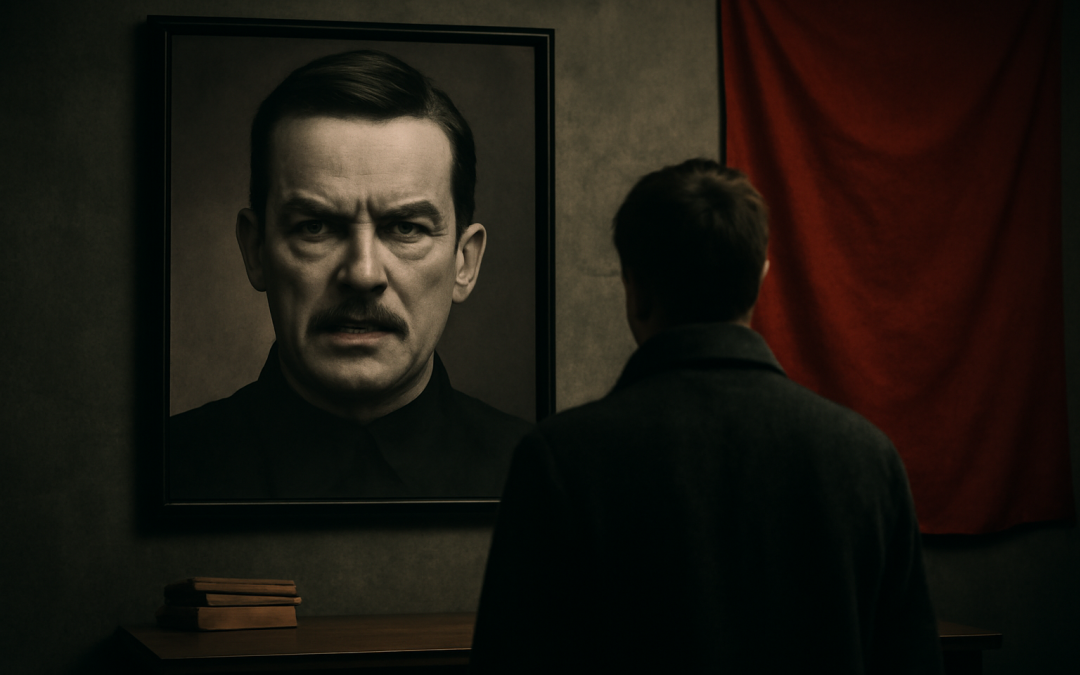
At the center of the story is the ever-watchful Party, led by the enigmatic figurehead known as Big Brother. This omnipresent authority uses a combination of psychological manipulation, misinformation, and brutal enforcement to suppress dissent and ensure absolute obedience. The Party’s slogan, “War is Peace, Freedom is Slavery, Ignorance is Strength,” encapsulates the distorted logic that permeates every aspect of life. By redefining truths and rewriting history, the regime effectively controls reality itself, leaving citizens disoriented and powerless. This manipulation extends beyond mere propaganda; it infiltrates language through Newspeak, designed to eliminate rebellious thought by narrowing the range of expression.
The novel also presents a chilling portrayal of surveillance and its impact on personal autonomy. The telescreens that monitor citizens in their homes symbolize a society where privacy no longer exists. The fear of being watched constantly suppresses individual desires and thoughts, creating a compliance born of terror rather than genuine consent. This environment fosters an atmosphere of paranoia where trust among individuals is undermined, as everyone is encouraged to report any sign of disloyalty. Orwell’s depiction of surveillance highlights how technology can be weaponized to serve oppressive political ends, a concern that remains profoundly relevant in today’s digital age.
At the heart of the narrative lies the protagonist Winston Smith, a low-ranking member of the Party who harbors silent rebellion. Winston’s internal struggle is a poignant exploration of the human spirit’s resilience amidst overwhelming oppression. His desire to seek truth and assert personal freedom pits him against a system that seeks to obliterate individuality. Through Winston’s eyes, readers experience the psychological torment inflicted by the regime’s endless repressions and the crushing weight of inevitable defeat. His journey underscores the profound consequences of living in a society where independent thought and emotional connections are systematically dismantled.
The theme of historical revisionism plays a crucial role in demonstrating the Party’s mastery over both the past and present. By constantly altering records and fabricating events, the regime perpetuates its version of reality and eliminates any evidence of alternate understandings. This manipulation of history effectively erases collective memory and undermines the very foundation on which personal and societal identity are built. Orwell reveals how controlling the narrative of the past becomes an essential tool for maintaining political power, as it shapes perceptions of the present and influences future loyalty. This relentless rewriting not only limits knowledge but also instills a fatalistic acceptance among the oppressed, who come to believe that resistance is futile.
Language emerges as a central mechanism of control and repression. Newspeak, the constructed language designed by the Party, serves to diminish the range of thought by eliminating words associated with rebellion and freedom. By restricting language, the regime constrains thought itself, making it impossible even to conceive of dissent. This concept of controlling thought through language is a testament to Orwell’s understanding of the profound relationship between communication and cognition. It also presents a grim forecast of societies that seek to inhibit free expression as a means of dominating their populations.
The emotional isolation experienced by characters underscores the devastating social consequences of such a repressive regime. Genuine human connections are discouraged, and relationships are monitored for signs of disloyalty. The regime’s intrusion into the most intimate aspects of life erodes trust and companionship, leaving individuals isolated and vulnerable. Love, which could serve as a form of resistance, is either twisted or destroyed, as seen in Winston’s relationship with Julia, which ultimately succumbs to the overwhelming power of the Party. This deliberate fracturing of social bonds strengthens the Party’s grasp by preventing collective action and mutual support among citizens.
One of the most haunting aspects of the narrative is its resolution, which illustrates the overwhelming capacity of authoritarian power to crush even the most determined spirit. Winston’s eventual capitulation and acceptance of Big Brother reveal the tragic power of systemic control to break down resistance. His transformation from a questioning individual into a mindless devotee serves as a chilling conclusion to the novel’s exploration of power dynamics. It starkly demonstrates how repression, fear, and control can strip away not only freedom but identity itself. This ending leaves readers with a profound sense of despair but also a renewed awareness of the importance of vigilance in safeguarding liberty.
The psychological mechanisms of power portrayed in the novel reveal the complex interplay between fear, loyalty, and submission. The Party’s use of torture and psychological manipulation to force obedience illustrates the extremes to which authoritarian systems will go to maintain control. Oceania’s institutions are designed not merely to punish but to completely reprogram thought and beliefs. This brutal re-education highlights the vulnerability of human psychology under sustained pressure and the ethical dilemmas posed by such absolute power. Orwell’s depiction serves as a cautionary tale about how political systems can exploit fear and coercion to achieve unchallengeable control.
In many respects, the novel’s exploration of power and control transcends its fictional context and resonates with real-world political histories and contemporary concerns. The oppressive tactics described mirror patterns found in various totalitarian regimes, making the story a timeless critique of authoritarianism. It challenges readers to recognize and resist the early signs of political manipulation, such as censorship, propaganda, and surveillance, that can erode democratic principles. Moreover, in an era of increasing digital monitoring and disinformation, Orwell’s insights carry renewed urgency and relevance.
The role of identity and individuality in the face of oppressive control is a powerful theme threaded throughout the narrative. The regime’s efforts to standardize belief and behavior aim to erase personal uniqueness and autonomy. Winston’s struggle embodies the tension between conformity and self-expression, highlighting how totalitarian systems seek to nullify dissent by eliminating the very nature of individual will. The book suggests that the preservation of identity is both a personal battle and a political act. It invites readers to consider the value of personal freedoms and the costs incurred when such freedoms are suppressed.
Orwell’s skillful construction of a bleak and claustrophobic world heightens the novel’s impact, drawing readers into an unsettling and immersive experience. The oppressive atmosphere is reinforced by precise, chilling prose that conveys the relentless nature of the Party’s surveillance and control. This environment creates a sense of suffocation and inevitability that mirrors the characters’ lived experience. The novel’s setting serves not only as a backdrop but as a critical component of the message, demonstrating how environment and power interact to shape human behavior and thought.
The narrative structure, which gradually unveils the extent of the Party’s control and Winston’s internal rebellion, deepens the emotional engagement of readers. Orwell masterfully balances moments of hope and despair, illustrating the constant push and pull between resistance and conformity. This tension is a driving force behind the story, keeping readers invested in Winston’s fate while underscoring the novel’s broader reflections on power. The pacing and development of themes foster a growing sense of dread, climaxing in the final, harrowing revelation of the Party’s absolute dominance.
Literary devices such as symbolism and irony enrich the text’s examination of power dynamics. The figure of Big Brother embodies both the omnipotent ruler and the impersonal surveillance state, representing the chilling fusion of personality cult and bureaucratic control. The irony of slogans that invert meaning reflects the twisted logic of the regime and forces readers to question accepted truths. These elements work together to emphasize the depth of the Party’s manipulation and the perversion of ideals such as freedom and truth. Orwell’s use of these techniques contributes to the novel’s enduring power and complexity.
The enduring legacy of this narrative lies in its capacity to provoke critical reflection on the nature of governance, freedom, and resistance. It compels readers to confront uncomfortable realities about the fragility of democratic institutions and the ease with which power can be abused. Its vivid portrayal of control mechanisms serves as a reminder of the importance of vigilance against political oppression. The novel encourages active engagement with political systems and warns against complacency, emphasizing that liberty requires continuous defense.
In educational and cultural contexts, the novel has become a landmark text for discussions around civil rights, governmental overreach, and ethical leadership. Its language and concepts have entered popular discourse, influencing how societies think about surveillance and state control. The cultural imprint of the novel extends beyond literature, impacting political science, philosophy, and human rights debates. This broad resonance is a testament to the author’s profound insight into the vulnerabilities of human societies when confronted with absolute power.
Reading the book today evokes a renewed sensitivity to the subtle forms of control that may permeate modern life. With increasing concerns about privacy invasion, mass data collection, and manipulative media, many readers find the novel’s themes alarmingly prescient. It fosters critical awareness about how power can be exercised invisibly and insidiously, shaping thought and behavior without overt force. The story challenges contemporary audiences to evaluate their own societies and consider what limits should be placed on power to protect individual freedoms.
In conclusion, the novel is a profound meditation on the mechanisms of power and the human cost of authoritarian control. Through its vivid depiction of a totalitarian regime’s strategies to dominate every aspect of life, it provides a sobering warning about the fragility of freedom. The psychological, social, and political dimensions of control are explored with extraordinary depth, offering readers a lens through which to view both historical and current struggles for liberty. Its impact remains powerful and transformative, urging ongoing vigilance and commitment to preserving human dignity against forces that seek to diminish it.

by admin | Jul 10, 2026 | Reviews
The exploration of identity and the experience of erasure occupy a significant place in literature, cinema, and cultural discourse, often highlighting the tension between visibility and invisibility in society. Few narratives capture this dilemma as poignantly as the story of a man who, despite existing in the most palpable sense, is rendered unseen by the world around him. This notion challenges not just the physical visibility of a person but the existential essence of being recognized as an individual with agency, history, and worth. The Invisible Man delves into these complex themes, interrogating what it means to be noticed and how societal forces contribute to the suppression of identity.
At its core, the story is a meditation on the violence of invisibility. The protagonist’s invisibility operates both literally and metaphorically, serving as a powerful allegory for marginalized identities that are ignored, dismissed, or erased in the social fabric. This multilayered treatment foregrounds how invisibility is not a neutral or natural state but often enforced by systemic structures, prejudice, and fear. Whether it’s race, class, gender, or other markers of difference, the invisible man becomes a symbol for those whose lives are overlooked, whose voices go unheard, and whose realities are questioned or denied by dominant narratives.
The tension between visibility and invisibility speaks to a deeper crisis of identity. The struggle to assert one’s existence in a world that refuses acknowledgment can lead to a fracturing sense of self. In the story, this manifests through the protagonist’s gradual unraveling as he grapples both with the psychological weight of being unseen and the external pressures trying to define—or erase—him. Such depiction reveals the toll that erasure takes on the human psyche, where invisibility grows from something that initially feels like power or protection into a suffocating condition of isolation and disempowerment.
Intriguingly, the narrative also inverts traditional notions of visibility by revealing how being seen is often contingent on harmful stereotypes or reductive labels. Visibility, for the invisible man, is not always liberation; it can mean exposure, scrutiny, and dehumanization. This paradox highlights the limitations of simply being “visible” in a society obsessed with categorization and control. To be truly recognized as a fully realized individual, visibility must be accompanied by respect, understanding, and the allowance of multifaceted humanity. Thus, the story critiques superficial recognition and probes the need for genuine acknowledgment beyond surface appearances.
The depiction of erasure in the story extends beyond personal identity to engage with historical and cultural memory. The protagonist’s invisibility becomes a metaphor for the ways history itself can be altered, suppressed, or forgotten. Marginalized groups, particularly those subjected to systemic racism and oppression, have often been written out of official narratives or reduced to stereotypes that erase their true experiences. Through this lens, the story compels readers or viewers to confront the consequences of erasure not just on individual lives but on collective consciousness and societal values.
Moreover, the invisible man’s attempt to reclaim agency without sacrificing his own humanity highlights the resilience embedded in the fight against erasure. The narrative illustrates that identity is neither static nor solely dictated by external recognition; it is continually forged through self-awareness, resistance, and adaptation. This dynamic understanding challenges fatalistic views of invisibility as a permanent silence and instead presents it as a fraught, ongoing negotiation between self and society.
The themes of the story resonate profoundly in contemporary contexts. Discussions around visibility, representation, and erasure are increasingly prevalent in social justice movements and cultural critiques. The invisible man’s plight echoes the real-life experiences of those who navigate invisibility in various forms—whether due to race, gender identity, socioeconomic status, or other intersecting factors. This alignment underscores the enduring relevance of the narrative’s exploration and its capacity to foster empathy and insight into lived realities often ignored.
Crucially, the story also interrogates the role of technology and surveillance in shaping perceptions of visibility. In a world where digital footprints and constant observation both expose and obscure, the invisible man’s condition takes on new layers of meaning. The paradox of being hyper-visible through data yet invisible in human connection complicates traditional understandings of presence and erasure. It asks how modern society might create new forms of invisibility even as it claims to reveal all.
Throughout the narrative, the tension between concealment and revelation drives much of the drama and psychological depth. The invisible man’s oscillations between hiding and asserting himself underscore an essential human dilemma: to be known on one’s own terms without losing autonomy or safety. His journey reveals how fraught identity formation is when it occurs under the threat of erasure, and how the desire for recognition can both empower and endanger.
The storytelling also employs symbolism and metaphor to enrich the exploration of identity and erasure. The invisibility cloak or condition serves as a powerful image that cuts across literal and figurative dimensions. It invites interpretations related to invisibility as a shield, a prison, a curse, or a form of radical freedom. This flexibility allows the narrative to speak to diverse audiences and experiences, making it resonant on multiple levels.
Importantly, the narrative does not offer easy resolutions. The invisible man’s story is one of ambiguity, complexity, and often discomfort, mirroring the real-world challenges of confronting and addressing embedded societal issues. This refusal to simplify respects the multiplicity of perspectives and the deeply entrenched nature of invisibility as a social phenomenon. Instead, it urges introspection and sustained dialogue about who is seen, who is erased, and why.
The impact of the narrative lies also in its ability to humanize what might otherwise be abstract concepts. By centering on one man’s journey with all its emotional texture, confusion, and determination, the story moves invisibility from an intellectual idea to a visceral, lived experience. This connection invites greater compassion and understanding rather than detachment or dismissal.
Beyond individual struggles, the invisibility motif extends to collective voices seeking validation and space within dominant frameworks. The story’s implications about erasure resonate with broader cultural efforts to reclaim histories, narratives, and identities that have been marginalized or distorted. In this sense, the invisible man becomes a proxy for any group or individual whose presence challenges established norms and calls for a more inclusive and just recognition.
The narrative’s engagement with identity and erasure also intersects with philosophical inquiries about existence and perception. It questions how much of selfhood depends on external acknowledgment and whether true identity can survive in absence of social visibility. Such questions unsettle conventional assumptions about individuality and reality, pushing readers to grapple with the interconnectedness of identity, society, and recognition.
Furthermore, the emotional and psychological dimensions of the story offer insights into the burdens carried by those subjected to erasure. Feelings of alienation, intense loneliness, and the craving for acknowledgment arise repeatedly, underscoring the profound human costs of invisibility. By articulating these inner landscapes, the story contributes to a richer understanding of vulnerability and resilience.
The narrative also paints a nuanced picture of power relations inherent in visibility. Who gets to see, who remains unseen, and why are central inquiries that reveal how power operates through acts of acknowledgment or denial. The invisible man’s condition is thus not just a personal affliction but a political statement about how societies regulate existence and legitimacy.
Stylistically, the story employs a blend of realism and metaphor, enhancing its thematic depth and emotional resonance. The deft weaving of visible and invisible elements creates an immersive experience that captures the ambivalences of identity and presence. This stylistic approach allows the story to move beyond mere allegory into a compelling, lived portrait of invisibility.
In examining identity alongside erasure, the narrative challenges reductive binary thinking about visibility. It asserts that invisibility is not simply absence but a complex state fraught with contradictions, potential, and dangers. This nuanced perspective invites a rethinking of how society defines and interacts with those deemed marginal or other.
Ultimately, the story serves as a powerful critique of the societal mechanisms that enforce erasure and a call to recognize the humanity in those overshadowed by prejudice or indifference. It demands a reevaluation of what it means to see and be seen, pushing towards a world where identity is affirmed, not negated.
By transcending the specifics of its plot, the narrative becomes a timeless meditation on the quest for acknowledgment and the consequences of invisibility. It encourages readers to consider their own roles in perpetuating or challenging the erasure of others and to imagine new possibilities for connection and recognition.
In conclusion, the exploration of identity and erasure within the story offers a profound and unsettling look at the fragile interplay between presence, acknowledgment, and invisibility. Through its complex protagonist and evocative symbolism, it exposes the psychological, social, and political dimensions of being unseen and forgotten. The narrative pushes audiences to rethink the assumptions surrounding visibility and challenges them to engage more deeply with the lived realities of those who are too often erased. In doing so, it not only critiques existing injustices but also affirms the enduring human desire to be truly seen and acknowledged in all one’s complexity.

by admin | Jul 9, 2026 | Reviews
Few literary works delve as deeply into the restless spirit that defines America as the classic narrative recounting an intense and turbulent journey across vast landscapes. The essence of perpetual motion pulses through every page, reflecting a yearning that transcends mere travel—it is a profound search for meaning, identity, and freedom. The narrative captures the emotional and psychological turmoil of post-war America, a society grappling with its newfound prosperity while simultaneously harboring deep-seated anxieties about conformity and the loss of individual autonomy. This restlessness is more than physical movement; it is a metaphor for the existential unrest that permeates mid-twentieth-century life.
The story follows a young man whose wanderlust propels him from coast to coast, seeking to break free from the mundane routines of society. Encounters with friends and strangers alike fuel his quest for understanding. Along the way, the transient nature of relationships, the volatility of youth, and the constant pursuit of novel experiences become central themes. The characters’ relentless drive forward is depicted as both intoxicating and exhausting, embodying the paradox of seeking liberation through continuous escape. The journey itself becomes a fluid space where social norms are questioned, and traditional values are interrogated.
At its core, this narrative articulates a profound disquiet with the rigid structures of mid-century American life. The post-World War II era brought a surge of economic opportunity, but also a strengthening of social conformity. Suburbanization, consumerism, and an emphasis on stability created an environment that many found stifling. Against this backdrop, the restless characters challenge the idea that happiness can be found in material success or conventional achievement. Their experiences reveal a countercultural dissatisfaction, a desire to dismantle societal expectations and live authentically, even if such authenticity comes at the cost of stability.
The bond between the central figures in the story is electric yet fragile, fraught with tensions borne from their divergent desires and personal demons. Friendship is both a balm and a source of conflict, illustrating the complicated ways people connect in times of upheaval. Their relationships fluctuate between moments of intense camaraderie and sudden alienation, mirroring the instability of the age itself. These dynamics are not only personal but also symbolic, representing broader cultural fissures and the clash between individual freedom and communal responsibility.
The narrative’s vivid descriptions of America’s landscapes reinforce the theme of restlessness and escape. The open roads, sprawling deserts, and bustling cities serve as more than mere settings; they are active participants in the story. The vastness of the geography parallels the internal expanses the characters navigate, highlighting their simultaneously liberating and isolating experiences. The contrast between the promise of the road and the harsh realities encountered on the journey underscores the tension between hope and disillusionment that defines the broader American experience.
A distinctive rhythm permeates the prose, capturing the frenetic energy and sporadic pauses of travel. This cadence reflects the chaotic pulse of youthful rebellion and the fragmented pursuit of meaning in an era of rapid change. Moments of exhilaration alternate with profound introspection, creating a layered narrative texture that mirrors the complexity of the characters’ inner lives. The language itself carries a raw and immediate quality, evoking the physicality of the road and the emotional intensity of the search.
Culturally, the story can be read as a critique of the homogenization of American society in the 1950s. The characters’ quest for freedom is in many ways a rejection of the standardized consumer culture that was solidifying during the period. Their nomadic lifestyles challenge the idea of the “American Dream” as it was commonly understood—homeownership, steady employment, and family stability. Instead, the narrative elevates experience over possession and movement over settlement. This challenge to mainstream values would echo across subsequent decades, influencing countercultural movements and reshaping literary and artistic expressions.
The tension between the desire for connection and the impulse to keep moving forward captures a fundamental human dilemma. The characters are caught between the comfort of belonging and the allure of the unknown. Their restlessness is not just a symptom of youthful rebellion but also an exploration of freedom’s costs and limits. This duality adds emotional and philosophical depth, inviting readers to reflect on their own conceptions of fulfillment and the sacrifices entailed in pursuing a life unconstrained by convention.
The story also confronts issues of identity, both personal and national. The protagonists wrestle with what it means to be American in a time of great transformation. Their journey becomes a pilgrimage through the cultural and physical landscape of the country, marking moments of revelation and disillusionment. The restlessness that drives them can be seen as a metaphor for America’s ongoing quest to define itself amidst vast diversity and competing ideals. It’s a meditation on the complexities of freedom and the challenges inherent in self-definition.
Another significant element is the portrayal of the changing social mores of the time, particularly regarding sexuality and gender. The narrative candidly explores intimate relationships and personal freedom in a period when such openness was often taboo. By pushing boundaries and confronting societal norms, the characters embody a spirit of rebellion not only against political and economic structures but also against traditional moral standards. This exploration contributes to the story’s lasting impact as a groundbreaking work that anticipates broader social revolutions.
Psychologically, the characters reveal layers of vulnerability beneath their outward bravado. The tension between their desire for escapism and their search for belonging exposes a deep-seated anxiety about isolation. Their restlessness is not merely a superficial trait but an expression of unresolved fears and existential doubt. In offering an unvarnished look at these emotional struggles, the narrative invites empathy and understanding, humanizing a generation often dismissed as reckless or aimless.
The sense of impermanence that pervades the storyline also reflects broader philosophical questions about the nature of time and existence. The perpetual motion of the characters mirrors life’s transient qualities, while the fleeting encounters and shifting landscapes suggest the difficulty of planting roots, both literally and figuratively. In this way, the story engages with universal themes of mortality, meaning, and the search for permanence amidst change.
Literary devices such as symbolism and imagery play a key role in reinforcing the story’s themes. Vehicles symbolize freedom but also the burden of endless travel; the open road is both a path to possibility and a corridor of uncertainty. These motifs resonate deeply, contributing to the story’s enduring power. The vibrant imagery of cityscapes, highways, and rural stretches complements the emotional tenor and guides readers through the narrative’s layered meanings.
Furthermore, the story’s influence extends beyond literature into American cultural consciousness. Its portrayal of restlessness and youthful rebellion has inspired countless artists, musicians, and filmmakers. The ethos captured in its pages continues to evoke the tensions and aspirations of generations navigating the balance between societal expectations and personal freedom. Its legacy as a touchstone for understanding American identity remains potent, demonstrating the ongoing relevance of its themes.
Despite its celebrated status, the narrative also invites critique, particularly regarding its treatment of race and gender. Some interpretations argue that its focus on a predominantly white, male perspective limits its representation of American diversity. The silences and absences in the story prompt reflection on whose voices are heard and whose are marginalized. This critical engagement enriches the work’s significance by situating it within broader conversations about inclusivity and narrative authority.
In conclusion, the narrative captures the complex interplay of freedom, alienation, and identity that defines a significant chapter in American history. Through its vivid depiction of a restless journey, it exposes the hopes and contradictions of a nation in transition. By exploring the desire to break free from convention and the simultaneous challenges that freedom entails, the story resonates with anyone grappling with the meaning of belonging and the pursuit of authenticity. Its enduring appeal lies in its unflinching examination of restlessness as both a personal condition and a cultural phenomenon.