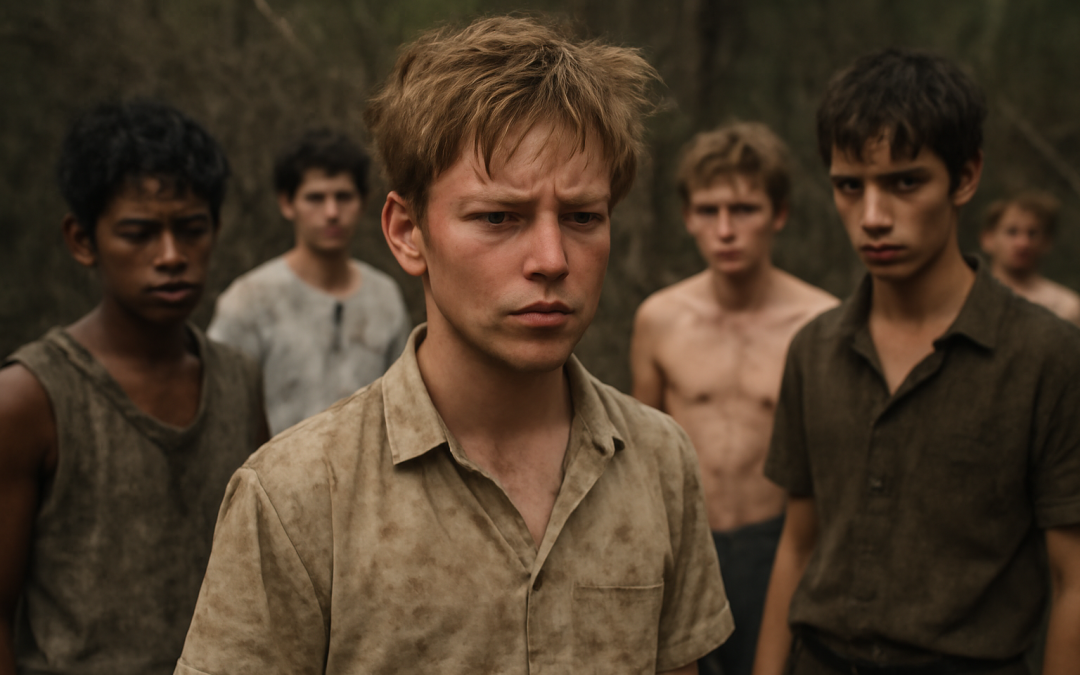
Few narratives delve as deeply into the fragility of social order and the primal instincts that lurk beneath the veneer of civilization as the story presented in *Lord of the Flies*. The novel is a grim exploration of humanity’s capacity for savagery when the structures of society dissolve. Through the eyes of stranded boys on a deserted island, the narrative investigates how quickly the rules that govern behavior can disintegrate, revealing raw ambition, fear, and violence as dominant forces. This enduring examination of civilization unraveling challenges readers to confront uncomfortable truths about what lies within us all.
The premise of the story is both simple and profoundly unsettling. A group of young boys, isolated from the adult world and stranded on an uninhabited island, attempt to govern themselves with the hope of rescue. Initially, these boys organize with a sense of order and purpose, establishing rules, electing leaders, and assigning duties. However, as the days progress and the reality of their predicament sinks in, the fragile social structure begins to break apart. The descent from order to chaos unfolds in a series of escalating conflicts, revealing the innate struggle between the impulse to live by society’s standards and the urge to succumb to baser instincts.
One of the most compelling aspects of this narrative is its portrayal of power dynamics. Leadership is central to the story, illustrated most notably through the characters of Ralph and Jack, whose contrasting visions of authority and survival frame the broader conflict. Ralph represents democratic ideals, striving to maintain order and focus on rescue. Jack, on the other hand, embodies the allure of savagery, prioritizing hunting and the thrill of exerting dominance. Their rivalry exposes the tension between civilization’s rules and the raw exertion of power which thrives in their absence. This duality drives much of the plot and effectively illustrates how leadership styles influence group cohesion or fracture.
The breakdown of civility is also deeply intertwined with the themes of fear and superstition. The boys’ imaginations conjure an ominous “beast” that symbolizes the darkness within themselves—an intangible menace that evokes panic and paranoia. This fear serves as a powerful catalyst for the erosion of reason and the rise of violent impulses. The symbolic beast represents the psychological shadow that humanity tends to suppress but cannot fully escape. The boys’ responses reveal how fear, when left unchecked, can undermine collective rationality and justify irrational and destructive actions.
Moreover, the novel uses its microcosm—a small group isolated from society—to address broader philosophical questions about human nature. Are humans inherently good, corrupted only by social conditions, or is there an intrinsic darkness in every individual waiting for the right circumstances to emerge? Through the gradual erosion of the boys’ civilized behavior, the story suggests that beneath the surface of learned morals and etiquette lies a more primal and dangerous set of impulses. The island becomes a pressure cooker, stripping away societal expectations and exposing these concealed tendencies.
The author’s use of symbolism enriches this narrative, giving it layers of meaning that resonate beyond the immediate plot. Objects like the conch shell, representing democratic order and communication, and the “Lord of the Flies” itself, a pig’s head on a stick, as an emblem of corruption and malevolent power, provide vivid metaphors that anchor the psychological and thematic elements of the story. These symbols evolve as the plot progresses, highlighting shifts in the boys’ mindset and the decay of civilization on the island. Such imagery invites readers to interpret the tale not just as a drama among children, but as an allegory for societal collapse.
Character development is crucial in conveying the novel’s message. Each boy on the island represents different facets of human nature and societal roles. Piggy, with his intellectualism and moral clarity, stands as a voice of reason and civility, yet he is marginalized and ultimately silenced, reflecting how rationality is often overpowered by chaos. Simon’s gentle spirituality and insight into the true nature of the beast contrast with the growing savagery around him, making his tragic fate a poignant commentary on innocence destroyed by collective hysteria. Through these characters, the story explores the complex interactions of intellect, morality, and instinct.
The narrative structure itself contributes to the sense of inevitability that permeates the story. The gradual descent into savagery is both paced and foreshadowed, with earlier small conflicts escalating into full-scale violence and tragedy. The island’s isolation intensifies this progression, with no external authorities to intervene, forcing the boys to confront their fears and failings on their own. This confined setting ensures that every action and reaction feels weighty, as the societal microcosm is stripped down to its barest elements.
In addition, the author’s prose is stark and unembellished, which serves to heighten the chilling atmosphere of the novel. The simplicity of the language contrasts with the complex themes, making the story accessible while intensifying the emotional impact. The depiction of the natural environment shifts from idyllic and enchanting to menacing, mirroring the transformation in the boys themselves and the dark forces at work beneath the island’s surface.
The novel also provides a keen insight into how group dynamics can spiral out of control. Peer pressure, the need for acceptance, and the desire for power all interplay to exacerbate conflicts. The boys’ descent is marked by the abandonment of universally held principles and the rise of tribalism and violence. This progression echoes historical instances of social breakdown, where the collapse of institutions leads to chaos and brutality. By placing children—a symbol of innocence—at the center, the story underscores the precarity of order and how fragile the constructs of society truly are.
Furthermore, the element of hope and rescue persists throughout the narrative, maintaining a tension that keeps the reader invested. The characters’ initial optimism gradually fades, replaced by desperation and fear, which underscores the devastating consequences of losing faith in collective ideals. Yet, the conclusion offers a sobering reflection on human nature, leaving readers to grapple with the unsettling reality of the novel’s moral implications.
This story remains profoundly relevant in contemporary discussions about the nature of authority, the roots of violence, and the limits of social cohesion. Its exploration of civilization unraveling is a cautionary tale that warns against assuming that societal norms and ethical behavior are permanent fixtures. Instead, it presents a challenging perspective: that without vigilance, the thin line separating order from chaos can easily be crossed, revealing the darker dimensions of humanity.
In summation, the narrative offers a haunting examination of what happens when the constructs that uphold societal stability collapse. Through its vivid characters, sharp symbolism, and unflinching portrayal of human nature, it forces readers to confront the uncomfortable possibility that beneath the surface of civility lies an ever-present potential for savagery. This profound exploration not only unsettles but also enlightens, encouraging reflection on the values that maintain order and the vulnerability of those systems in the face of fear and power struggles. Its enduring impact lies in its ability to expose the raw truths about civilization unraveling and the complex duality of human nature itself.