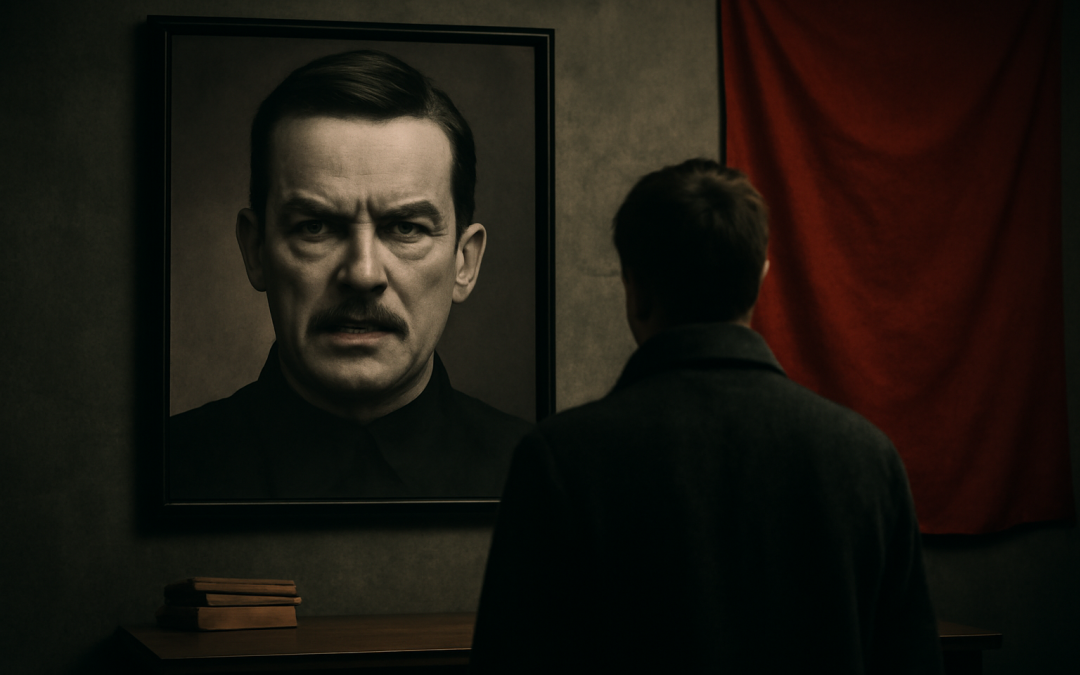
George Orwell’s dystopian novel stands as a stark and unsettling exploration of power and control in a totalitarian regime. Set in a bleak future where individuality is crushed under the weight of constant surveillance and propaganda, the book serves as a powerful warning about the dangers of unchecked authority. It delves deep into how those in power manipulate truth, language, and history to maintain dominance over an oppressed population. Through its portrayal of a society stripped of freedom and privacy, the narrative forces readers to confront uncomfortable questions about the limits of governmental control and the price of complacency.
At the center of the story is the ever-watchful Party, led by the enigmatic figurehead known as Big Brother. This omnipresent authority uses a combination of psychological manipulation, misinformation, and brutal enforcement to suppress dissent and ensure absolute obedience. The Party’s slogan, “War is Peace, Freedom is Slavery, Ignorance is Strength,” encapsulates the distorted logic that permeates every aspect of life. By redefining truths and rewriting history, the regime effectively controls reality itself, leaving citizens disoriented and powerless. This manipulation extends beyond mere propaganda; it infiltrates language through Newspeak, designed to eliminate rebellious thought by narrowing the range of expression.
The novel also presents a chilling portrayal of surveillance and its impact on personal autonomy. The telescreens that monitor citizens in their homes symbolize a society where privacy no longer exists. The fear of being watched constantly suppresses individual desires and thoughts, creating a compliance born of terror rather than genuine consent. This environment fosters an atmosphere of paranoia where trust among individuals is undermined, as everyone is encouraged to report any sign of disloyalty. Orwell’s depiction of surveillance highlights how technology can be weaponized to serve oppressive political ends, a concern that remains profoundly relevant in today’s digital age.
At the heart of the narrative lies the protagonist Winston Smith, a low-ranking member of the Party who harbors silent rebellion. Winston’s internal struggle is a poignant exploration of the human spirit’s resilience amidst overwhelming oppression. His desire to seek truth and assert personal freedom pits him against a system that seeks to obliterate individuality. Through Winston’s eyes, readers experience the psychological torment inflicted by the regime’s endless repressions and the crushing weight of inevitable defeat. His journey underscores the profound consequences of living in a society where independent thought and emotional connections are systematically dismantled.
The theme of historical revisionism plays a crucial role in demonstrating the Party’s mastery over both the past and present. By constantly altering records and fabricating events, the regime perpetuates its version of reality and eliminates any evidence of alternate understandings. This manipulation of history effectively erases collective memory and undermines the very foundation on which personal and societal identity are built. Orwell reveals how controlling the narrative of the past becomes an essential tool for maintaining political power, as it shapes perceptions of the present and influences future loyalty. This relentless rewriting not only limits knowledge but also instills a fatalistic acceptance among the oppressed, who come to believe that resistance is futile.
Language emerges as a central mechanism of control and repression. Newspeak, the constructed language designed by the Party, serves to diminish the range of thought by eliminating words associated with rebellion and freedom. By restricting language, the regime constrains thought itself, making it impossible even to conceive of dissent. This concept of controlling thought through language is a testament to Orwell’s understanding of the profound relationship between communication and cognition. It also presents a grim forecast of societies that seek to inhibit free expression as a means of dominating their populations.
The emotional isolation experienced by characters underscores the devastating social consequences of such a repressive regime. Genuine human connections are discouraged, and relationships are monitored for signs of disloyalty. The regime’s intrusion into the most intimate aspects of life erodes trust and companionship, leaving individuals isolated and vulnerable. Love, which could serve as a form of resistance, is either twisted or destroyed, as seen in Winston’s relationship with Julia, which ultimately succumbs to the overwhelming power of the Party. This deliberate fracturing of social bonds strengthens the Party’s grasp by preventing collective action and mutual support among citizens.
One of the most haunting aspects of the narrative is its resolution, which illustrates the overwhelming capacity of authoritarian power to crush even the most determined spirit. Winston’s eventual capitulation and acceptance of Big Brother reveal the tragic power of systemic control to break down resistance. His transformation from a questioning individual into a mindless devotee serves as a chilling conclusion to the novel’s exploration of power dynamics. It starkly demonstrates how repression, fear, and control can strip away not only freedom but identity itself. This ending leaves readers with a profound sense of despair but also a renewed awareness of the importance of vigilance in safeguarding liberty.
The psychological mechanisms of power portrayed in the novel reveal the complex interplay between fear, loyalty, and submission. The Party’s use of torture and psychological manipulation to force obedience illustrates the extremes to which authoritarian systems will go to maintain control. Oceania’s institutions are designed not merely to punish but to completely reprogram thought and beliefs. This brutal re-education highlights the vulnerability of human psychology under sustained pressure and the ethical dilemmas posed by such absolute power. Orwell’s depiction serves as a cautionary tale about how political systems can exploit fear and coercion to achieve unchallengeable control.
In many respects, the novel’s exploration of power and control transcends its fictional context and resonates with real-world political histories and contemporary concerns. The oppressive tactics described mirror patterns found in various totalitarian regimes, making the story a timeless critique of authoritarianism. It challenges readers to recognize and resist the early signs of political manipulation, such as censorship, propaganda, and surveillance, that can erode democratic principles. Moreover, in an era of increasing digital monitoring and disinformation, Orwell’s insights carry renewed urgency and relevance.
The role of identity and individuality in the face of oppressive control is a powerful theme threaded throughout the narrative. The regime’s efforts to standardize belief and behavior aim to erase personal uniqueness and autonomy. Winston’s struggle embodies the tension between conformity and self-expression, highlighting how totalitarian systems seek to nullify dissent by eliminating the very nature of individual will. The book suggests that the preservation of identity is both a personal battle and a political act. It invites readers to consider the value of personal freedoms and the costs incurred when such freedoms are suppressed.
Orwell’s skillful construction of a bleak and claustrophobic world heightens the novel’s impact, drawing readers into an unsettling and immersive experience. The oppressive atmosphere is reinforced by precise, chilling prose that conveys the relentless nature of the Party’s surveillance and control. This environment creates a sense of suffocation and inevitability that mirrors the characters’ lived experience. The novel’s setting serves not only as a backdrop but as a critical component of the message, demonstrating how environment and power interact to shape human behavior and thought.
The narrative structure, which gradually unveils the extent of the Party’s control and Winston’s internal rebellion, deepens the emotional engagement of readers. Orwell masterfully balances moments of hope and despair, illustrating the constant push and pull between resistance and conformity. This tension is a driving force behind the story, keeping readers invested in Winston’s fate while underscoring the novel’s broader reflections on power. The pacing and development of themes foster a growing sense of dread, climaxing in the final, harrowing revelation of the Party’s absolute dominance.
Literary devices such as symbolism and irony enrich the text’s examination of power dynamics. The figure of Big Brother embodies both the omnipotent ruler and the impersonal surveillance state, representing the chilling fusion of personality cult and bureaucratic control. The irony of slogans that invert meaning reflects the twisted logic of the regime and forces readers to question accepted truths. These elements work together to emphasize the depth of the Party’s manipulation and the perversion of ideals such as freedom and truth. Orwell’s use of these techniques contributes to the novel’s enduring power and complexity.
The enduring legacy of this narrative lies in its capacity to provoke critical reflection on the nature of governance, freedom, and resistance. It compels readers to confront uncomfortable realities about the fragility of democratic institutions and the ease with which power can be abused. Its vivid portrayal of control mechanisms serves as a reminder of the importance of vigilance against political oppression. The novel encourages active engagement with political systems and warns against complacency, emphasizing that liberty requires continuous defense.
In educational and cultural contexts, the novel has become a landmark text for discussions around civil rights, governmental overreach, and ethical leadership. Its language and concepts have entered popular discourse, influencing how societies think about surveillance and state control. The cultural imprint of the novel extends beyond literature, impacting political science, philosophy, and human rights debates. This broad resonance is a testament to the author’s profound insight into the vulnerabilities of human societies when confronted with absolute power.
Reading the book today evokes a renewed sensitivity to the subtle forms of control that may permeate modern life. With increasing concerns about privacy invasion, mass data collection, and manipulative media, many readers find the novel’s themes alarmingly prescient. It fosters critical awareness about how power can be exercised invisibly and insidiously, shaping thought and behavior without overt force. The story challenges contemporary audiences to evaluate their own societies and consider what limits should be placed on power to protect individual freedoms.
In conclusion, the novel is a profound meditation on the mechanisms of power and the human cost of authoritarian control. Through its vivid depiction of a totalitarian regime’s strategies to dominate every aspect of life, it provides a sobering warning about the fragility of freedom. The psychological, social, and political dimensions of control are explored with extraordinary depth, offering readers a lens through which to view both historical and current struggles for liberty. Its impact remains powerful and transformative, urging ongoing vigilance and commitment to preserving human dignity against forces that seek to diminish it.