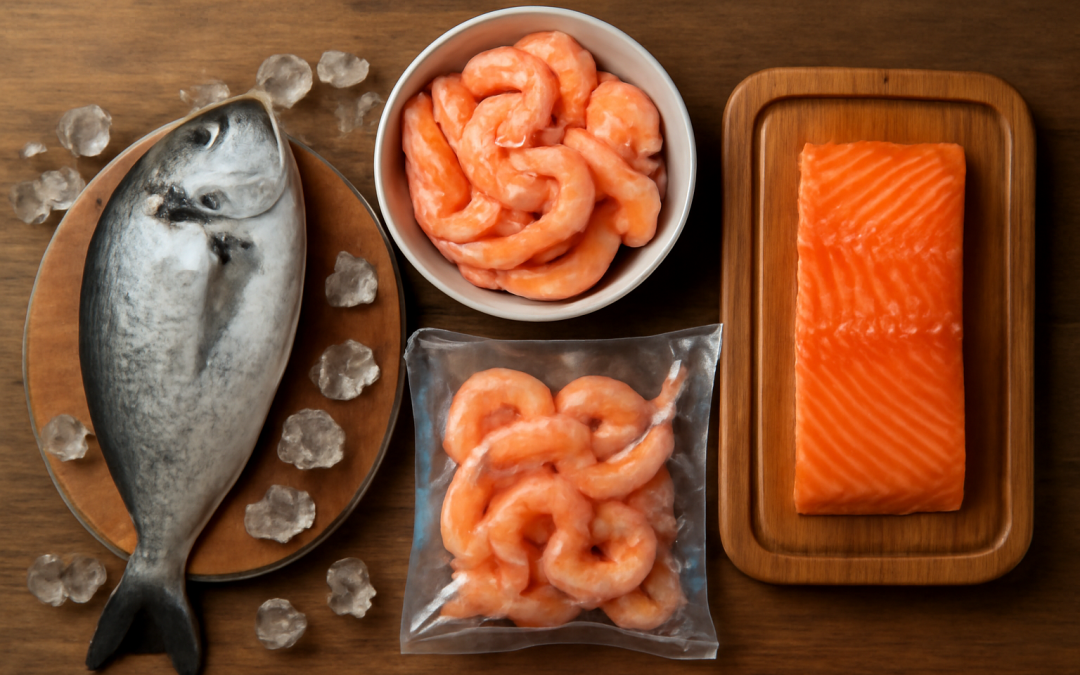
Seafood, prized for its delicate flavor and rich nutritional content, is a perishable commodity that requires careful handling to maintain its quality and safety. The high moisture content and enzymatic activity within fish and shellfish make them highly susceptible to spoilage shortly after harvest. As a result, effective seafood preservation methods are essential not only to extend shelf life but also to ensure consumer safety by preventing microbial growth and biochemical deterioration. These methods range from traditional techniques passed down through generations to modern technologies developed to meet the demands of global distribution and changing consumer preferences.
One of the oldest and most universally recognized methods for preserving seafood is refrigeration. Keeping seafood at low temperatures slows down the activity of spoilage microorganisms and enzymatic reactions that cause degradation. Refrigeration, typically maintained just above freezing at temperatures of 0–4°C, can significantly extend the freshness of fish and shellfish for several days. However, while refrigeration is effective in slowing down spoilage, it does not completely halt microbial growth, necessitating additional preservation strategies when storage exceeds a critical time frame. Besides, the temperature must be consistently maintained to prevent the onset of spoilage or quality loss due to temperature fluctuations.
Freezing seafood takes preservation a step further by lowering the temperature below 0°C, often between -18 to -30°C, to essentially stop microbial activity and enzymatic processes. This method allows for much longer storage periods, often several months, without substantial loss of quality. The speed at which seafood is frozen impacts the texture and flavor; rapid freezing results in smaller ice crystals that better preserve cell structure, preventing the mushy texture that can arise with slow freezing. Advanced freezing techniques such as blast freezing and cryogenic freezing using liquid nitrogen have revolutionized the seafood industry by enabling rapid chilling that retains nutritional content, flavor, and texture to a greater degree than traditional freezing.
Salting is another time-honored method widely used for centuries in seafood preservation. By applying salt to fish, the water activity is reduced, creating an environment that inhibits microbial growth and enzymatic reactions. Salt can be applied through dry salting, where dry salt is rubbed onto fish surfaces, or wet salting, where seafood is soaked in a brine solution. These methods not only extend shelf life but also impart unique flavors and textures popular in various culinary traditions. Salted fish products have been vital in regions without reliable refrigeration, serving as components of diets that can last through harsh seasons.
Drying is often combined with salting and remains a cornerstone of seafood preservation in many coastal cultures. The process removes moisture from fish or shellfish, thereby reducing water activity to levels that limit microbial growth. Sun drying, air drying, and smoke drying are traditional methods utilized, each affecting the final product’s flavor and shelf life differently. Smoking, in particular, adds phenolic compounds that have antimicrobial properties and impart distinct flavors. Modern methods such as dehydrators and controlled-atmosphere drying chambers allow for more consistent and safer drying conditions, reducing the risk of contamination and spoilage.
Apart from these conventional methods, fermentation has historically played a significant role in seafood preservation. By promoting the growth of beneficial bacteria, such as lactic acid bacteria, fermentation lowers pH and generates compounds that inhibit spoilage and pathogenic microorganisms. Fermented seafood products have unique, often pungent, flavors cherished in many cultures. Recent interest in fermented foods also highlights their potential health benefits through the presence of probiotics, adding another dimension to their preservation focus.
Vacuum packaging is a more recent development in the preservation of seafood that drastically reduces oxygen levels around the product. Since many spoilage microorganisms require oxygen, vacuum packaging slows their proliferation and prevents oxidative rancidity of fatty fish. When combined with refrigeration, vacuum packaging can extend shelf life considerably beyond that achievable by refrigeration alone. Modified atmosphere packaging (MAP) is an advancement where specific gas mixtures replace the air in the packaging to further inhibit microbial growth and oxidative processes.
Another innovative preservation technique gaining traction is high-pressure processing (HPP). This non-thermal method involves subjecting seafood to extremely high pressures that inactivate microorganisms and enzymes without exposing the product to heat. This helps retain the natural taste, texture, and nutritional quality of fresh seafood while significantly extending shelf life. HPP is particularly beneficial for ready-to-eat seafood products where maintaining freshness and safety without cooking is crucial.
Irradiation offers yet another method to control microbial load and extend shelf life by exposing seafood to controlled doses of ionizing radiation. This process disrupts the DNA of bacteria and parasites, effectively sterilizing or reducing the microbial population. Despite the efficacy of irradiation, public perception and regulatory differences have limited its widespread adoption for seafood. Nonetheless, it remains a valuable tool, especially for ensuring food safety in export products requiring strict microbial control.
Ensuring that seafood is preserved safely and effectively also involves adherence to strict hygiene and handling protocols. From the moment of catch through processing, transportation, and storage, minimizing contamination by pathogens or spoilage organisms is critical. Techniques such as rapid chilling immediately after harvest, hygienic handling practices, and maintaining cold chains prevent initial contamination and slow down spoilage processes. Good manufacturing practices (GMP) and Hazard Analysis and Critical Control Point (HACCP) systems are widely implemented in seafood processing facilities to monitor and control potential safety risks throughout the supply chain.
In addition to physical and chemical preservation techniques, the use of natural preservatives and additives has been explored to enhance the shelf life and quality of seafood. Extracts from herbs, spices, and certain marine organisms are known for their antimicrobial and antioxidant properties. Incorporating these natural compounds in coatings, marinades, or packaging films offers an environmentally friendly approach to preservation and is aligned with the growing consumer demand for clean-label products.
The choice of preservation method often depends on the type of seafood, intended market, cultural preferences, and economic considerations. For example, delicate fish like salmon may benefit most from freezing and vacuum packaging to preserve its high lipid content, while robust fish like cod have traditionally been salted and dried. Shellfish such as shrimp and crab are commonly frozen or chilled because of their sensitivity and short shelf life. Additionally, regional practices and infrastructure influence preservation choices; in developing areas without reliable electricity, salting and sun drying remain dominant, whereas industrialized regions rely heavily on refrigeration, freezing, and advanced packaging technologies.
Transport and distribution also pose challenges that shape preservation strategies for seafood. The global demand for fresh and high-quality seafood requires an efficient cold chain from catch to consumer. Breakdowns in refrigeration during transport can lead to rapid quality degradation and safety risks. Technologies such as temperature-monitoring devices, insulated containers, and rapid freezing at the source help maintain the cold chain integrity. Meanwhile, innovations in packaging materials, like biodegradable films with antimicrobial properties, are under development to improve sustainability without compromising preservation.
The environmental impact of preservation methods is an increasingly important consideration. Energy-intensive technologies like freezing and refrigeration contribute to carbon emissions, prompting research into more sustainable alternatives. Methods that reduce waste by extending shelf life also alleviate pressure on fisheries and help meet demands without overexploitation. Additionally, emerging technologies like edible coatings derived from natural polymers offer potential solutions to reduce reliance on plastic packaging while supporting seafood preservation.
Consumer preferences and safety regulations continue to drive innovation in seafood preservation. With growing awareness of food safety and quality, there is a higher expectation for products to be free from harmful bacteria and parasites, as well as chemical contaminants. Regulatory agencies have established limits and guidelines on permissible preservation treatments to ensure safety while allowing for commercial feasibility. This has propelled research into novel, non-thermal methods that maintain the freshness and nutritional value of seafood without introducing undesirable changes.
To maximize the benefits of preservation, it is essential to understand the biochemical and microbiological mechanisms of spoilage specific to seafood. Fish spoilage often results from the growth of specific bacteria that produce off-flavors, such as pseudomonads and Shewanella species, or from enzymatic degradation leading to textural changes. Shellfish spoilage involves rapid autolysis and high susceptibility to contamination due to their filter-feeding nature. Tailoring preservation methods to target these spoilage pathways enables more effective extension of shelf life and retention of quality.
In conclusion, the diverse array of seafood preservation methods reflects the complexity of maintaining freshness, safety, and sensory qualities in a highly perishable product. From ancient techniques like salting, drying, and fermentation to advanced technologies including freezing, vacuum packaging, and high-pressure processing, each approach offers unique advantages and limitations. The integration of proper handling, hygienic practices, and cold chain management is crucial to leverage these preservation methods fully. As global seafood consumption continues to rise, ongoing innovation aimed at improving efficiency, sustainability, and product quality will remain essential to meeting consumer demands while safeguarding this valuable resource.