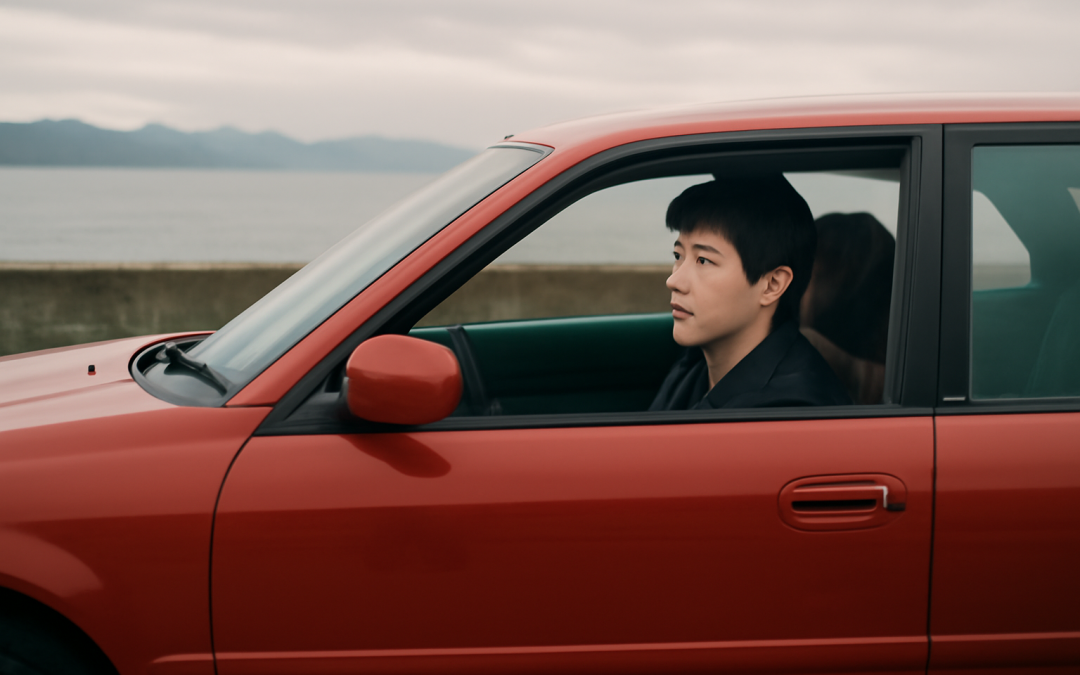
Grief is a complex and deeply personal journey, and few films capture its nuances with the quiet subtlety and emotional depth as this poignant cinematic offering. From the very beginning, the film invites audiences not just to witness a story about loss but to become intimately acquainted with the characters’ inner turmoil, their moments of silence, and the understated ways in which they cope with trauma. Set against the backdrop of long drives and conversations behind the wheel, the narrative unfolds slowly, allowing room for reflection and emotional undercurrents to simmer beneath the surface.
The central narrative revolves around a well-known actor who grapples with the sudden death of his wife, a loss that forces him to confront not only his grief but also the unspoken realities of their marriage. This journey is not one punctuated by dramatic outbursts, but rather by restrained yet powerful exchanges that reveal the chasms and connections between characters. The choice to use the framework of a road trip becomes a compelling metaphor for this emotional odyssey—each mile traveled mirroring the gradual, painful process of coming to terms with what has been lost. In this way, the film’s pacing mimics grief itself: slow, uneven, and endlessly winding.
What makes the story resonate so powerfully is its honesty and refusal to simplify or romanticize pain. It steers clear of conventional grief narratives that lean heavily on catharsis or redemption and instead delves into the ambiguity and contradictions that are often most real in mourning. The protagonist is flawed, sometimes distant, and struggling to articulate feelings that feel too vast to contain. His interactions with his chauffeur, a reserved widower himself, become a study in the quiet companionship that grief can foster. Their developing relationship serves as a reminder that healing does not come in grand gestures but often in small, shared moments of vulnerability and understanding.
Cinematographically, the film’s aesthetic supports its thematic vision through carefully composed shots that favor stillness and restraint. Moments of silence are as telling as dialogue, and the use of confined spaces, such as the car’s interior, accentuates the intimate, sometimes claustrophobic nature of grief. Scenes are often bathed in natural light, with the changing landscapes outside the windows serving as an external mirror to the evolving emotional states of the characters. The camera lingers over details—weathered hands, the play of light on faces, the slight tremor of a smile—conveying volumes without the need for words.
Underlying the surface is a profound exploration of communication, or the lack thereof, which often defines relationships strained by loss. The film probes how people who share the same experiences may still remain worlds apart, their grief isolating them even as it draws them closer. In this sense, the story challenges viewers to think about the expectations placed on mourning and the societal pressure to find closure quickly. It shows that grief is neither linear nor predictable; instead, it is an ongoing dialogue between memory and reality, presence and absence.
Throughout the film, the performances are marked by subtlety and restraint, anchoring the story with a sense of authenticity. The lead actor delivers a masterful portrayal of a man wracked by grief but unwilling to display vulnerability openly, making his quiet moments of emotional revelation all the more affecting. His chemistry with the actor playing the chauffeur brings warmth and depth to the narrative, their nuanced interactions illuminating how empathy and companionship can serve as lifelines during dark times. It’s a testament to the film’s direction and casting choices that such a delicate, low-key story feels so alive and immediate.
Culturally, the film draws on rich layers of context that add resonance without ever overwhelming the story. The setting, deeply embedded in a specific place and culture, enriches the narrative through subtly woven references to tradition, societal expectations, and the pressures men endure regarding emotional expression. By reflecting this cultural framework, the film not only provides a backdrop but also critiques the ways grief is socially mediated, particularly for men who are often expected to mask their pain. This adds a valuable dimension to the conversation about mourning and highlights the importance of emotional honesty.
One cannot discuss this film without highlighting its relationship with the original source material. Adapted from a short story by a renowned author, the screenplay expands the narrative, allowing characters and themes more room to breathe and develop. This transformation from page to screen successfully captures the spirit of the original while introducing new emotional layers and perspectives. The director’s vision shines through in how the cinematic language is used to deepen the story’s impact, creating an experience that transcends words and resonates on a profoundly human level.
Music plays a subtle yet important role in the film’s emotional landscape. Rather than relying on a sweeping score to cue the audience’s feelings, the soundtrack is minimalist and often diegetic—emerging naturally from the world of the characters. The occasional melodies and silences that permeate scenes underscore the themes of loneliness and connection without overwhelming the narrative. This restrained use of sound respects the viewer’s intelligence and allows the weight of the characters’ experiences to come through more vividly.
The themes of identity and reinvention weave alongside the motif of grief, as the film interrogates how loss can reshape a person’s sense of self. For the protagonist, the journey behind the wheel opens space for introspection and subtle transformation, even though he remains tethered to the ghosts of his past. The road trip becomes symbolic of potential renewal, but the film remains committed to portraying this as a tentative, fragile process—not a neat resolution. It honors the reality that grief lingers and evolves rather than fades and concludes.
The film’s exploration of masculinity and the societal roles imposed on men offers an insightful critique. The lead character’s struggle to openly grieve reflects broader cultural taboos, highlighting how such repression can amplify emotional suffering. Through the relationship with his driver—who navigates his own quiet grief—the narrative expands this critique beyond an individual to a shared human predicament. The understated conversations between these men reveal the deep need for connection and the courage required to break through emotional isolation.
Another remarkable aspect is the film’s ability to balance melancholia with moments of unexpected humor and tenderness. These instances provide necessary breathing space in a weighty story, reminding the audience that even in grief, life continues with its oddities and bright spots. The mixture of sorrow and warmth reflects the dual nature of mourning—where heartbreak coexists with the slow unfolding of hope and the possibility of understanding one’s place in the world again.
The film’s conclusion resists the temptation to offer tidy or definitive resolutions. Instead, it leaves viewers with a sense of lingering uncertainty and quiet acceptance, much like life itself. This open-endedness invites reflection and allows each audience member to bring their own experiences and interpretations to the final scenes. It embraces the idea that grief is a companion rather than a foe, a continuous presence that shapes and colors existence but does not define it entirely.
In terms of filmmaking craft, the director’s patient and meticulous approach stands out as a key strength. Every frame feels deliberate, every conversation weighted with significance. This craftsmanship is evident in the pacing, which respects the emotional rhythms of the story, and in the restraint applied to performances and visual storytelling. The film trusts its audience to engage deeply and reward them with a rich, textured experience that lingers well beyond the closing credits.
Technically, the use of the automobile as a confined and moving stage is ingenious. It creates an intimate setting that facilitates both confrontation and quiet reflection, capturing the tension and tenderness between the characters. The metaphor of the road as a path toward understanding is enhanced through this spatial device, making the journey itself a narrative character—sometimes confining, sometimes liberating. This inventive storytelling element energizes a story that could otherwise have become overly static.
The film also shines in its portrayal of human connection that transcends language and cultural divides. The characters navigate personal histories and losses that are universally recognizable, creating empathy across boundaries. Their interactions suggest that while grief may isolate individuals, it also reveals shared vulnerabilities and the fundamental need for companionship. Such a perspective enriches the narrative, providing a hopeful message amid the poignant sadness.
Viewers who seek performances anchored in subtlety and depth will find much to appreciate here. The cast’s excellent work communicates volumes in moments of silence and fleeting looks, emphasizing the power of nonverbal communication. This approach highlights how grief often dwells in what is left unsaid and the quiet spaces between interactions. Such artistry elevates the film beyond a mere exploration of sorrow into a nuanced examination of human resilience.
As a meditation on loss and memory, the film succeeds in evoking the texture of grief without veering into melodrama. The unfolding story leans on emotional realism and keen psychological insight, creating a portrayal that feels lived-in and true. This authenticity invites viewers into an intimate encounter with pain and healing, encouraging awareness of the myriad ways grief touches life. It is a rare film that manages such sensitivity and insight, making it a significant contribution to the cinematic landscape.
Ultimately, the film stands as a powerful reminder of the enduring impact of love and loss. Through its evocative storytelling and compelling character work, it challenges assumptions about what it means to grieve and how individuals find their way through tragedy. It honors the quiet dignity of those who carry their sorrow without spectacle and the subtle courage that lies in moving forward. This is cinema that speaks to the heart with intelligence and compassion, leaving a lasting impression on all who experience it.
In embracing the complexities of mourning, the film encourages a deeper understanding of grief as an ongoing process rather than a finite event. Its delicate exploration of how loss reshapes identity, relationships, and hope offers profound insights that linger beyond the screen. This is a film that rewards careful attention and emotional openness, inviting viewers not only to witness but to feel the weight and lightness of grief on the road. It stands as a testament to the resilience of the human spirit and the quiet power of connection amidst sorrow.