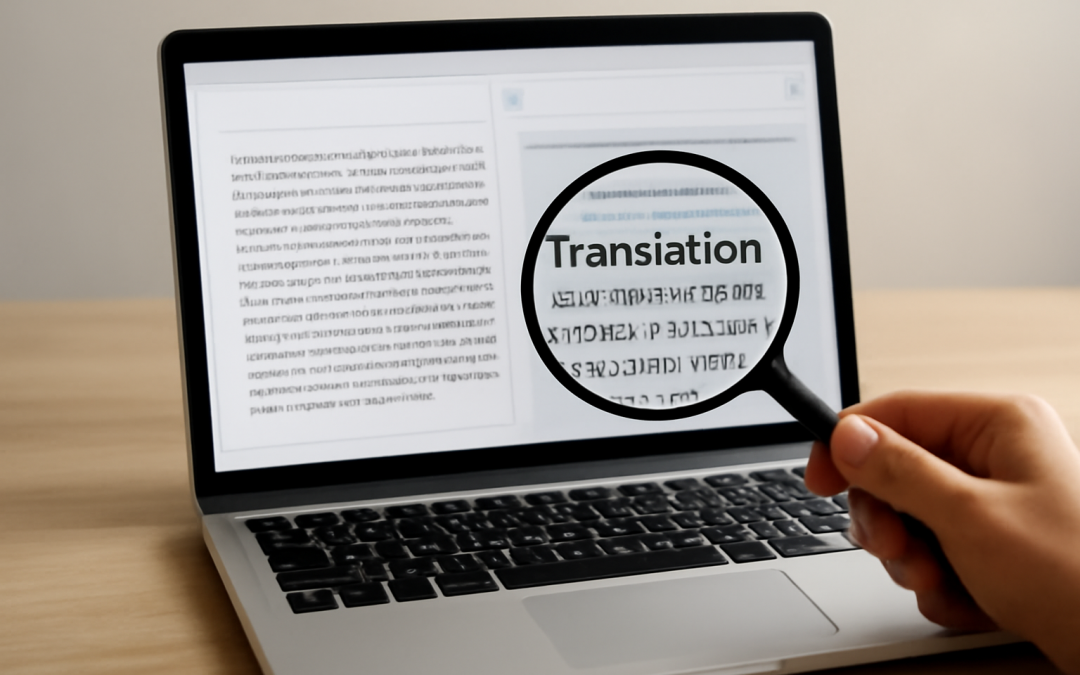
In today’s globalized world, the demand for quick and efficient communication across languages has led to the widespread use of automatic translation tools. These tools promise to break down language barriers instantly, making information accessible to a diverse audience. However, despite significant advancements in technology, automatic translation often produces errors that can range from minor inaccuracies to confusing or misleading interpretations. Understanding why these errors occur is crucial for users who rely on machine translation to convey precise meanings and for developers who aim to improve these systems.
One of the fundamental reasons behind automatic translation errors lies in the inherent complexity of human languages. Languages are not merely collections of vocabulary and grammar rules; they are dynamic systems shaped by culture, context, idiomatic expressions, and subtle nuances. Machine translation models typically analyze and process language based on large datasets of text, seeking patterns and correspondences between words and phrases in different languages. Although this approach can be effective for straightforward sentences, it struggles with the layers of meaning embedded in natural language, such as sarcasm, humor, or culturally specific references. These subtleties often become lost or misconstrued, leading to translations that might be technically correct in terms of word choices but miss the intended tone or context.
Another significant challenge arises from the ambiguity inherent in many languages. Words and phrases can have multiple meanings depending on the context, and humans rely on a range of clues—previous sentences, real-world knowledge, or even intonations—to interpret them correctly. Automatic translation systems, however, rely heavily on algorithms that may not fully grasp these contexts, especially when there is limited surrounding information. For example, the English word “bank” could refer to the side of a river or a financial institution. Without proper contextual data, a translation system might pick the wrong meaning, resulting in a nonsensical or erroneous translation in the target language. This problem is compounded when translating between languages with more varied or complex grammar structures, where the relationship between words can shift more dramatically based on subtle contextual shifts.
Syntax and grammar differences also contribute heavily to the errors made by automatic translations. Languages vary dramatically not only in vocabulary but also in how sentences are structured. Word order, verb conjugations, gender agreements, and other grammatical features differ widely among languages, and these differences can challenge translation algorithms. Some languages, like English, rely on relatively fixed word order, whereas others, such as Latin or Russian, use inflections and flexible syntax to convey meaning. When a machine translation system encounters these differences, it may produce awkward or even incomprehensible sentences because it lacks the ability to rearrange or properly inflect words in a way that sounds natural or grammatically correct in the target language.
Lexical gaps present yet another obstacle. Not all ideas or concepts have direct equivalents in every language. Some languages possess unique words or phrases encapsulating culturally specific ideas or emotions that can be difficult or impossible to translate literally. When faced with these gaps, machine translation systems often resort to approximations or substitute phrases that can distort the meaning. For instance, the German word “Schadenfreude” describes the pleasure derived from another’s misfortune, a concept that requires multiple words to express in English. Automatic translators might struggle to convey such nuanced terms efficiently, resulting in translations that seem awkward or incomplete.
Machine translation systems are often trained on vast corpora of text drawn from the internet, books, or other sources. Although large datasets enable these algorithms to learn language patterns, they also introduce biases and errors inherent in the source material. If a training dataset contains inconsistent or poorly translated sentences, the model could reproduce these mistakes. Additionally, slang, regional dialects, and evolving language usages can cause confusion. A phrase that is common in one language community may be rare or unknown in another, leading to improper translations. This limitation is why machine translation excels in formal or standardized text but tends to falter when translating informal or creative writing.
Idiomatic expressions and expressions rooted in cultural context tend to be one of the most challenging aspects for machine translation. Humans understand idioms not just by their dictionary meanings but through the cultural knowledge and shared experiences behind them. Automatic translation tools often process idioms word-for-word, producing translations that sound illogical or meaningless to speakers of the target language. For example, translating the English idiom “kick the bucket” (meaning to die) directly into another language can confuse readers and distort the intended message. Without a deep cultural understanding, machines cannot readily identify or substitute idiomatic expressions with their appropriate equivalents.
Errors can also arise from the limitations of the underlying models used in automatic translation. Early systems relied on rule-based approaches, encoding explicit grammatical and syntactical rules for how to transform text between languages. More modern systems use statistical and neural network techniques, which “learn” translations from data rather than relying on rigid rules. While neural machine translation (NMT) has significantly improved fluency and accuracy, it still depends heavily on the quality and diversity of training data. Moreover, NMT models sometimes generate text that appears fluent but is factually incorrect or contextually inappropriate, a phenomenon known as “hallucination.” Such errors can be subtle and difficult to detect, yet they undermine users’ trust in automatic translations.
Another fundamental problem is that automatic translation systems often lack common sense reasoning. Humans naturally infer meaning based on knowledge about the world, the environment, and likely intentions of the speaker or writer. Machines do not possess this intuition and cannot easily fill in gaps in the text or predict unstated implications. This gap in understanding frequently leads to mistranslations, particularly in complex or ambiguous sentences where logical inference plays a key role.
The influence of syntax and semantics interaction also explains some errors in automatic translation. Syntax refers to the arrangement of words and phrases to create sentences, while semantics concerns the meaning of the words and sentences themselves. Although these two domains are interconnected, good syntactic structure in a translated sentence does not guarantee that the semantic meaning is preserved. Automatic translation models may correctly reorder words but fail to capture the intended meaning or subtleties of the source sentence. Such discrepancies can yield results that are grammatically sound but semantically misleading.
The role of punctuation and formatting should not be underestimated in translation accuracy. Machines often fail to interpret punctuation marks correctly, especially when languages have different conventions for punctuation placement and usage. For example, question marks, commas, or quotation marks might be treated differently depending on the language, affecting the sentence’s overall meaning or emotional tone. Failures to process these nuances can result in confusing or grammatically incorrect output.
In addition, the practical constraints of computational resources and speed impact translation quality. To meet the demand for quick results, translation algorithms sometimes sacrifice depth of analysis for efficiency. This trade-off can lead to simplifications or omissions, especially in longer or more complex texts. Processing limitations might also restrict the amount of contextual data the system can consider, further increasing the likelihood of errors. Consequently, there is often a tension between producing fast translations and maintaining high accuracy.
While technology continues to progress, human language remains too fluid and multifaceted for perfect automatic translation. Language evolves continuously, with new words, phrases, and usages emerging regularly. Each generation brings changes to cultural references, syntax, and lexicons. Machine translation systems require frequent updates and retraining to keep pace, and even then, they cannot replicate the deep and flexible language comprehension that humans possess. This dynamic nature of language ensures that errors will persist unless supplemented by human oversight.
Moreover, the goals and expectations placed on automatic translation affect perceptions of its accuracy. Users often expect machine translation to be flawless or close to human quality, a standard that current technologies rarely meet across all contexts. Misunderstandings occur when casual or exploratory use meets professional demands for precision, such as in legal, medical, or technical fields. In these situations, even small translation mistakes can have serious consequences, causing confusion, misinterpretation, or harm. Recognizing the limitations of automatic translation tools and applying appropriate human review is critical to ensuring communication remains effective.
Despite its shortcomings, automatic translation has undeniable benefits, making information more accessible and fostering international collaboration. Continued research into improving natural language processing, incorporating deeper semantic analysis, and integrating cultural knowledge may reduce errors over time. However, this progress must be grounded in a realistic understanding of what these systems can and cannot achieve, appreciating that language’s complexity often defies simplistic algorithmic solutions.
In summary, automatic translation errors arise from a combination of factors rooted in the fundamental nature of human language, the limitations of current technology, and the complexity of accurately capturing meaning across linguistic and cultural boundaries. Ambiguities, idiomatic expression, syntax differences, lexical gaps, context dependence, and data quality all challenge machine translation systems. While advancements continue to improve the fluency and usability of these tools, their outputs must be interpreted critically, with awareness of their potential for misinterpretation and distortion. Only through informed use and ongoing development can the promise of automatic translation approach its full potential, bridging communication gaps without sacrificing clarity or precision.