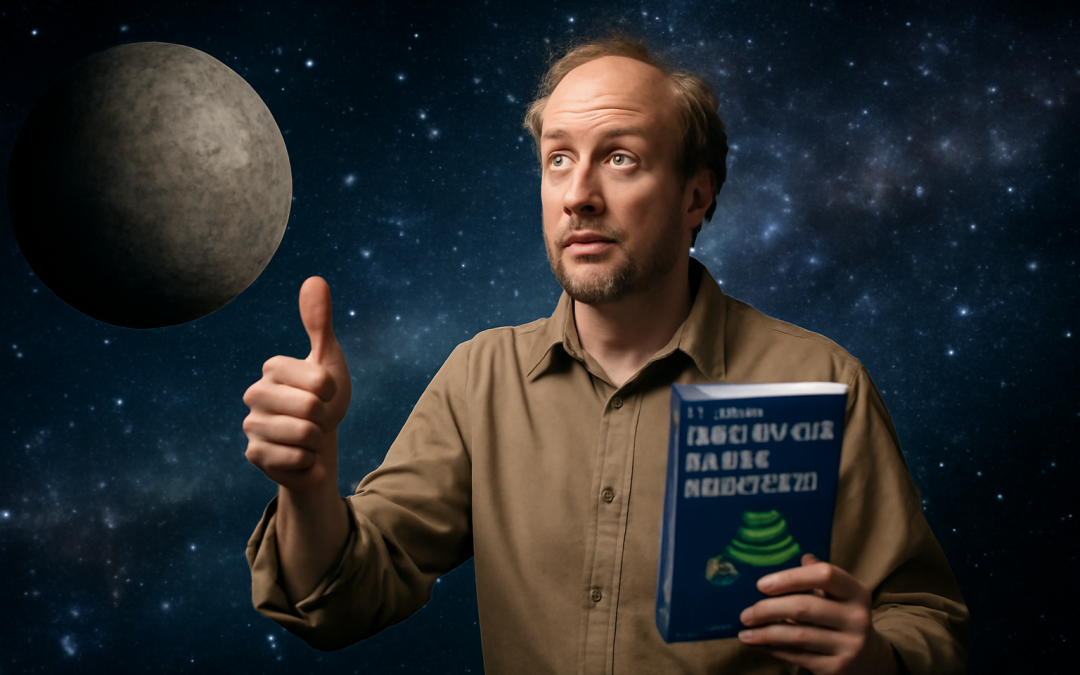
The Hitchhiker’s Guide to the Galaxy explodes onto the cosmic stage with a blend of wit, satire, and sheer absurdity, weaving together elements of science fiction and comedy into a tapestry that defies conventional genre boundaries. From the moment the story launches, it invites readers and viewers alike to question the minutiae of existence and the nature of the universe through a uniquely humorous lens. The narrative orbits around Arthur Dent, an unassuming human whose life is irrevocably altered when Earth is demolished to make way for a galactic freeway. What follows is a surreal voyage through space, enriched by an eccentric cast of characters and an underlying philosophy that challenges the very fabric of reality.
One of the most compelling aspects of this work is its embrace of absurdity, presenting the universe as an incomprehensible, often illogical place where the rules of everyday life no longer apply. The humor arises not just from slapstick or clever wordplay but from a deep-seated recognition of life’s inherent chaos and randomness. This approach transforms what could have been a mere sci-fi adventure into a poignant exploration of humanity’s search for meaning in an indifferent cosmos. The Hitchhiker’s Guide itself, an electronic book within the story packed with questionable advice and dry wit, serves as a metaphor for the human tendency to seek understanding and order amidst confusion.
Central to the story’s charm is its richly developed and quirky characters, each bringing their own flavor to the narrative’s absurd comedy. Arthur Dent, as the everyman, embodies bewilderment and resistance, grounding the cosmic chaos in a relatable human perspective. Ford Prefect, his alien friend and seasoned intergalactic traveler, acts as both guide and provocateur, highlighting the strangeness of the universe with a casual ease. Then there’s Zaphod Beeblebrox, the flamboyant, two-headed ex-President of the Galaxy whose reckless antics and ego underscore the narrative’s satire of power and authority. Marvin, the paranoid android, adds a layer of melancholic irony, his depressed demeanor serving as a counterpoint to the surrounding exuberance.
The narrative structure of The Hitchhiker’s Guide to the Galaxy mirrors its thematic content, eschewing traditional linear progression in favor of episodic, often tangential adventures that reflect the unpredictable nature of the universe it portrays. This fragmented storytelling style allows for a variety of tones and moods to coexist, from existential musings to outright farce. The pacing is brisk, but it never sacrifices depth, weaving moments of genuine philosophical insight into its rapid-fire humor. In many ways, this format is a perfect vehicle for the absurdity it revels in, reinforcing the idea that life—and the cosmos—cannot be neatly contained in a straightforward narrative.
Another standout element is the inventive language and imaginative technology that populate this universe. The Guide’s entries themselves are a highlight, combining technical jargon with irreverent commentary, serving as a source of comic relief and world-building simultaneously. Concepts such as the improbability drive, which allows the spaceship Heart of Gold to maneuver through space by embracing the randomness of quantum mechanics, exemplify how the story uses scientific ideas as fodder for both plot and humor. These innovations aren’t just gimmicks; they underscore the narrative’s central preoccupation with chance, uncertainty, and the absurd.
At its heart, the story is also a subtle critique of bureaucracy, consumer culture, and the pretensions of human knowledge. The destruction of Earth for the construction of a cosmic bypass echoes very real frustrations with governmental decision-making and the prioritization of progress over individual lives. Through satirical portrayals of interstellar administration and the impersonal machinery of galactic governance, the narrative highlights the disconnect between those who wield power and those who suffer its consequences. This theme resonates across the absurdity, grounding the humor in something deeply recognizable and relatable.
Despite its humorous tone, The Hitchhiker’s Guide never loses sight of its philosophical undercurrents. The question of life’s meaning—or its apparent lack thereof—is explored through both explicit dialogue and the structural absurdity of the plot. The oft-repeated but enigmatic answer “42” to the ultimate question of life, the universe, and everything is emblematic of this exploration. It simultaneously lampoons the human desire for simple answers to complex problems and encourages a more nuanced contemplation of the universe’s mysteries. This blend of humor and philosophy invites readers to embrace uncertainty rather than fear it.
The visual and narrative style of adaptations of The Hitchhiker’s Guide to the Galaxy further amplify its unique qualities, where a mix of dry British humor and imaginative special effects create an atmosphere that feels both familiar and otherworldly. The interplay between the mundane and the fantastical highlights the absurdity inherent in the story, reinforcing the tension between humanity’s everyday concerns and the vast, strange universe beyond. Whether experienced through radio dramas, television series, or film, these adaptations maintain the delicate balance between comedy and contemplation that defines the work.
Moreover, the story’s influence extends far beyond its initial release, inspiring a cultural phenomenon that has impacted science fiction and comedy alike. Its irreverent tone and willingness to tackle big ideas with humor have paved the way for countless other works that seek to blend genres and challenge expectations. The phrase “Don’t Panic,” prominently featured within the Guide, has become a cultural touchstone, embodying an optimistic yet realistic approach to the absurd situations we all face. This enduring appeal speaks to a broader human experience—the need to find humor and resilience amid the chaos.
In examining the work’s lasting appeal, it becomes clear that the strength lies not just in its humor but in its deep empathy for its characters and themes. The absurdity of the universe is matched by the sincere emotional journeys of its inhabitants, particularly Arthur’s reluctant transformation from a passive bystander to a participant in a larger cosmic drama. This emotional core adds weight to the comedy, ensuring that the absurd moments resonate rather than merely amuse. The result is a story that entertains, provokes thought, and invites reflection on the human condition.
Critics and fans alike often praise the subtle layering of satire and social commentary throughout the narrative. It cleverly critiques everything from politics to philosophy while never losing sight of its role as a source of entertainment. This balance prevents the story from becoming preachy or heavy-handed, allowing readers to engage with its ideas in a lighthearted but meaningful way. The ability to provoke laughter and introspection simultaneously is a testament to the skillful writing and imaginative world-building that underpin the entire universe.
Another noteworthy aspect is the story’s propensity to play with expectations and conventions. It subverts traditional science fiction tropes, eschewing heroic space battles and grandiose quests in favor of smaller, often mundane concerns elevated to cosmic significance. This inversion both delights and surprises, keeping the audience on its toes and inviting a fresh perspective on familiar genre elements. By doing so, it challenges the audience to reconsider what stories about space and exploration can be, expanding the possibilities of the genre itself.
The soundtrack and sound design in adaptations contribute heavily to the atmosphere, enhancing the humor and surreal ambience. Quirky sound effects, a playful score, and the use of pauses and delivery create a rhythm that echoes the story’s offbeat sensibility. These auditory elements help to immerse the audience, making the experience richer and more engaging. The attention to detail in these elements reflects the care with which the source material has been handled, ensuring that its unique voice is preserved across different mediums.
The interplay between technology and humanity is another theme woven throughout the narrative. The characters’ interactions with machines, from Marvin to the Guide itself, reveal a complex relationship characterized by frustration, dependency, and occasional affection. This dynamic explores the contradictions inherent in our reliance on technology—both as a tool for liberation and a source of alienation. The story’s humorous take on this relationship provides a fresh lens through which to consider our own interactions with the increasingly technological world.
As the narrative progresses, the scope of absurdity expands, encompassing not just the characters’ personal dilemmas but the very fabric of reality they traverse. Time travel, parallel universes, and existential paradoxes all make appearances, each handled with the same irreverent spirit that defines the rest of the work. These elements complicate the plot and deepen its thematic resonance, pushing the boundary between comedy and speculative fiction. The willingness to embrace such complexity without sacrificing humor is a hallmark of the story’s enduring brilliance.
It is impossible to discuss the work’s impact without mentioning its unique blend of British humor and universal appeal. The dry wit, irony, and understatement experienced by audiences across generations carry a distinctly British flavor, yet the themes and questions it raises are profoundly global. This combination makes the story both a product of its cultural context and a timeless meditation on human existence. Its humor transcends national boundaries, proving the power of comedy to connect people regardless of background.
The legacy of the story also lies in its ability to inspire curiosity and wonder about the universe, prompting many to explore science, philosophy, and literature with renewed enthusiasm. By demystifying complex scientific concepts and framing them within humorous stories, it makes the cosmos more accessible and inviting. The result is an educational experience masked as entertainment, one that plants seeds of exploration and critical thinking in audiences young and old.
Ultimately, the story serves as a reminder that in a universe overflowing with uncertainty and chaos, humor remains a vital tool for survival and understanding. Its message encourages acceptance of life’s unpredictability and the embrace of the strange and wonderful, however baffling it may be. The combination of comedy, science fiction, and philosophy creates a uniquely satisfying experience that resonates on multiple levels, inviting repeated visits and renewed appreciation.
In essence, the narrative is not just a journey through space but a voyage into the heart of what it means to be human in an absurd world. It challenges preconceived notions, delights in the unexpected, and comforts with a reminder that none of us really understands the universe—and that’s perfectly okay. The laughter it inspires is both a shield and a bridge, connecting us to each other and to the mysteries that surround us. This enduring work continues to captivate new generations, proving that absurdity, when handled with creativity and insight, can illuminate the darkest corners of existence with sparkling humor and profound wisdom.