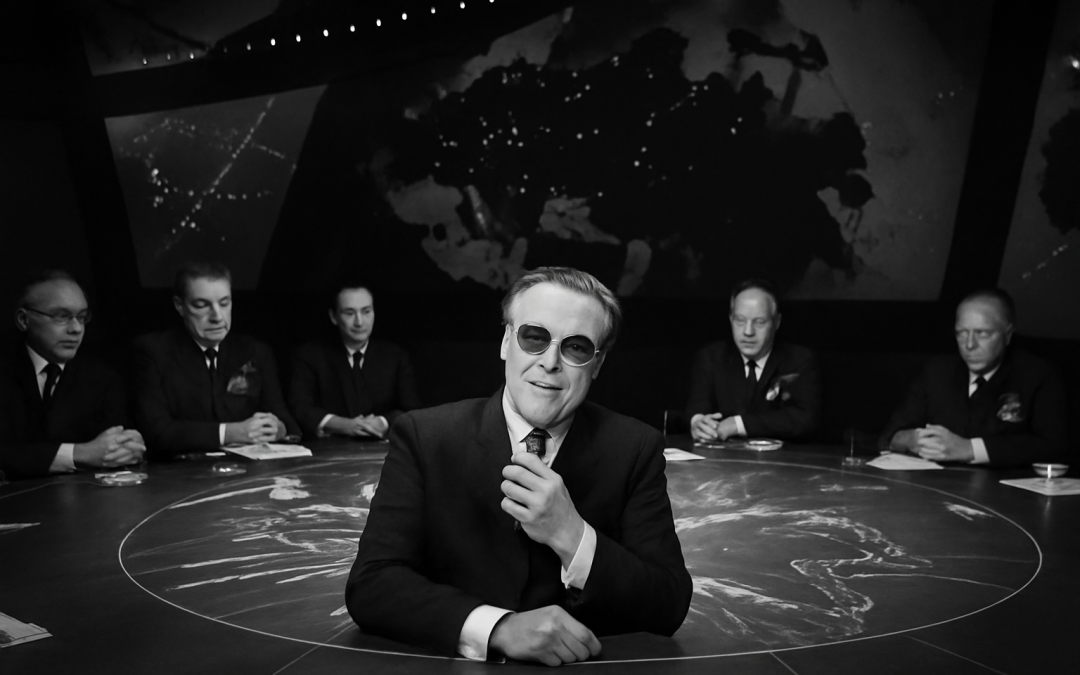
Few films capture the absurdity of their era with as much wit and precision as Dr Strangelove. Released during the heightened tensions of the Cold War, this dark comedy digs beneath the surface of nuclear paranoia to expose the irrationality and human folly that underpin the threat of global annihilation. It manages to transform a potentially terrifying subject into a gripping, unsettling, and laugh-out-loud satire, providing audiences with a uniquely jarring experience that oscillates between humor and horror.
The story follows an out-of-control nuclear crisis provoked by a paranoid U.S. Air Force general who launches a preemptive strike on the Soviet Union. What unfolds in the War Room and aboard a bomber plane is a conflicted mix of panicked decision-making, political posturing, and the eerie calmness of those who understand the catastrophic consequences of their actions yet remain powerless to stop them. This premise sets the stage for a narrative teeming with irony and biting social commentary.
One of the film’s most striking qualities is its fearless approach to taboo topics. While other works of the period often treated the Cold War and its associated dangers with grim solemnity or outright propaganda, this film opts for satire, using exaggerated characters and absurd situations to critique real-world policies and mindsets. This approach elevates it beyond mere comedy, inviting viewers to confront the underlying madness of nuclear brinkmanship without the state-sanctioned rhetoric or fearmongering typical of the time.
Peter Sellers delivers three remarkable performances, showcasing extraordinary versatility that becomes a cornerstone of the film’s impact. His portrayal of the titular Dr. Strangelove—a former Nazi scientist turned American advisor—combines eccentricity, menace, and dark humor in a way that is unforgettable. Sellers also plays the bumbling U.S. President and a British RAF officer, each character uniquely contributing to the film’s layered satire. His ability to shift between roles highlights the absurdity of the political and military figures involved in the nuclear standoff, humanizing their follies while underscoring their dangerous incompetence.
Director Stanley Kubrick’s vision is essential in creating the film’s distinctive atmosphere. His meticulous framing and use of stark, black-and-white cinematography lend a documentary-like gravity to scenes that are at once ludicrous and alarming. Kubrick’s mastery of tone ensures that the humor never undermines the serious message; instead, it sharpens it by confronting audiences with how laughable the threats and policies securing the so-called peace truly are. This delicate balance between comedy and tragedy is maintained with precision and care throughout the film.
The War Room sequences are particular highlights, brimming with a claustrophobic tension that contrasts sharply with the film’s comedic elements. The circular set design emphasizes the endless, cyclical nature of the decision-making process, where nonsensical arguments and petty egos often dictate the fate of the world. The dialogue crackles with sharp satire, filled with lines that continue to resonate in political discourse decades later. The characters’ preoccupation with abstract doctrines, juxtaposed with the tangible danger looming overhead, underscores the disconnect between ideology and reality.
Underlying the comedic surface is a deeply ingrained anxiety about nuclear weapons and their devastating potential. The film’s portrayal of the “doomsday device”—a Soviet superweapon designed to annihilate all life on Earth if activated—illustrates the terrifying logic of mutually assured destruction. This conceptual nightmare, treated with both horror and dark humor, questions the sanity of a system that hinges on deterrence through devastation. By making the extinction of humanity a punchline, the film forces audiences to recognize the absurdity in trusting such a precarious balance.
Moreover, the film’s examination of masculinity and power is both subtle and profound. Characters display exaggerated machismo—obsessed with control, dominance, and bravado—only to reveal their fragility when faced with circumstances beyond their control. This critique of aggressive nationalism and militarism exposes how such qualities can become self-destructive, particularly when wielded by those in positions of immense authority. By lampooning these traits, the film encourages reflection on the real-life leaders whose decisions could have similar catastrophic consequences.
The screenplay, co-written by Kubrick, Peter George, and Terry Southern, is a testament to sharp, incisive writing. Every line serves multiple purposes: advancing the plot, building character, and enhancing the satirical tone. The dialogue is loaded with double entendres, clever wordplay, and ironic understatement. This linguistic precision enriches the film’s texture and supports its ongoing commentary on the perils of political hubris and military fanaticism. The script’s wit remains fresh, speaking to universal themes that transcend its Cold War context.
Musically, the film employs an almost ironically upbeat score to contrast with the grim subject matter. The iconic use of the song “We’ll Meet Again” during the final montage of nuclear devastation is haunting, as it pairs a cheerful melody with images of desolation. This juxtaposition amplifies the film’s message that human folly can render hopeful ideals meaningless. It also serves as a sobering reminder of how quickly normalcy can crumble under the weight of irrational decisions.
Cinematography and production design contribute significantly to the film’s storytelling. The use of confined spaces—whether the War Room, bomber interiors, or control centers—heightens the sense of entrapment and inevitability. Kubrick’s attention to detail in creating these environments adds authenticity that grounds the absurdity, making the satirical elements more impactful. The stark visuals underscore the bleakness of the situation, creating an atmosphere that feels both surreal and all too plausible.
Beyond its immediate political context, the film resonates as a timeless meditation on the dangers of unchecked power and the fragility of human reason. The themes it explores—the madness of war, the unpredictability of technology, and the absurdity ingrained in bureaucratic systems—remain relevant in any era marked by geopolitical tension. This universal appeal has helped it endure as a classic, continually studied and referenced in discussions about warfare, leadership, and human nature.
Audience reception at the time was mixed, with some critics uncomfortable with the way it made light of serious issues. However, its impact grew steadily, establishing it as an influential work that challenged conventional narratives about military conflict and politics. Its boldness in addressing taboo subjects paved the way for later films and media to explore difficult topics through satire and dark humor. Today, it is widely regarded as a pioneering film that melded entertainment with potent political critique.
The performances of the ensemble cast complement Sellers’ triple roles by grounding the story in a believable, if exaggerated, world. Actors like George C. Scott provide intense portrayals of military officers caught between duty and the impossibility of their mission. Each character contributes to the film’s layered approach to satire, revealing various aspects of Cold War paranoia and leadership failure. The interplay between these figures creates a dynamic narrative that balances individual absurdity with systemic critique.
While the film’s humor is often broad and outrageous, it never descends into mere slapstick. Instead, it relies on a dry, intellectual wit that demands the audience’s engagement. This approach invites viewers not only to laugh but to think critically about the content, encouraging a deeper understanding of the inherent contradictions and risks of nuclear policies. The dark comedy serves as a tool for reflection rather than distraction, making it a powerful vehicle for social commentary.
The film’s title, invoking the name of a mad scientist archetype, encapsulates its core message: much of the Cold War’s threat lay in irrational fears and the grotesque consequences of scientific advances without ethical restraint. Dr. Strangelove himself embodies the paradox of brilliance and malevolence, representing the dangers of intelligence divorced from morality. This character serves as a chilling symbol of how technological progress can be exploited to perpetuate conflict rather than peace.
International audiences have also embraced the film, recognizing its critique as relevant far beyond the borders of the United States and Soviet Union. Its universal themes of existential threat and bureaucratic absurdity strike a chord in any society grappling with the balance between security and sanity. The film’s influence can be seen in countless other works that use humor to confront dark political realities, cementing its status as a foundational text in political satire.
In addition to its thematic achievements, the film is noteworthy for its technical innovations. The strategic use of practical effects, combined with Kubrick’s precise direction, enhances the tension and realism in scenes that might otherwise feel farcical. The execution of the bomber sequences, in particular, demonstrates a careful blend of gravity and absurdity that sustains narrative momentum. These technical aspects contribute to a coherent and compelling cinematic experience.
The lasting legacy of the film is evident not only in its continued popularity but also in its ongoing relevance amid contemporary global tensions. As the world faces new challenges related to nuclear proliferation and diplomatic stalemates, the film’s cautionary tale about the perils of paranoia and miscommunication offers crucial insights. It reminds viewers that the line between security and catastrophe can be perilously thin, and that the human element—fraught with flaws and contradictions—remains at the heart of global diplomacy.
Above all, the film succeeds because it refuses to take the threat of nuclear war at face value or be confined to fearmongering. Instead, it uses dark comedy as a means to expose the insanity underpinning such dangers, inviting laughter as both a release and a mode of critical engagement. This combination of laughter and unease creates a unique artistic effect, compelling audiences to confront the terrifying implications lurking behind the joke.
In conclusion, this film stands as a masterclass in using dark comedy to tackle one of the most daunting fears of the modern world: nuclear annihilation. Its bold satire, incisive performances, and expert direction create a cinematic experience that is as thought-provoking as it is entertaining. Far from diminishing the seriousness of the subject, the film amplifies it through humor, holding a mirror to the absurdity of geopolitical brinkmanship and the fragile sanity of those who control the world’s most destructive weapons. It remains an essential viewing for anyone seeking to understand how art can confront political fear and transform it into a lasting dialogue about human survival and responsibility.