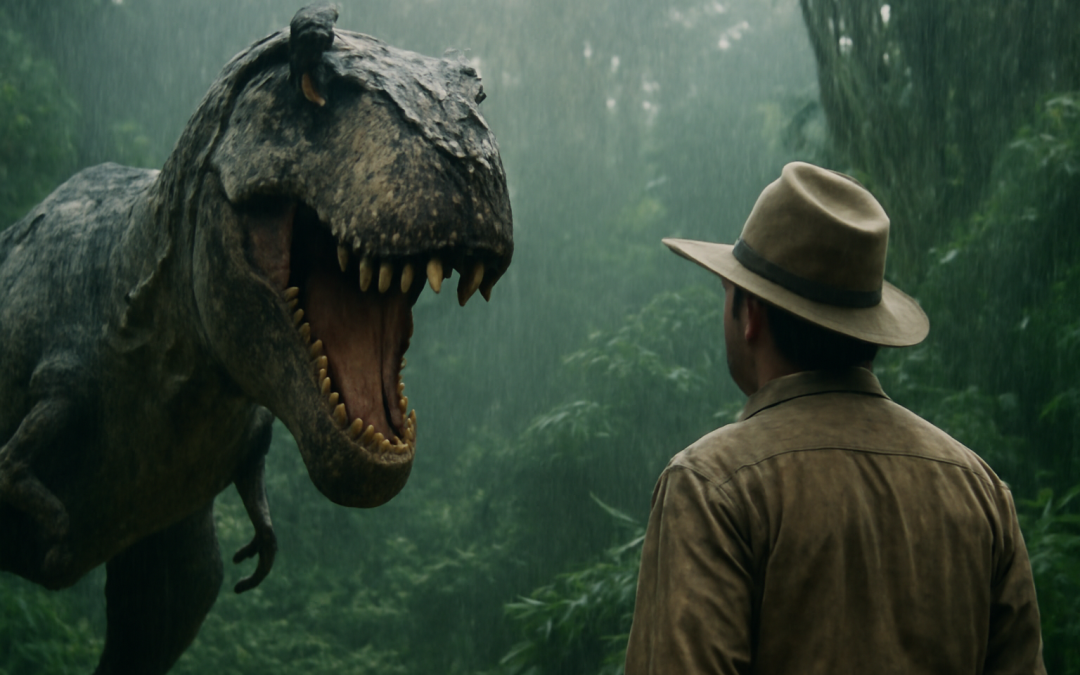
Few films have captured the imagination and awe of audiences quite like Jurassic Park. Upon its release, it was more than just a groundbreaking visual spectacle; it was a cinematic event that melded wonder with deep philosophical questions about humanity’s place in nature and the risks of unchecked scientific ambition. The sheer scale of the story—resurrecting creatures from an era long vanished—and the breathtaking execution continue to resonate decades later, making it a film that invites viewers to marvel as much as to ponder consequence.
From the opening scenes, the film establishes a mood of wonder. The first glimpses of dinosaurs, brought to life with a revolutionary blend of computer-generated imagery and animatronics, unlock a world previously confined to childhood fantasies and dusty museum exhibits. The cinematography masterfully balances moments of tranquility and grandeur with sudden, spine-tingling tension, enabling the dinosaurs to feel both majestic and terrifying. This contrast serves as a reminder of nature’s duality—its beauty and its unpredictability.
Beyond the spectacle, a powerful theme underpins the narrative: the dangerous hubris of humans attempting to control and dominate something far greater than themselves. Jurassic Park explores the ethical boundaries of scientific progress, questioning the assumption that just because we can recreate extinct life, we should. The scientists involved operate under the belief that mastery over genetic engineering affords them absolute control, a notion quickly dismantled by the cascading failures on the island. The story becomes a cautionary tale about unintended consequences, showing how ambition without humility can unleash chaos.
Central to the film’s emotional resonance is the interplay among its characters—scientists, entrepreneurs, and visitors—whose responses to the resurrected dinosaurs reveal varying philosophies about science and nature. Dr. Alan Grant, the pragmatic paleontologist, represents awe grounded in respect and caution. His skepticism contrasts with John Hammond’s entrepreneurial optimism, who sees the park as a triumph of human ingenuity and a monument to innovation. As the park’s systems fail, and nature reclaims its dominion, the characters are forced to confront their misjudgments, leading to moments of crisis and revelation.
Another remarkable aspect of the film is its use of suspense. Unlike many monster movies that rely heavily on gore or relentless action, this story expertly builds tension through pacing and atmosphere. Scenes where the characters are trapped or pursued evoke genuine fear because the threat is unpredictable. The dinosaurs are not mere movie monsters but complex beings reacting according to instinct. This layer adds depth and realism, elevating the film beyond simple thrill rides into a thoughtful engagement with fear and survival.
The scientific concepts presented also contribute intrigue, even as they spark debate. Genetic cloning and chaos theory are woven into the plot with sufficient clarity to stimulate curiosity without overwhelming the narrative. The idea of “life finding a way” serves both as a nod to the marvel of evolution and as a philosophical assertion that nature cannot be completely controlled or predicted. This motif resonates through the unfolding disaster, reminding viewers that attempts to impose order on complex systems often backfire.
Technological innovation in the film was unprecedented at the time of release, setting a new bar for special effects and sound design. The integration of CGI with animatronics created an authentic portrayal of dinosaurs, making viewers feel as if they are witnessing living creatures rather than fabricated images. The soundscape—comprising everything from the iconic dinosaur roars to the subtle rustling of leaves—contributes to an immersive environment that heightens the emotional stakes.
Moreover, the film’s approach to its dinosaurs has influenced popular culture profoundly. These creatures have become synonymous with both the awe of nature and the fragility of human control. The image of the towering T. rex, captured in thunderous footsteps and piercing roars, remains one of cinema’s indelible icons. This portrayal strikes a balance between majestic wonder and menacing power, inviting fascination yet warning against complacency.
The underlying environmental message cannot be overlooked. Jurassic Park implicitly cautions against disturbing natural order for profit or pride, a prescient reminder in today’s context of ecological degradation and climate change. The park’s isolation and ultimate collapse reflect how disconnected humans can be from the ecosystems they manipulate. This disconnect amplifies the film’s relevance as a narrative about stewardship, responsibility, and respect for the natural world.
The narrative structure also stands as a testament to skillful storytelling. Where many blockbuster films lean heavily on spectacle, this one maintains a strong plot and character development that anchors the visual grandeur. Moments of tension are punctuated by quieter, more intimate sequences exploring human relationships and ethical dilemmas. This balance enriches the viewing experience by engaging both head and heart, turning a science fiction thriller into a thoughtful meditation on progress and its consequences.
Furthermore, the score by John Williams deserves particular mention for its contribution to the film’s mood and emotional impact. Its sweeping themes encapsulate the majesty and mystery of the dinosaurs while providing an undercurrent of tension and anticipation. The music enhances the sense of adventure and discovery while also underscoring the sense of looming danger. It is a perfect sonic counterpart to the film’s visual and narrative ambitions.
Jurassic Park also resonates with its audiences through its timeless exploration of human arrogance. The film posits that no matter how advanced technology becomes, nature’s complexity and power can never be wholly subdued or controlled. This idea is embodied in the recurring imagery of chaos theory, illustrating that small changes can have enormous, unpredictable effects. Such reflections remain relevant as society faces rapid advancements in biotechnology, artificial intelligence, and genetic engineering, reminding us to proceed with care and foresight.
In addition to its philosophical and thematic merit, the film excels as a form of entertainment. It combines thrills, humor, and awe in a manner that appeals to a wide range of viewers. Characters inject moments of levity, providing relief from the escalating danger, while the relentless pace keeps the audience engaged. This synthesis ensures the film appeals not only intellectually but viscerally, a rare achievement in science fiction cinema.
The legacy of the film is evident in the numerous sequels and spin-offs it has inspired, each attempting to recapture elements of the original’s magic. While none have matched the delicate balance of wonder and consequence, the continuing fascination with the concept speaks to the power of the original story. It tapped into a shared dream—rediscovering prehistoric wonders—and a shared anxiety—what happens when mankind’s reach exceeds its grasp.
Ultimately, the most enduring quality of this film lies in its ability to provoke thought without diminishing entertainment. It invites viewers to imagine the impossible but warns against the reckless pursuit of knowledge without ethical consideration. The thrilling encounters with dinosaurs become more than just exciting set pieces; they serve as metaphors for larger questions about humanity’s role in the natural world.
In conclusion, the film remains a masterful fusion of storytelling, technical achievement, and philosophical inquiry. It celebrates human curiosity and creativity while serving as a stark reminder of the limitations and dangers that come with playing god. Its lasting impact testifies to a unique blend of blockbuster spectacle and thoughtful cautionary tale, ensuring it will continue to captivate and challenge audiences for generations to come.