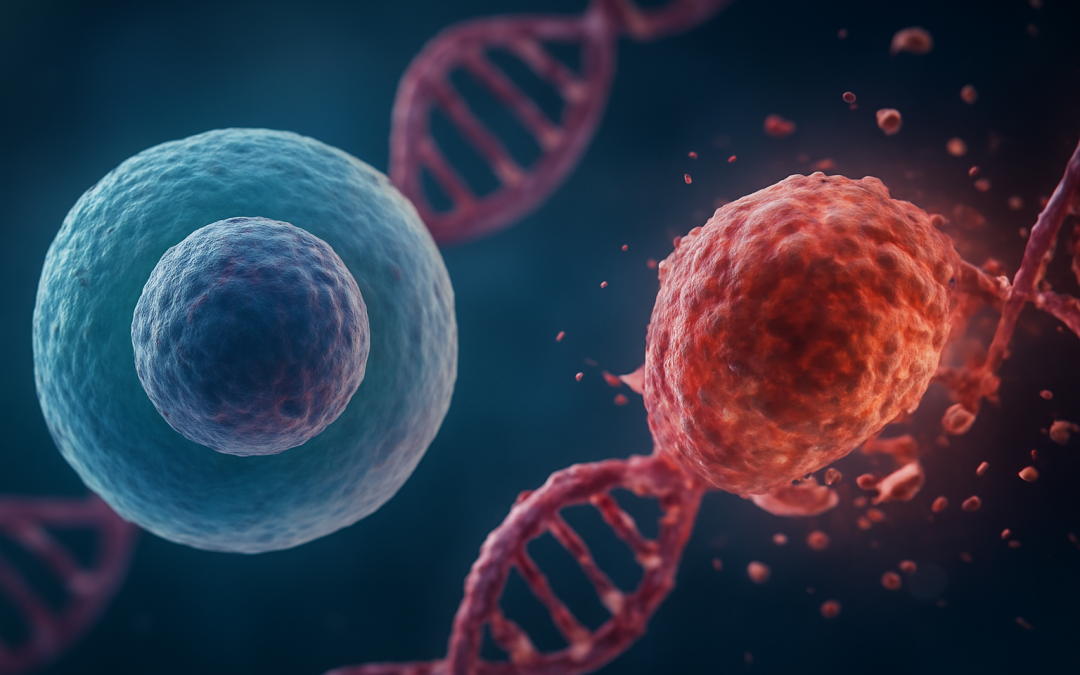
Cell mutation is a fundamental process that underlies much of biology, playing a crucial role in evolution, development, and disease. At its core, mutation involves changes in the genetic material of a cell—alterations in the DNA sequence that can have a variety of effects ranging from benign to severely detrimental. Understanding what causes cells to mutate is essential for grasping how genetic diversity arises, how cancer develops, and how organisms adapt to their environments. These changes are not random but occur through a combination of internal cellular mechanisms and external environmental factors, each contributing to the intricate complexity of genetic variation.
One of the primary sources of mutations in cells is errors that occur during DNA replication. When cells divide, their DNA must be copied precisely to ensure that each daughter cell inherits an exact genetic blueprint. Despite the high fidelity of DNA polymerases, the enzymes responsible for copying DNA, mistakes can still happen. These errors might involve the insertion of incorrect nucleotides, duplications, deletions, or even the loss of entire segments of DNA. Although cells possess sophisticated proofreading and repair systems that correct many of these errors, a small fraction escape correction. This leads to permanent changes in the DNA sequence, which can manifest as point mutations or larger structural alterations.
Spontaneous chemical changes within DNA also contribute significantly to mutations. The chemical structure of nucleotides—the building blocks of DNA—is inherently unstable to a certain degree and can undergo alterations such as deamination or depurination. Deamination is the loss of an amino group from a DNA base, which can result in the alteration of base pairing properties, ultimately causing mutations during replication. Depurination, the loss of purine bases (adenine or guanine), creates gaps in the DNA strand that can introduce errors if left unrepaired. These spontaneous events occur with a relatively predictable frequency and can be influenced by factors such as temperature and the cellular environment, subtly shaping the genetic landscape over time.
External environmental factors play a pivotal role in inducing mutations. Exposure to ultraviolet (UV) radiation from sunlight, for example, leads to the formation of thymine dimers—covalent linkages between adjacent thymine bases in DNA that disrupt replication and transcription. If unrepaired, these dimers cause mistakes during DNA synthesis that result in mutations. Similarly, ionizing radiation such as X-rays or gamma rays carries enough energy to break DNA strands or modify bases, creating complex damage that is often difficult for cellular repair mechanisms to resolve accurately. The mutagenic effects of radiation have been widely studied in the context of cancer epidemiology and radiation therapy, illustrating how external factors can drive genetic change.
Chemical mutagens also pose a significant threat to DNA integrity. These substances can be found in the environment, industry, and even in lifestyle choices such as tobacco smoking. Chemicals like polycyclic aromatic hydrocarbons (found in cigarette smoke) or aflatoxins (contaminants of certain crops) interact directly with DNA, causing base modifications or adduct formation that block replication or alter base pairing. Other compounds, such as alkylating agents, add alkyl groups to DNA bases, leading to mispairing and mutation. Exposure to such mutagens is a major contributor to the incidence of mutations in somatic cells, driving diseases like cancer by enabling unchecked cellular proliferation due to accumulated genetic errors.
Biological agents, including certain viruses, can also induce mutations. Oncogenic viruses integrate their genetic material into host cell DNA, sometimes disrupting normal gene function or activating proto-oncogenes that regulate cell growth and division. This genomic integration can induce mutations indirectly by promoting instability in the host genome. For instance, human papillomavirus (HPV) is known to cause mutations in cervical cells, leading to cancer. Other bacteria and parasites might induce chronic inflammation, which produces reactive oxygen and nitrogen species that damage DNA and increase mutation rates. These complex interactions between infectious agents and host cells underscore the multifaceted nature of mutagenesis in living organisms.
Another important internal factor contributing to mutation stems from errors in DNA repair processes themselves. Cells employ a wide array of repair mechanisms to maintain genomic stability, including mismatch repair, base excision repair, nucleotide excision repair, and double-strand break repair. However, defects or inefficiencies in these pathways can lead to the accumulation of DNA damage. For example, mutations in the genes encoding repair proteins such as BRCA1 and BRCA2 are linked to increased mutation rates and a higher risk of cancers like breast and ovarian cancer. This highlights how the very systems designed to prevent mutations can, when malfunctioning, become sources of genetic change.
Epigenetic changes, though not mutations in the traditional sense, might sometimes indirectly contribute to mutagenesis by altering the accessibility of DNA to damaging agents or repair enzymes. Methylation patterns and chromatin remodeling affect how tightly DNA is packed and can influence mutation rates. For instance, heavily methylated cytosines are prone to spontaneous deamination, resulting in a common type of point mutation. Epigenetic regulation is dynamic, responding to environmental cues and cellular signals, suggesting that mutation rates may vary across different genomic regions and conditions, influenced by the epigenetic landscape.
In addition to DNA mutations, cells can undergo changes in their chromosomal structure, such as translocations, inversions, deletions, or duplications. These chromosomal mutations are often caused by erroneous repair of DNA double-strand breaks—a particularly dangerous form of DNA damage. The agents responsible for inducing such breaks include ionizing radiation, certain chemicals, and mechanical stress. Chromosomal abnormalities can have more dramatic effects on cell function and viability compared to point mutations, sometimes resulting in sudden and profound changes to gene dosage or gene fusion events that drive oncogenesis.
Mitochondrial DNA, which resides separately from nuclear DNA, is also susceptible to mutations. Mitochondria contain their own genetic material that encodes essential components of the cellular energy production machinery. This DNA is particularly vulnerable to mutations due to its proximity to the electron transport chain, a major source of reactive oxygen species (ROS) that damage DNA. Unlike nuclear DNA, mitochondrial DNA repair mechanisms are less robust, meaning mutations accumulate more rapidly, contributing to aging and various mitochondrial diseases. Environmental factors that increase oxidative stress can accelerate this process, illustrating another layer of complexity in mutation causation.
Lifestyle factors such as diet, exercise, and exposure to toxins strongly influence the rate and type of mutations within cells. Poor diet, for example, may lack essential nutrients like folate or antioxidants, which help maintain DNA integrity and support the repair process. Exercise has been shown to modulate oxidative stress levels, potentially reducing mutation rates. Conversely, exposure to toxins like alcohol or tobacco smoke introduces mutagenic compounds into cells. These compounds not only damage DNA directly but also disrupt metabolic functions, exacerbating the likelihood of mutation. The interplay between genetics, environment, and lifestyle highlights the nuanced causes behind cellular mutation.
Certain inherited genetic variations, while not mutations themselves, can predispose cells to increased mutation rates. These inherited susceptibilities include polymorphisms in genes coding for DNA repair proteins, detoxifying enzymes, or cell cycle regulators. Individuals carrying these variations may have a higher baseline rate of spontaneous mutations or a diminished capacity to manage damage caused by environmental mutagens. This genetic background is a crucial factor in disease susceptibility and influences how external causes of mutation impact individual cells.
The complexity of what causes cells to mutate reflects the delicate balance between maintaining genomic integrity and allowing for genetic diversity. While the majority of mutations are neutral or deleterious, some can confer advantages that drive evolutionary adaptation. The sources of mutation function in concert—as errors in replication, chemical instability, environmental insults, faulty repair, and biological interactions—all shaping the ongoing dynamic landscape of the genome. Research continues to uncover the mechanisms and conditions under which mutations arise, offering insight into preventing disease, improving treatments, and understanding the molecular foundations of life.
Preventing and mitigating factors that cause cellular mutation are central to public health efforts worldwide. Strategies aimed at reducing exposure to known mutagens, such as tobacco control, minimizing ultraviolet radiation exposure, and regulating environmental pollutants, have proven effective in lowering mutation rates associated with cancer and other genetic diseases. Advances in medical science also focus on enhancing DNA repair through pharmacological means or gene therapy, providing hope for reducing mutation-driven pathologies. Education about lifestyle choices and environmental risks empowers individuals to protect their genome integrity, underscoring the importance of understanding mutation causality in both personal and societal contexts.
Ultimately, the causes of mutation are as diverse as life itself, spanning molecular errors and environmental interactions. This broad spectrum of mutagenic influences is crucial for generating the genetic variation required for biological innovation and survival, but it also poses risks when mutations disrupt critical cellular functions. The ongoing challenge is to comprehend these processes deeply enough to harness their benefits while minimizing their harms, advancing both evolutionary biology and human health in the process.