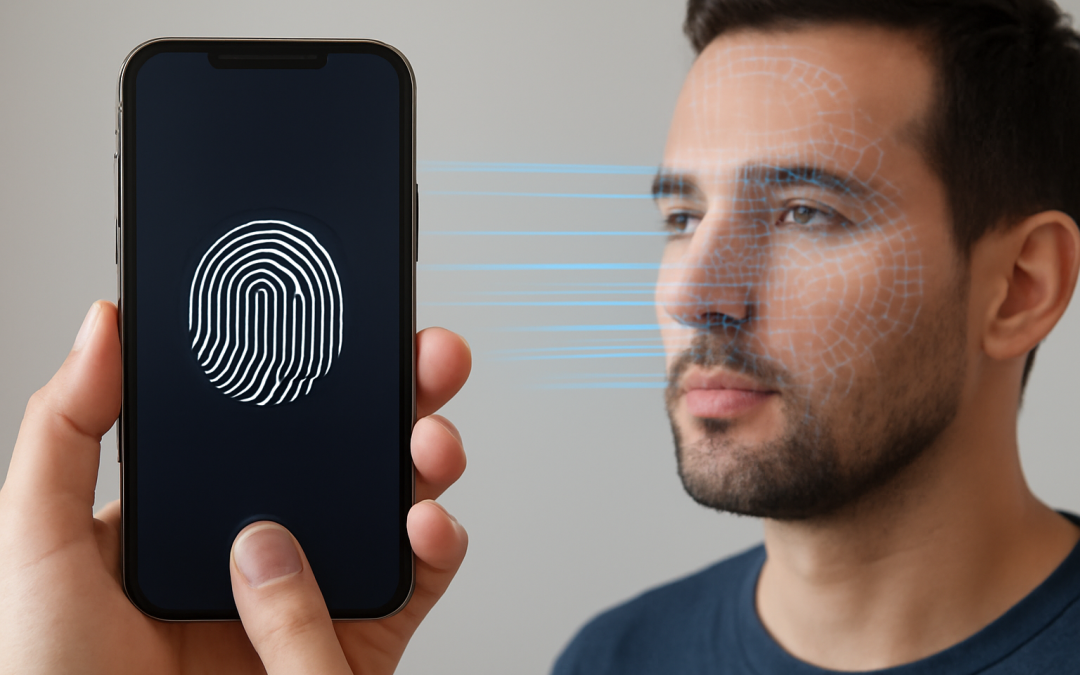
Biometric authentication has become an integral part of modern technology, offering users enhanced security and convenience. Among the most widely adopted biometric systems are Touch ID and Face ID, which have transformed the way we unlock devices, authorize payments, and protect personal information. These technologies leverage unique physical traits—fingerprints and facial features—to provide seamless access without compromising security. Understanding how Touch ID and Face ID work reveals not only the sophistication of biometric systems but also the growing importance of integrating biometrics into everyday digital interactions.
At its core, Touch ID relies on fingerprint recognition to authenticate a user’s identity. When a finger touches the sensor, the system captures the fingerprint’s unique patterns, including ridges, valleys, and minutiae points. Unlike traditional scanners that merely capture surface images, Touch ID employs a capacitive sensor that detects the electric current differences between ridges and valleys of a fingerprint. This method ensures higher accuracy and reduces the risk of errors caused by dirt, moisture, or minor skin damage. Once the fingerprint data is captured, it is converted into a mathematical representation, often called a template, that is stored securely within a dedicated hardware chip—commonly referred to as the Secure Enclave. This chip uses end-to-end encryption and isolates fingerprint data from the rest of the system, making it inaccessible to applications or external threats.
During each authentication attempt, the fingerprint presented is compared against the stored templates. If there is a match within a predetermined threshold, the system unlocks the device or authorizes the requested action. This matching process does not store the raw fingerprint image; instead, it operates on secure, encrypted mathematical models, which protects the biometric data from being stolen or misused. The speed and accuracy of Touch ID have made it a favored choice, particularly in smartphones and laptops, where quick access to devices paired with strong security is essential.
While fingerprint recognition has significant benefits, Face ID introduces a different approach by utilizing facial recognition technology. Face ID employs a combination of hardware components, such as the infrared camera, dot projector, and flood illuminator, to create a detailed three-dimensional map of the user’s face. When a user looks at their device, the flood illuminator lights up the face with infrared light to ensure visibility even in low-light conditions. The dot projector then casts over 30,000 tiny invisible dots onto the face, which the infrared camera captures to generate a precise depth map. This 3D mapping capability is what sets Face ID apart from conventional facial recognition that relies solely on 2D images, which can be easily deceived by photos or videos.
The captured facial data is converted into a mathematical representation, similar to fingerprint templates, and securely encrypted within the device’s dedicated hardware enclave. Like Touch ID, this facial data is never stored on external servers, protecting the user’s privacy. The device’s software compares the stored mathematical model to the new scan each time authentication is requested. The 3D nature of this technology allows it to recognize users even if they change hairstyles, wear glasses, or grow a beard, adapting to minor variations in appearance while maintaining strong security standards. Additionally, Face ID employs anti-spoofing techniques by ensuring the scanned face is live and not a static image. This is crucial for preventing unauthorized access through photographs or masks.
Both Touch ID and Face ID operate within a framework that emphasizes user convenience without sacrificing privacy or security. By localizing all biometric data processing and storage within a secure enclave, these systems drastically reduce the risk of data breaches. This design choice helps in complying with stringent privacy laws and user expectations regarding sensitive personal information. Moreover, biometric authentication methods have considerably improved user experience by eliminating the need for complex passwords or PIN codes, which are often forgotten, stolen, or easily compromised.
The technology powering both Touch ID and Face ID continues to evolve. With Touch ID, researchers and developers have worked on enhancing sensor sensitivity and accuracy to accommodate different skin types and conditions. In some devices, the fingerprint scanner is placed under the display, using ultrasonic or optical techniques rather than capacitive sensing. This advancement allows for larger screen real estate without sacrificing biometric functionality. These under-display sensors use sound waves or light to penetrate the skin slightly, capturing the fingerprint pattern in three dimensions. This approach enhances durability, reduces false rejects, and broadens the range of acceptable finger placement on the screen.
Face ID technology also sees ongoing improvements in its algorithms and hardware components. Machine learning plays a vital role in refining facial recognition capabilities, enabling devices to adapt to changes over time and reduce false positives. Additionally, the system can combine facial data with other contextual information, such as ambient lighting, to increase accuracy. Face ID is also being explored for broader applications beyond device unlocking, including secure transactions, identity verification for services, and personalized user experiences. The robustness of the facial recognition system makes it suitable for integration into augmented reality and virtual reality platforms, allowing for intuitive user controls and enhanced security simultaneously.
Despite their many benefits, both Touch ID and Face ID must address concerns related to privacy, security, and potential misuse. Biometric data is inherently personal and immutable—unlike passwords, one cannot simply change their fingerprint or facial structure. Therefore, securing this data is paramount. Apple, one of the main developers of these technologies, has implemented stringent security measures to ensure biometric data never leaves the device and is protected through hardware-based encryption. Furthermore, biometric authentication is typically combined with traditional methods such as passwords or PINs as a fallback or additional security layer. This multifactor approach increases overall security and provides alternatives when biometric recognition fails or is unavailable.
There are also limitations to each technology depending on environmental factors or user characteristics. For example, Touch ID might struggle with wet, dirty, or scarred fingers, leading to increased rejection rates. Users engaged in certain physical activities or working in particular environments may occasionally encounter difficulties with fingerprint recognition. On the other hand, Face ID can be impacted by extreme lighting conditions or obstructions such as masks, hats, or face coverings, which have become more common in recent times. To accommodate these scenarios, devices often allow users to switch to alternative authentication methods temporarily or adjust settings to improve recognition performance.
The adoption of biometric systems like Touch ID and Face ID reflects a broader shift toward frictionless yet secure technology interactions. From logging into devices to making mobile payments and accessing sensitive apps, users benefit from an intuitive experience that balances convenience with robust protection. Biometric authentication advances the concept of a personalized and context-aware security framework, which adjusts dynamically to the user’s needs while guarding against unauthorized access.
Looking ahead, the integration of artificial intelligence and more sophisticated sensors promises further enhancements in biometric reliability and versatility. Emerging developments include combining multiple biometric factors, such as fingerprint, face, iris, and voice recognition, to create multifactor biometric authentication systems. Such hybrid approaches could unlock new frontiers in security, especially for critical applications like financial services, healthcare, and government identification systems. Additionally, advancements in biometric anti-spoofing and privacy-preserving computation techniques will continue to strengthen user trust and regulatory compliance.
Ultimately, the success of Touch ID and Face ID exemplifies how biometric authentication can redefine security paradigms in consumer technology. By leveraging unique human characteristics and embedding cutting-edge hardware and software solutions, these systems provide an efficient, secure, and user-friendly way to verify identity. As these technologies evolve and become more widespread, they will play an increasingly vital role in protecting digital identities and enabling seamless interactions across an ever-growing spectrum of applications. The balance of convenience, privacy, and security achieved by Touch ID and Face ID sets a benchmark for future biometric innovations, paving the way for a more secure and accessible digital world.