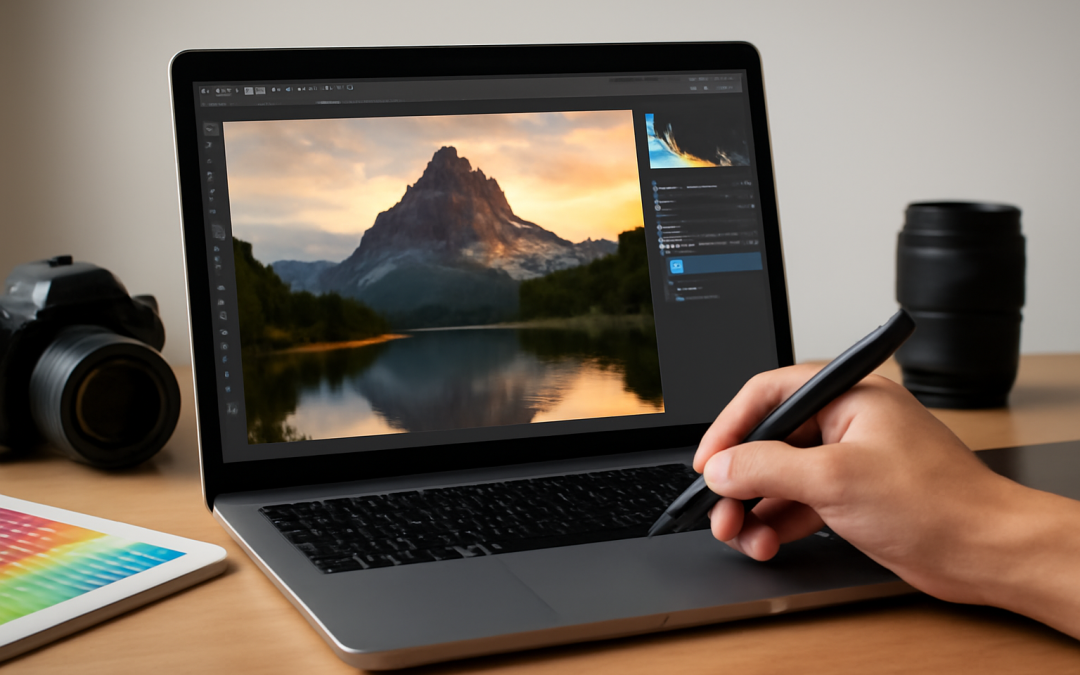
In the realm of digital image manipulation and creative design, the ability to refine and enhance visuals without permanently altering the original file has revolutionized workflows. Non-destructive editing offers artists, photographers, and designers a powerful approach that preserves the integrity of their source material, enabling limitless experimentation and creativity. Unlike traditional editing techniques that overwrite pixel data or apply changes irreversibly, this method allows adjustments to be made in layers, masks, or through reversible processes, ensuring the original content remains untouched and accessible at any point.
The significance of non-destructive editing extends beyond safeguarding the original image; it fundamentally changes how professionals approach their work. When edits are applied destructively, any mistake or unwanted result can mean starting over or losing valuable details. Conversely, non-destructive methods provide flexibility, allowing users to tweak or remove effects without degrading the quality or compromising the original data. This flexibility streamlines iterative processes and fosters a more dynamic creative environment where trial and error can flourish without fear of damage.
One of the core principles behind this editing philosophy is the use of adjustment layers, which act as separate elements atop the original image. These layers modify attributes such as exposure, contrast, hue, or saturation independently, and since they do not alter the underlying pixels, they can be toggled on or off, edited, or reordered at any stage. This unique separation enhances workflow efficiency, enabling designers to isolate specific changes and collaborate more seamlessly, as each adjustment is clearly delineated and easy to manage.
Another powerful tool associated with non-destructive editing is the use of masks. Masks serve as a means to control where and how an effect is applied within an image. Unlike applying a brush stroke directly to the image layer, masks allow for precise and reversible modifications by painting areas of transparency or opacity on an adjustment layer. This targeted control adds a high degree of sophistication and nuance to image editing, as different parts of the composition can be independently refined without affecting the entire image, all while maintaining the ability to revisit and adjust these choices later.
Non-destructive editing is not limited to color and tonal adjustments. It also encompasses the use of smart objects, which enable users to integrate vector graphics, raster images, or other components as embedded elements that maintain their original data. By converting layers into smart objects, edits such as transformations, filters, or warping are applied as separate instructions rather than direct pixel changes. This feature ensures that resizing or applying effects can be done multiple times without losing clarity or introducing artifacts — a crucial advantage for tasks that demand precision and repeated refinements.
When considering the broader impact on workflows, non-destructive editing promotes collaboration and efficient asset management. In professional environments where multiple stakeholders may contribute to a project, maintaining non-destructive files allows each participant to make their own changes while preserving the original design. For instance, a photographer can send layered files with adjustment layers to a retoucher, who can apply additional corrections or filter overlays without altering the foundational image. This approach not only preserves creative intent but also enhances transparency and traceability throughout the production process.
Moreover, non-destructive techniques enable the creation of adaptable and reusable templates. Designers working with recurring projects such as branding, marketing materials, or batch photo edits benefit greatly from the ability to update specific aspects without rebuilding layouts from scratch. By employing smart objects and adjustment layers, alterations to color schemes, text, or imagery can be made swiftly and systematically, leading to significant time savings and consistent output quality across various deliverables.
In the field of photography, non-destructive editing has become integral to professional post-processing workflows. Software like Adobe Lightroom, Capture One, and others rely heavily on these principles by storing edits as sets of metadata instructions rather than direct pixel modifications. This allows original raw files to remain intact, while the user can continuously refine exposure, white balance, and other parameters without compromising image fidelity. The result is greater accuracy in reproducing colors and preserving detail, alongside the freedom to revert changes or create multiple edited versions from a single raw file.
Non-destructive editing also enhances the creative freedom available during the retouching phase. Artists can apply complex enhancements such as frequency separation, dodge and burn, or localized sharpening on separate layers or as filters, ensuring their adjustments remain flexible and can be revisited or fine-tuned easily. This capability is especially valuable for high-end retouching where subtle detail must be preserved, as it minimizes the risk of unintentional damage and allows for more controlled, delicate work.
Despite its many advantages, mastering non-destructive editing requires a solid understanding of the tools and techniques involved. Users must learn to think in terms of layers, masks, and linked objects, shifting away from the mindset of direct pixel manipulation. This learning curve may initially seem steep, especially for beginners accustomed to simpler, destructive editing workflows. However, the long-term benefits in terms of quality, efficiency, and flexibility make the investment worthwhile for anyone serious about digital content creation.
The technology behind non-destructive editing continues to evolve, with software developers enhancing user interfaces and introducing new features to make these processes more intuitive and accessible. Innovations like live filters, layer styles, and advanced mask refinements have expanded what is possible without altering the original file. Cloud-based collaborative platforms also integrate non-destructive workflows, enabling remote teams to work synchronously on layered files, commenting, and suggesting edits in a manner that preserves version history and accountability.
In addition to its practical applications, the philosophy of non-destructive editing aligns well with the growing emphasis on sustainability and efficiency in digital media production. By reducing the need to create multiple copies of images or assets at various stages, it conserves storage space and lessens redundancy. Moreover, the modularity of non-destructive files makes archiving and repurposing content more straightforward, allowing creators to extend the lifespan and value of their work across numerous projects and platforms.
Even outside of traditional photography and graphic design, non-destructive editing principles find relevance in motion graphics, video editing, and 3D modeling. In these fields, nondestructive workflows manifest through nodes and adjustment layers in video compositing software or non-linear editing timelines where effects and color corrections can be toggled and shifted without affecting raw footage. This extension of the concept demonstrates its broad applicability and foundational importance across the creative digital landscape.
Ultimately, adopting this methodology fosters a mindset of experimentation and risk-taking—essential qualities for innovation. Knowing that every change can be undone or refined emboldens creators to explore new techniques and push the boundaries of their craft without apprehension. Non-destructive editing thus serves not only as a technical workflow strategy but also as a catalyst for creative growth and expression.
Through its comprehensive approach to preserving original data while allowing extensive flexibility in edits, this process dramatically transforms the way visual content is created, refined, and shared. It empowers professionals across all levels to work more efficiently, collaborate more effectively, and produce higher quality results. As technology advances and creative demands become increasingly complex, non-destructive editing remains an indispensable standard for ensuring that innovation and integrity coexist harmoniously in digital artistry.
In summary, the adoption of non-destructive editing represents a profound evolution in digital content creation, bridging the gap between creative ambition and technical rigor. By separating adjustments from original assets, providing reversible changes through layers and masks, and embracing adaptable file formats, it enables creators to maintain control and preserve quality throughout the editing process. This approach not only safeguards work against irreversible mistakes but also enhances workflow fluidity, promotes collaboration, and supports sustained creative exploration. As digital media continues to grow in sophistication and reach, the principles of non-destructive editing will remain central to achieving professional, polished, and enduring results.