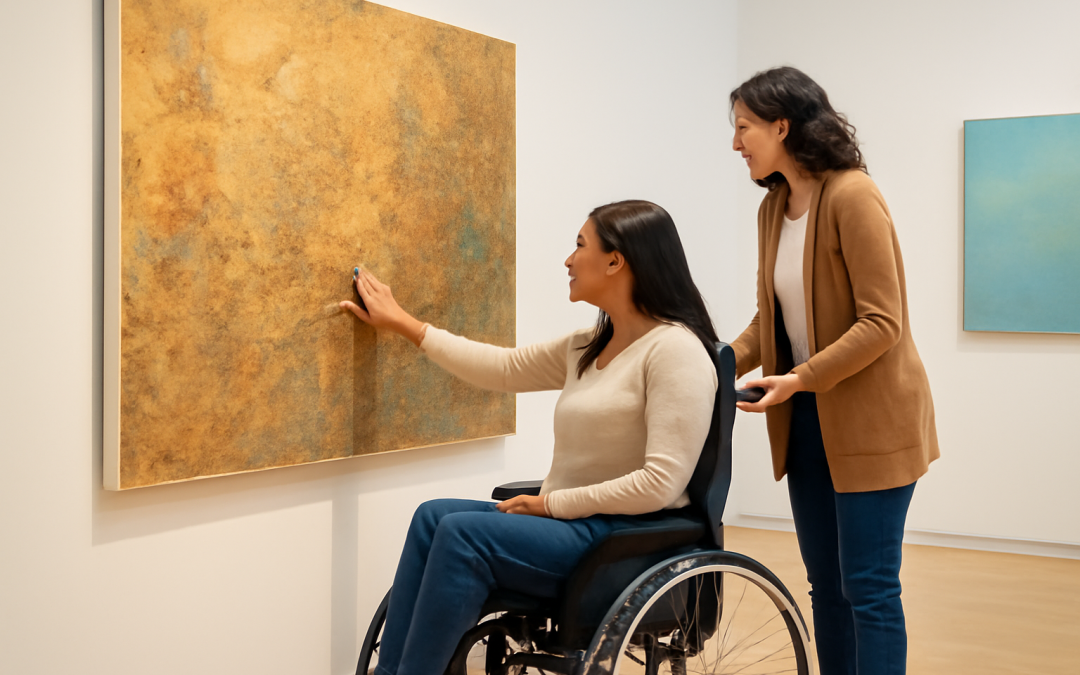
Art is an essential medium through which individuals express emotions, ideas, and cultural values, but its impact is often limited by barriers that prevent full participation from all audiences. For many people with disabilities, accessing art can be a significant challenge, whether due to visual, auditory, physical, or cognitive impairments. This is why accessibility in art is not just a valuable addition but a necessary evolution to ensure inclusivity and equal enjoyment for everyone. By dismantling these barriers, the world of art becomes richer, more diverse, and more reflective of the society it aims to represent.
Historically, art institutions and creators did not always consider the needs of people with disabilities. Museums, galleries, and theaters were often designed without ramps, tactile exhibits, or audio descriptions, making them largely inaccessible. The lack of representation in both the physical and content design meant that many people were left out of meaningful cultural experiences. However, recent decades have seen a growing awareness and commitment to enhancing accessibility, supported by legal frameworks and advocacy campaigns that highlight the importance of equal access to cultural life.
Visual accessibility is one of the most discussed facets of making art inclusive. People with visual impairments often rely on alternative methods to engage with art, such as tactile art pieces, audio descriptions, or braille labels. Artists and museums have begun to create multisensory exhibitions where textures and shapes can be explored by touch, accompanied by detailed narrative descriptions to assist those who cannot see the work. These efforts allow the visually impaired to form a deeper connection with the art that goes beyond simply looking, engaging their other senses and imagination.
Auditory accessibility is equally important, especially in performance art, music, and spoken word events. Sign language interpretation, captioning, and assistive listening devices are becoming more prevalent in theaters and concert halls. These tools help individuals who are deaf or hard of hearing follow along and fully appreciate performances. Beyond providing technical aids, inclusive programming often means incorporating content that resonates with diverse audiences, acknowledging and valuing the lived experiences of people with different abilities.
Physical accessibility addresses structural barriers that limit the ability of individuals to navigate art spaces with ease. Many art venues have taken steps to include accessible entrances, elevators, seating, and restrooms, ensuring that wheelchair users and people with mobility challenges can participate comfortably. Accessibility also extends to studios and workshops, where adaptive tools enable artists with disabilities to create and share their work. These changes foster a more welcoming environment for audiences and creators alike.
Cognitive accessibility calls for art to be understandable and engaging to individuals with intellectual disabilities or neurodivergent conditions. This can involve simplifying language in exhibit descriptions, offering quiet spaces within galleries to reduce sensory overload, or providing pre-visit materials to prepare visitors. Interactive and participatory art installations are especially effective in this regard, offering hands-on experiences that engage a broad range of cognitive abilities and learning styles.
Technological advancements play a critical role in improving accessibility in art. Digital platforms offer new avenues for experiencing art through virtual tours, audio guides, and augmented reality (AR). These tools can be customized to suit individual needs, such as changing text size or contrast and providing alternative text for images. Online art collections and virtual museums have dramatically expanded access for those who might face mobility, geographic, or financial constraints, allowing them to explore and engage with art from the comfort of their homes.
The creation of art by people with disabilities marks a significant shift in perceptions and representation within the cultural sector. Disabled artists challenge conventional narratives and aesthetics, contributing unique perspectives shaped by their experiences. This not only broadens the artistic canon but also encourages dialogue about identity, accessibility, and inclusion. Celebrating and supporting disabled artists is crucial to fostering a more equitable art world and inspiring future generations to pursue creative expression regardless of physical or cognitive challenges.
Education institutions and organizations have a powerful influence on promoting accessibility in art. By incorporating disability studies and universal design principles into art curricula and museum practices, they prepare future artists, educators, and curators to prioritize inclusivity. Programs that offer workshops, scholarships, or residencies specifically for disabled artists help create an environment where diverse talents can thrive. Furthermore, training frontline staff at cultural venues ensures that all visitors feel respected and supported during their experience.
Collaboration between artists, curators, disability advocates, and audiences is essential for creating accessible art spaces and experiences. By involving people with disabilities in the planning and decision-making processes, organizations gain invaluable insights into what works and what does not. Co-creating art projects that address accessibility challenges ensures that solutions are practical, meaningful, and innovative. Such partnerships demonstrate a commitment to genuine inclusion rather than token gestures, strengthening the cultural sector’s integrity and responsiveness.
While progress has been made, challenges remain in achieving comprehensive accessibility in art. Budget constraints, lack of awareness, and outdated practices continue to hinder some institutions from fully embracing inclusive design. Moreover, accessibility must be understood as an ongoing commitment rather than a one-time fix; it requires continuous dialogue, evaluation, and adaptation. Advocates and policymakers must remain vigilant to ensure that accessibility does not become sidelined amid competing priorities or shifting cultural trends.
The benefits of incorporating accessibility into art extend far beyond fulfilling legal requirements or ethical obligations. When art is made accessible, it fosters a richer exchange of ideas and experiences among diverse communities. People with disabilities who can engage with art gain opportunities for social inclusion, personal growth, and creative inspiration. At the same time, able-bodied audiences and artists gain empathy and insight, breaking down stereotypes and fostering mutual respect. This inclusivity strengthens the social fabric by encouraging a culture of openness and shared humanity.
Inclusivity in art also has the potential to drive innovation in artistic practices and audience engagement. By exploring new media, technologies, and participatory formats to address accessibility, artists and institutions push the boundaries of what art can be. This experimentation often leads to more dynamic and immersive experiences that attract broader and more diverse audiences. Accessibility challenges stimulate creative problem-solving and open the door to fresh aesthetics and narratives that enrich the cultural landscape.
The role of funding and policy in promoting accessibility cannot be overlooked. Grants, awards, and governmental support targeting inclusive initiatives help overcome financial barriers and incentivize innovation. Regulations that require accessible facilities and programs hold institutions accountable while raising standards across the sector. Advocating for sustained investment in accessibility is critical to ensuring that improvements are not temporary but embedded in the foundation of arts and culture.
Ultimately, art’s power lies in its ability to connect people and communicate beyond words. Making art accessible ensures that this power is shared widely and equitably, honoring the dignity and diversity of all individuals. It also reflects deeper societal commitments to human rights and social justice, signaling that culture belongs to everyone. By embracing accessibility, the art world not only enriches its own offerings but contributes to building a more inclusive and empathetic society.
Accessibility in art is a multifaceted endeavor that requires dedication, creativity, and cooperation among multiple stakeholders. From adapting physical spaces and developing technological solutions to encouraging the participation of disabled artists and audiences, every effort counts. As the cultural sector continues to evolve, prioritizing accessibility will help break down barriers, transform perceptions, and celebrate the full spectrum of human creativity. The journey toward truly inclusive art is complex but essential, and the rewards for individuals and communities alike are profound and enduring.