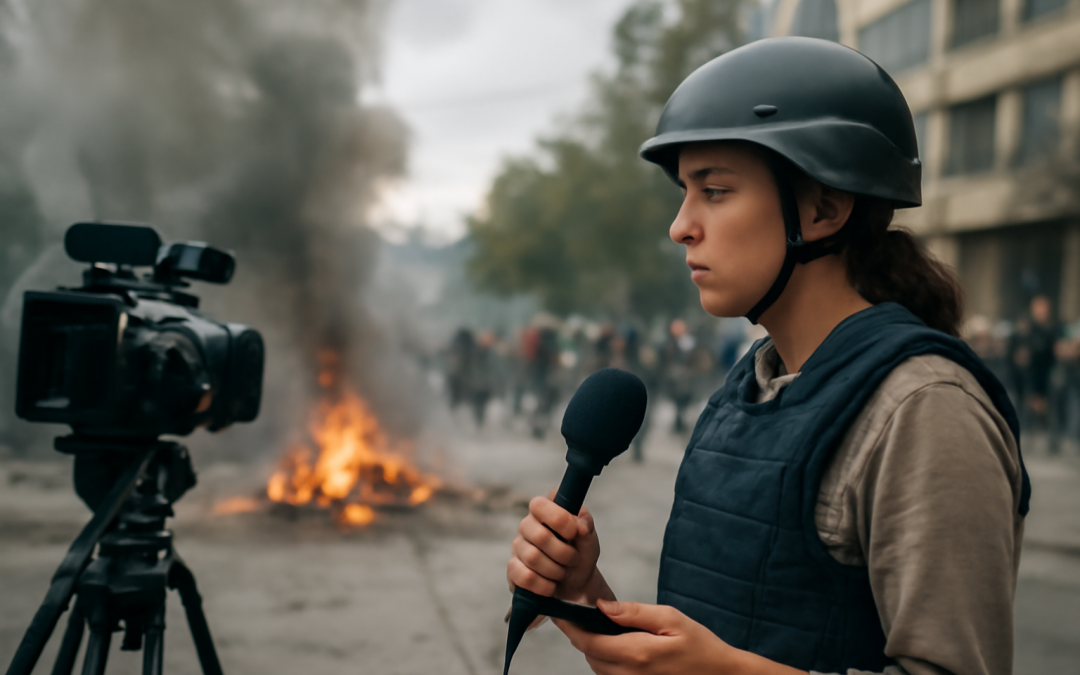
The landscape of crisis reporting has undergone a profound transformation over the past few decades, shaped by rapid technological advancements, evolving audience expectations, and the shifting nature of global crises themselves. Traditionally, reporting on emergencies, wars, natural disasters, or political upheavals relied heavily on correspondents stationed on the ground, carefully crafting detailed narratives with the luxury of time and verification. This model, while thorough, was slower and often filtered through the perspectives of established media outlets. In contrast, today’s crisis reporting is marked by immediacy, a diversity of voices, and the integration of real-time data, which has fundamentally redefined how information is gathered, verified, disseminated, and consumed.
At the heart of this evolution is the advent of digital technology and the internet. The rise of social media platforms like Twitter, Facebook, and Instagram has democratized the flow of information, allowing witnesses and affected individuals to share events as they unfold. This has created an unprecedented volume of raw data accessible to both journalists and the public. In modern crisis situations, the first reports often come not from professional journalists but from on-the-ground civilians posting images and videos through smartphones. This immediacy has increased the speed at which news reaches global audiences but has also raised concerns about accuracy and the potential for misinformation to spread rapidly before facts are confirmed.
The role of the traditional journalist has consequently evolved from being a sole observer and reporter to a curator and verifier of information. Newsrooms have established rigorous fact-checking protocols to sift through the flood of user-generated content, assessing its authenticity before publication. Tools such as geolocation, metadata analysis, and reverse image searches have become essential in modern crisis reporting, allowing journalists to quickly determine the credibility of visual evidence circulating online. Furthermore, collaboration between news organizations and fact-checking entities has increased, highlighting the importance of verification to maintain public trust in an era inundated with information.
Another significant shift is the growing emphasis on multimedia storytelling. Crisis reporting is no longer confined to written articles; video, audio, infographics, and interactive maps have become vital components that enrich narratives and assist audiences in understanding complex emergencies. The integration of live streaming technologies provides real-time access to unfolding events, enabling viewers to witness situations firsthand and feel a direct emotional connection. This mode of storytelling can mobilize humanitarian responses and increase public engagement but also requires journalists to navigate ethical dilemmas around graphic content and the privacy of individuals involved.
The changing nature of crises themselves has also influenced reporting methods. In today’s interconnected world, crises are often complex, involving multiple layers such as political tensions, humanitarian needs, and environmental impacts. For example, reporting on conflict zones now has to consider not only battlefield developments but also civilian displacement, economic consequences, and international diplomatic efforts. These multifaceted dimensions demand more comprehensive coverage, often necessitating collaboration across specializations such as political analysts, medical experts, and human rights investigators. This interdisciplinary approach enables a more nuanced understanding and highlights the interconnectedness of global challenges.
Moreover, crises today frequently unfold in real time on the global stage due to their direct linkage with issues like climate change, terrorism, pandemics, and cyberattacks. The COVID-19 pandemic illustrated this vividly, compelling reporters to adapt quickly to health risks and restrictions while providing continuous updates amid rapidly evolving scientific knowledge and public health guidelines. The pandemic also accelerated the adoption of remote reporting technologies, with journalists conducting interviews and gathering testimony virtually. This adaptability has become a hallmark of contemporary crisis reporting, reflecting a need for resilience amid unpredictable circumstances.
The rise of citizen journalism is another transformative element influencing modern crisis coverage. Individuals with smartphones and internet access are no longer passive recipients of news but active contributors, offering immediate eyewitness accounts and sometimes even challenging official narratives. In certain crisis situations, citizen journalists have provided critical information that traditional media could not access due to safety concerns or governmental restrictions. However, this new paradigm also raises ethical questions about the safety of these contributors, the potential exploitation of their content, and the responsibilities of professionals in verifying and contextualizing such information.
Despite many advantages, the rapid pace and volume of crisis reporting pose significant challenges. The pressure to publish breaking news quickly can lead to mistakes, sensationalism, and the overlooking of important context. Misinformation and disinformation campaigns, often propagated on social media, complicate these challenges by muddying the information waters with falsehoods intended to confuse or manipulate public opinion. Journalists must exercise greater caution and uphold ethical standards rigorously to counter these risks, sometimes having to balance the moral imperative to inform with the potential harm caused by premature or inaccurate reporting.
Another important development is the increasing prominence of emotional intelligence and trauma-informed approaches in crisis reporting. Given that these stories often involve human suffering, reporters are more conscious than ever about sensitivity toward victims and survivors. Ethical guidelines have been revised to prioritize consent, respect for privacy, and avoidance of retraumatization. Additionally, some media organizations provide mental health support to their staff who frequently cover intense and distressing events. This evolution reflects a broader recognition of the psychological impact of crisis reporting on both storytellers and audiences.
Financial models driving crisis coverage have also shifted. Traditional news organizations, grappling with shrinking budgets and audience fragmentation, have often reduced their foreign bureaus and on-the-ground correspondents. This contraction has sometimes hampered the depth and immediacy of international crisis reporting. At the same time, digital media outlets and independent journalists have stepped in, supported by crowdfunding, grants, or nonprofit foundations dedicated to investigative work and human rights reporting. This diversification has broadened the range of perspectives and stories available to the public but has also contributed to a more fragmented media environment that can challenge audience cohesion.
Furthermore, the geopolitical environment increasingly impacts how crises are reported and perceived. Governments and other powerful actors often seek to influence or control narratives, especially where national security or political legitimacy is involved. Journalists reporting in conflict zones or under authoritarian regimes may face censorship, harassment, or worse. This reality has prompted a rise in advocacy journalism and the work of organizations dedicated to press freedom and the protection of journalists. The tension between state interests and independent reporting underscores the complex ethical and practical landscape in which crisis reporting now operates.
Technology continues to shape the future trajectory of crisis reporting. Artificial intelligence and machine learning tools are being developed to aid in the processing of large datasets, detecting emerging threats, and automating parts of translation or transcription, thereby helping journalists to work more efficiently. Virtual reality and augmented reality are also being explored for immersive storytelling that could revolutionize audience engagement with crisis narratives. At the same time, concerns about surveillance, data privacy, and the use of algorithms to spread particular narratives must be vigilantly addressed to preserve journalistic integrity.
In reviewing these developments, it becomes clear that crisis reporting is no longer merely about delivering facts; it is an evolving practice that demands adaptability, critical thinking, technological literacy, and deep ethical commitment. Its purpose has expanded to not only inform but also to foster empathy, encourage informed public discourse, and ultimately contribute to resilience and recovery efforts. As the global community faces increasingly complex and interconnected crises, the role of accurate, responsible, and compassionate crisis reporting has never been more vital.
The profound changes in crisis reporting reflect broader societal shifts toward greater interconnectedness and immediacy while highlighting the challenges of managing information integrity in a complex media ecosystem. Journalists and media organizations must continue to evolve their methods and ethics to serve the public effectively amid ongoing uncertainty. In doing so, crisis reporting will remain an essential pillar of democracy and global awareness, upholding the truth amidst turmoil.