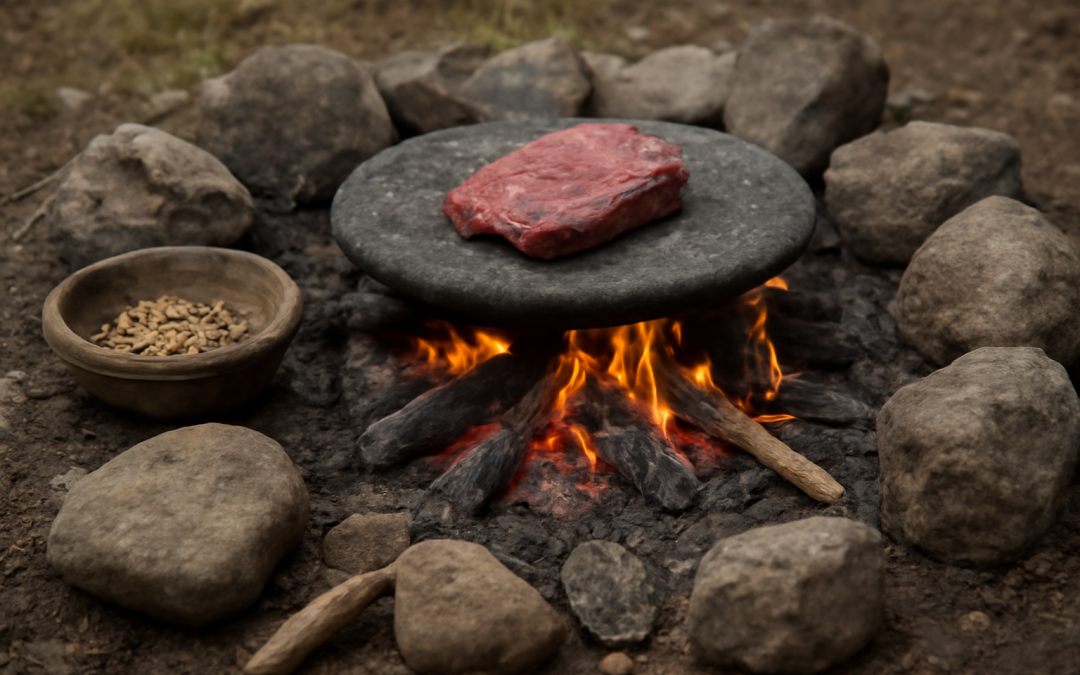
Long before the advent of modern kitchens and sophisticated culinary techniques, early humans developed a fascinating relationship with food and fire that laid the groundwork for today’s cooking practices. The Stone Age, spanning a vast period of prehistoric time, was marked by significant advances not only in toolmaking but also in how people prepared and consumed their food. Understanding these ancient methods reveals much about human innovation and survival strategies, illustrating how early societies transformed raw ingredients into nourishing meals through ingenious means.
One of the earliest and most transformative cooking methods was the controlled use of fire. Mastering fire was a monumental step for Stone Age communities, enabling them to cook food for the first time and dramatically altering their diets and health. Early humans discovered that exposing food to heat made it easier to chew and digest, as well as safer by killing harmful pathogens. The controlled hearth, typically a simple fire pit surrounded by stones, became the center of communal life, serving as a place not only for cooking but for social interaction.
Roasting directly on open flames or embers was among the most straightforward and initial techniques Stone Age people used. Hunters would skewer game animals or fish on sticks and cook them over flickering, smoky fires. This process unlocked new flavors and softened tough meats, allowing early humans to maximize their caloric intake. Roasting could also be applied to nuts and tubers found in their surroundings, helping break down fibrous textures and release nutrients otherwise difficult to access in their raw state.
Beyond roasting, ancient cooks harnessed the sandy shores and riverbanks to cook food using earth ovens, a practice surprisingly widespread in prehistoric times. A pit would be dug, lined with heated stones, and layered with food wrapped in leaves or grasses. This method allowed food to slow-cook under layers of earth, steam, and heat, retaining moisture and resulting in tender, flavorful dishes. Such preparation was ideal for larger cuts of meat, as well as bulky roots such as yams and camas bulbs, which required prolonged heat to become edible. Earth oven cooking represents a sophisticated early understanding of temperature regulation and heat retention.
Boiling and steaming, though less immediately evident from archaeological remains due to the absence of ceramic vessels in the early Stone Age, gradually became essential as humans advanced. Early containers, such as hollowed-out logs or animal hides, may have been used to hold water heated with hot stones, thereby enabling boiling or steaming. Hot stone cooking—depositing heated rocks into water-filled containers—expanded the range of cooking techniques by allowing cereal grains, shellfish, or plant roots to be softened and cooked without direct exposure to fire. This method likely dates back to the late Stone Age when tools and societal complexity increased, revealing a growing culinary diversity.
Stone Age cooking was also influenced heavily by the natural environment and available resources. Coastal communities, for example, exploited abundant seafood, including fish, shellfish, and seaweed. Cooking methods adapted to these materials included simple roasting over open fires and steaming in natural containers. Inland groups, living near forests or savannas, focused more on meat and plant roots, refining techniques such as slow roasting or earth oven cooking to maximize the nutritional value of tougher or starchier flora and fauna. This variability in cooking practices underscores how early human diets were finely tuned to regional ecosystems and seasons.
Another remarkable aspect of Stone Age culinary culture was the use of stone tools not only for hunting and butchering but also for food preparation. Flaked flint and other sharp-edged stones allowed early humans to skin animals, fillet fish, and even cut tough plant materials before cooking. This step was crucial for efficient cooking and consumption, enabling the preparation of more delicate or complex meals. The development of grinding stones, such as mortars and pestles, suggests that early humans processed grains and seeds by crushing or pounding them before cooking, potentially broadening their dietary scope by preparing primitive forms of porridge or bread-like substances.
Fire’s social role was as important as its nutritional contribution. Cooking food centrally around a controlled fire created opportunities for sharing, storytelling, and passing down knowledge between generations. The act of cooking itself likely encouraged early forms of collaboration and complexity in human interaction. This communal aspect fostered group cohesion and may have spurred cognitive development, as the process required timing, planning, and cooperation—skills invaluable for survival in varied prehistoric landscapes.
While protein sources like wild game were staples, the incorporation of plant-based foods was vital for maintaining a balanced diet. Stone Age humans utilized a wide range of edible plants including seeds, nuts, tubers, and leafy greens. Cooking these ingredients in various ways—from roasting over fire to pit baking—helped detoxify certain species and improved digestibility. For instance, many starchy roots naturally contain harmful substances that are neutralized by heat, making the knowledge of correct preparation critical. This underscores an early understanding of food safety and the evolving relationship between humans and their environment.
The control of cooking temperature, though rudimentary compared to modern stoves, was nonetheless crucial to successful meals. Stone Age cooks learned to regulate fire intensity by adjusting fuel types and airflow or by shifting food farther from or closer to embers. Experiments with different stones for hot stone cooking revealed varying heat retention properties, indicating observational skills and empirical learning. Such management of heat was essential not only for palatability but also for preserving nutrients, preventing food wastage, and ensuring that the energy cost of cooking was worthwhile.
Stone Age cooking methods also contributed to cultural identity, as distinct techniques and food preferences began to emerge across different groups and geographies. These early culinary traditions likely laid the foundation for regional food specialties and rituals centered around eating and preparation. Archaeological finds, including specialized tools and remnants of hearths coupled with food residues, help reconstruct these prehistoric culinary landscapes. They provide evidence of how ancient people valued certain foods and methods, reflecting their adaptability and the symbolic dimensions of eating.
In addition to practical techniques, the sensory experience of cooking would have played a role in human evolution. The aroma of roasting meat, the sight of crackling fire, and the taste of cooked flavors all enriched daily life and may have influenced social bonding and mate selection. This sensory dimension, intertwined with the nutritional benefits of cooked food, highlights why cooking became an integral part of human existence and cultural transmission. The journey from raw to cooked was not merely functional but also touched on emotional and social levels.
Over millennia, as societies progressed from nomadic hunters to more settled groups, Stone Age cooking methods evolved and diversified further. The appearance of pottery enabled boiling and stewing, techniques that allowed for more complex meal preparation. Pottery also facilitated storage and reheating, offering greater flexibility. This shift marked a transition toward more permanent culinary practices, reflecting broader changes in lifestyle, resource management, and community size. While the foundations were laid in earlier Stone Age techniques, the innovations in cooking technology continued to shape human history.
The adaptations seen in Stone Age cooking demonstrate an impressive spectrum of human ingenuity, ranging from the simple yet effective roasting on open flames to complex earth ovens and hot stone techniques. This evolution was driven by environmental challenges, resource availability, and social factors, illustrating humanity’s readiness to experiment and innovate. The pursuit of edible, enjoyable, and safe meals was a catalyst for toolmaking, fire control, and social structures. The legacy of these early methods is evident in the diverse culinary traditions found around the world today.
Reflecting on how our ancestors prepared food brings insight into the origins of cooking as both a biological necessity and a cultural phenomenon. Early humans bridged the gap from relying solely on raw nutrients to harnessing heat as a transformative agent, setting the stage for later agricultural and gastronomic breakthroughs. The journey from Stone Age cooking practices to contemporary cuisine is a profound narrative of adaptation and creativity, one that underscores the deep connection between food, technology, and society.
These ancient methods underscore the vital role that cooking has played in human survival and progress. By transforming raw ingredients through various techniques, Stone Age people improved nutrition, expanded food choices, and enhanced flavors, thereby promoting overall health. Their innovations laid the foundation for humanity’s culinary future, showing that the simple act of cooking with fire was a masterpiece of early technology. Understanding these methods enriches our appreciation of history and the remarkable resilience of prehistoric communities.