The concept of dining out as a social and cultural experience traces its roots back through centuries, but the origins of modern restaurants are deeply intertwined with shifts in society, economy, and culinary arts that occurred primarily in Europe during the 17th and 18th centuries. Unlike earlier forms of public eating, which were often limited to inns, taverns, and communal feasts, modern restaurants introduced a novel approach: offering a fixed menu in a private or semi-private setting, prepared and served on demand. This innovation laid the groundwork for the contemporary restaurant experience, emphasizing choice, convenience, and a glimpse into sophisticated cuisine.
In the medieval and early modern periods, feeding travelers was largely the responsibility of inns, where food was sometimes secondary to lodging. The fare was basic and communal, with limited variety or specialization. Public dining’s primary function was practicality rather than pleasure, with food served in large quantities to a diverse group of patrons who shared the same dishes. These establishments lacked the concept of individualized service and curated menus, which are central to the modern restaurant ethos. The idea of dining as both an indulgence and an art form began to take shape in the bustling cities of Europe as urban populations grew and became economically and culturally more complex.
Paris often receives credit as the cradle of the modern restaurant, and for good reason. In the mid-to-late 18th century, the city witnessed the rise of establishments specifically branded as “restaurants,” powered by the convergence of economic prosperity, culinary innovation, and social change. The word “restaurant” itself originally referred to restorative broths or soups, advertised as cures for ailments offered by certain vendors. Over time, these vendors began expanding their offerings beyond medicinal soups, introducing the idea of prepared meals available for immediate consumption in a dedicated space.
One key figure in this transformation was a man named Antoine Boulanger, who in the 1760s and 1770s opened shops in Paris selling “restaurants” — a kind of bouillon or restorative broth said to invigorate and heal. His use of the term and his commercial success helped popularize the concept of a meal service tailored to the individual customer’s choice and health needs. However, it was another landmark figure who revolutionized how restaurants were structured and operated: Monsieur Boulanger’s contemporary, a man named La Chapelle, is often credited with pioneering the use of individual tables and menus, allowing patrons to select their dishes rather than sharing communal plates.
By the late 18th century, the socio-political climate of France had also played an influential role in restaurant development. The fall of the aristocracy during the French Revolution led many trained chefs, who had formerly worked in noble households, to find new employment opportunities. These chefs brought with them highly refined culinary skills, introducing the public to dishes previously accessible only to the elite. The emergence of restaurants offering refined cuisine to the broader public egalitarianized access to gourmet food, expanding culinary culture beyond exclusive salons and banquets.
At the heart of these developments was an expansion of consumer choice and the professionalization of food service. For the first time, customers in these establishments could choose from a menu of dishes at set prices, allowing for a transparent dining experience that differed sharply from the previously predominant “table d’hôte” system, where patrons had little say over what was served. This shift made dining out a more predictable and desirable leisure activity, encouraging repeat patronage and creating a sustainable business model.
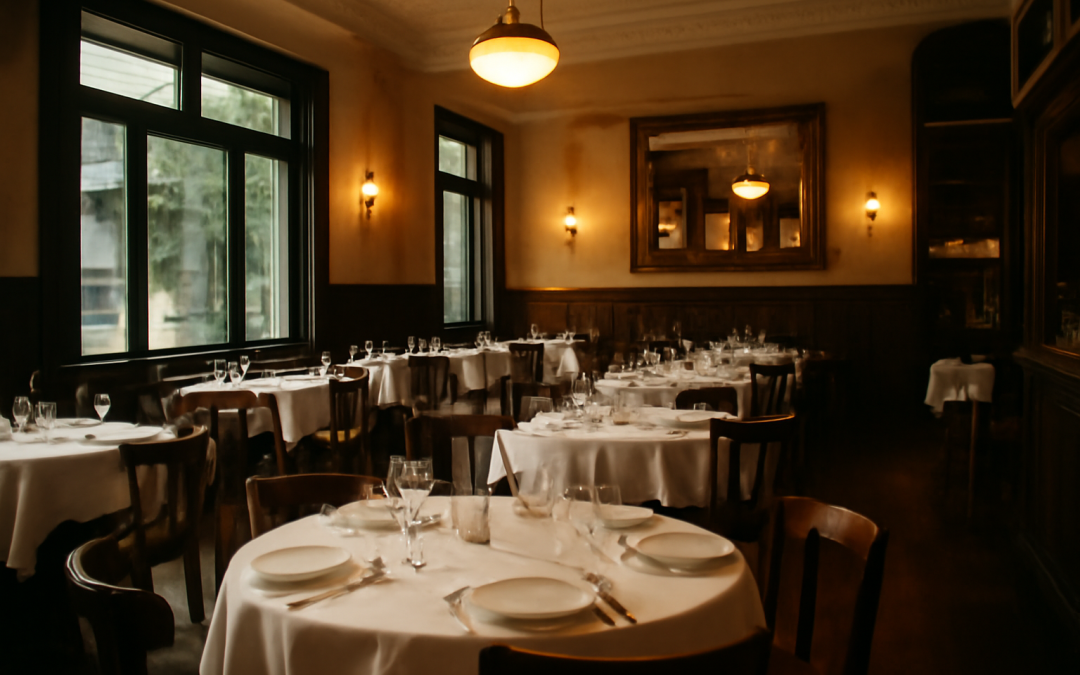
The architecture and design of early restaurants also played a role in shaping their modern identity. Unlike taverns or inns, which often had a rough communal atmosphere, the early Parisian restaurants carefully cultivated an ambiance of refinement and comfort. Restaurants featured separate dining areas with individual tables, white tablecloths, attentive waitstaff, and decorative interiors. These physical and service attributes elevated the act of eating into a ritual of sophistication and social display, helping restaurants become cultural institutions in their own right.
Beyond Paris, other European cities contributed to the origins of modern restaurant culture. London, for example, saw a rise in coffeehouses and taverns that began offering culinary services resembling those of restaurants. The British also introduced innovations such as afternoon tea and specialized dining clubs that integrated food service with social and intellectual exchange. These developments refined notions of hospitality and formal dining that would influence restaurant traditions internationally.
The growing popularity of travel and the expansion of the middle class during the 19th century further fueled the restaurant industry’s evolution. Increasing numbers of people had disposable income and time to spend on leisure activities, including dining out. The railway revolution made travel more accessible, bringing diverse groups of diners together and spreading culinary ideas across regions and countries. Alongside this democratization of dining came the codification of professional standards among chefs and restaurateurs, who established culinary schools and guilds to ensure consistency and quality.
In the United States, the modern restaurant stemmed from European influence but adapted to unique local conditions. Early American dining establishments took cues from French and British models, but the vast geography and diverse population created a variety of distinct dining cultures. For instance, the emergence of diner restaurants, steakhouses, and ethnic eateries reflected America’s pluralistic society. The rise of industrialization and urbanization in cities such as New York and Chicago led to a boom in restaurant openings, with varied cuisines catering to immigrants and native-born populations alike.
Key figures such as Delmonico’s in New York helped introduce elevated dining experiences to America in the mid-19th century. Delmonico’s was among the first to establish a fixed menu offering, maintaining a high standard of service and cuisine. This set the tone for the development of fine dining within the United States, paralleling but also differentiating from European traditions. Over time, American restaurateurs incorporated innovations like menu cards, reservations, and specialization in particular types of cuisine or service styles, adding richness and diversity to the restaurant landscape.
The industrial age also prompted changes in restaurant technology and logistics. Improved kitchen equipment, refrigeration, and supply chains allowed restaurants to offer more consistent and diverse menus year-round. This technical progress made it possible for restaurants to widen their reach, accommodating larger numbers of patrons without sacrificing quality. At the same time, innovations in marketing, such as advertising in newspapers and later radio and television, played a pivotal role in making restaurant dining a mass cultural experience.
The 20th century continued to witness rapid expansion and diversification in restaurant culture. The emergence of fast-food chains marked a significant departure from traditional establishments, emphasizing speed, standardization, and affordability. This business model democratized dining, making eating out common across all economic classes. At the same time, haute cuisine persisted, with international influences transforming menus and service styles in fine dining restaurants. This plurality of options further enriched modern restaurant culture, making it as varied and dynamic as the societies it serves.
Throughout this evolution, the underlying principles laid down centuries prior remain visible: the provision of prepared food for immediate consumption in a dedicated space, with a focus on customer choice and experience. The restaurant became not just a place to eat but a venue for social interaction, enjoyment, and cultural expression. Culinary innovation continues as chefs and restaurateurs draw from historic traditions while responding to contemporary tastes, sustainability concerns, and global influences.
The origins of modern restaurants demonstrate how changes in social structures, economic conditions, and cultural appetites come together to shape fundamental aspects of daily life. From humble beginnings with soup vendors to the grand dining halls of today, restaurants have always been reflections of their time, embodying the intersection of food, society, and innovation. This ongoing evolution ensures that the restaurant experience remains a vital, dynamic institution that both preserves heritage and embraces the future.