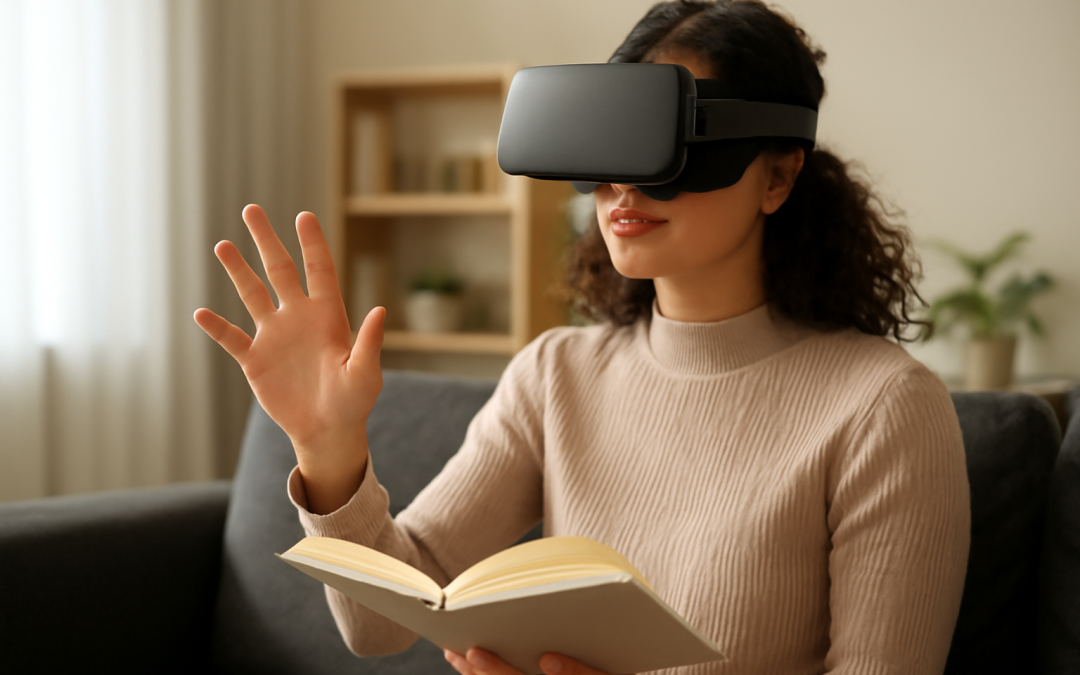
Immersive experiences have long been a coveted aspiration in the realm of storytelling, and the advent of advanced technologies has brought this goal closer to reality than ever before. One of the most revolutionary tools transforming narrative delivery is virtual reality (VR), which immerses audiences inside a crafted world, blurring the line between observer and participant. This technology doesn’t just tell a story—it allows individuals to live it. The potential for a deeper emotional connection and heightened engagement with characters and plotlines redefines how stories can be experienced and remembered.
At its core, virtual reality storytelling shifts the power dynamic between creator and audience. Traditional storytelling forms—books, films, theater—maintain a passive reception by the audience: information flows in one direction, and the consumer interprets it from a set viewpoint. VR inverts this, placing the audience within the narrative environment where their movement, attention, and choices can influence what they see and experience. This active involvement creates a personal bond with the story that, in many cases, surpasses what is possible through more conventional media.
The construction of immersive narratives in virtual reality demands a sophisticated blend of technical expertise and creative vision. Unlike a linear film, VR content must account for a 360-degree environment, meaning every detail within the space contributes to the storytelling. Narrative elements—ranging from character interactions to environmental cues—must be strategically positioned to guide the user’s attention and encourage exploration. Writers and designers collaborate closely to develop scenarios where the storytelling unfolds dynamically depending on the viewer’s perspective and movement, which requires a rethinking of pacing and plot structure.
Moreover, virtual reality enhances sensory engagement with storytelling beyond visual and auditory stimuli. The use of spatial sound, haptic feedback, and sometimes even scent can enrich the narrative tapestry, making the environment more believable and emotionally resonant. For example, the subtle sound of footsteps behind a user or the warmth of a virtual sun can evoke heightened sensations that strengthen immersion. These multisensory inputs create an experience that mirrors real-world perception, intensifying the emotional impact and fostering empathy between the user and virtual characters.
The ability of virtual reality to engender empathy is one of the most compelling advantages of this storytelling medium. Through VR, individuals step directly into the shoes of others, experiencing scenarios from perspectives often inaccessible to them in real life. VR documentaries, for instance, have enabled users to witness social injustices, environmental crises, or personal histories from intimate, humanized viewpoints. This firsthand immersion breaks down barriers of abstraction commonly associated with traditional storytelling and can inspire profound understanding and social awareness.
In terms of narrative genres, virtual reality is proving versatile. While it initially found most applications in gaming and entertainment, VR storytelling now spans education, training, therapy, and journalism. Educational VR experiences leverage immersive environments to teach complex subjects by placing learners in simulated settings where they can interact with historical events, scientific phenomena, or cultural contexts. This hands-on learning methodology stimulates engagement and retention far better than rote memorization or passive observation.
Therapeutic uses of VR storytelling demonstrate its capacity to aid mental health and rehabilitation as well. By guiding patients through carefully designed virtual narratives, practitioners can expose them gradually to anxieties or traumas in a controlled way, facilitating healing and emotional regulation. These therapeutic narratives often rely on storytelling elements that encourage resilience, empowerment, and reflection, showing how narrative design and psychological principles intersect within virtual reality.
Journalistic endeavors have embraced VR to offer immersive reporting on global issues. Traditional news often struggles to convey the emotional gravity of distant events; VR transports viewers to the scene, providing a visceral understanding of conflicts, natural disasters, or humanitarian crises. This method not only informs but can mobilize viewers by fostering personal connections with real-world events through spatial storytelling. As the technology matures, it pushes the boundaries of how factual narratives are crafted and delivered.
The growing accessibility of VR hardware has democratized storytelling opportunities, inviting creators from diverse backgrounds and disciplines to experiment with new narrative forms. Emerging tools and platforms simplify the production process, allowing smaller teams and individuals to develop compelling experiences without excessive budgets. This expansion heralds an era where stories from previously marginalized voices find broader exposure through immersive formats, enriching the global cultural landscape.
However, integrating storytelling principles with virtual reality technology is not without challenges. Crafting a coherent and engaging narrative within a non-linear, interactive space requires careful consideration of pacing, narrative flow, and user agency. When users are free to explore at will, there is a risk that the core message or emotional arc can become diluted or lost. Designers must strike a delicate balance between giving freedom and maintaining narrative coherence, often through subtle cues, character-driven prompts, or environmental design.
Another hurdle lies in the physical demands and accessibility of VR. Prolonged use of headsets can cause discomfort or motion sickness for some users, which impacts how long and often individuals will engage with a narrative. Additionally, the need for specialized equipment and sometimes powerful computing hardware can limit audience reach. As the technology evolves, improvements in comfort, cost, and ease of use are key to maximizing the medium’s storytelling potential.
Ethical considerations also emerge with virtual reality storytelling. The immersive nature of VR means that intensely personal or distressing content can have a more profound psychological impact than traditional media. Creators must weigh the effects of potentially triggering or manipulative content, incorporating safeguards like content warnings or exit options. Moreover, issues surrounding privacy and data collection during interactive experiences warrant careful attention, ensuring user trust is maintained.
Despite these challenges, the future of narrative experiences lies heavily intertwined with virtual reality. Innovations such as artificial intelligence-driven characters and adaptive storylines promise to make virtual worlds even more responsive and personalized. As machine learning integrates with storytelling design, VR experiences will become increasingly capable of reacting to user behavior and preferences, crafting unique, evolving narratives for each participant.
This blend of technology and narrative creativity could give rise to storytelling ecosystems where traditional linear plots become obsolete. Instead, stories might emerge continuously from the interplay between user choices, character development, and evolving environments. Such systems hold the potential to transform how humans connect with stories, making each experience a deeply individual yet shared cultural phenomenon.
In the entertainment sector, virtual reality is redefining how genres like horror, mystery, and drama are experienced. For horror, VR’s immersive quality heightens suspense and fear through direct environmental interaction, generating scares that traditional media cannot match. Mystery narratives benefit from allowing users to inspect scenes and gather clues firsthand, involving them in detective work. Drama and emotional narratives leverage VR’s spatial intimacy to build more nuanced character relationships, drawing users into intimate emotional moments.
The blending of VR storytelling with other forms of media further broadens its expressive range. Cross-platform storytelling, where narratives span VR, augmented reality, traditional film, and even social media, enables multi-layered experiences that engage audiences in varied contexts. For instance, a story might begin as a VR journey, continue in a mobile app, and conclude through social interaction online. This convergence enriches narrative complexity and encourages audiences to engage with stories on multiple levels.
Creators are also exploring the social dimension of virtual reality storytelling. Multi-user VR narratives allow participants to share experiences, interact with each other’s characters, or collaborate on story outcomes. These social VR experiences evoke collective storytelling akin to live theater or role-playing games, where narrative evolves dynamically with audience input. By harnessing this social potential, virtual reality storytelling can foster community and connection in ways isolated media cannot.
In educational and professional settings, VR narratives facilitate the development of empathy, cross-cultural understanding, and problem-solving skills. Immersive simulations allow learners to experience other cultures, historical events, or workplace scenarios with an immediacy that textbooks or lectures cannot provide. Such experiential learning fosters critical thinking and emotional intelligence, crucial for navigating increasingly global and interconnected environments.
Looking at the broader cultural implications, virtual reality storytelling challenges and expands notions of what a narrative can be. It disrupts traditional hierarchies between creator and consumer, linearity and choice, space and time. As stories become places to inhabit rather than texts to read, they invite new literacies and modes of interpretation. Audiences become explorers and co-authors of their experiences, redefining their role within the narrative process.
Ultimately, the rise of virtual reality storytelling marks a profound shift in how humans communicate meaning and share experiences. As this technology becomes more accessible and sophisticated, it offers unprecedented opportunities to craft rich, immersive, and emotionally powerful stories that resonate on both individual and collective levels. The transformative power of stepping inside a story—seeing, hearing, and feeling it from within—has the potential to reshape not just entertainment, but education, social awareness, and human connection for years to come.