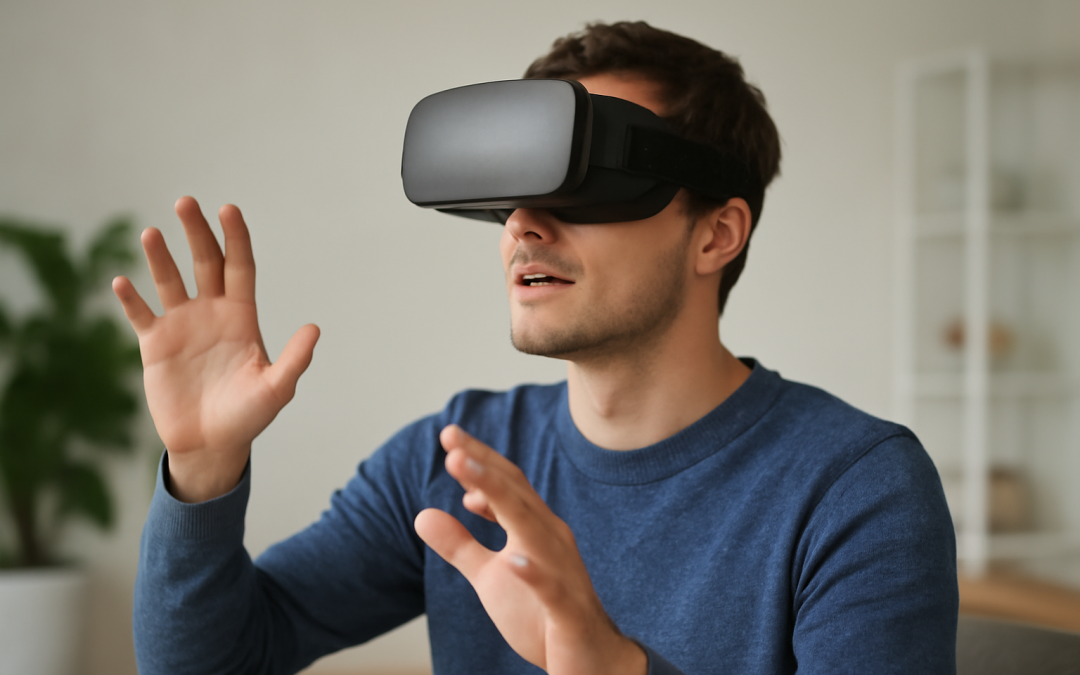
Imagine stepping into a world that exists beyond the physical boundaries of your room—a space where sights, sounds, and sensations are no longer limited by reality. This immersive experience is made possible through an intricate blend of technology, software, and human perception working seamlessly together. Virtual reality (VR) transcends traditional screens and interfaces, placing users directly inside digital environments that feel both vivid and convincing. The promise of fully immersive experiences has captivated industries ranging from gaming and entertainment to education and healthcare. But how exactly does virtual reality work to deliver this profound sense of presence?
At its core, virtual reality is about creating an artificial simulation that replicates real-world environments or conjures entirely new ones, allowing users to interact with these digital spaces as naturally as they would the real world. The technology involves capturing, processing, and presenting sensory information, primarily visual and auditory, in a way that tricks the brain into accepting it as a genuine experience. Visual stimulation is fundamental; devices such as head-mounted displays (HMDs) provide stereoscopic 3D images by rendering two slightly different views, one for each eye. This simulates depth perception and supports the brain’s interpretation of spatial relationships, thereby making the virtual world appear three-dimensional and tangible.
One of the key pieces of hardware in virtual reality systems is the headset. These devices house high-resolution screens, sometimes utilizing OLED or LCD panels, strategically placed just a few centimeters from the eyes. The screens typically show two images side by side, corresponding to the left and right eyes. Specialized lenses within the headset adjust the focus and field of view, enhancing image clarity and ensuring comfort during extended use. To track the user’s head movements, modern VR headsets employ a combination of sensors such as accelerometers, gyroscopes, and magnetometers. These components relay precise orientation and motion data to the system, allowing the virtual environment to shift dynamically as the user looks around, maintaining an immersive perspective.
Beyond head tracking, effective virtual reality requires accurate position tracking, which captures subtle movements like leaning, stepping, or reaching out. There are several ways to achieve this, including external cameras tracking the headset and controllers, or inside-out tracking where cameras on the headset itself interpret surrounding physical space. This spatial awareness allows users to move naturally within a designated volume and have their actions mirrored in the virtual world. Handheld controllers, gloves, or even full-body suits equipped with sensors enable interaction with objects in the digital environment, further blurring the line between physical and virtual realities.
The auditory experience in virtual reality is just as crucial as the visual one. Spatial audio technology mimics the way sound behaves in the real world, generating cues that shift depending on the user’s head orientation and position. This 3D audio effect is typically delivered through high-quality headphones integrated with the VR headset, reinforcing the sensation of being inside a specific space. Sound sources can be positioned anywhere around the user—above, behind, or to the sides—creating an enveloping and realistic soundscape that complements the visual stimuli.
The magic of virtual reality also lies in the software that drives and constructs these experiences. Developing a believable virtual world demands sophisticated rendering engines capable of generating detailed graphics in real time. These engines calculate lighting, textures, shadows, and physics interactions to make environments reactive and authentic. Advanced algorithms handle the complex calculations for image distortion caused by the lenses and the display refresh rates, which must typically exceed 90 frames per second to minimize latency and reduce motion sickness. Low latency is critical in maintaining immersion, as even slight delays between user movement and visual update can break the illusion and cause disorientation.
Content creation plays a pivotal role in virtual reality’s effectiveness. Each experience is meticulously crafted by designers, artists, and programmers using 3D modeling software and game engines such as Unity or Unreal Engine. These tools enable creators to construct everything from vast landscapes to intricate objects, animating them and scripting interactive elements. Real-world physics simulations add further realism, allowing virtual objects to behave according to the laws of gravity and collision. Combining these elements results in virtual environments that feel interactive, believable, and engaging.
A deeper understanding of human perception is also fundamental for VR technology. The brain relies on multiple sensory inputs to construct a coherent representation of the world, and VR attempts to replicate these inputs to evoke a similar response. Visual information must align with vestibular and proprioceptive cues—sensations related to balance and body position—to prevent motion sickness and maintain comfort. When discrepancies arise, such as the eyes perceiving movement while the body remains still, users may experience nausea or disorientation called “cybersickness.” To mitigate this, VR developers employ techniques like fixed reference points within the environment, gradual acceleration of virtual motion, or limiting sudden visual changes.
Another emerging component in virtual reality systems is haptic feedback, which provides tactile sensations corresponding to virtual interactions. Advanced gloves, vests, or handheld devices generate forces, vibrations, or temperature changes that simulate touch, enhancing the sense of immersion. For example, feeling the resistance when picking up a virtual cup or the impact of an object hitting the body amplifies presence within the virtual space. As haptic technology advances, it promises to transform VR experiences, making them more comprehensive by engaging multiple senses simultaneously.
Virtual reality also benefits from the integration of artificial intelligence (AI) to create more dynamic and responsive environments. AI-driven characters can interact with users in realistic ways, adapting their actions and dialogues based on user behavior. Procedural content generation, powered by AI, enables the creation of expansive and varied virtual worlds without the need for manual design of every detail. These capabilities significantly expand the scope and richness of virtual reality experiences, making them more believable and personalized.
Connectivity and computing power have a profound impact on virtual reality performance. Many VR systems rely on powerful desktop computers or gaming consoles to process high-fidelity graphics and complex simulations. However, standalone VR headsets equipped with optimized processors and onboard storage are becoming increasingly popular, providing users with untethered mobility and ease of use. Additionally, cloud computing and 5G networks open possibilities for streaming VR content remotely, reducing hardware limitations and enabling access to vast virtual environments anywhere in the world.
As technology progresses, the boundaries of virtual reality continue to expand toward mixed reality and augmented reality (AR), where digital elements blend seamlessly with the physical world. Devices capable of overlaying holographic images onto real surroundings introduce new interactions and applications, from industrial training to remote collaboration. While traditional virtual reality immerses users in entirely fabricated spaces, these hybrid technologies leverage many of the underlying principles of VR, such as real-time tracking, spatial audio, and high-resolution rendering, to enhance how we perceive and engage with our environment.
In summary, virtual reality operates through a sophisticated interplay of hardware, software, and perceptual science designed to create immersive, interactive digital worlds. By delivering carefully synchronized sensory stimuli—primarily visual and auditory—while tracking user movements and enabling natural interactions, VR establishes a compelling illusion of presence within alternate realities. Continuous advancements in display technology, motion tracking, haptics, and AI contribute to increasingly realistic and engaging experiences. As these elements evolve, virtual reality is poised to reshape how humans learn, communicate, and entertain themselves, unlocking new dimensions of possibility that were once the realm of imagination alone.