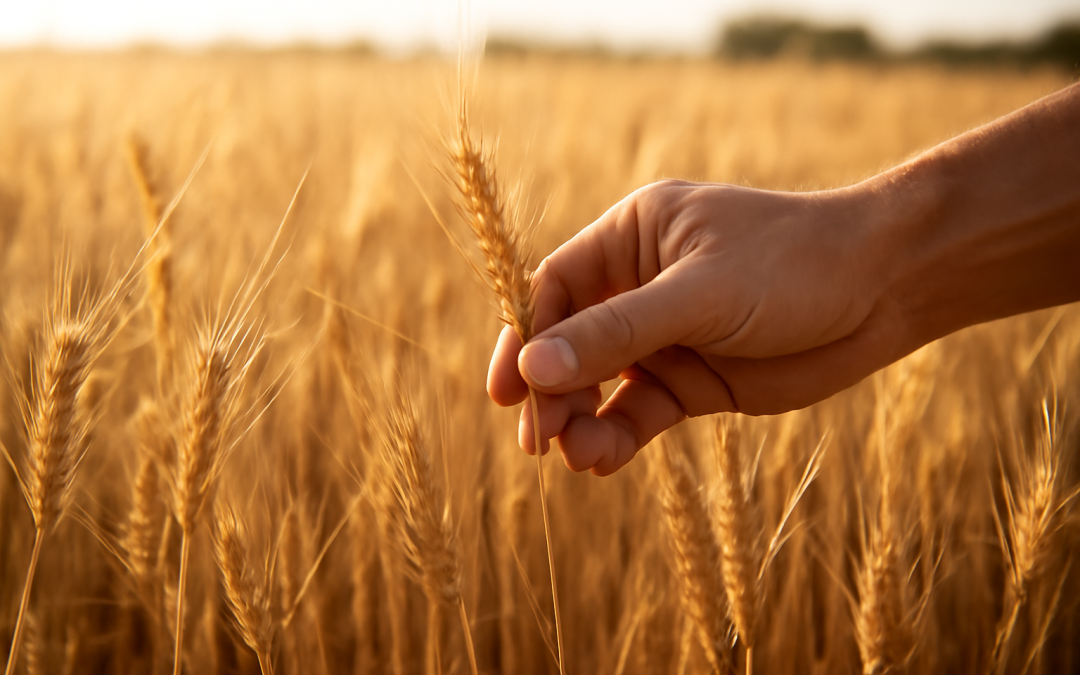
The cultivation of wheat represents one of the most transformative developments in human history, forming the cornerstone of agricultural societies and influencing the trajectory of civilization. This remarkable journey from wild grasses to the staple grain that feeds billions today is a fascinating narrative of human ingenuity, environmental interaction, and biological change. Wheat domestication embodies a complex process through which early humans selectively bred plants, gradually steering a species from the wild toward agriculture and eventual cultural significance.
Long before the rise of cities and the establishment of states, ancient hunter-gatherer communities roamed vast landscapes, gathering wild grains and other edible plants. Among these wild grasses, certain species of wheat began to stand out for their nutritional value and ease of harvest. The earliest evidence of wheat usage dates back approximately 10,000 years in the Fertile Crescent, a region extending from modern-day Iraq through Syria, Lebanon, Israel, and Jordan. This area, often referred to as the cradle of agriculture, was home to numerous wild wheat species such as einkorn and emmer, which became the initial candidates for domestication.
The shift from foraging to farming was gradual and driven by a combination of environmental pressures and human preference. Early humans noticed that some plants exhibited favorable traits—such as larger seeds or non-shattering seed heads, which made gathering easier and less wasteful. Over generations, these traits were unconsciously selected as people harvested grains from plants that yielded more food. This selective pressure favored wheat variants that were more amenable to domestication, leading to genetic changes that differentiated domesticated wheat from its wild ancestors.
One of the key evolutionary transformations during wheat domestication was the change in the seed dispersal mechanism. Wild wheat species naturally shatter their seed heads, scattering seeds widely to reproduce. However, shattering complicates harvest since seeds fall prematurely to the ground, escaping collection. Early cultivators began to favor wheat plants with non-shattering seed heads, ensuring that seeds remained intact until humans manually harvested them. This trait—a hallmark of domesticated wheat—facilitated efficient gathering and sowing, marking a profound biological departure from wild ancestors.
Genetic studies have shed light on the complex hybridization events that gave rise to the wheat species known today. Einkorn wheat (Triticum monococcum), one of the earliest domesticated wheats, is a diploid species with a single set of chromosomes and was likely the first to be cultivated intentionally. Shortly thereafter, a hybridization event between wild einkorn-like grasses and a related species led to the emergence of emmer wheat (Triticum dicoccum), a tetraploid species with two sets of chromosomes. This hybridization endowed emmer with various adaptive advantages, such as increased grain size and resilience, making it another fundamental crop during Neolithic times.
Subsequent hybridization involving emmer wheat and a wild goatgrass species produced hexaploid bread wheat (Triticum aestivum), the dominant wheat species cultivated today. This miraculous genetic combination brought together three different genomes, granting bread wheat greater versatility and adaptability across diverse climates and soils. Hexaploid wheat’s global prominence stems from these biological attributes, allowing it to thrive from the fertile plains of the Middle East to the vast fields of North America and beyond.
Domestication did not only impact wheat at the genetic level; it also profoundly altered its ecology and role in human societies. Early farming communities gradually cleared land and created fields dedicated to wheat cultivation, shifting human settlement patterns from nomadic to more sedentary lifestyles. This transformation enabled larger, stable populations and the evolution of complex societal structures. Moreover, the steady grain supply allowed the development of food surpluses, which in turn supported the emergence of craft specialization, trade, governance, and cultural institutions.
The cultural significance of wheat quickly became evident in ancient civilizations. From Mesopotamia to ancient Egypt, wheat was revered not only as a vital food source but also as a symbol of life and fertility. Religious rituals, myths, and festivals often centered around the agricultural calendar and wheat harvests. The grain’s importance inspired technological innovations such as sickles for efficient harvesting, grinding stones for processing kernels, and storage facilities designed to protect surplus grain from pests and spoilage.
However, wheat domestication was not without challenges. Early and ongoing cultivation required constant attention to soil fertility, pest management, and water availability. The narrow genetic base of domesticated wheat, compared to its wild relatives, made crops vulnerable to diseases and environmental stressors. This led to recurrent periods of crop failure, emphasizing the need for continued adaptation and innovation in wheat breeding and farming practices.
Archaeological findings and paleoethnobotanical analyses have been instrumental in tracing the domestication journey. Charred wheat grains, ancient farming tools, and storage pits recovered from archaeological sites paint a detailed picture of early agricultural life and the evolving relationship between humans and wheat. Radiocarbon dating has helped confirm timelines, revealing how wheat cultivation spread from its origin in the Fertile Crescent to Europe, North Africa, and Asia, often accompanying migrations and trade routes.
It is important to recognize that wheat domestication was not a singular event but rather a protracted process intersecting multiple cultures and environments. Different regions witnessed independent domestication or incorporation of local wild wheats into cropping systems, contributing to the diversity of wheat varieties available today. This regional variation influenced culinary uses, cultivation techniques, and social organization, demonstrating wheat’s adaptability not just biologically but also culturally.
Modern science continues to explore and enhance wheat cultivation using advanced genetic and biotechnological tools. Researchers aim to improve yield, nutritional content, and resilience to climate change by drawing from both domesticated strains and wild relatives’ genetic diversity. These efforts underscore the ongoing nature of wheat domestication—a dynamic process that began millennia ago and continues as humanity seeks to sustainably feed a growing global population.
The story reflects an extraordinary narrative of co-evolution where a wild grass was gradually transformed through human selection into one of the world’s most important food plants. This evolution was neither accidental nor instantaneous but the result of persistent human curiosity, experimentation, and adaptation to changing circumstances. The domestication of wheat helped pave the way for settled agriculture, enabling the rise of civilizations and shaping the course of history itself.
In essence, wheat domestication represents a profound milestone in human development, encapsulating the interwoven destinies of nature and culture. As scientific advances unlock deeper understanding of wheat’s complex heritage, the appreciation for this humble grain’s role in shaping humanity only grows stronger. The journey from wild grass swaying in ancient plains to golden fields harvested across continents is a testament to the enduring bond between humans and the plants that sustain us.