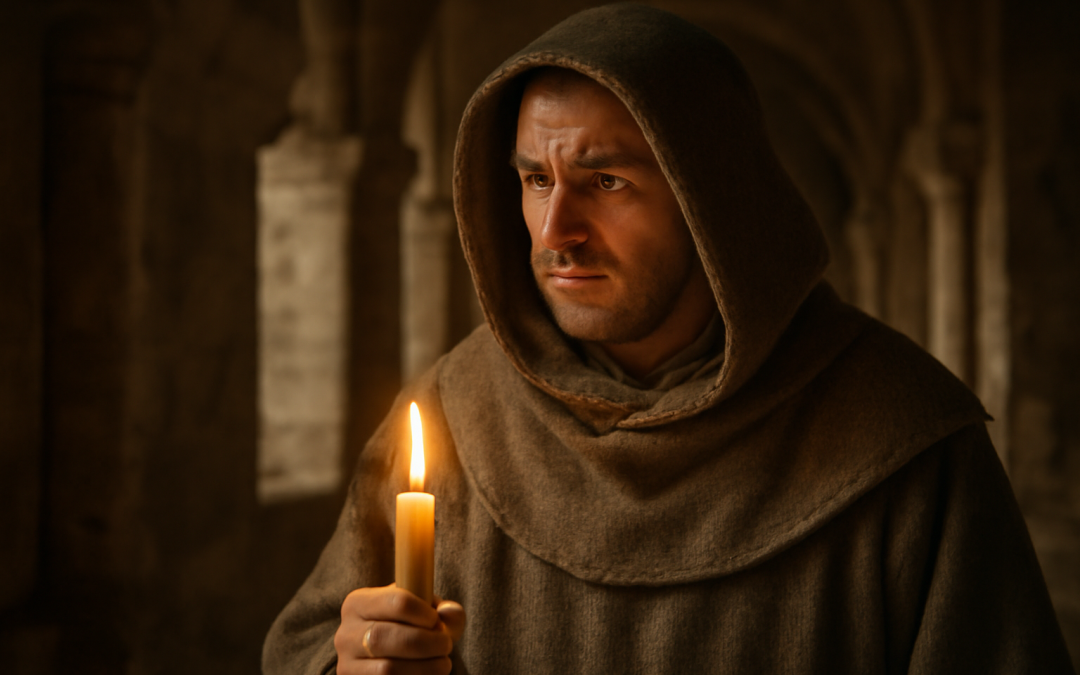
In the quiet shadows of a medieval monastery, where whispers echo through ancient stone corridors and the flickering candlelight reveals more than it conceals, an intricate dance of mystery and faith unfolds. This story, steeped in historical detail and intellectual inquiry, invites readers to journey through both the labyrinthine passages of a 14th-century abbey and the equally complex corridors of the human mind and spirit. With its richly woven narrative, the novel sets the stage for an engrossing exploration of truth, belief, and the often murky interface between reason and faith.
At its core, the plot revolves around a series of enigmatic deaths that disrupt the monastic peace, challenging the protagonists—both a seasoned inquisitor and his young assistant—to untangle a web of secrets hidden beneath layers of religious devotion and scholarly pursuit. The atmosphere is saturated with a palpable tension, where the pursuit of knowledge clashes with the rigid dogma of the church, producing a compelling conflict that drives the narrative forward. This tension invites readers to ponder the very nature of truth, especially when it is filtered through the complex lenses of power, fear, and belief.
The setting is not merely a backdrop but a living, breathing entity in the story. The abbey itself, with its labyrinthine library and cloistered silence, symbolizes the vast repository of knowledge that humanity has collected—and the perilous limits imposed upon it by institutional authorities. Each passageway and chamber serves as a metaphor for the intellectual and spiritual trials faced by the characters, underscoring the difficulty of discovering truth in a world that often prefers mystery and control to clarity and freedom.
What elevates this tale beyond a simple whodunit is its deep philosophical undercurrent. The narrative does not just seek to uncover a murderer but also wrestles with questions that have reverberated through centuries: Can faith coexist with reason? What constitutes heresy, and who defines it? How do individuals reconcile their personal beliefs with the demands of the institutions to which they belong? These questions are woven into the mystery, creating a textured story that challenges readers intellectually and emotionally.
The characters themselves personify this struggle. The inquisitor epitomizes the sharp intellect and skeptical inquiry of the Enlightenment’s early stirrings, while his novice companion represents the curious spirit, caught between reverence for tradition and the desire for understanding. Their dialogue and investigations unfold with deliberate pacing, mirroring the painstaking process of uncovering truth piece by piece, ambiguous clue by ambiguous clue. Through their journey, readers glimpse the precarious balance between doubt and faith that defines human existence.
Moreover, the novel’s portrayal of faith is neither blind nor simplistic; instead, it captures its complex, multifaceted nature. Faith is depicted as a source of strength and community, but also as a mechanism for control and fear. The ecclesiastical hierarchy is shown in all its human complexity—capable of both profound kindness and ruthless ambition. This nuanced depiction invites reflection on the role of religion in society, especially during times when knowledge and power are closely guarded and contested.
The mystery itself unfolds with intricacy and subtlety. Clues are interspersed throughout the narrative, often hidden beneath layers of allegory and historical allusion. This requires readers to engage actively, piecing together fragments of information and interpreting symbolic gestures. The intellectual rigor demanded by the plot adds to the immersion, making the mystery not only entertaining but also deeply satisfying from a cognitive perspective.
Stylistically, the narrative embraces a tone that is at once somber and evocative, capturing the austere beauty of the medieval period while imbuing it with a timeless resonance. The prose is carefully crafted, with attention to detail that brings the era to life without overwhelming the reader. Descriptions of the abbey’s architecture, the dense atmosphere of the library, and the rituals of monastic life enrich the setting and deepen the mood, immersing readers in a world where every shadow might conceal a secret.
The relationship between the main characters is another highlight, providing a human element that anchors the broader thematic concerns. Their dialogues reveal not only their developing bond but also their evolving understanding of the world and themselves. As the plot progresses, revelations about their pasts and personal convictions add layers to their motivations and actions, enhancing the emotional depth of the story.
In addition to the central mystery and philosophical reflection, the work also addresses broader historical and social themes. It captures the turbulent nature of the era—marked by political intrigue, religious strife, and intellectual ferment—illuminating how these forces shape the lives and decisions of individuals. Through this historical lens, the narrative explores the perennial tension between innovation and tradition, highlighting the sacrifices made by those who dare to question prevailing norms.
Integral to this exploration is the portrayal of knowledge itself. The abbey’s vast library symbolizes the human thirst for understanding, but also the fragility of that knowledge in a world often hostile to change. The story critiques the censorship and dogmatism that once stifled scientific and philosophical advancement, while also acknowledging the genuine fears and uncertainties that accompany new ideas. This balanced approach adds a layer of historical authenticity and philosophical depth to the tale.
One of the most compelling aspects is how the novel intertwines intellectual mystery with spiritual inquiry, demonstrating that the search for truth is as much an internal journey as an external one. The characters’ investigations into the murders mirror their personal quests for meaning, illustrating the idea that faith and reason need not be adversaries but can coexist in a dynamic, sometimes uneasy partnership. This synthesis encourages readers to reflect on their own beliefs and the ways in which knowledge and spirituality shape their lives.
The themes explored resonate beyond the historical setting, offering insights relevant to contemporary society. Questions about authority, truth, censorship, and belief continue to be pressing concerns in the modern world. The story’s examination of these issues underscores the enduring complexity of human understanding and the perpetual tension between openness and control. By situating these themes in a richly detailed medieval context, the narrative provides a fresh perspective on familiar dilemmas.
The pacing of the story carefully balances moments of intense suspense with quieter, contemplative scenes, allowing readers to absorb both the external action and the internal reflection. This rhythm enhances the immersive experience, drawing readers deeper into the unfolding mystery while encouraging thoughtful engagement with the philosophical questions posed. The deliberate unfolding mirrors the gradual revelation of not only the plot’s secrets but also the characters’ innermost struggles.
In conclusion, this narrative offers a masterful blend of mystery and faith, set against a vividly realized historical backdrop. Its layered storytelling invites readers into a profound exploration of belief, knowledge, and the human condition. Through its compelling characters, intricate plot, and thoughtful themes, it challenges assumptions and ignites curiosity, proving that the search for truth—whether spiritual or intellectual—is a timeless journey marked by both peril and hope.