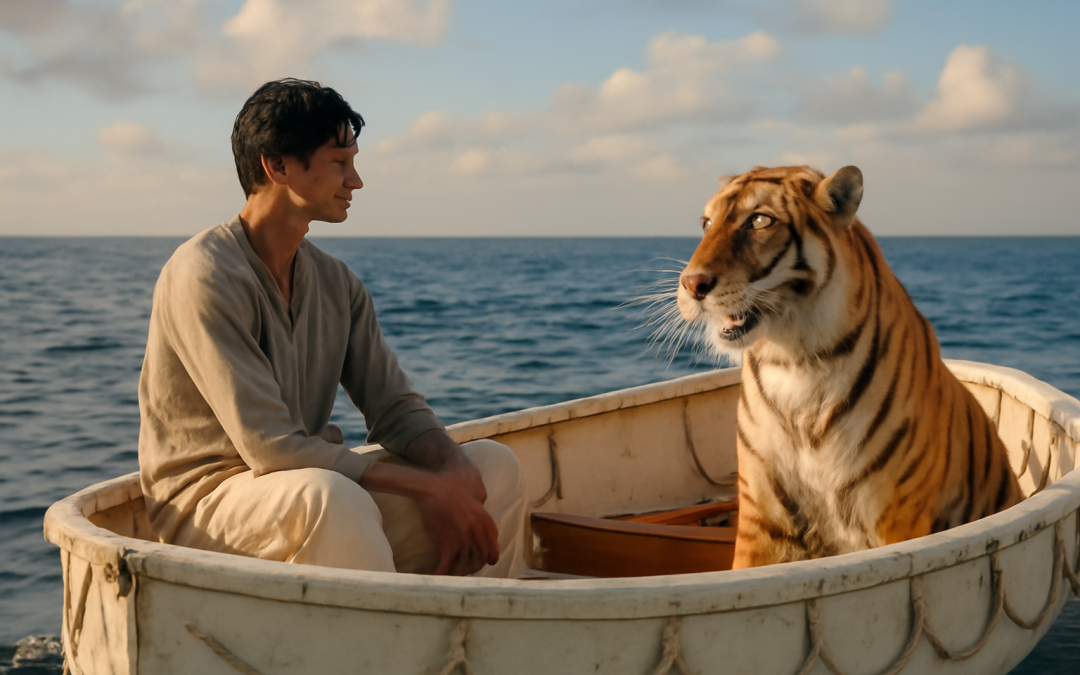
Few stories in recent memory intertwine the human spirit, spirituality, and the art of storytelling as profoundly as this narrative. From its initial moments, it invites readers and viewers alike into a world where faith is not just a belief system but a vital force that sustains the protagonist through unimaginable trials. The layers of narrative complexity are vast, weaving philosophical musings with the visceral reality of survival, creating a rich tapestry that challenges, comforts, and compels.
The protagonist’s journey is both literal and metaphorical, charting a course across the vast ocean as well as through the realms of doubt, hope, and belief. Central to the narrative is the exploration of faith—not merely as religious adherence but as a survival mechanism that transcends conventional understanding. The story asks profound questions about the nature of reality and the power of storytelling itself, suggesting that sometimes the narratives we choose to believe are what ultimately define us.
At the heart of the story lies an extraordinary circumstance: a young person stranded in the vastness of the Pacific Ocean, accompanied only by a Bengal tiger. This unlikely companionship becomes a crucible for exploring the coexistence of fear, courage, and faith. Their relationship shifts from one of mutual wariness to a complex bond of trust and interdependence, symbolizing broader themes about humanity’s relationship with nature and the divine.
Narratively, the story is rich with symbolism. Water, often a metaphor for life’s constant flux and uncertainty, serves as both a barrier and a bridge between worlds. The ocean’s vastness reflects the limitless possibilities of the human spirit and imagination, while also highlighting our vulnerability. The tiger, named Richard Parker, is not merely an animal but a manifestation of the primal forces within the human psyche, embodying both danger and protection.
The presentation of multiple faiths is another remarkable aspect. The protagonist expresses devotion to Hinduism, Christianity, and Islam, illustrating a pluralistic spiritual consciousness rarely explored with such intimacy in mainstream storytelling. This depiction reinforces the idea that faith transcends rigid boundaries, and spirituality can be a deeply personal, evolving process. His eclectic religious practices serve as a poignant reminder that the search for meaning often cuts across organized doctrines, resonating with audiences from different backgrounds.
More than just a survival story, it becomes a meditation on the ways we construct our realities. When the protagonist offers two versions of his ordeal—one fantastical, the other starkly realistic—he challenges the listener, and by extension the audience, to contemplate the nature of truth. This narrative choice invites us to question what we prefer to believe and why. Is faith merely a comforting illusion, or does it possess a transformative power that gives life meaning beyond mere facts?
That tension between belief and skepticism is woven throughout, resonating deeply with anyone who has grappled with uncertainty in their own lives. It elevates the narrative from a simple tale of adventure into a philosophical inquiry about the stories we tell ourselves. In essence, the story becomes an allegory for human resilience: our capacity to adapt, to hope, and to find sanctuary within the stories that shape us.
The author’s use of language and vivid descriptions further enhances this exploration. Imagery is not just decorative but integral to the emotional landscape, evoking the beauty and terror of the natural world with equal intensity. The graphic descriptions of the ocean’s moods mirror the shifting emotional tides within the protagonist, creating a sensory experience that immerses the reader or viewer completely.
Equally compelling is the film adaptation’s visual grandeur, which brings these themes to life with breathtaking cinematography. The interplay of light and shadow on the water, the vastness of the sky, and the meticulous details of the lifeboat create a world that is both wondrous and unforgiving. The tiger’s majestic and sometimes terrifying presence is rendered with such realism that it elicits genuine awe and fear, underscoring the precariousness of the protagonist’s situation.
The soundtrack also plays a crucial role in framing the emotional tone. Ethereal music swells at moments of revelation, underscoring the spiritual quest inherent in the story. Silence, on the other hand, punctuates scenes of isolation and introspection, allowing the weight of solitude and uncertainty to linger palpably. This interplay of sound and silence deepens the audience’s connection to the themes of faith and storytelling.
While the narrative’s fantastical elements invite wonder, its psychological depth is what truly captivates. The loneliness and isolation that the protagonist endures catalyze profound introspection. His conversations with the tiger symbolize a dialogue with the self—between rationality and instinct, fear and hope. This internal struggle is a mirror for the universal human conflict between doubt and belief.
The story’s conclusion, deliberately ambiguous, leaves the audience with more questions than answers—a rarity in contemporary storytelling. This openness encourages ongoing reflection rather than offering neat resolutions. The choice to leave the truth of the tale uncertain emphasizes the power of narrative as a tool to shape perception and understanding, rather than a simple vehicle for fact.
Critically, this narrative defies easy categorization. It is part adventure, part spiritual parable, and part psychological thriller. The skillful blending of genres broadens its appeal and enriches its thematic complexity. Viewers and readers find themselves drawn into a story that is as much about the power of imagination and faith as it is about physical survival.
The protagonist’s resourcefulness and resilience underscore the human capacity to endure extreme hardship. His creative solutions to challenges—whether constructing shelter, rationing food, or managing his relationship with Richard Parker—highlight the interplay between ingenuity and hope. This pragmatic side of the story balances the more ethereal spiritual themes, grounding the narrative in lived experience.
In exploring the framework of storytelling itself, the narrative aligns with a long tradition of meta-fiction—stories about stories. By inviting the audience to consider the nature of narrative truth, it positions itself as a commentary on the human need to impose order on chaos through tales. This reflexive quality adds a layer of intellectual engagement that elevates the work beyond mere survival drama.
Language and storytelling also become acts of preservation throughout the tale. The protagonist’s retelling of his ordeal is an assertion of identity and a way to make sense of trauma. Through story, pain becomes coherent, and isolation is transformed into connection. The act of narration itself embodies the hope that meaning can be derived from suffering.
Underlying the narrative is a profound affirmation of the human spirit’s indefatigability and its craving for connection—to nature, to the divine, and to each other. The story acknowledges the darkness that life can bring but insists on the light that can emerge through faith and imagination. It suggests that belief, whatever form it takes, is a fundamental human need that sustains us in moments when all else is lost.
This work also invites reflection on the role of nature in spiritual experience. The vast, often threatening ocean serves as both antagonist and teacher, demanding respect and offering revelation in equal measure. The interactions between man and beast highlight the blurred lines between civilization and wilderness, reason and instinct, safety and danger.
The interweaving of narrative layers—fact, fiction, myth, and reality—creates a mosaic that mirrors the complexity of human consciousness. This blending challenges the audience to reconsider assumptions about truth and the function of narrative as a tool for survival. It demonstrates that the lines between reality and imagination are not always clear-cut but often exist in a dynamic tension.
In many ways, the story is a modern fable, drawing on centuries-old motifs while updating them for a contemporary audience. It taps into archetypal themes of journey, trial, and transformation. At the same time, it captures the unique challenges and sensibilities of the modern world, particularly the search for meaning in an age of uncertainty.
The narrative’s treatment of childhood and innocence adds another dimension. The protagonist’s youth amplifies the sense of vulnerability and wonder, making his ordeal all the more poignant. His evolving understanding of faith and storytelling reflects the transition from innocence to experience, highlighting the growth that can arise from suffering.
Moreover, the story’s multicultural context enriches its texture. The protagonist’s Indian heritage, his migration, and the global elements of the tale speak to the interconnectedness of human experience. This blending of cultural perspectives challenges parochial views and offers a more inclusive vision of spirituality and resilience.
From a critical perspective, the story can also be seen as a meditation on the power dynamics between humans and nature. The delicate and sometimes antagonistic relationship between the boy and the tiger evokes questions about dominance, coexistence, and respect. It raises awareness of humanity’s often fraught place within the natural order.
The narrative’s philosophical underpinning resonates with existential and spiritual traditions alike. The themes of isolation, suffering, and the search for meaning echo the works of thinkers who have grappled with the human condition. By situating a personal story within this broader context, the tale achieves a universality that speaks across cultures and epochs.
Finally, the work’s lasting impact lies in its insistence that stories themselves are acts of faith. To tell a story is to assert that one’s experience matters, that the world can be made comprehensible, and that hope can emerge from despair. This conviction infuses every page and frame, leaving a profound impression on those who engage with it fully.