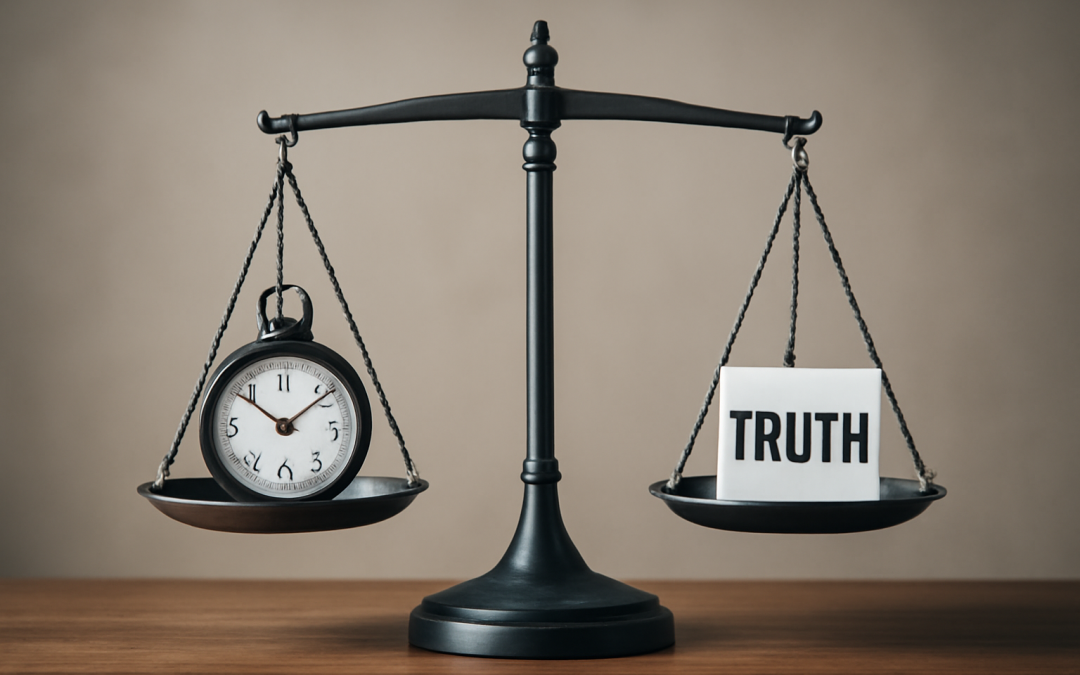
In an age defined by the instant exchange of information, society faces an increasingly complex challenge: balancing the demand for speed with the imperative of truth. This tension permeates not just journalism, but every facet of communication, from social media updates to corporate announcements, and political discourse to scientific reporting. The pressure to deliver news and insights rapidly often comes at the expense of thorough fact-checking and nuanced analysis, resulting in a landscape where misinformation can spread just as quickly as verified facts. This speed versus truth dilemma poses critical questions about the values and priorities that govern our information ecosystems.
The acceleration of information flow owes much to technological advancements. The rise of digital media platforms, smartphones, and real-time publishing tools means news can be disseminated worldwide in seconds. While this connectivity has democratized the spread of information, making diverse viewpoints accessible, it has also fostered an environment where the most sensational or urgent news tends to dominate, regardless of accuracy. The race to be first often overshadows careful verification, leading to premature reporting and the circulation of half-truths or outright falsehoods. In this environment, audiences are not only consumers but also participants, sharing content before its authenticity is confirmed.
This urgency to break news quickly stems from competitive pressures among media outlets and content creators. In an overcrowded marketplace, being the first to report a story can mean a significant increase in audience engagement, advertising revenue, or political influence. Traditional journalistic norms, which prioritized accuracy, context, and corroboration, have been challenged by the demand for immediacy. A story’s value is frequently measured in clicks and shares rather than its factual integrity, incentivizing practices that may sacrifice thoroughness. Consequently, readers must become more critical, navigating a digital terrain where speed often trumps truth.
Social media amplifies this dilemma through algorithms designed to maximize user engagement. These algorithms frequently prioritize content based on popularity and novelty rather than reliability, inadvertently encouraging the spread of misinformation. The speed at which content circulates on these platforms makes it harder to retract or correct false information once it has been widely shared. Moreover, the echo chambers created by personalized feeds reinforce existing biases, complicating efforts to disseminate verified truths. This dynamic not only undermines public trust in media but also poses significant risks to democratic processes and public health.
The speed versus truth conflict is particularly stark in crisis situations such as natural disasters, political upheavals, or health emergencies. In these contexts, timely information can literally save lives. However, the urgency to deliver immediate updates can lead to the propagation of errors, rumors, or unverified claims. For example, during the early stages of a pandemic, misinformation about treatments or the severity of the disease can exacerbate public anxiety or complacency. Journalists and authorities face the formidable task of balancing the imperative to inform quickly with the responsibility to provide accurate, verified facts. This balancing act highlights the ethical complexities involved in fast-paced communication environments.
Scientific communication epitomizes the broader tension between speed and truth. Scientific knowledge often evolves through rigorous, methodical processes that resist quick conclusions. Yet, in a world hungry for swift answers to complex questions—such as the causes of a new disease or the efficacy of a treatment—there is intense pressure to deliver findings prematurely. The publication of preliminary or unreviewed research, while fostering rapid dialogue, can also mislead policymakers, practitioners, and the public. The subsequent need to revise or retract information can erode confidence in scientific institutions and fuel skepticism.
Educational systems and media literacy programs have become vital in addressing this dilemma. By equipping individuals with critical thinking skills and tools to evaluate sources, these initiatives foster informed consumption of information. Teaching how to identify bias, verify claims, and understand the nuances of complex issues empowers audiences to resist the allure of sensational or deceptive content, particularly when presented rapidly. Media outlets and educators must collaborate to cultivate an informed citizenry capable of navigating the speed versus truth dilemma with discernment and patience.
Clear communication practices within organizations also play a critical role. Transparency regarding the limits of available information helps manage expectations and build trust. When immediate responses are required, acknowledging uncertainties rather than overstating confidence can prevent misinformation from taking hold. Organizations that prioritize accuracy over speed often enhance their credibility in the long term, even if the initial communication takes longer to develop. This approach recognizes that truthfulness is an investment in sustainable relationships with audiences rather than a disposable commodity.
At a policy level, regulatory frameworks are grappling with ways to mitigate the consequences of this dilemma. Proposals to hold platforms accountable for the spread of false information or to enforce stricter standards for news verification seek to reshape incentives. However, these measures must delicately balance the protection of free expression with the prevention of harm caused by misinformation. Overregulation risks stifling legitimate discourse, whereas underregulation allows the unchecked dissemination of falsehoods. Crafting policies that encourage responsible communication without undermining fundamental rights is one of the defining challenges of the digital age.
The speed versus truth controversy also intersects with psychological and cultural factors. The human brain gravitates towards immediate, emotionally charged information, especially in uncertain times. This predisposition makes rapid, striking messages more memorable and influential than carefully reasoned narratives. Overcoming this tendency requires conscious effort and cultural shifts that value patience, reflection, and humility in information processing. Promoting norms that honor critical questioning and acceptance of complexity can counteract the allure of quick, simplistic answers that often accompany misleading content.
Corporate communications reflect similar tensions. Companies feel compelled to respond swiftly to crises or public relations challenges to maintain their reputations. However, hasty statements without full context can backfire, escalating disputes or eroding stakeholder trust. Strategic communication, which involves deliberate and transparent messaging, acknowledges this trade-off by prioritizing accuracy and consistency over speed. In the long run, such an approach enhances a company’s credibility, illustrating the practical business case for valuing truth even in fast-moving scenarios.
The interplay between speed and truth is not inherently adversarial; rather, it attempts to reflect the competing priorities of modern information ecosystems. While speed enables agility and responsiveness, truth ensures reliability and sustainability. Ideally, these elements can coexist if systems and cultures evolve to uphold both values simultaneously. Innovations such as real-time fact-checking, AI-assisted verification, and collaborative journalism demonstrate promising pathways. These tools and practices highlight that speed need not be sacrificed to maintain accuracy, provided there is a concerted commitment to data integrity and transparency.
Understanding the speed versus truth dilemma requires acknowledging the broader societal shifts driving it. The digital revolution has transformed not only how information is produced and consumed but also how it shapes identities, relationships, and power structures. In this context, rapid communication can empower marginalized voices and catalyze social change, yet it can also exacerbate polarization and confusion. Striking a balance involves recognizing the multifaceted role of information in contemporary life and embracing strategies that protect both immediacy and veracity as foundational democratic values.
Fostering resilience against the pitfalls of speed without truth calls for a systemic approach. Media organizations must renew their commitment to editorial standards, investing in fact-checking and contextual reporting despite economic pressures. Audiences should cultivate skepticism without cynicism, seeking multiple sources and questioning motives. Technology companies bear responsibility to refine algorithms that privilege credible sources and flag dubious claims. Policymakers need to frame nuanced regulations that uphold freedom while minimizing harm. Collectively, these efforts can nurture an environment where speed enhances rather than undermines truth.
The narrative around this dilemma often focuses on conflict—speed pitted against truth as mutually exclusive objectives. Yet, the future may lie in synergy, where fast communication is underpinned by robust verification processes and transparent disclaimers. Collaborative fact-checking networks and crowd-sourced journalism have shown potential to accelerate truthful reporting. Moreover, educating content creators about ethical standards and misinformation risks can raise the overall quality of rapid news delivery. Reimagining the relationship between speed and truth as complementary rather than adversarial offers hope for more informed and resilient public discourse.
Ultimately, the resolution of the speed versus truth dilemma depends on collective choices about the kind of information culture we want to nurture. Prioritizing unverified haste may yield short-term gains in audience attention but risks long-term erosion of trust, social cohesion, and democratic accountability. Conversely, valuing truth with patience fosters deeper understanding and more meaningful engagement, though it requires discipline and investment. Navigating this balance is one of the defining challenges of our time, demanding wisdom, collaboration, and a shared commitment to the power of truthful communication in a fast-moving world.