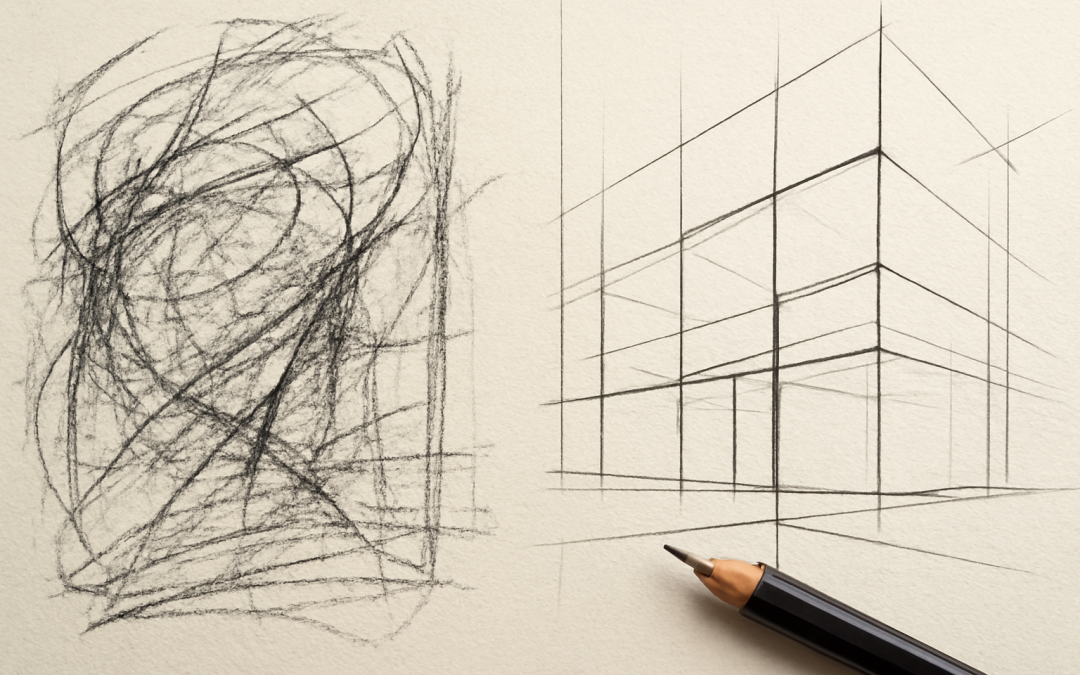
Line is one of the fundamental elements in art, serving as a crucial tool through which artists communicate, guide viewers’ eyes, and impart meaning. Among the many approaches to line usage, the expressive line and the structural line stand out as two distinct yet intertwined techniques that shape artistic creations in profound ways. Understanding the unique characteristics of these styles, as well as their interplay, offers richer insight into how artists convey emotion, form, and narrative through seemingly simple marks on a surface.
Expressive lines are often characterized by their fluidity, spontaneity, and emotional charge. These lines do not merely outline shapes; they breathe life into the artwork by revealing the artist’s inner feelings and moods. They can be bold and aggressive, delicate and whispery, or erratic and chaotic, depending on the emotional tenor the artist wishes to convey. The power of expressive line lies in its ability to transcend mere representation and evoke an emotional response from the viewer. This type of line often appears in gestural drawings, abstract paintings, and works that prioritize movement and energy over precise form. The irregularity and variation in thickness, texture, and direction of expressive lines create dynamic compositions that draw the observer into a vivid experience.
In contrast, structural lines focus on clarity, order, and the construction of form. These lines help delineate the boundaries of objects, establish proportions, and create a sense of spatial organization. In representational art, structural lines are essential for laying the groundwork of accurate depictions, enabling the artist to build upon a stable framework before adding detail or expression. They are usually more controlled, consistent, and measured, guiding the viewer’s understanding of the subject’s shape and position within the pictorial space. Architectural drawings, technical illustrations, and classical figure studies heavily rely on structural line to communicate precision and clarity of form.
While expressive and structural lines serve different purposes, their coexistence within a single piece can produce compelling results. Artists often begin with structural lines to map out the composition and ensure spatial accuracy, then overlay expressive lines to infuse vitality and emotion. This layering allows a work to maintain its formal integrity while also offering a visceral, emotive dimension. The tension between control and freedom, order and chaos, precision and spontaneity often makes the artwork more captivating and complex.
Historically, many influential artists have skillfully balanced expressive and structural lines in their work. For instance, Leonardo da Vinci’s sketches famously combine rigorous structural frameworks with fluid, exploratory lines, revealing both intellectual precision and creative spontaneity. Similarly, the Impressionists employed structural lines subtly beneath their expressive brushwork to anchor their compositions, balancing the fleeting effects of light and atmosphere with solid forms. In modern and contemporary art, the interplay of these lines continues to evolve, with some artists pushing expressive line to the forefront and others emphasizing structural clarity to challenge conventional aesthetics.
The expressive line can be seen as an extension of the artist’s hand and psyche. Its gestural quality often reflects rhythm and movement, capturing an essence beyond the visual surface. Different materials and tools influence the character of expressive lines; for example, charcoal allows for sweeping, smoky marks, while ink can produce sharp, decisive strokes. The tactile experience of making these lines can amplify the artist’s connection to the work, making the process as much a form of expression as the resulting image.
Structural lines, by comparison, often involve more deliberate techniques. Draftsmen and designers use rulers, grids, and compasses to create consistent lines that establish proportion and perspective. Even when more freehand, structural lines maintain a relative uniformity and clarity to outline spatial relationships precisely. These lines underpin visual comprehension by helping viewers decipher the form’s dimensions and placement. In sculpture and architectural design, structural line translates into three-dimensional frameworks that support and define physical space.
The understanding of expressive versus structural line also plays a key role in art education. Students are encouraged to explore the emotive potential of free, lively linework while simultaneously developing control and mastery over proportion and perspective through structural line exercises. Through this dual focus, emerging artists learn how to balance emotional resonance with technical accuracy. This foundation is critical whether they pursue abstraction, realism, or any stylistic synthesis.
In contemporary artistic practice, the boundaries between expressive and structural lines are frequently blurred. Many artists experiment with hybrid techniques, where energetic, sweeping lines coexist with meticulous frameworks within a single composition. This fusion allows varied interpretations and invites viewers to engage with the artwork on multiple levels. It emphasizes a holistic approach where feeling and form inform and enrich each other rather than compete.
The impact of using expressive lines extends beyond the visual into conceptual realms. By emphasizing movement and emotion, artists invite viewers to see art as a living process rather than static imagery. These lines can suggest narrative urgency, psychological depth, or spiritual intensity. Viewers often find themselves responding intuitively to the raw energy captured in such marks, which can resonate with personal experiences or universal emotions.
Structural lines, meanwhile, provide a grounded sense of order, which is equally essential in creating meaning. They can communicate stability, harmony, and balance, or even tension through deliberate dissonance in composition. Such lines function as visual “grammar,” organizing visual elements in logical relationships, making the artwork accessible and coherent. The structural line frames the expressive, giving it context and legibility.
Exploring specific styles reveals how expressive and structural lines manifest across art history. In Expressionism, for example, bold, dynamic lines dominate, emphasizing subjective emotion over realistic representation. The vibrant, often distorted forms rely heavily on expressive line to convey anguish, joy, or despair. Conversely, Renaissance art is marked by structural line-driven precision, where geometry and proportion are meticulously applied to create lifelike illusions of space and anatomy. Cubism, meanwhile, disrupts traditional structural line conventions, fragmenting forms into multiple perspectives while retaining an underlying sense of constructed space.
Both expressive and structural lines also contribute significantly to abstract art. While abstract artists typically eschew direct representation, the distinction between these lines persists. Structural lines form the skeleton of compositions, creating grids, patterns, or repeated motifs. Expressive lines overlay these frameworks to inject spontaneity and emotional depth, preventing the artwork from becoming too mechanical or predictable.
In the digital age, the concept of line has expanded beyond physical media to include vector graphics, digital pen tools, and algorithmic patterns. Digital artists can manipulate line fluidity, weight, and texture with unprecedented precision, combining expressive and structural attributes easily. Software facilitates experimentation with layering and blending, enabling new artworks that integrate controlled design with freeform gesture seamlessly.
Ultimately, the dialogue between expressive and structural line embodies the larger artistic tension between spontaneity and control, emotion and reason, chaos and order. This dynamic conversation shapes the visual language artists use to build meaning and communicate with their audience. Whether through a sweeping charcoal sketch or an architectural blueprint, the power of line to inform, excite, and structure remains central to the creative process.
Mastering the balance between these two line types allows artists to produce work that is not only technically accomplished but emotionally resonant. As artists develop their style, they often oscillate between these poles, sometimes emphasizing one over the other depending on the message, mood, or medium. Recognizing the unique contributions of expressive and structural line enriches both the creation and appreciation of art, offering deeper understanding of how visual language works to move and inform viewers.
The nuanced use of these lines continues to inspire innovation and experimentation in art. Whether the line serves as an emotional outburst or a measured framework, its presence commands attention and shapes perception. In the interplay of these contrasting yet complementary approaches, art finds its heartbeat, revealing the complex interplay of human thought, feeling, and creativity on the page or canvas.