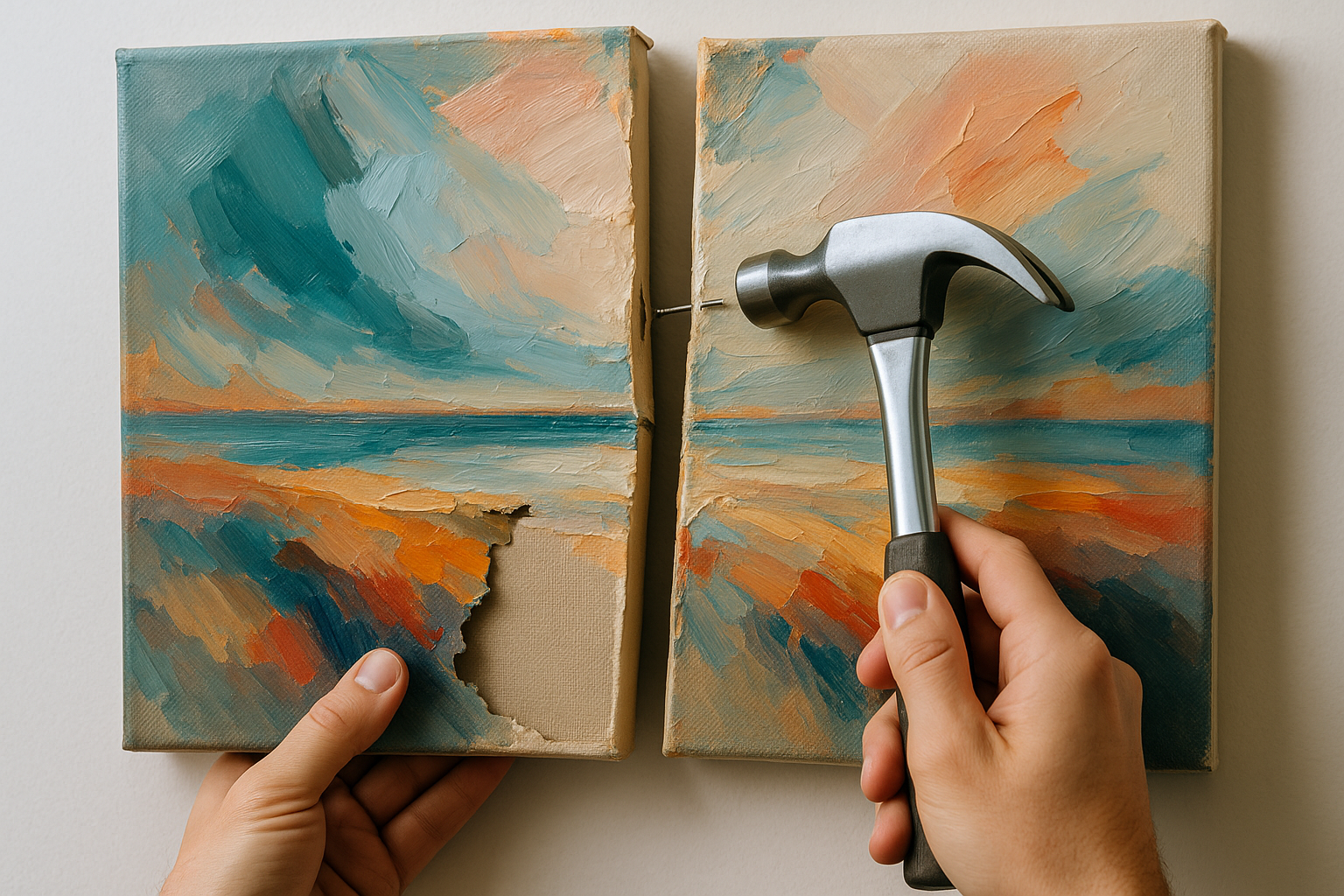
In the realm of visual expression, artwork serves as a bridge between the artist’s vision and the observer’s interpretation. However, when that connection falters—when the elements within a piece seem disjointed or fail to resonate as a cohesive whole—the viewer may experience a sense of disconnection. Fixing disconnected artwork becomes both an essential and challenging process, demanding an understanding of composition, harmony, and the subtle interplay of visual components. By addressing these issues thoughtfully, one can restore vitality to the piece and reestablish the emotional and conceptual link intended by the creator.
One of the primary reasons artwork feels disconnected is due to poor composition. Composition is essentially the arrangement of elements within the frame, including shapes, colors, lines, and textures, all working together to guide the observer’s eye and evoke feeling. When certain elements clash or compete indiscriminately for attention, the piece loses unity. An artist might have strong individual elements, but these might not be organized in a way that supports a singular narrative or aesthetic. To fix this, reassessing the structural framework of the artwork is crucial. Often, employing classical composition techniques such as the rule of thirds, leading lines, or the golden ratio helps to anchor the artwork and create natural points of focus, making the overall piece more harmonious.
Another significant factor adding to disconnection is inconsistency in color palette. A color scheme that lacks cohesion can disrupt visual harmony, making different parts of the artwork feel unrelated. Sometimes, this happens when an artist experiments with colors that don’t complement each other or when they introduce too many uncoordinated hues. The solution lies in revisiting the color theory fundamentals—understanding color relationships, saturation, and temperature can guide artists in creating palettes that enhance unity. Limiting the palette to a few harmonious colors or selecting a dominant hue with supporting accents can breathe coherence into the work. Additionally, artists should consider the emotional connotations of their chosen colors since this psychological layer ties directly into the narrative, fostering a deeper connection with viewers.
Texture and brushwork also play consequential roles in either reinforcing or disrupting an artwork’s cohesion. When disparate textures appear without a clear purpose, they can create visual noise that distracts rather than enriches. For example, rough, thick strokes juxtaposed against overly smooth areas may seem unintentional if not used deliberately. To fix disconnected artwork, artists need to either unify textural qualities or use contrast strategically to highlight focal points. This means consciously deciding where rougher textures serve to elevate interest and where smooth passages offer calm, ensuring both balance and intentionality are evident. Moreover, consistency in the medium itself, whether oil, acrylic, digital, or mixed media, can heavily influence the final feel of the artwork.
Subject matter and thematic consistency are equally vital elements. Disconnected artwork often struggles because the visual elements do not support a clear story or message. When the viewer is unsure of the narrative or purpose behind the piece, confusion arises, breaking engagement. Fixing this involves revisiting the conceptual underpinnings of the work, clarifying what the artist aims to communicate, and ensuring that every component aligns with that vision. This might require removing extraneous details that dilute the focus or adding unifying symbols and motifs that tie various parts together. Also, artists should be mindful of the emotional tone conveyed—whether it’s joy, melancholy, tension, or serenity—and ensure it permeates all layers of the work consistently.
Sometimes, a sense of disconnection stems from technical issues such as perspective errors or scale inconsistencies. These subtle but noticeable discrepancies can pull viewers out of the immersive experience, making the piece feel amateurish or careless. Correcting these means painstakingly refining the technical execution, either by reworking spatial relationships or recalibrating proportions. Techniques like using grids, perspective lines, or even digital manipulation tools can help achieve accuracy and restore believability. What’s important here is that the technical foundation supports rather than detracts from the artistic message, enabling the whole to feel intentional and polished.
Negative space, or the empty areas surrounding a subject, plays a vital yet often overlooked role in visual connection. Poor handling of negative space can make a composition appear cluttered or loosely organized, contributing to the disconnected sensation. Effective use of negative space not only provides breathing room but also emphasizes focal elements and directs viewer attention smoothly. To fix this, artists should evaluate the balance between filled and empty areas, adjusting as necessary to optimize flow and rhythm. Sometimes, simplifying the background or cropping the composition can improve this balance, enhancing coherence without sacrificing detail.
Lighting and contrast can also be pivotal in bridging gaps within artwork. Without defined light sources and thoughtful use of shadows and highlights, a piece can feel flat, detached, or ambiguous. Applying a consistent lighting strategy leads to a sense of depth, atmosphere, and unity. Artists might experiment with chiaroscuro techniques or carefully calibrate contrast to emphasize critical forms or create mood. This ensures the viewer’s gaze travels naturally across the artwork, reinforcing visual and emotional connections. Inconsistent or unnatural lighting, on the other hand, may pull the eye awkwardly, underscoring disjointedness rather than diminishing it.
Another powerful tool to resolve disconnection lies in the relationship between foreground and background. When elements lack interaction or seem isolated in their own planes, disjointedness can easily follow. To fix this, layering strategies become invaluable. Artists can employ overlap, atmospheric perspective, or gradient shifts in color and texture to integrate foreground and background seamlessly. Elements should not appear to float independently but rather participate visibly in the same spatial environment. For example, subtle reflections, shadows cast across surfaces, or blending edges create a tangible bond between distinct planes, restoring unity and completeness.
The pace and rhythm within artwork further influence how connected it feels. A composition that moves erratically or lacks fluidity can cause visual confusion, breaking sustained engagement. Found in repeating shapes, color echoes, or directional cues, rhythm guides the observer’s eye across the piece in a deliberate and satisfying manner. To fix disconnected artwork, artists need to evaluate and enhance these rhythmic flows, ensuring there are clear transitions and harmonies in movement. This not only unites the composition visually but also imbues it emotionally, as rhythm triggers subconscious resonances that communicate energy, tension, or calm.
Sometimes, fixing disconnected artwork requires rethinking narrative sequencing, particularly in multi-panel or series-based presentations. When individual works are intended to relate to one another but fall short of cohesive storytelling, the disconnection becomes glaring. Aligning thematic, stylistic, and compositional elements across multiple pieces is essential to creating a unified body of work. This might involve revising color schemes, altering framing, or introducing recurrent motifs and characters. Additionally, sequencing with intentional pacing and contrast accentuates relationships and progression, helping the audience to engage deeply and holistically.
The process of addressing disconnection also demands patience and critical self-reflection. Artists might be attached to certain elements or resistant to change, but objectivity is key to successful repair. Seeking feedback from fellow artists or viewers can illuminate blind spots and offer fresh perspectives. Sometimes, stepping away from a project before revisiting it with renewed eyes can reveal previously unnoticed problems and inspire solutions. Embracing this cyclical approach of creation, critique, and revision encourages continuous refinement that ultimately results in a more integrated and compelling piece.
Technology can also assist in fixing disconnected artwork, especially in digital or hybrid media. Editing software provides opportunities to manipulate layers, adjust colors precisely, and experiment with composition without permanent commitment. Artists can utilize tools such as masking, blending modes, and filters to unify disparate elements seamlessly. Moreover, digital platforms enable easy testing of alternative arrangements and palettes to identify the most harmonious configurations. Nonetheless, it’s important for artists to balance technological intervention with traditional craftsmanship to maintain authenticity and emotional resonance.
Restoration projects in art history demonstrate practical applications for fixing disconnection on a broader scale. Many masterpieces have suffered from deteriorated paint, fading colors, or damaged textures over time, resulting in visual fragmentation. Conservators and restoration experts carefully analyze original techniques and materials, employing specialized methods to reintegrate lost details while respecting the artwork’s historical integrity. This delicate process underscores the importance of understanding an artwork’s original context and artistic intention when addressing disconnection—insights equally valuable to contemporary creators seeking to mend their own work.
Overall, fixing disconnected artwork extends beyond mere aesthetic adjustments. It calls for an embrace of cohesion that involves technical finesse, conceptual clarity, and emotional honesty. By harmonizing composition, color, texture, narrative, lighting, and rhythm, artists rebuild the invisible threads that invite viewers to not only see but feel and understand the piece as an organic whole. The journey to repair disconnection often leads to deeper artistic growth, pushing creators to refine their vision and skills while cultivating a stronger connection with their audience. Ultimately, this transformative process breathes new life into the artwork, reaffirming the power of visual storytelling to forge meaningful human connections.