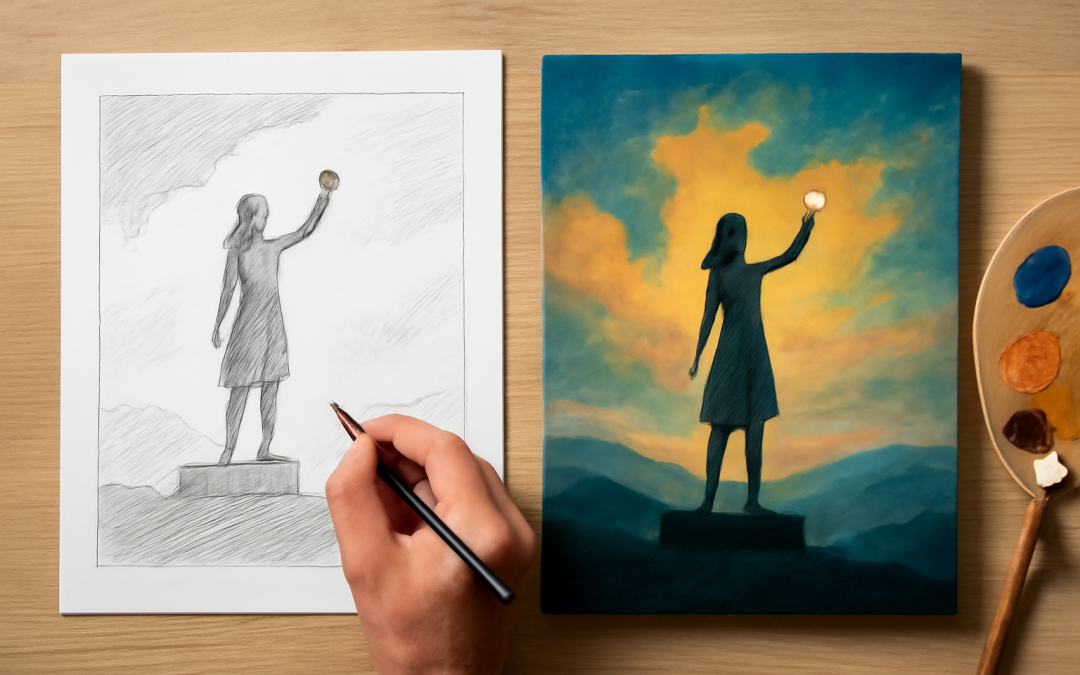
In the world of visual storytelling and creative production, there exists a fundamental distinction between concept illustration and finished art. Both play crucial roles in the artistic process, yet they serve different purposes and are crafted with distinct intentions. Understanding the nuances between these two phases not only deepens appreciation for the creative workflow but also highlights the unique skill sets and approaches required at each stage.
Concept illustration acts as the preliminary visual exploration that lays out ideas, themes, and visual directions. It is an early step in the development of a creative project, whether that be in film, video games, advertising, or publishing. The primary aim of concept illustration is to communicate an idea swiftly and effectively, often focusing on mood, composition, character design, or environment rather than fine details. This form of illustration serves as a blueprint, providing a clear vision for art teams, clients, or stakeholders before moving into more time-intensive stages.
These initial visuals tend to be rough, loose, and experimental. The artist prioritizes speed and creativity over polish, allowing for rapid iteration and feedback. Multiple concepts might be produced to explore different angles or visual styles, helping teams decide which direction best suits the project’s goals. Through this process, concept illustrations can evolve dramatically, frequently undergoing revisions prompted by client feedback or new ideas, demonstrating their inherently flexible and provisional nature.
Contrasting sharply with concept illustration, finished art represents the finalized, polished piece intended for public consumption or presentation. It is the culmination of the creative process where every detail has been meticulously rendered, and the vision set forth during the concept phase is fully realized. Finished art carries the weight of professionalism and aesthetic refinement, reflecting the artist’s technical mastery and compositional precision. It is the work that captures the viewer’s attention and elicits emotional responses with its clarity and completeness.
While concept illustration embraces ambiguity and rapid idea generation, finished art demands resolution. The artist must refine textures, lighting, perspective, and color schemes, ensuring a cohesive narrative or visual impact. This phase can involve numerous layers of work—from detailed line work and color application to post-processing effects that enhance depth and realism. The patience and dedication required here are considerable, as the finished piece becomes the definitive representation of the creative vision.
Another key difference lies in the intent behind the two types of work. Concept illustrations primarily serve as communication tools within a creative team or between client and artist, acting as discussion points or approvals before significant resources are committed. Finished art, on the other hand, is often intended for audience consumption—whether as a promotional poster, book cover, album artwork, or in-game asset. This shift in audience necessitates a different approach, where clarity, emotional resonance, and technical accomplishment become paramount.
In terms of workflow, concept illustration usually happens early and can occur multiple times over the lifespan of a project. Since it often involves rough sketches and rapid iterations, it encourages experimentation without the pressure of perfection. Nurturing creativity and innovation at this stage is essential; it allows ideas to be tested and discarded with minimal cost. Conversely, finished art is a later stage that converges on a single, definitive output. It marks the transition from exploratory to conclusive, with the intent of delivering a product that can stand on its own merits.
Tools and techniques can vary between these two stages as well. In concept illustration, artists often employ loose brushes, quick strokes, and simplified palettes to suggest form and mood. Digital painters might use broad brushes, custom textures, or photo bashing to accelerate the process. Finished art typically demands more control and refinement, using detailed brushwork, layering techniques, and adjusted lighting effects to craft an intricate and harmonious final product. Mastery over these tools represents a core competency for artists who must navigate both realms effectively.
One cannot overlook the psychological and creative challenges linked to each phase. Concept illustrations demand a high tolerance for ambiguity and adaptability, as artists must remain open to continuous changes and accept that their work may never be “final” in this state. These challenges encourage a mindset focused on innovation and problem-solving. Finished art, however, requires endurance and precision, as the pressure to perfect every detail can be daunting. It demands a different kind of discipline, emphasizing patience, meticulous review, and a strong sense of composition and color theory.
From a client or stakeholder perspective, it is critical to appreciate these differences, as misunderstandings can lead to misplaced expectations. Sometimes, clients new to the creative process may mistake a concept illustration for a finished piece and judge its roughness harshly. Educating clients about the purpose and constraints of concept work can foster better collaboration and realistic timelines. Similarly, artists must articulate these distinctions to ensure clear communication and smooth project flow.
The evolution from concept illustration to finished art is analogous to drafting a story before publishing the final novel. Both the sketch and the refined drawing serve vital purposes but engage different cognitive and technical processes. Concept work is about generation, exploration, and discovery, whereas finished art is about affirmation, clarity, and impact. Appreciating these complementary roles enriches the understanding of artistic production and allows for more nuanced creative conversations.
In educational settings, nurturing skills tied to both concept illustration and finished art is crucial for emerging artists. Mastery in concept illustration fosters quick thinking, creativity, and flexibility, while expertise in finished art cultivates attention to detail, technical proficiency, and aesthetic judgment. Encouraging students to experiment freely in their concept work and pushing towards precision in their finished pieces builds a balanced artistic foundation that benefits any visual career path.
Moreover, many leading artists and studios highlight that effective communication between concept artists and finishing artists is a key ingredient for successful projects. Concept illustrations serve as vital guides and references, and when finished artists closely analyze and interpret these visuals, the end product aligns closely with the original creative intent. This collaboration reduces wasted effort and enhances the overall consistency and strength of the final work.
In practice, a single artist may wear both hats during a project, moving seamlessly from rough concepts to polished art. However, this transition requires a mindful shift in approach and technical execution. The artist must channel their imaginative spontaneity into structured craftsmanship, a process that involves both creative freedom and disciplined execution. Balancing these contrasting mindsets is often what separates a good artist from a great one.
The value of concept illustration extends beyond simply serving as a draft stage. It can influence multiple departments, including storytelling, marketing, and product design. For example, a well-executed concept sketch can inspire script changes, marketing strategies, or merchandising opportunities. Conversely, finished art stands as the definitive visual product that audiences see and appreciate, carrying the emotional and narrative weight that drives engagement.
Technological advances are also shaping how both concept illustration and finished art are created. Digital platforms with powerful tools enable rapid prototyping and dynamic exploration in concept work, while advanced rendering software allows for photorealistic finished art. Virtual and augmented reality are further blending the lines by providing immersive environments where concepts become interactive experiences even before full production. Despite this, the fundamental distinction remains, rooted in the purpose and level of completion.
Artists and creatives often find a deep personal satisfaction in seeing their concepts evolve into finished art. The journey from an initial spark of imagination to a fully realized masterpiece is a testament to an artist’s skill, vision, and perseverance. It is a process that honors both the exploratory freedom of concept illustration and the achievement of creating finished art that resonates with viewers.
Understanding the interplay between these two facets of artistic creation also enhances the way audiences appreciate artwork. Recognizing that what might begin as a rough idea carries the potential to become a stunning finished piece adds depth to the experience of art consumption. It cultivates an awareness of the labor involved, the decisions made, and the evolution of ideas from inception to finality.
Ultimately, the distinction between concept illustration and finished art encapsulates the broader creative continuum—from initial vision to polished reality. Both stages are indispensable; concept illustrations ignite innovation and set direction, while finished art delivers emotional and visual fulfillment. Their combined influence shapes how stories, products, and experiences are visually communicated worldwide, reflecting the dynamic and multifaceted nature of the artistic process.