Every day, countless scenes unfold before our eyes—streets bustling with life, landscapes bathed in shifting light, and moments charged with emotion. Yet most of us see only the surface, skimming reality without truly absorbing its depth or complexity. Artists, however, possess an extraordinary ability to pierce through the ordinary and engage with the world on a profoundly perceptive level. This heightened way of looking transforms how they experience everything around them, making the familiar seem new and alive. Cultivating this vision is not the realm of innate talent alone; it can be nurtured through deliberate practice, patience, and a willingness to observe the world with curiosity and intent.
The first step toward seeing like an artist is learning to slow down. In a fast-paced world, our eyes often move rapidly from one thing to another without lingering, causing us to miss subtle details and hidden nuances. Artists train themselves to pause and focus on a subject, spending time to explore every aspect of it. This deliberate observation reveals textures, colors, and relationships that remain invisible to the casual glance. When you take the time to study an object or scene closely, its true form emerges. Shapes that initially appeared simple gain complexity, and the interplay of light and shadow produces volumes and contours that give life to flat surfaces.
Another crucial element lies in understanding shapes and forms. At the heart of every visual experience are fundamental geometric units that, when combined, establish the structure of what we see. Artists break down complex visuals into these simpler components, building a mental framework that aids in comprehension and reproduction. By practicing to discern circles, squares, triangles, and organic forms within any scene, one sharpens the ability to mentally map space and dimension. This approach encourages seeing beyond mere outlines or colors to grasp the spatial relationships and proportions that make objects believable and coherent.
A deep sensitivity to light and shadow is also essential. Light is not simply an illumination tool; it acts as a sculptor, revealing or concealing shapes, guiding the eye, and setting moods. Artists pay attention to light sources, the way shadows fall, and the variations in tone created by different lighting conditions. Observing how sunlight filters through leaves, for example, or how artificial light casts harsh contrasts, opens a new dimension of awareness. Recognizing the subtleties of reflected light and the transitions between dark and light areas enriches the perception of space and volume, enabling one to communicate more effectively through visual representation.
Color, too, holds tremendous importance. It is not just about identifying hues but comprehending their relationships and emotional impact. Artists study color theory to understand contrasts, harmonies, and temperature variations. Beyond technical knowledge, they notice the way natural light can alter the perception of color throughout the day or how adjacent colors influence one another’s intensity. By cultivating an attuned eye for color, one becomes capable of discerning layers of hues and subtle gradients that often escape notice, enriching visual interpretation. This refined color awareness reveals the vibrancy and emotion embedded in scenes that may otherwise appear dull or monotonous.
Seeing like an artist requires cultivating an open and inquisitive mindset. Rather than passively observing, it involves questioning what is seen. Why does this shadow curve here? How does the light change the character of this object? What story does this pose or expression convey? This investigative stance transforms observation into an active dialogue with the subject. Artists often train themselves to look for meaning and narrative within visual details, making connections that deepen understanding and appreciation. Such curiosity fosters a more immersive experience where every visual element becomes a clue or symbol waiting to be decoded.
Equally important is not just looking at objects in isolation but perceiving relationships between them. Artists analyze composition to understand balance, rhythm, and focal points. This holistic vision involves noticing how elements occupy space relative to one another and how the eye travels across an image. They observe negative spaces—the areas around or between subjects—as carefully as the objects themselves, recognizing their role in shaping perception. Viewing scenes as integrated wholes contextualizes individual parts and reveals underlying dynamics that contribute to visual harmony or tension.
Training the eye to appreciate textures adds another layer of depth to seeing. Surfaces carry information about an object’s nature, age, or condition—rough bark, smooth glass, weathered stone. Artists attentively study texture patterns and their interaction with light, which deepen the sensory experience of sight. Touch and vision merge in the mind as they envision the tactile qualities of what they see, enriching memory and emotional connection. This tactile awareness also assists in rendering convincing artwork, as reproducing texture effectively enhances realism and invites viewers to mentally engage beyond sight.
Attention to detail, while valuable, is balanced by the ability to zoom out and grasp overall impressions. Artists fluidly shift between focusing on minute specifics and stepping back to survey the entire scene. This dynamic focusing trains perception to be both comprehensive and precise, avoiding fixation on elements that might distort the whole or overlook important subtleties. It promotes a kind of visual mindfulness where one is simultaneously aware of individual components and their place within context, enhancing accuracy in interpretation and creation.
Another vital skill involves developing memory and mental visualization. Artists often rely on the power of internal imagery to shape their work. Training oneself to retain clear mental pictures of observed scenes aids not only in artistic reproduction but also in deepening visual understanding. Mental rehearsal strengthens the connection between perception and imagination, allowing for creative exploration while grounded in accurate seeing. Over time, this ability refines intuition and decision-making when engaging with complex visual environments.
Cultivating empathy also plays an essential role in what distinguishes an artist’s vision. Seeing like an artist is not merely about technical accuracy but about understanding and communicating experience, emotion, and perspective. By attuning to the feelings elicited by a place, person, or object, artists imbue their work with vitality and resonance. This empathy heightens awareness of mood and atmosphere, making visual encounters meaningful beyond their surface appearances. It invites observers to connect emotionally with the subject, bridging the gap between isolated vision and shared human reality.
Experiencing diverse artistic styles and media broadens perceptual skills. Exposure to different approaches challenges the eye to recognize multiple ways of seeing and interpreting. Studying works from classical realism to abstraction, impressionism to expressionism, introduces new visual languages and techniques that expand understanding. This cultural and artistic literacy deepens sensitivity to nuance, symbolism, and innovation, enriching personal vision. Engaging with varied art forms fosters adaptability and opens fresh channels of creativity rooted in observation.
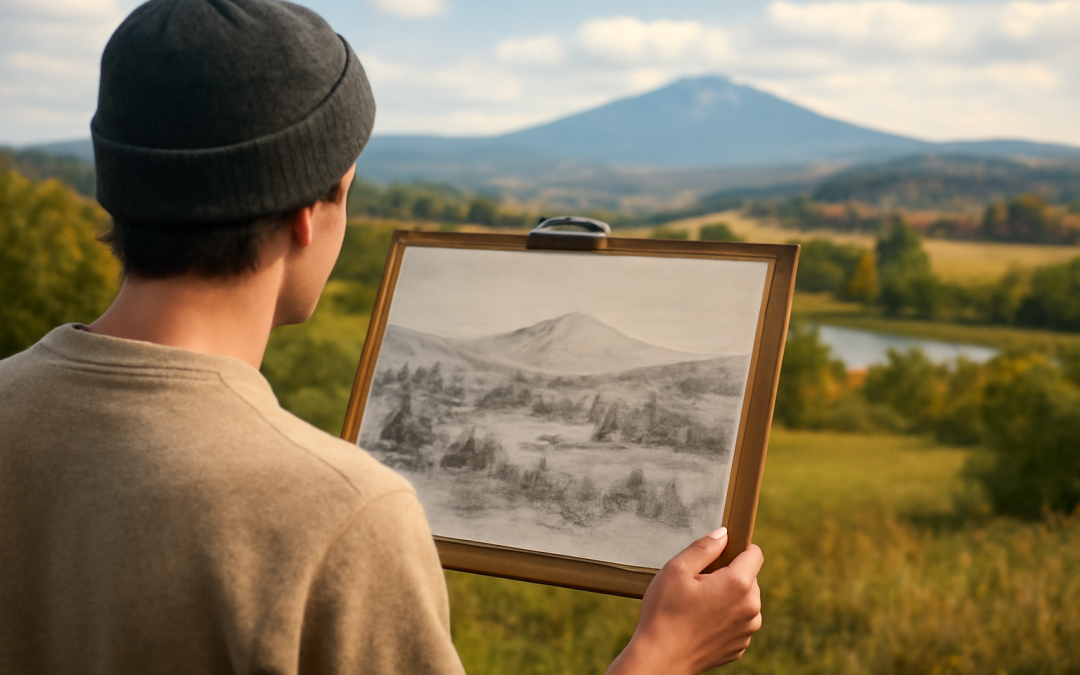
Practice remains the cornerstone of developing the ability to see like an artist. Sketching, painting, or simply drawing from life compels close examination and active interpretation. These exercises refine hand-eye coordination and embed observational skills more deeply into cognition. Even without pursuing professional art, visual journaling or photography encourages deliberate looking and remembering. Regular practice cultivates patience and discipline, qualities that underpin advanced perception and artistic insight.
Equally important is learning to observe without judgment. Many people unconsciously censor or categorize what they see, diminishing curiosity and openness. Artists strive to suspend preconceived notions and see things as they are, embracing imperfections and ambiguity. This nonjudgmental mindset fosters genuine exploration and discovery, allowing unusual details or perspectives to emerge. Cultivating this attitude nurtures openness not only to visual stimuli but to new ideas and possibilities beyond traditional frameworks.
Interacting with nature can serve as a powerful means to sharpen visual perception. Natural environments offer endless variations in light, shape, texture, and color, stimulating the senses more richly than controlled or urban settings. Walking outside and observing flora, fauna, and landscapes encourages slow, thoughtful seeing conducive to artistic insight. The rhythms and cycles of nature also teach patience and attentiveness vital for creative observation. Many artists draw inspiration and foundational skills from close observation of the natural world.
Incorporating technology mindfully enhances the process but should not replace direct observation. Digital tools can aid in studying perspective, color, and composition by allowing manipulation and experimentation. However, reliance on screens can flatten perception if it replaces engagement with real-world experience. Striking a balance between traditional methods and modern aids ensures a fuller sensory input and deeper visual comprehension. Ultimately, nothing substitutes the tactile and immediate richness of seeing with the naked eye.
Learning how to see like an artist transforms vision into an active, enriching practice that infuses everyday life with meaning and beauty. It elevates ordinary moments into sources of inspiration and insight. By training the eyes and mind to observe with curiosity, empathy, and acuity, one cultivates a powerful connection with the world. This sharpened perception not only enhances artistic creation but enriches personal experience, inviting a more mindful, attentive way of being. The journey toward this refined vision offers continual discovery and growth, rewarding patience with a lifelong gift: the ability to truly see.