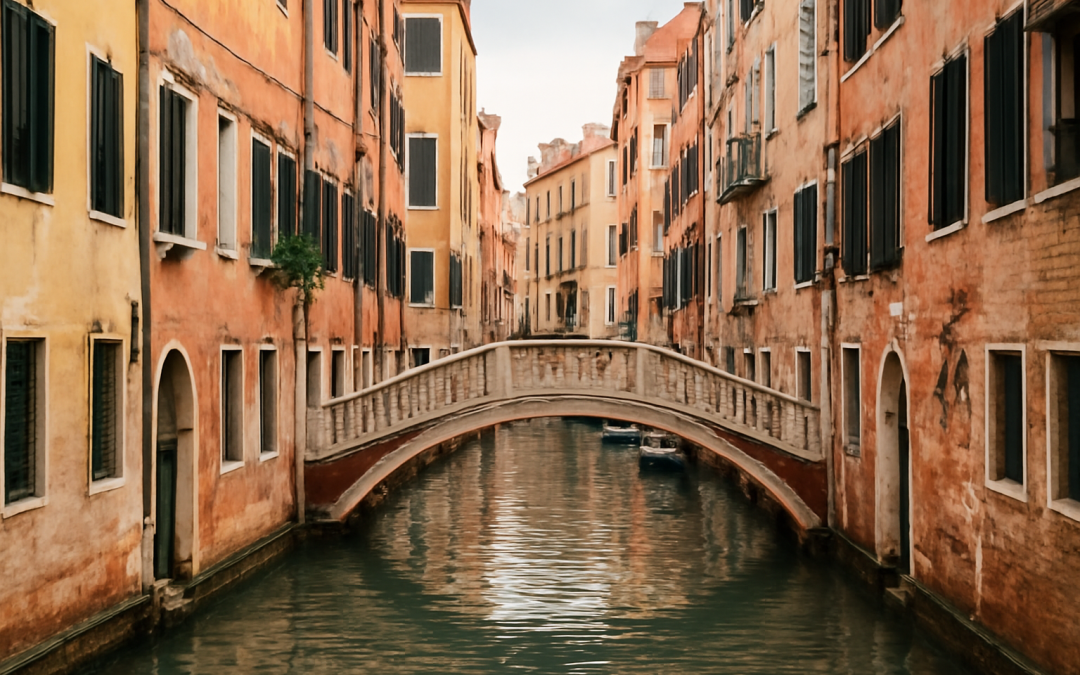
Navigating Venice is an experience unlike any other city in the world. With its labyrinthine network of narrow alleys, winding canals, and countless bridges, Venice can both enchant and confound visitors. Despite its compact size, the city’s layout challenges even the most seasoned travelers, making it easy to lose one’s sense of direction. However, by approaching your visit with a bit of preparation and an understanding of the city’s unique geography, you can explore Venice confidently and immerse yourself fully in its timeless charm.
The first step to avoiding disorientation is to embrace the fact that Venice is a city built on water. Unlike cities with straightforward grids or numbered streets, Venice’s roads are really a complex weave of pedestrian pathways and waterways. Canals serve as the main thoroughfares for boats, while alleys function as streets on foot. This means that traditional modes of navigation, like simply following a straight path, rarely apply. Instead, visitors must develop an instinct for recognizing landmarks and understanding the relationship between different neighborhoods or sestieri. Taking a moment to study a map before setting out can make a substantial difference.
Familiarizing yourself with the city’s principal landmarks provides natural reference points that anchor your sense of direction. St. Mark’s Square, or Piazza San Marco, is arguably the quintessential heart of Venice. From here, the famous Basilica di San Marco and the Campanile provide clear visual markers visible from many parts of the city. Aligning yourself with these structures can help you maintain orientation as you wander. Additionally, the Rialto Bridge is another iconic landmark often used by locals and tourists alike to gauge their location within Venice. By deciding on a few key spots and mentally mapping your journey relative to them, you can avoid aimless wandering and the frustration that comes with it.
Venice is also divided into six distinct sestieri—San Marco, Dorsoduro, Cannaregio, Castello, San Polo, and Santa Croce. Understanding these neighborhoods can simplify the process of getting around considerably. Each sestiere has its own atmosphere, historical significance, and main attractions. For instance, San Marco is bustling with tourists, while Cannaregio offers a more residential and authentic vibe. When you know in which sestiere you want to spend time, navigation becomes more purposeful rather than random. Street signs in Venice include the name of the sestiere, which is a helpful clue and can prevent disorientation.
Using technology wisely can complement your spatial awareness. While many travelers instinctively pull out their smartphones for directions, the narrow passages and thick walls sometimes interfere with GPS signals. To counter this, it’s a good idea to download offline maps or use apps specifically designed for Venice. Some navigation tools also highlight the locations of vaporetto (water bus) stops, ferry lines, and walking routes, which can be incredibly useful when combining different modes of transport. Just as importantly, avoid an overreliance on devices. Spending a moment to absorb your surroundings and cross-check your trajectory against physical signs can create a more organic navigation experience.
Another key strategy is to use the waterways themselves as guides. Venice’s canals generally run parallel to one another or radiate out from larger thoroughfares. Knowing the main canals like the Grand Canal, which snakes like a large “S” through the city, can orient you relative to other less obvious routes. Walking alongside or crossing the Grand Canal at one of its famous bridges, such as the Rialto or Accademia, can instantly situate you within the city’s broader geography. Additionally, water taxis and vaporetto routes frequently serve as linear guides through Venice’s core, making it easier to conceive of the city in a three-dimensional space.
Despite these tools, expect to get lost occasionally because Venice practically invites you to wander and discover hidden corners. The city’s charm lies in its unexpected piazzas, quiet campos, and tucked-away artisan shops accessible only through narrow passages. Instead of seeing temporary confusion as a setback, view it as part of the Venetian experience. When lost, take this as an opportunity to slow down and appreciate the intricate details of Venetian life—the distinctive architecture, mosaic-tiled walls, and the lively interactions with locals. Such unplanned detours often become the most memorable highlight of your trip.
One practical tip to further ease movement around Venice is to plan your visits to major sites in a logical sequence based on their location. For example, you can explore St. Mark’s Basilica and the Doge’s Palace first, then transition slowly toward the Rialto area for shopping and dining. From there, you might wander into Cannaregio to visit the Jewish Ghetto or head south to Dorsoduro for art museums and quieter streets. This kind of intentional routing ensures you don’t zigzag unnecessarily and reduces confusion about where you are in the city’s layout.
When visiting Venice, consider that some alleys and passageways can be narrow or curvaceous with unexpected dead ends. Familiarize yourself with the signage, which often features street names painted on small tiles embedded in building corners or walls. These subtle markers can be easily missed but are invaluable when cross-referencing with your map. Additionally, avoid panicking if you don’t immediately recognize street names. Venice’s signage system remains consistent, and with practice, it becomes easier to anticipate junctions and select the right path.
The early morning hours are a golden window for exploration in Venice without the usual crowds that might obstruct views or interfere with navigation. During these quiet times, the city’s colors and reflections on the water are at their most breathtaking. Moreover, with fewer tourists around, you can take your time orienting yourself without pressure. Observing locals starting their day can also be instructive. Small cafes, bakeries, and markets spring to life early, and following the flow of residents often leads you to more straightforward routes and popular city arteries.
One of the most effective ways to avoid confusion in Venice is to blend walking with the city’s public water transport. Vaporetto lines run regularly along major routes and can shuttle you between distinct neighborhoods more quickly and efficiently than walking. These boats run a predictable schedule, and their stops are clearly labeled. Using a water bus not only saves stamina but also offers picturesque views of the city from its canals, enabling you to mentally map the city from a fresh perspective. If you find yourself disoriented on foot, jumping on a vaporetto for a short trip can reset your bearings as well with the advantage of seeing Venice’s layout unfold from the water.
For those who prefer guided experiences, joining a walking tour can make the difference between a frustrating adventure and a seamless one. Knowledgeable guides share insider tips on which paths to avoid during peak times and point out shortcuts that might not be obvious. They also bring the stories and history of Venice to life, enriching your appreciation of the environment around you. Many tours incorporate aspects of navigation, teaching guests how Venetians think about and move through their city, which can be invaluable for future independent exploration.
If you find a helpful local during your travels, don’t hesitate to strike up a conversation. Venetians are proud of their city and often delighted to offer directions and insider pointers. Language barriers are usually minor due to the city’s tourism-oriented economy, and basic Italian phrases combined with a friendly attitude can open doors to useful guidance. Locals can also recommend the best times and routes to avoid congested areas, helping you enjoy Venice’s magic with minimal stress.
Taking breaks while exploring Venice is not merely about resting but also about recalibrating your orientation. Sitting down in a quiet square with a visual of familiar landmarks allows you to review your mental map and plan your next steps. Cafés and small piazzas serve as excellent vantage points. It is also an opportunity to notice the daily rhythms of the city, the ebb and flow of foot traffic, and the gliding gondolas, all of which contribute context to your movements.
Lastly, keep in mind that the beauty of Venice is partly woven through its inherent complexity. The feeling of losing your way is often accompanied by the delight of discovery. Narrow alleys open up to surprisingly large squares, vibrant markets, and architectural wonders around each corner. By maintaining a flexible mindset and viewing occasional misdirection as an integral part of your journey, you’ll experience the city on a deeper, more meaningful level. With patience, curiosity, and a few practical strategies, Venice becomes not a maze, but a captivating puzzle waiting to be solved.
In the end, exploring Venice without getting lost is as much about cultivating patience and observation as it is about map-reading skills. The city rewards those who are willing to slow down and embrace its unique characteristics. With preparation, the right attitude, and an awareness of key landmarks and neighborhoods, you can navigate Venice confidently and enrich your travel experience. Whether you stick to well-trodden paths or venture into hidden corners, the city’s magic is accessible to all who journey through it with an open heart and clear intent.