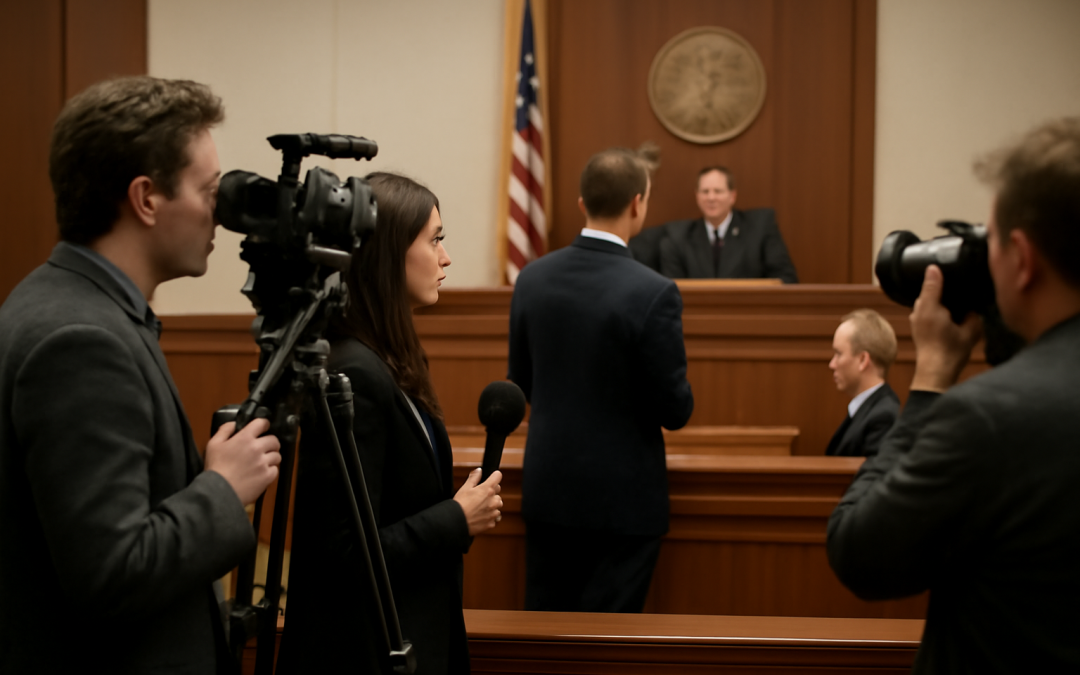
The role of courtroom coverage in shaping public perception has grown significantly with the rise of modern media, altering how justice is understood and experienced within society. This dynamic interaction between the legal arena and media outlets serves not only to inform the public about judicial proceedings but also influences opinions, sometimes to the detriment of fair trial standards. Media exposure of high-profile cases, bolstered by continuous coverage and often sensationalized reporting, raises critical questions about the balance between transparency and the preservation of judicial integrity.
Courtroom coverage has traditionally been regarded as a public service, allowing transparency in the administration of justice. Open trials are a cornerstone of democratic societies, meant to ensure that justice is not only done but seen to be done. However, media involvement can extend beyond mere observation, impacting the atmosphere within the courtroom itself. Reporters, journalists, and camera crews bring a level of scrutiny and pressure that prior generations of defendants and jurors did not encounter. The knowledge that their actions and words might be broadcast worldwide can affect behavior within the trial, potentially skewing facts or strategies.
The primary keyword, courtroom coverage, encapsulates the dissemination of legal proceedings through newspapers, television, and increasingly, digital platforms. Each medium has transformed the way trials are conveyed and absorbed by the public. Television coverage, in particular, with its immediate and visual nature, has revolutionized how viewers engage with justice. The live broadcasting of major trials, such as the O.J. Simpson case, demonstrated that courtroom coverage could captivate a national audience, turning judicial processes into a form of spectacle. This phenomenon, often termed “trial by media,” illustrates how media can extend beyond reporting facts to influencing public sentiment and, indirectly, the legal processes themselves.
Such influence is a double-edged sword. On one hand, extensive courtroom coverage can enhance public understanding of the justice system, encouraging civic engagement and reinforcing the system’s accountability. On the other hand, it risks oversimplifying complex legal issues, emphasizing drama over accuracy and impartiality. Sensational stories attract viewership but may distort the truth, leading to preconceived notions about guilt or innocence before the verdict is delivered. This prejudgment can place defendants at a disadvantage, complicate jury selection, and challenge the objective administration of justice.
The extent and nature of courtroom coverage can also affect legal actors differently. Judges and lawyers may find themselves navigating not only the facts and laws but also public opinion stoked by media narratives. Legal practitioners are often tasked with managing the presence of the media while safeguarding their client’s rights and the court’s dignity. In some jurisdictions, restrictions on courtroom coverage, such as banning cameras or limiting live broadcasts, reflect concerns about media influence potentially disrupting the judicial process. These restrictions represent attempts to strike a fair balance between transparency and undue interference.
Furthermore, the evolution of social media has added another layer of complexity to courtroom coverage and media influence. Platforms like Twitter, Facebook, and Instagram allow instantaneous sharing of information, commentary, and opinions by both journalists and the public. While this democratizes information flow, it also facilitates the spread of misinformation and trial by social media mobs. Viral posts, memes, and hashtags can shape public discourse rapidly, often lacking the nuance critical in legal matters. Judges and lawyers must contend with the rapid pace of such coverage, which can extend far beyond traditional media controls and ethical guidelines.
Legal scholars and practitioners have debated the implications of this media landscape on the right to a fair trial. The principle that defendants are innocent until proven guilty can be undermined by overwhelming courtroom coverage that assumes guilt or innocence prematurely. High-profile cases attract extensive media attention, which in turn heightens the stakes for accurate reporting and unbiased judgment. Efforts to mitigate these risks include voir dire processes to screen jurors for media bias and judicial instructions to disregard media influence, but these safeguards have limitations in practice.
The media’s role in courtroom coverage also entails ethical challenges. Journalists must navigate the tension between public interest and responsible reporting. Covering trials truthfully and comprehensively requires avoiding sensationalism, respecting privacy, and maintaining impartiality. Sensational headlines and intrusive reporting can lead to trial by media that jeopardizes individual rights and public trust in the judicial system. Media outlets simultaneously bear the responsibility of informing the public while upholding these ethical norms, a balance that is not always maintained in the face of commercial pressures and competition for attention.
Investigative journalism, when conducted responsibly, highlights systemic injustices and brings important legal questions to light. Cases inspired by media attention have sometimes prompted legal reforms and accountability. For example, media scrutiny of wrongful convictions and police misconduct has spurred reforms within law enforcement and judicial procedures. However, not all courtroom coverage contributes positively; when the media focuses excessively on salacious details or celebrity defendants, it may obscure broader issues and perpetuate misinformation.
The relationship between courtroom coverage and media influence is not static; it evolves alongside technological advancements and shifts in societal values. The rise of live streaming trials and online court reporting represents a new frontier, promising greater transparency but also challenging traditional legal norms. Jurisdictions are experimenting with different models of media access to trials, balancing public interest with protection against prejudicial effects. The outcomes of these experiments will likely inform future policies on courtroom coverage and the legal profession’s approach to media engagement.
Educational initiatives aimed at improving media literacy among the public complement efforts to regulate courtroom coverage. Encouraging audiences to critically evaluate news sources and the context of legal reporting fosters a more informed citizenry. Understanding how media influence operates within courtroom coverage empowers individuals to recognize potential biases or misinformation. This awareness is essential in an era where media narratives can profoundly shape perceptions of justice and fairness.
The impact on jury decision-making remains one of the most significant concerns related to courtroom coverage and media influence. Jurors exposed to extensive media coverage before or during a trial may form opinions that conflict with evidence presented in the courtroom. Judges face the daunting task of managing these influences to preserve impartiality. Some courts restrict jurors’ access to media or instruct them rigorously, while others grapple with the challenge of finding jurors untainted by external narratives altogether. These challenges underscore the profound effects media can have not just on public opinion, but on the very outcomes of legal proceedings.
Public officials and policymakers also play a critical role in shaping the rules that govern courtroom coverage. Legislation and judicial guidelines define the extent to which cameras and recording devices are permitted in courtrooms and set parameters for media conduct. Balancing freedom of the press and the right to a fair trial requires nuanced policies that consider jurisdictional differences and case-specific factors. Decisions regarding courtroom media access can have lasting repercussions on legal transparency and public trust.
Moreover, cultural differences influence how courtroom coverage is conducted and perceived across various countries. In some legal traditions, media presence in courtrooms is strictly limited to preserve decorum and judicial authority, while others embrace open media to foster transparency. These divergent approaches reflect underlying attitudes toward the media, the judiciary, and the public’s role in the justice system. Examining international models offers valuable insights into potential reforms and improvements in managing courtroom coverage and media influence.
Technological advancements also mean that media influence extends beyond traditional trials to precedents and the development of legal norms. Media coverage of certain cases can prompt public debates that influence legislation and judicial interpretations. Social movements frequently leverage media narratives around landmark trials to advocate for legal and social change. The legal system, while designed to be insulated from popular opinion, cannot entirely detach from the powerful forces of media and public discourse.
Ultimately, the interplay between courtroom coverage and media influence highlights the complexity of delivering justice in contemporary society. While transparency and public information are vital components of democracy, the risks of undue media impact necessitate careful management. Stakeholders in the justice system—including judges, lawyers, journalists, policymakers, and the public—must collaborate to uphold the principles of fairness, accuracy, and ethical responsibility. Only through such collaboration can the ideal of a just and impartial legal system coexist with the realities of an ever-expanding media environment.
In conclusion, courtroom coverage stands as a crucial mechanism for public insight into the workings of justice, yet it is also a potent force capable of shaping perceptions and outcomes. The influence of media on legal proceedings poses significant challenges but also offers opportunities to promote fairness, accountability, and reform. Navigating these complexities demands vigilance, ethical commitment, and adaptive policies that preserve the integrity of the legal process while embracing the benefits of informed public participation. As media continues to evolve, so too must the frameworks governing courtroom coverage, ensuring that justice remains both transparent and fair in the eyes of society.