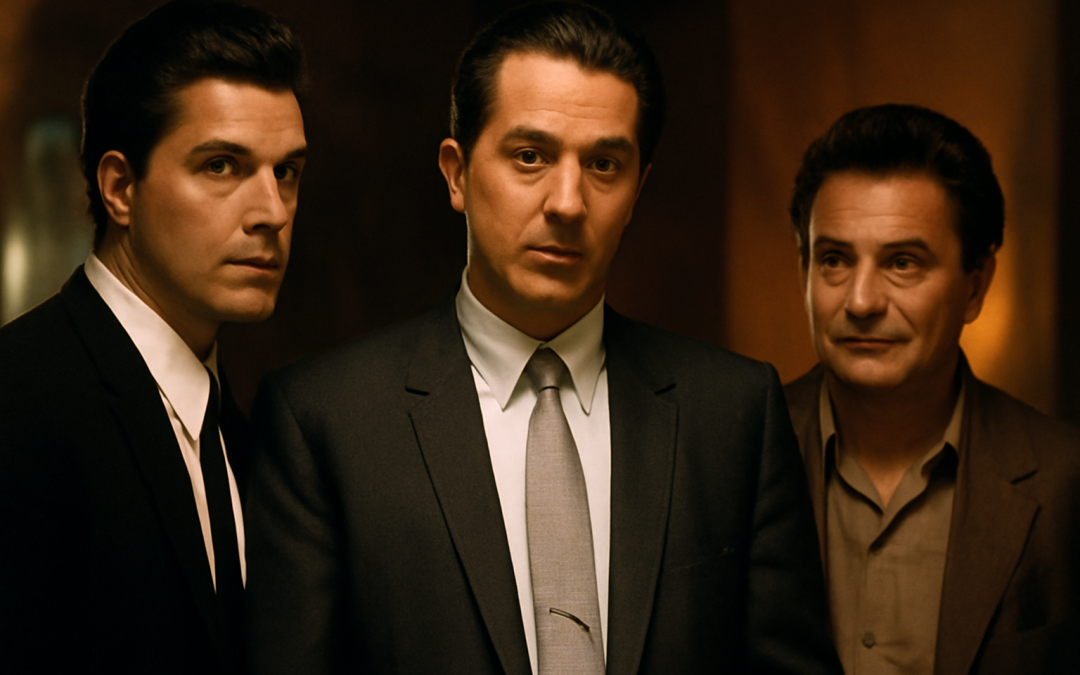
Few films capture the relentless, frenetic pulse of the criminal underworld as vividly and viscerally as Goodfellas. Directed by Martin Scorsese and based on the true story detailed in Nicholas Pileggi’s book, this cinematic masterpiece offers an intense exploration of the rise and fall of Henry Hill, a man who lived through the breathtaking highs and devastating lows of organized crime. The film’s remarkable ability to convey the dizzying pace of life inside the Mafia, where loyalty, violence, and ambition intertwine, sets it apart from countless crime dramas that came before and after. Goodfellas does not simply recount events—it immerses viewers in the overwhelming speed and unpredictability that characterize a life built on deception and danger.
The story unfolds with a unique kinetic energy, propelled by electrifying editing, dynamic camerawork, and a pulsating soundtrack that pulses like the heartbeat of the characters themselves. Scorsese’s decision to employ a fast-paced visual language mirrors the rollercoaster existence that Henry Hill endures. From the naïve enthusiasm of a young boy fascinated by mobsters to the frantic desperation of a man trying to outrun his own mistakes, the narrative moves swiftly yet deliberately, never sacrificing detail for momentum. This approach helps the audience understand the allure of crime, with its promise of quick money, power, and respect, while simultaneously highlighting its inevitable consequences.
One of the film’s most striking features is its complex portrayal of the characters who inhabit this treacherous world. Henry Hill, masterfully played by Ray Liotta, is neither a hero nor an outright villain, but a deeply flawed individual whose choices reflect both ambition and insecurity. Surrounded by charismatic and ruthless figures such as Jimmy Conway (Robert De Niro) and Tommy DeVito (Joe Pesci), Henry navigates a volatile environment where friendships are forged and shattered in the blink of an eye. The rapid-fire dialogue and frequent bursts of violence underscore an atmosphere where trust is precarious and danger lurks behind every corner. It’s through these relationships that the film conveys the intoxicating yet perilous speed of crime—a life where moments of joy are fleeting and tragedy is just a bullet away.
The screenplay, co-written by Scorsese and Pileggi, blends meticulous research with storytelling prowess, resulting in scenes that feel both authentic and cinematic. The casual way characters discuss cocaine deals or planned murders amid family dinners or vacations reveals a chilling normalization of violence and corruption. This juxtaposition heightens the film’s impact, showing how the criminal lifestyle pervades every aspect of Henry’s existence. The rapid shifts between mundane routine and extreme brutality reflect the unpredictable rhythm of life in organized crime, where calm can rapidly turn into chaos without warning.
Another factor contributing to this dynamic portrayal is the film’s incredible editing, helmed by Thelma Schoonmaker. The rapid cuts, tracking shots, and freeze frames inject the narrative with a pulsating momentum that mimics the adrenaline-fueled pace of the characters’ lives. The famous long tracking shot through the Copacabana nightclub perfectly encapsulates this technique, combining technical brilliance with narrative immersion. This seamless sequence draws viewers into the world of glamour and danger, emphasizing how the characters navigate their fast lanes with practiced ease. It is in these moments that the film’s visual style and storytelling work in harmony to bring forth an immersive experience of the speed and intensity of the criminal underworld.
Moreover, the movie’s portrayal of violence is unflinching and brutally honest. Rather than glorify the bloodshed, Goodfellas presents violence as sudden, shocking, and often banal—routine acts that underscore the precariousness of the characters’ positions. The speed of these violent acts, frequently delivered without warning and resolved quickly, mirrors the film’s larger theme. It demonstrates how quickly fortunes can be won or lost, lives made or destroyed in a split second. This approach dispels any romantic notions about life in the Mafia, instead offering a raw, unvarnished look at its consequences.
The soundtrack plays a pivotal role in reinforcing the film’s fast-paced and gritty narrative. With an eclectic mix of period songs spanning rock ‘n’ roll, pop, and blues, the music not only situates the story chronologically but also enhances emotional resonance. Tracks by artists like The Rolling Stones, Eric Clapton, and Ray Charles accompany scenes of celebration, heist, or quiet reflection with perfect timing, amplifying the tension or release at key moments. Rather than merely serve as background, the music becomes a character in its own right, propelling the narrative forward and emphasizing the cultural backdrop against which the story unfolds.
Goodfellas also stands out for its unrelenting honesty about the rise and fall cycle inherent to the criminal lifestyle. Henry’s journey from a bright-eyed boy enamored with mobsters to a man forced into witness protection encapsulates the inevitable drain of the fast lane. The intoxicating speed at which crimes are conjured and conspiracies hatched begins to weigh heavily on his psyche, portraying how this world cannot sustain anyone indefinitely. Betrayals ripple quickly through the story, reminding viewers that loyalty in this context is fragile and often self-serving. The final act of the film, which sees Henry realizing the cost of his choices, drives home the message that the speed of crime ultimately leads to isolation and ruin.
Besides its narrative and technical brilliance, the film benefits immensely from its ensemble cast. Joe Pesci’s Oscar-winning portrayal of Tommy DeVito is a standout; his unpredictable volatility perfectly personifies the dangerous edge that shadows every interaction within their circle. Pesci’s ability to oscillate between charm and menace in mere seconds illustrates the precariousness of the Mafia’s ecosystem where a smile can morph into a gunshot without notice. Robert De Niro’s understated performance as Jimmy Conway brings a sense of experienced lethality, contrasting with Henry’s youthful eagerness and providing a sobering look at the cost of ambition within this speed-driven world. Lorraine Bracco adds depth as Karen Hill, whose increasing discomfort with her husband’s lifestyle underscores the growing personal toll behind the glamourized exterior.
The cultural impact of the film has been enormous and enduring, influencing not only other filmmakers but also public perceptions of organized crime. Goodfellas redefined the genre, moving away from the mythic, larger-than-life portrayals of the Mafia seen in earlier movies to something more immediate and raw. Its depiction of crime as a high-speed, often reckless enterprise resonated deeply, setting a new bar in cinematic storytelling. The film’s influence can be traced through countless subsequent works that attempt to mimic its blend of gritty realism, complex characterization, and kinetic style.
In analyzing Goodfellas, it is essential to recognize how it balances the allure and danger of the criminal lifestyle with an unflinching portrayal of its moral and physical consequences. The dizzying speed of life in the Mafia, the temptation of quick success, and the ever-present threat of downfall are rendered with unparalleled clarity and power. The film invites viewers to understand why people are drawn into this world while simultaneously warning of its destructive nature. It elevates the crime drama from entertainment to something that scrutinizes the human condition under extreme pressure.
The story’s pacing is not merely a stylistic choice but a thematic cornerstone. Just as Henry Hill’s life unfolds in rapid succession from petty crimes to large-scale heists, the film’s own rhythm mirrors this acceleration. Even moments of calm are tinged with an underlying tension, a reminder that at any second, the balance could topple. This constant forward momentum reflects the nature of crime itself—always evolving, rarely predictable, and dangerously quick to spiral out of control. Scorsese’s ability to craft this sensation through narrative, editing, and performance is a testament to his mastery as a filmmaker.
Ultimately, the speed of crime as depicted in Goodfellas is emblematic of the human desire for power, recognition, and survival. Yet, it also reveals the fragility and fleetingness of those pursuits when built on a foundation of violence and fear. The exhilaration of the fast lane gives way to paranoia and isolation, demonstrating the heavy price paid by those who choose this path. The film’s closing sequences underscore this sobering truth, portraying a man caught in the aftermath of his choices, reflecting on a life lived too fast and full of loss.
Few films have managed to depict the intertwining of charisma, danger, and tragedy with such unrelenting honesty and stylistic finesse. Goodfellas remains a pinnacle of crime cinema, thanks to its vivid exploration of the speed at which the world of crime moves and how that speed consumes everyone caught in its midst. It challenges audiences to not only witness a story but feel the rush and the wreckage that come with living life in the fast lane. This powerful and relentless portrayal ensures its place not merely as a classic film but as an essential study in the human cost of the criminal chase.