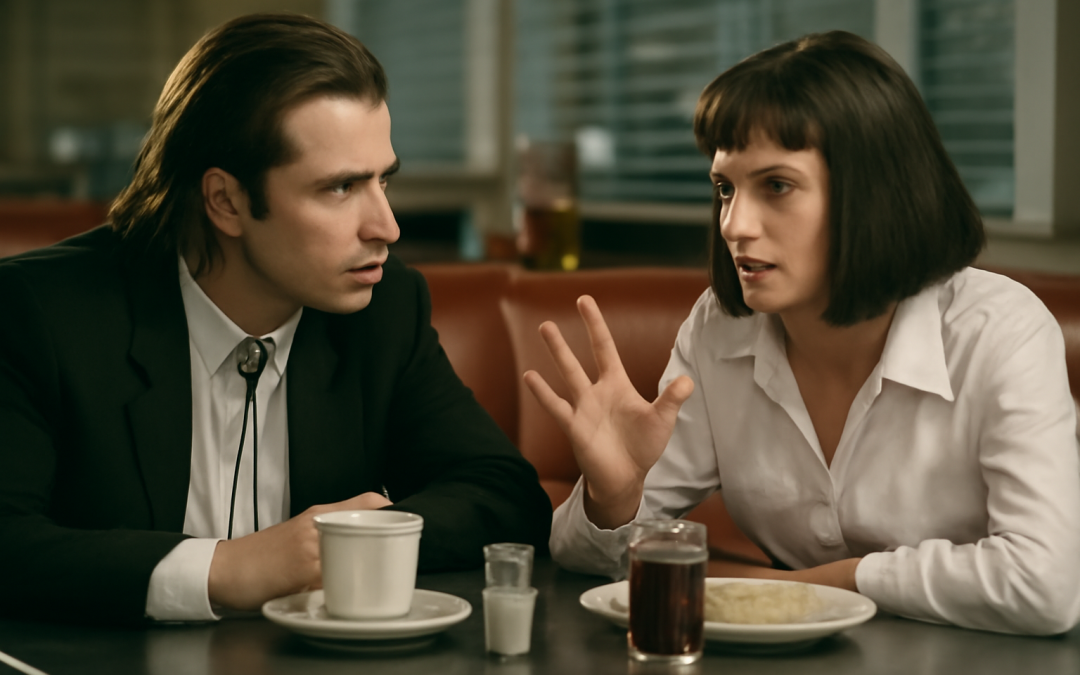
When Quentin Tarantino unleashed his 1994 masterpiece onto the world, audiences and critics alike were stunned by the fresh, audacious approach to storytelling that redefined the crime genre. At its core, the film offers a kaleidoscopic narrative, weaving together multiple storylines that intersect, diverge, and eventually coalesce, but never in chronological order. The brilliance lies in its fractured temporal structure — a deliberate shattering of traditional linear narrative that challenges the viewer’s perception of cause and effect. This unconventional design is not merely a stylistic choice but an essential element that amplifies the film’s thematic richness and emotional impact.
The film chronicles the lives of several Los Angeles characters, primarily revolving around two hitmen, a conflicted mob boss’s wife, a prizefighter, and a pair of petty criminals. Each storyline is presented as a vignette, contributing uniquely to the overall tapestry. Unlike conventional Hollywood films where the narrative unfolds sequentially, this story embraces a non-linear, disjointed form. The opening sequence, for instance, is actually the final scene of the intertwined stories when viewed in chronological order, setting an immediate tone of intrigue and unpredictability. By so masterfully disrupting time’s usual flow, the filmmakers invite viewers to actively reconstruct the timeline, engaging them in a way that storytelling typically does not demand.
Parsing the non-linear narrative reveals how the shattered structure deepens character development and thematic exploration. Characters who would otherwise risk remaining archetypal figures gain unforeseen complexity through the selective revealing of their motivations and moral quandaries. The segmented format strips away predictability, allowing the audience glimpses into moments that—when rearranged—form a mosaic of loyalty, violence, redemption, and existential ponderings. The nonlinear approach also mirrors the chaotic, unpredictable nature of the criminal underworld the film portrays; nothing is orderly, and allegiance is as fluid as time on screen.
Central to understanding this fractured storytelling is the film’s brilliant screenplay, laden with sharp, memorable dialogue that pairs perfectly with its structure. The scenes that might, in a conventional film, be mere connective tissue instead become compact, potent bursts of character interaction that stand firmly on their own merit. Consider the iconic “Ezekiel 25:17” monologue, which reverberates with multiple layers of significance throughout the story. Presented in different contexts and by different characters, it becomes a symbol of their inner conflicts and the moral ambiguity permeating the narrative. Dialogue acts as a thread stitching the intersecting lives together, suggesting that despite time’s disintegration, certain themes and conversations remain constants.
Moreover, the film’s visual style complements and reinforces its fragmented narrative. Cinematographer Andrzej Sekuła employs a vibrant palette and inventive camera angles to delineate shifts in storylines and mood. The use of close-ups, wide shots, and dynamic tracking sequences not only enrich each vignette but also help viewers navigate through the time shifts without losing emotional connection. The carefully crafted mise-en-scène — from seedy diners to sterile hotel rooms — offers visual cues that ground every scene within a specific reality, even as the plot bounces back and forth across events. These choices enable the fractured structure to feel purposeful rather than disorienting.
The soundtrack deserves equal praise in how it integrates with the film’s mosaic form. The carefully curated mix of surf rock, soul, and pop songs acts more than mere background music; it functions as an emotional signpost. Each song correlates with particular narrative beats and character arcs, further enhancing the sense of disjointed but thematically cohesive storytelling. The juxtaposition of upbeat tunes against moments of violence or tension underscores the film’s signature blend of humor and darkness. The music propels the film forward even as the storyline simultaneously loops backward or sideways, defying conventional chronology.
Pulp fiction’s nonlinear storytelling also reshapes traditional genre boundaries. While it undoubtedly fits within crime cinema, the fractured structure offers something far more layered and self-aware than typical crime thrillers. It permits the film to oscillate between intense drama, sharp comedy, and philosophical meditation without losing momentum or coherence. The unexpected twists and returns to prior events compel viewers to reassess initial judgments, lending the film a complexity rare in genre fare. It challenges established tropes by refusing to codify its characters or their actions into simplistic morality plays. Instead, the fractured narrative embraces ambiguity, making the story as unpredictable as the world it depicts.
What’s particularly striking is how this fragmented approach to storytelling impacts the audience’s emotional investment. In conventional narratives, suspense builds linearly toward climax and resolution; here, tension ebbs and flows unpredictably as the timeline folds in on itself. Viewers experience surprise, revelation, and humor not just from story content but from the way events are revealed. The disjointed structure mirrors real life’s unpredictability, reminding us that stories—like memories—are seldom experienced in a neat, tidy progression. This effect heightens engagement, inviting repeated viewings to uncover hidden nuances missed the first time. By defying expectation, the film crafts a unique viewing experience that lingers long after the credits roll.
Beyond its structural innovation, the film’s thematic concerns resonate with a fresh depth precisely because of how the story is segmented. Issues of chance, fate, and violence are magnified by the way events are presented out of order, challenging us to consider how different sequences of choices and consequences might have unfolded under alternate circumstances. The film examines the randomness of survival and demise within a violent world, emphasizing that small moments can have disproportionately large repercussions. This nonlinear perspective forces the audience to actively piece together cause and effect, reinforcing themes of unpredictability inherent in human experience.
Additionally, the fractured storytelling aligns with the film’s meta-commentary on cinema itself. By shattering the traditional narrative structure, the film draws attention to its construction, celebrating the artifice of storytelling while simultaneously immersing us in a vivid, compelling world. It reminds viewers that film is a medium of manipulation and invention, where time and perspective are flexible tools rather than rigid frameworks. This self-awareness brilliantly marries with the film’s pop culture references and pastiche style, which effortlessly blends homage and originality. The fractured narrative, thus, functions not only as a storytelling mechanism but as a thematic statement on the nature of narrative itself.
The influence of this narrative structure extends far beyond the film, marking a turning point in cinema that inspired countless filmmakers and altered popular storytelling sensibilities. Its success demonstrated that audiences could embrace stories that required active participation and critical reflection, dispelling fears that non-linear formats were inherently confusing or elitist. The film’s fractured timeline has since become a hallmark of postmodern cinema, informing the work of directors across genres. In this sense, the film is not only a cultural milestone but also a catalyst for narrative experimentation that reshaped how stories can be told.
Another compelling aspect of the fractured narrative is how it allows for thematic contrasts to emerge starkly within close proximity. Story segments colored by violence and moral ambiguity suddenly give way to moments of humor and human vulnerability, enhancing the emotional resonance. This interplay highlights the complexities of the characters’ lives, making them feel more authentic and multidimensional. It also challenges the audience’s expectations by blending high and low culture in a way that feels natural rather than jarring. The fragmented structure thus broadens the scope of cinematic storytelling by enabling tonal shifts that conventional chronology might inhibit.
The performances within this fragmented narrative framework are nothing short of stellar, each actor bringing depth and nuance that transcend potential risks of disjointed characterization. Actors like John Travolta, Samuel L. Jackson, and Uma Thurman deliver unforgettable portrayals that anchor their episodes with charisma and pathos. Because the timeline is fractured, each performance is confined yet made richer by context revealed in other segments. This non-chronological unfolding adds layers to their characters’ personalities and transformations. The fractured structure allows performances to function like puzzle pieces that gain more significance when assembled together, enhancing viewer appreciation and emotional impact.
Moreover, the fractured storytelling enables the film to explore themes of redemption and fate in a way that feels both organic and profound. Characters who seem doomed or trapped at one point may later be granted moments of grace or luck, with the timeline’s back-and-forth revealing nuances in their journeys. This treatment reflects a broader philosophical meditation on violence and morality, suggesting that life’s outcomes are neither entirely predetermined nor purely random. Instead, the film’s fractured structure captures the tension between free will and fate, presenting a world where choices ripple unpredictably. This depth elevates the narrative beyond typical genre fare into a complex human drama.
Technically, the editing plays a crucial role in executing this fractured narrative without alienating the audience. The work of editor Sally Menke is masterful, seamlessly weaving the different storylines together with precise timing and rhythm. The transitions between scenes and segments are carefully calibrated to maintain coherence and momentum, even as the plot jumps in time and perspective. The fractured structure demands a high level of craftsmanship in pacing, which the film delivers in abundance. The editing itself becomes a storytelling device, dictating emotional cadence while reinforcing the thematic concerns of time and consequence.
The film’s fractured structure also reflects the influence of pulp literature and noir films, from which the film derives much of its aesthetic and narrative inspiration. The episodic nature of pulp magazines and the moral ambiguity characteristic of noir resonate powerfully with this storytelling approach. Yet, the film simultaneously subverts and reinvents these traditions by employing a self-referential, postmodern style. By fracturing the narrative timeline, the film both honors and challenges its genre predecessors, creating a hybrid form that feels both nostalgic and revolutionary. This blending of old and new contributes to the film’s enduring appeal and critical acclaim.
It is worth noting how the fractured narrative creates space for moments of black humor, which sharply contrast with scenes of brutality and tension. The juxtaposition of violence with absurd or mundane conversation punctuates the film and contributes to its unique tone. This blending of comedy and drama reflects the complexities of real life, where moments of levity appear even amidst chaos. The nonlinear format enhances this effect by placing disparate moments side by side, inviting reflection on their contrasts and connections. The fractured structure, therefore, contributes to the film’s ability to surprise, entertain, and provoke thought simultaneously.
Finally, the fractured structure is essential to the film’s commentary on storytelling and reality itself. By disrupting linear time, the film questions the notion that narratives must be straightforward or complete to be meaningful. It suggests instead that human experience is fragmented, multifaceted, and open to interpretation. The film implicitly invites the audience to embrace ambiguity and complexity, recognizing that each person’s narrative is constructed from incomplete, overlapping pieces. This philosophical underpinning resonates throughout the entire cinematic experience, underscoring the film’s lasting significance.
In sum, the film’s fractured narrative structure is far more than a stylistic novelty; it is the beating heart of the film’s artistry and intellectual ambition. Through shattering the traditional chronology, the film elevates character, theme, mood, and engagement to unprecedented heights. This approach challenges viewers to rethink how stories are told and understood, revealing the power of cinema to manipulate time and perspective in service of deeper truths. Its enduring influence attests to how innovation in narrative form can revitalize familiar genres and enrich cultural storytelling. This film remains a dazzling example of how structure can be shattered and yet create a whole new kind of cinematic masterpiece.