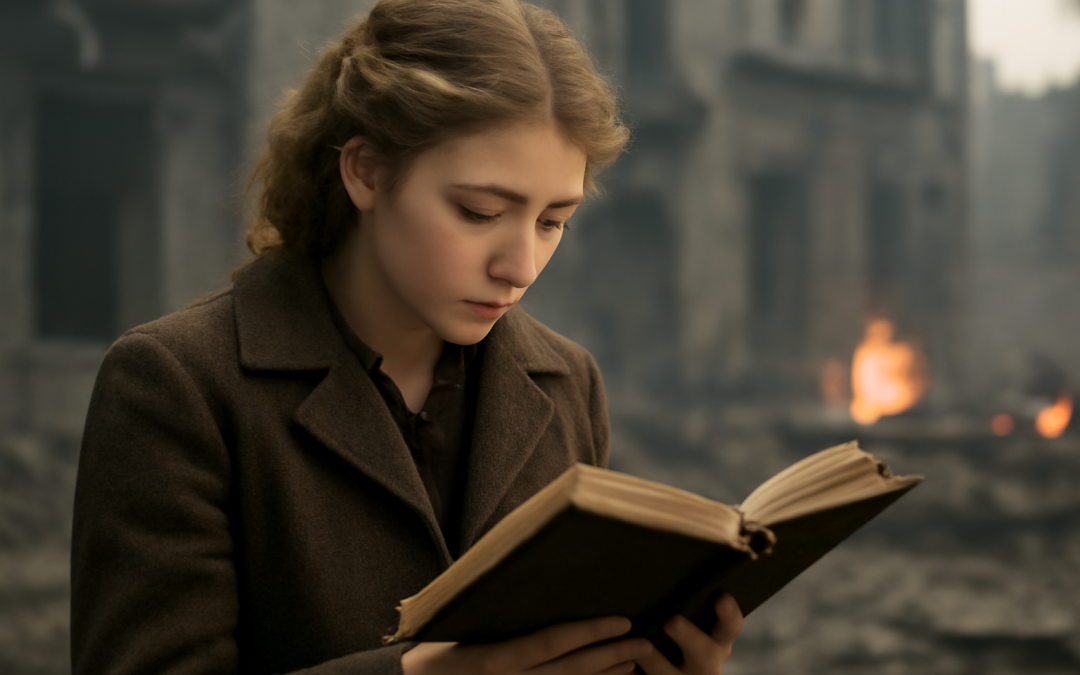
In the world of literature, certain novels transcend the typical boundaries of storytelling, blending history, humanity, and the power of language into an unforgettable experience. Such is the case with this novel, set against the brutal backdrop of World War II. This story’s exploration of words—how they can both wound and heal, deceive and reveal—offers a profound reflection on the human condition amidst immense adversity. At its core, it is a narrative about survival, resistance, and the unexpected ways people find hope when everything seems lost.
The novel’s setting, Nazi Germany, is integral to its emotional and thematic resonance. Life under the Third Reich, particularly for a young girl navigating loss, fear, and oppression, is portrayed with a harrowing yet compassionate lens. The main character’s journey is one of profound transformation; she starts as a timid, uncertain child who discovers a surprising affinity for words. These words become her refuge, her form of rebellion, and her way to connect with others in a world that often feels indifferent or hostile. The power of language as both a weapon and a sanctuary stretches throughout the novel, underscoring how deeply words shape our experiences and memories.
The narrative structure is both inventive and poignant. The story unfolds through the perspective of Death, an unusual yet compelling narrator who offers a detached but deeply empathetic view of the characters’ lives. This choice adds layers of philosophical depth, inviting readers to ponder mortality and the meaning of suffering. Through Death’s eyes, the reader witnesses the stark contrasts between the brutality of war and the small, tender moments of human kindness. The narrator’s voice is neither sentimental nor harsh; it holds a steady, contemplative tone, which fits perfectly with the underlying themes of the story.
Character development in the novel is rich and nuanced. The protagonist, a young girl, is drawn with emotional complexity. She is flawed, brave, scared, and resilient. Her relationships with those around her—her adoptive family, a young Jewish refugee they hide, and others in her small neighborhood—are portrayed with sensitivity and depth. These relationships serve as a microcosm of the larger societal tension, showing both the cruelty and compassion possible in times of war. The bonds formed and broken throughout the narrative illustrate the human capacity for kindness and cruelty, often existing side by side.
A compelling aspect of the story is how it highlights the role of literature and storytelling as a means of defying oppression. Books are represented as vessels of hope and rebellion, offering solace to the protagonist amid the chaos around her. The act of reading becomes an act of resistance, a way to preserve knowledge and humanity in a world where hatred seeks to erase them. The story’s emphasis on the importance of words challenges readers to consider their own relationship with language and memory. It reminds us how stories can serve as both mirrors and windows, reflecting personal pain and revealing shared humanity.
The backdrop of war and the Holocaust is never underplayed or sanitized, yet the novel manages to maintain a delicate balance by focusing on personal experience rather than historical exposition alone. It highlights the everyday struggles and moral dilemmas faced by ordinary people caught in extraordinary circumstances. In this way, it restores individuality and dignity to those history often reduces to statistics. The story does not shy away from the darkness but also refuses to let that darkness completely define its characters or the reader’s experience. It is a narrative that acknowledges pain while affirming resilience.
The prose itself is another noteworthy element. The language is carefully crafted—lyrical yet accessible, rich with imagery but never overly ornate. The writing style captures the emotional complexity of the story while maintaining clarity and momentum. Because of this, readers are invited into the protagonist’s inner world and the brutal realities of the era with equal ease. Symbolism and metaphor are used sparingly but purposefully, reinforcing the thematic weight of the narrative without overwhelming it. Each scene, each described word or gesture, feels deliberate and meaningful, contributing to a cohesive emotional and intellectual journey.
One cannot discuss the novel without noting its exploration of morality and the ambiguities of human behavior during war. The characters often occupy morally gray areas, forcing readers to question simplistic notions of good and evil. Acts of kindness sometimes coexist with fear-fueled betrayal; moments of courage are tinged with vulnerability. This complexity adds a compelling psychological realism to the story. Rather than presenting war as a clear battleground of heroes and villains, it reveals the messy reality of human choices and survival. This nuanced portrayal invites empathy and reflection, challenging readers to rethink assumptions about who the victims and perpetrators are.
The novel also beautifully depicts the impact of secrecy and silence, both personal and societal, in times of conflict. The characters carry heavy burdens of unspoken truths, fears they dare not voice, and histories they struggle to share. The weight of silence creates tension and suspense but also underscores the isolation and loneliness war imposes. At the same time, the moments when words are finally spoken—whether through stolen books, whispered confessions, or courageous storytelling—are deeply cathartic and transformative. This dynamic further illustrates the healing potential of language, even when words seem fragile or inadequate.
Moreover, this book offers a unique lens on childhood during wartime. The protagonist’s youthful innocence is both a source of vulnerability and strength. Her curiosity, imagination, and developing moral sense stand in stark contrast to the destruction surrounding her. The portrayal of childhood is tender but unflinching, acknowledging trauma without diminishing the complexity of youthful experience. Through her eyes, readers see the strange coexistence of normalcy and horror, joy and sorrow, that marked so many lives during the war. This perspective enriches the novel’s emotional depth and immediacy, making the historical realities resonate personally.
Family and chosen family are other thematic pillars of the narrative. The foster family’s love and protection provide a critical anchor for the protagonist amid chaos and danger. Their relationships are depicted with warmth and occasional tension, capturing the everyday dynamics that persist even in extraordinary circumstances. This focus on familial bonds adds a deeply human dimension to the story’s larger historical context. It also emphasizes that amid widespread loss, relationships remain a vital source of meaning and hope. The ways people nurture and protect one another become acts of defiance against the brutal forces that seek to tear them apart.
The story’s pacing and plotting further enhance its impact. While the novel moves steadily forward with a sense of impending doom, it also allows room for reflection and character moments. This balance between tension and pause enables the emotional stakes to build naturally, making climactic moments more powerful. Suspense is crafted through both external threats and internal conflicts, maintaining engagement throughout the narrative. The layered storytelling, combined with well-drawn characters and evocative settings, creates a rich tapestry that lingers in the reader’s mind long after the final page.
Themes of loss and memory permeate the novel, giving it a timeless quality. The characters grapple with profound grief and the challenge of remembering loved ones amidst widespread destruction. The act of telling stories, preserving moments of joy and sorrow, becomes a form of defiance against erasure. Memory is both a blessing and a burden—an essential part of identity but also a source of pain. This exploration offers a meditation on the fragility and endurance of human experience, reminding readers that history is not just a series of events but a collection of lived moments carrying deep emotional truths.
The novel’s conclusion is both heartbreaking and hopeful, refusing to offer simplistic resolutions. The ending reflects the complexity and ambiguity woven throughout the story, allowing readers to carry forward a sense of sorrow alongside the possibility of renewal. There is a recognition that while war leaves scars that may never fully heal, the human spirit’s resilience and the enduring power of words provide a glimmer of light in the darkness. It is an ending that resonates emotionally and intellectually, inviting contemplation long after the book is closed.
Ultimately, this novel is a testament to the enduring strength of language and storytelling in the face of unimaginable cruelty and loss. It highlights how words can shape reality, preserve humanity, and offer solace when hope seems distant. Through an unforgettable protagonist and a richly imagined wartime world, it delivers a powerful message about courage, compassion, and the complexity of human nature. It engages readers not only as a historical narrative but as a profound study of language’s transformative power amid the harshest of circumstances.
For those seeking a story that moves beyond conventional war narratives, this book offers an insightful and deeply moving experience. It challenges readers to consider how stories endure, how language can heal and hurt, and how ordinary individuals navigate the extraordinary trials of history. With its compelling characters, evocative prose, and profound themes, it stands as a reminder that even in the darkest times, the human spirit can find ways to resist, remember, and hope. Through words—as tools, weapons, and treasures—the novel celebrates the indomitable will to survive and to keep telling the truth of human experience.