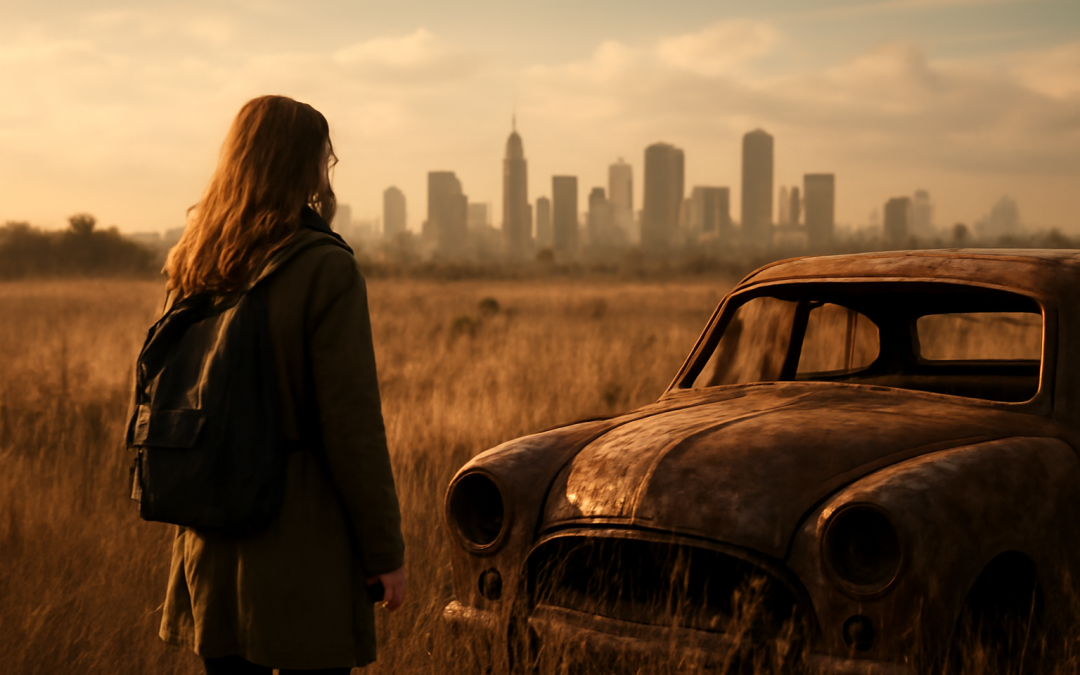
In an era where apocalyptic narratives are often dominated by bleak despair or relentless action, the exploration of what remains after the collapse of civilization offers a refreshing and deeply contemplative perspective. The story at hand unfolds in a world reshaped by devastation, yet it refuses to focus solely on survivalist impulses. Instead, it dives into the profound essence of humanity — memory, art, and culture — and how these threads weave a fragile tapestry of civilization amid ruin. Through a compelling narrative that spans time and viewpoint, the story examines how the remnants of the old world continue to echo in the lives of those who come after, suggesting that civilization is not merely infrastructure or social order but something far more enduring.
The narrative begins with a harrowing pandemic that swiftly dismantles the world as it was known. In its wake, the survivors find themselves in a drastically altered landscape, stripped not just of familiarity but of the very conveniences and complexities that had shaped their daily existence. However, what becomes striking in this new reality is how humanity clings to fragments of culture — books, music, art — as more than mere distractions but as vital connections to a past that defines them. Rather than succumbing to nihilism, these survivors demonstrate a remarkable resilience through their commitment to preserving and embodying what civilization once celebrated. This is where the story distinguishes itself: it isn’t merely about the decay of society, but about the persistence of identity and meaning.
Central to this tale is a traveling group of performers who embody this commitment to culture and memory. Their journey is not just geographical but symbolic, carrying the message that stories, songs, and performances are lifelines to what civilization represented. Their role underscores an essential idea: in the face of collapse, it is art that sustains the spirit. The performers serve as walking monuments to a world that was, reminding viewers and readers alike that civilization’s true legacy lies in its stories and creative expressions. Through their eyes, the past is neither forgotten nor irrelevant; it is a vital compass guiding a fractured present.
This motif introduces an intricate interplay between remembrance and necessity. The characters are forced to navigate both the harsh realities of survival and the equally important challenge of preserving elements of culture. This duality enriches the narrative, as it presents a nuanced understanding of what it means to rebuild or reimagine the world after a cataclysm. The story suggests that physical survival alone cannot constitute civilization; instead, it must be married to memory, shared history, and cultural continuity. In this sense, the narrative acts as a meditation on how humanity’s intangible legacies could define future generations as much as their tangible realities.
One of the most arresting aspects is how it humanizes each survivor’s connection to the past, often through poignant flashbacks and interwoven timelines. The storytelling deftly balances moments of intimate personal history with broader socio-cultural reflections, as readers witness how individual memories and traumas shape collective identity. This technique effectively emphasizes that civilization is not a monolith, but a mosaic of countless personal narratives and shared experiences. The characters’ internal struggles with loss, hope, and fear are intricately tied to their efforts to remember and honor what preceded the collapse. These emotional currents underscore the idea that civilization’s endurance depends on empathy and remembrance as much as on artifacts and institutions.
The depiction of the post-pandemic world itself is both stark and poetic. While the devastation is undeniable, the narrative resists reducing the environment to mere backdrop or consequence. Instead, the natural world reasserts itself, blending beauty and menace, and reminding the audience of nature’s indifference and, simultaneously, its regenerative power. This balance is carefully maintained: human civilization has faltered, yet life stubbornly persists in new forms and rhythms. The symbiotic relationship between this evolving wilderness and the scattered pockets of humanity serves as a quiet commentary on resilience and adaptation. There is a somber recognition that civilization is not the natural order but a fragile construct within it.
Within this framework, the story explores themes of power, control, and the human tendency to seek meaning in chaos. Different groups of survivors develop contrasting philosophies and social structures, some clinging to order through authoritarian means, others embracing communal empathy or artistic expression as the path forward. This variety reflects the multifaceted nature of civilization itself: no single model can capture its complexity. Moreover, it illustrates how the search for meaning after cataclysm can lead to conflict as well as cooperation. The narrative’s refusal to simplify these dynamics enriches its thematic depth and underscores the realistic challenges of reconstructing society after collapse.
A particularly compelling narrative thread involves the significance of a graphic novel created before the pandemic — a story within the story that becomes a symbol of hope and continuity. This meta-narrative element creatively intertwines the past and present, underscoring art’s enduring power to inspire and provide solace. The graphic novel becomes a metaphor for civilization’s intangible legacy and the ways stories can bridge generations and disparate experiences. Its survival through the pandemic and its impact on characters highlight how fiction and creativity are essential to cultural survival. This element also invites readers to reflect on the stories they cherish and how those narratives shape their understanding of the world.
The performances staged by the traveling troupe further flesh out the narrative’s examination of art’s role in a fractured world. Theater is portrayed not merely as entertainment but as a form of ritual and remembrance. Through these performances, the characters assert their humanity and offer a collective witness to a lost civilization. These moments of communal gathering provide emotional refuge and a sense of continuity, bringing light to the shadows of devastation. The portrayal of these performances poignantly illustrates how rituals — whether storytelling, music, or theater — are foundational to cultural endurance and identity formation, even amid collapse.
This enduring theme of memory is further reflected in the characters’ relationships and personal growth. Connections forged or rekindled serve as microcosms for the larger project of rebuilding civilization. The narrative deftly portrays how empathy, trust, and love create bonds strong enough to sustain individuals through isolation and despair. These human interactions vividly illustrate that civilization’s core rests on relationships and community, not merely technology or infrastructure. The characters’ journeys offer hope without descending into melodrama, balancing realism with the possibility of renewal.
Another important aspect is the measured pacing, which allows the story to breathe and the characters to develop organically. This deliberate storytelling creates space for reflective moments — scenes of quiet introspection or simple interactions laden with emotional weight. Such moments deepen the reader’s immersion and provide a contrast to the more intense sequences of conflict or crisis. The narrative’s cadence underscores a central point: rebuilding civilization is not a rapid process, but one measured in small, meaningful steps and human gestures. Through this patient unfolding, the story honors the slow, often invisible work involved in cultural and emotional survival.
The soundscape and imagery, although conveyed through prose, are vividly crafted. Descriptions of abandoned landscapes, the subtle rustling of leaves, the flicker of candlelight in a darkened room, or the melancholic melody of a violin weave a sensory experience that complements the thematic richness. These sensory details serve to anchor the narrative’s abstract themes in tangible reality, making the emotional resonance more palpable. The detailed, evocative writing invites the reader to fully inhabit the world and empathize deeply with its inhabitants, heightening the story’s immersive quality.
Furthermore, the story’s exploration of technological loss and adaptation is both subtle and thought-provoking. The collapse strips away modern conveniences, forcing characters to rely on simpler tools and knowledge. This regression is portrayed with neither romanticism nor despair; it is a pragmatic acknowledgment of new limitations and possibilities. The narrative hints at the cyclical nature of human progress and the intricate relationship between technological advancement and cultural preservation. Rather than viewing technology as civilization’s sole marker, the story asserts that culture, values, and memory are the pillars that truly uphold human society.
The ethical dimensions encountered by the characters add another layer of complexity. Decisions about leadership, resource allocation, and interpersonal boundaries are portrayed with nuance and realism. Characters grapple with moral dilemmas without easy answers, a reflection of the ambiguous nature of survival and governance in a fractured world. These ethical quandaries avoid binary judgments, instead emphasizing the messy, human reality of trying to do right in difficult circumstances. This approach challenges readers to consider their own values and assumptions about civilization and ethics.
Importantly, the narrative honors the ambiguity inherent in such a world. It neither offers simplistic resolutions nor neat conclusions. Instead, it embraces uncertainty as a natural part of the human condition, especially in extraordinary circumstances. This openness invites readers to engage actively with the questions posed, rather than passively consume a completed worldview. In doing so, the story fosters a contemplative space where ideas about civilization, memory, hope, and despair can coexist and inform each other.
The human spirit’s capacity for adaptation, creativity, and compassion shines through as a central beacon in this post-apocalyptic landscape. The narrative illustrates that even stripped of most material trappings, people find ways to hold on to their humanity and to each other. This insistence on the preservation of culture and connection, even amidst profound loss, reframes the apocalypse not as an end but as a beginning — a chance to reaffirm what is truly essential about civilization.
In conclusion, this work stands as a poignant, insightful meditation on civilization remembered and reimagined. It challenges conventional portrayals of post-apocalyptic existence by highlighting the enduring power of art, memory, and human connection. The interplay of personal stories, cultural fragments, and ethical dilemmas creates a rich, textured narrative that resonates on both emotional and intellectual levels. Through its careful exploration of what it means to survive not just physically but culturally, it offers a powerful reminder: civilization’s legacy is preserved in the stories we tell, the art we cherish, and the bonds we forge — threads that remain unbroken even in the face of destruction.