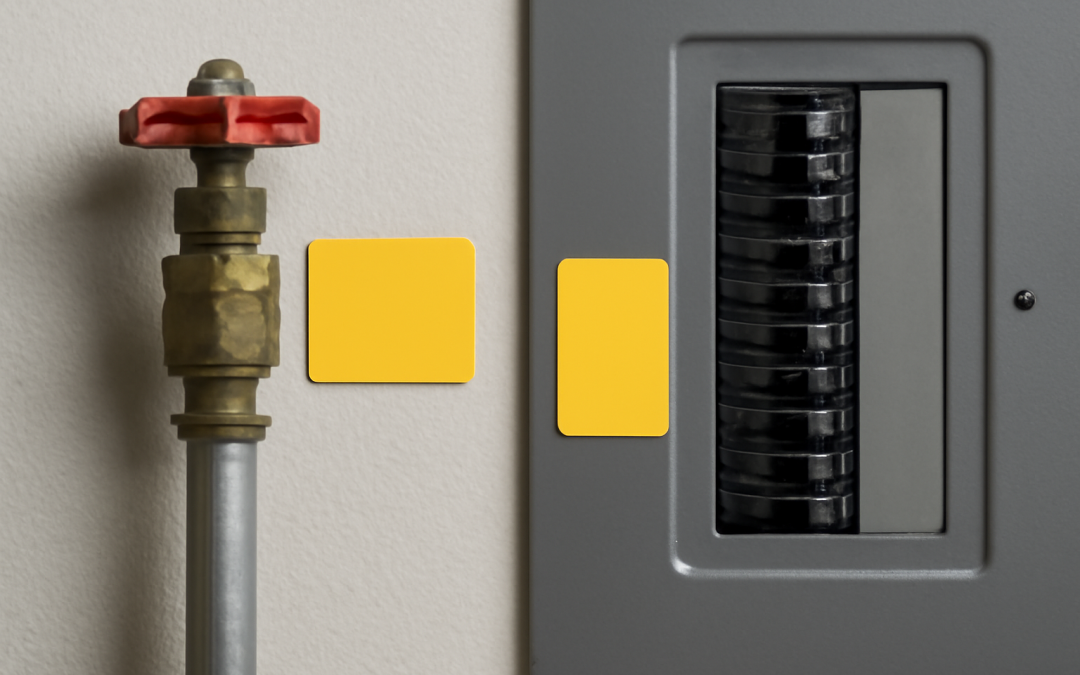
In any building, whether residential, commercial, or industrial, the swift identification and operation of shutoff valves and breakers can mean the difference between a minor inconvenience and a major disaster. Emergencies rarely provide the luxury of time or clarity, making it critical that these vital components are labeled clearly and accurately. Proper labeling ensures that individuals, from trained professionals to laypersons, can quickly locate and operate these key controls when needed.
Shutoff valves control the flow of liquids or gases, typically water, gas, or steam, within a building’s plumbing or mechanical systems. Breakers, on the other hand, manage the electrical supply to circuits and devices, preventing overloads and fires. Given their safety and operational importance, misidentification or confusion surrounding these controls can lead to delayed responses and increased danger. Clear labeling not only aids emergency responders but also helps maintenance personnel and occupants efficiently manage building systems without guesswork.
One of the primary benefits of labeling shutoff valves and breakers clearly is enhanced safety. In an emergency such as a gas leak, water pipe burst, or electrical fault, quick response is vital to mitigate hazards. Well-labeled valves and breakers reduce response time significantly by eliminating uncertainty. For example, if a particular valve controls the flow of natural gas to a kitchen and it is labeled clearly, occupants or technicians can shut it off swiftly, possibly preventing an explosion. Similarly, during a fire, knowing which breaker controls the electricity in a specific area prevents firefighters and occupants from working in energized zones, reducing the risk of electrocution.
In addition to emergencies, clear labeling plays a crucial role during routine maintenance and inspections. Facilities managers and technicians rely on accurate and visible labels to isolate portions of plumbing and electrical systems for repairs or upgrades. Without clear identification, they might inadvertently shut down critical systems affecting building operations or fail to isolate the correct system, leading to unnecessary downtime or complications. Clear labeling saves time, reduces human error, and streamlines the overall management of building infrastructure.
Durability and visibility are two key aspects that must be considered when labeling these critical components. Labels should be made from materials resistant to fading, tearing, heat, moisture, and chemical exposure. This is particularly important in harsh environments such as industrial plants or outdoor installations where weather and operational factors can degrade labels rapidly. Visibility can be enhanced through the use of reflective materials, large fonts, contrasting colors, and logical placement. Labels should be positioned directly on or as close as possible to the shutoff valves and breakers to avoid confusion.
Standardization is another important factor for effective labeling. Adopting a consistent format across a building or facility means that anyone who operates or maintains the systems can quickly interpret the information displayed. This includes using universally understood symbols, clear wording, and standardized color codes—such as red for gas valves or yellow for electrical breakers. Consistency reduces the cognitive load on individuals who might otherwise waste precious seconds deciphering irregular or ambiguous labels.
Moreover, labeling should be comprehensive, covering every shutoff valve and breaker within the facility. Even components that seem trivial or rarely used must be labeled clearly to prepare for unexpected situations. This might include main control valves for water supply, emergency gas shutoffs, electrical panels controlling critical areas, and any auxiliary breakers for essential machinery or systems. Omitting any component from the labeling system creates blind spots that could undermine safety or operational efficiency.
Integrating the labeling system into facility documentation and training enhances its effectiveness. Including label information in schematics, maps, and operational manuals facilitates cross-referencing when troubleshooting or training new personnel. Regular training ensures that staff know what each label means, where the labeled shutoff points are located, and how to operate them safely. For large or complex facilities, mock drills involving the identification and operation of shutoff valves and breakers help reinforce knowledge and build confidence in emergency response.
Technological advances have introduced new possibilities for labeling beyond traditional printed tags and stickers. For instance, QR codes linked to digital schematics or operational instructions provide additional layers of information without cluttering the label itself. Some facilities incorporate RFID tags or smart sensors that communicate the status of valves and breakers in real-time, aiding remote monitoring and control. While these technologies offer exciting advantages, physical labeling remains a fundamental necessity for immediate on-site access during urgent situations.
The importance of clear labeling also extends to compliance with local codes, regulations, and industry standards. Many building codes and safety regulations require shutoff valves and breakers to be identifiable and operational within specific time frames during emergencies. Failure to comply not only risks regulatory penalties but also endangers occupants and property. Proactively implementing a clear labeling strategy helps organizations meet legal requirements while demonstrating commitment to safety and operational excellence.
Additionally, attention must be given to the human factor when designing labels. Labels should use simple language and avoid technical jargon that may not be understood by all users. Providing instructions in multiple languages may be necessary in diverse workforces or public buildings. Also, labels should avoid overly small print or complicated abbreviations that could be misread under stress or poor lighting conditions. Clear, concise, and legible labeling builds confidence and reduces the risk of mistakes during critical interventions.
In multi-tenant or complex structures, organizing labeling schemes according to zones or floors can supplement the information on individual valves and breakers. This hierarchical approach enables responders to understand the broader context quickly, such as which wing or floor the control affects. Combining zone information with unique identification numbers for each valve or breaker streamlines communication and documentation, especially during large-scale incident management.
Routine audits and maintenance of labeling systems are also paramount to their ongoing effectiveness. Labels may become obscured, damaged, or fall off over time, and changes in building infrastructure can render original labels inaccurate. Periodic inspections ensure that all shutoff valves and breakers remain correctly labeled, visible, and up to date. Updating labels proactively prevents confusion and errors, supporting sustained safety and operational readiness.
In situations where multiple valves or breakers look similar, additional measures may improve clarity. For example, using color-coded caps, shape variations, or tactile markings can help distinguish controls physically. This is particularly beneficial in low-light or smoke-filled conditions where visual cues alone may be insufficient. Combining such physical cues with clear labeling creates multiple layers of identification to increase reliability.
The consequences of poorly labeled shutoff valves and breakers can be severe. Delays in shutting off utilities in emergencies often lead to escalating damage, injuries, or loss of life. Misidentification can result in shutting down the wrong system, potentially cutting power to critical devices like medical equipment, communications systems, or safety appliances. Furthermore, the inefficiency caused by unclear labeling imposes additional costs through extended downtime, emergency repairs, and potential regulatory fines.
Conversely, a well-designed labeling system represents a proactive investment yielding long-term benefits. It reduces risks, improves response times, enhances operational efficiency, and builds confidence among occupants and staff. Clear labeling contributes to an overall culture of safety and professionalism, reassuring stakeholders that the facility is managed with care and responsibility.
Ultimately, the clarity of shutoff valve and breaker labeling reflects an organization’s prioritization of safety, functionality, and preparedness. The need to act quickly and accurately under pressure cannot be overstated, and clear labels guide decisive action. Whether facing a sudden emergency or conducting routine maintenance, accessing precise information without delay makes all the difference. Therefore, dedicating time and resources to the thoughtful design, implementation, and maintenance of labeling systems is not merely a procedural task but a critical element of responsible building management.
In conclusion, clear labeling of shutoff valves and breakers is essential for ensuring safety, efficiency, and regulatory compliance in any facility. It minimizes risks during emergencies, facilitates maintenance work, and supports effective communication among all parties involved in building management. The choice of durable materials, standardized formats, and strategic placement enhances visibility and comprehension. Supplementing labeling with documentation, training, and technological tools further elevates its value. By maintaining this focus on clarity and accuracy, organizations create safer environments that can respond effectively to the challenges posed by unexpected events.