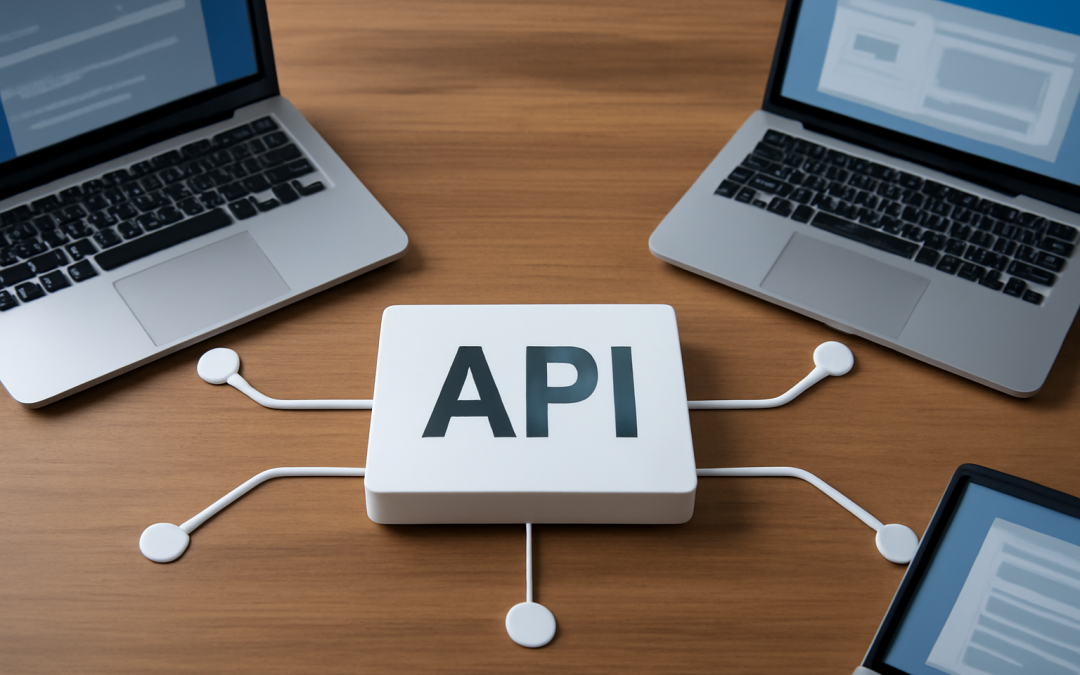
In today’s interconnected digital landscape, software applications rarely operate in isolation. Instead, they communicate with each other to share data, functionality, and services, creating a seamless user experience that spans across devices and platforms. At the heart of this communication lies an essential technology: the Application Programming Interface, or API. APIs serve as bridges that enable disparate software systems to work together, allowing developers to build more versatile, efficient, and innovative solutions. By understanding how APIs connect software, one gains insight into the foundational mechanisms driving modern digital ecosystems.
APIs function as intermediaries that define rules and protocols for data exchange between software components. When one application wants to use features or access information from another, it sends a request through an API. This request follows a structured format that both the requester and provider understand, enabling them to communicate effectively without direct interference. This abstraction allows applications to interact regardless of differences in coding languages, platforms, or operating systems. For instance, a weather app on a smartphone might receive real-time data from a remote weather service’s API, seamlessly integrating information into a user-friendly interface.
One of the key advantages of APIs is their role in promoting modular software architecture. By breaking down complex systems into smaller, independent components connected via APIs, developers can manage, update, and scale applications more efficiently. This design approach supports faster development cycles and easier maintenance because individual modules can be enhanced or replaced without disrupting the entire system. As a result, APIs enable businesses to adapt quickly to changing market demands or technological innovations by integrating new services alongside existing ones rather than rebuilding from scratch.
APIs also empower third-party developers to extend the functionality of existing software platforms. Many companies expose public APIs that allow external developers to build add-ons, integrations, or complementary services. This encourages an ecosystem where creativity flourishes, and users benefit from a wider variety of features tailored to specific needs. Social media platforms, for example, provide APIs that enable external applications to post updates, retrieve user information, or display content, broadening user engagement beyond the native application. This openness has fueled the growth of diverse digital tools that interoperate smoothly within the broader internet environment.
Security considerations are paramount in API design and implementation since APIs often handle sensitive data and transactions. Proper authentication, authorization, and encryption mechanisms must be in place to prevent unauthorized access and data breaches. Industry standards such as OAuth and API keys are commonly used to ensure that only trusted clients can interact with the API. Furthermore, thorough monitoring and rate limiting help protect services from abuse or denial-of-service attacks. By establishing clear, secure protocols for data exchange, APIs maintain the integrity and confidentiality essential for commercial and personal applications alike.
Another dimension of how APIs connect software is their role in enabling cloud computing and microservices architectures. Cloud platforms offer APIs that grant developers access to scalable resources, storage, and computing power without managing physical hardware. This capability allows applications to dynamically adjust resource usage based on demand, resulting in cost efficiency and improved performance. Microservices, which divide applications into small, independently deployable services, rely heavily on APIs to communicate. Each microservice exposes APIs to interact with others, facilitating agile development and continuous delivery practices that meet today’s fast-paced development environments.
The diversity of API types further illustrates their versatility in software connectivity. RESTful APIs, based on HTTP protocols, are among the most popular due to their simplicity and compatibility with web technologies. They allow operations such as reading, writing, updating, and deleting data using methods that correspond to standard HTTP verbs. SOAP APIs, though more complex, offer robust, standardized protocols useful in enterprise environments requiring formal contracts and higher security. GraphQL APIs provide flexible querying capabilities, enabling clients to request exactly the data they need, reducing bandwidth and improving efficiency. Each style addresses different needs but ultimately serves the same purpose of enabling structured data exchange between software systems.
Integration of APIs simplifies the aggregation of disparate data sources, streamlining the user experience by consolidating information into a unified interface. In sectors such as finance, healthcare, and retail, where data is generated by numerous systems, APIs enable synchronization and harmonization of this information. For example, a personal finance app can use APIs to pull transaction details from multiple banks, investment platforms, and budgeting tools, offering users a comprehensive financial overview. Similarly, in healthcare, APIs can bridge patient records across various providers, facilitating coordinated care and informed decision-making.
Beyond technical communication, APIs also facilitate business partnerships and digital innovation. Organizations increasingly use APIs to open their services to partners, forming collaborative ecosystems that drive new revenue streams and customer engagement. By offering APIs to trusted collaborators, businesses can extend their reach and create integrated experiences without rebuilding proprietary infrastructure. This strategy accelerates time to market for new products while leveraging the strengths of multiple stakeholders. The widespread adoption of API marketplaces and developer portals highlights the commercial and strategic importance of these digital connections.
Challenges do exist in managing API ecosystems, particularly around version control and backward compatibility. As APIs evolve with new features or changes, developers must ensure existing client applications continue to function without disruption. Effective versioning strategies, clear documentation, and deprecation policies are essential to maintaining a healthy developer experience and preventing fragmentation. Additionally, the proliferation of APIs can introduce complexity in monitoring dependencies and data flows across an organization’s technology stack, necessitating robust governance and tooling to oversee API lifecycle management.
At a more technical level, APIs encapsulate complexity and provide simplified interfaces for developers. This abstraction allows engineering teams to focus on core application logic rather than reinvention of common functionalities like payment processing, messaging, or mapping. For instance, instead of building a complete payment system, developers can integrate with established payment gateway APIs, ensuring compliance and security while saving development time. This reuse of capabilities accelerates innovation and standardizes interactions, fostering reliability and predictability in software behavior.
The growing importance of machine-to-machine communication in the Internet of Things (IoT) also underscores the role of APIs. Connected devices, ranging from smart thermostats to industrial sensors, rely on APIs to send data to centralized applications and receive commands. These APIs must be lightweight and efficient to operate within constrained environments while supporting interoperability across diverse hardware. The design of such APIs considers latency, data formats, and secure access to enable real-time interactions and automation that characterize smart environments.
Ultimately, APIs form the foundation for software ecosystems that continuously evolve and expand. They enable scalable integration, promote innovation through openness, and simplify complexity through standardization. Organizations harnessing the power of APIs can connect internal systems, partner services, and customer applications into cohesive workflows that drive productivity and engagement. As technology advances, the capabilities and reach of APIs will continue to grow, reinforcing their central role in shaping the future of software development and connectivity.
The golden thread weaving together the vast software landscape is the API, facilitating seamless connections, data exchange, and collaborative innovation. Mastering the use of APIs unlocks unprecedented possibilities for developers and businesses alike, turning isolated software components into dynamic, interconnected ecosystems where value is multiplied and experiences enriched. This synergy based on well-designed API interactions will remain the cornerstone of digital transformation and the engine driving next-generation applications.