Few albums have managed to capture the essence of an era with such precision and artistry as Abbey Road. Released in 1969, this iconic record from The Beatles stands as a testament to their unparalleled creative brilliance during the pinnacle of their career. It serves not only as a collection of some of their most memorable songs but also as a cohesive body of work that encapsulates their innovative spirit, musical experimentation, and collaborative synergy. Abbey Road remains widely regarded as one of the finest examples of what can be achieved when world-class musicians push the boundaries of pop and rock music.
The album opens with “Come Together,” a song that immediately sets the tone with its hypnotic bassline and swampy groove. John Lennon’s gritty vocals and cryptic lyrics create an air of mystique, inviting listeners into a sonic journey that masterfully blends blues, rock, and psychedelic elements. The track exemplifies The Beatles’ ability to marry catchy hooks with deeper thematic content, making it both accessible and thought-provoking. The rhythm section laid down by Paul McCartney and Ringo Starr anchors the song firmly, showcasing their musical precision and tight interplay.
Following this, “Something” emerges as one of George Harrison’s crowning achievements as a songwriter. It’s a tender, heartfelt love ballad that stands out not only for its lyrical honesty but also for its elegant guitar work and soothing melody. Often considered one of the greatest love songs ever recorded, “Something” is a highlight of Abbey Road and a clear demonstration of Harrison’s evolution from the band’s quieter contributor to an artist with a distinctive and compelling voice. The track layers emotional vulnerability over rich instrumentation, including a string arrangement that adds depth without overwhelming the simplicity of the song’s core.
As the album progresses, the upbeat and buoyant “Octopus’s Garden” brings a much-needed sense of whimsy and joy. Sung by Ringo Starr, it highlights his unique charm and the camaraderie within the band. This track, with its playful lyrics and infectious melody, provides a lighter contrast to the more introspective and complex pieces on the album. The song’s cheerful tone and imaginative storytelling embody the experimental spirit that permeated Abbey Road, demonstrating that even amidst profound innovation, the band retained a sense of humor and innocence.
One of the defining features of this record is The Beatles’ exceptional use of studio technology and ingenious production techniques, many facilitated by their trusted producer George Martin. The album showcases a seamless integration of diverse musical styles—ranging from rock and pop to blues and classical influences—woven together through meticulous arrangements and pioneering soundscapes. The engineering team at Abbey Road Studios pushed the limits by experimenting with layering, tape loops, and effects that enhanced the textural richness of each track. The attention to detail in the layering of instruments, vocals, and ambient sounds reveals the band’s commitment to crafting an immersive and dynamic listening experience.
A particularly striking aspect of this album is the famous medley on the second side, a suite of interconnected songs that flow effortlessly into one another. This collection includes fragments that, on their own, might seem like simple sketches but together create a complex narrative and emotional arc. The medley begins with “You Never Give Me Your Money,” a brooding and dynamic track that serves as a foundation for the following pieces. It captures the turmoil the band was facing at the time, both personally and professionally, yet manages to transcend it through its musical inventiveness.
Songs such as “Sun King,” “Mean Mr. Mustard,” “Polythene Pam,” and “She Came in Through the Bathroom Window” serve as brief, vivid vignettes, each bursting with character and unique stylistic flair. The transition between these tracks is so fluid that listeners often experience them as a single composition rather than separate songs. This approach underlines The Beatles’ talent for constructing not just singles, but albums conceived as complete works of art. “Golden Slumbers” and “Carry That Weight,” which emerge toward the conclusion of the medley, evoke themes of reflection, resilience, and the weight of their shared history.
The album concludes with “The End,” a track that is both literally and metaphorically significant. It features energetic drum solos from Starr—a rarity in their catalog—and a series of guitar exchanges between Lennon, McCartney, and Harrison. This musical conversation epitomizes the collaborative spirit that defined The Beatles, even as tensions within the group were escalating. The lyric “And in the end, the love you take is equal to the love you make” serves as a poignant summation of their career’s essence, adding a philosophical weight to the high-energy finale.
Musically, Abbey Road represents the culmination of The Beatles’ evolution from a straightforward rock band into masters of studio experimentation and genre fusion. The polish and sophistication found on this album reflect their deepening artistry and willingness to challenge themselves creatively. Their individual talents shine through while still serving the collective sound, demonstrating that the band was more than the sum of its parts.
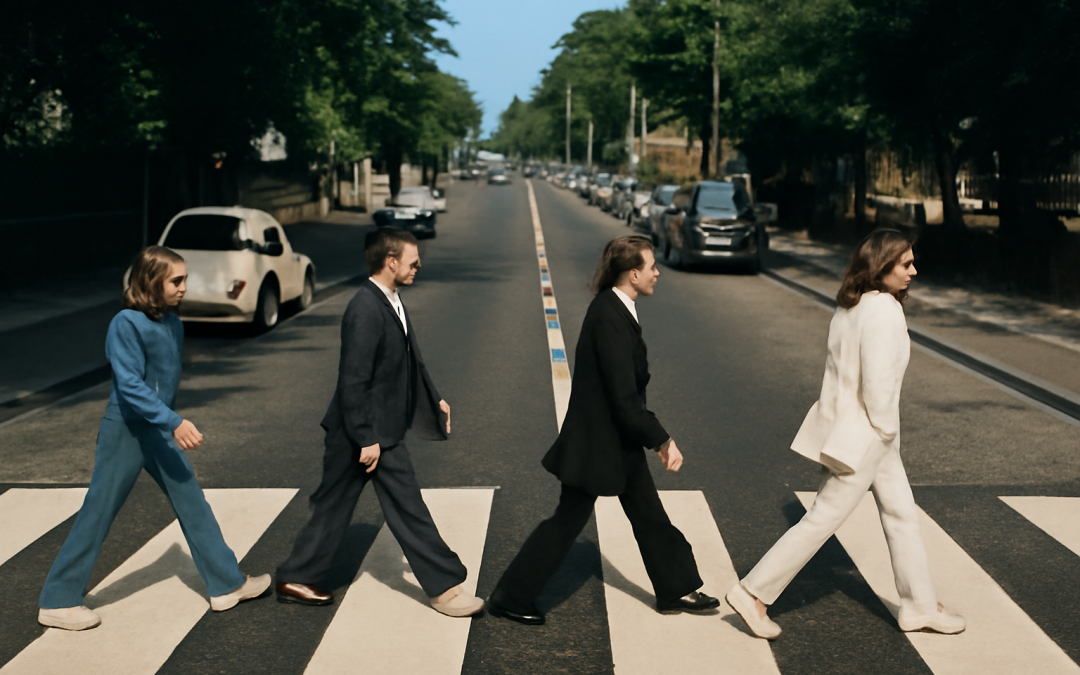
Beyond its musical achievements, the album’s cover art has become one of the most recognizable images in popular culture. The photograph, shot outside Abbey Road Studios in London, captures the four band members crossing the zebra crossing. This image has been endlessly celebrated, parodied, and referenced, adding a visual dimension to the album’s legendary status. The simplicity of the photo contrasts intriguingly with the complexity of the music it represents, symbolizing The Beatles’ unique blend of accessibility and innovation.
Critics and fans alike have often debated the context surrounding Abbey Road’s creation. Coming at a time when The Beatles were dealing with internal conflicts and diverging artistic visions, the album is sometimes viewed as a moment of reconciliation, a final burst of unity before their eventual breakup. The restraint and cohesion evident in the performances suggest a group still capable of great collaboration, even as cracks were beginning to form. This poignant tension adds a layer of emotional resonance for listeners aware of the band’s history.
In terms of influence, Abbey Road has left an indelible mark on subsequent generations of musicians. Its inventive use of studio techniques and integration of disparate musical elements paved the way for the evolution of progressive rock, pop orchestration, and experimental music production. The medley format, in particular, has inspired artists to think more expansively about album structure, encouraging a move toward thematic and conceptual coherence in mainstream recording.
From a lyrical perspective, the album balances introspection and storytelling, humor and melancholy. The songs explore themes of love, conflict, growth, and existential reflection, demonstrating a maturity that had been gradually developing throughout the band’s career. This thoughtful lyrical content deepens the emotional impact of the music, inviting listeners to engage both intellectually and viscerally.
Abbey Road’s place in The Beatles’ discography is noteworthy for being simultaneously traditional and groundbreaking. While it brings together songwriting and performance techniques refined through years of collaboration, it also ventures into new territory, incorporating orchestral arrangements, avant-garde influences, and innovative recording practices. This delicate balance underscores why the album is often considered a zenith of the band’s artistic output.
The individual performances on the album are uniformly strong, showcasing the distinct personalities and skills of each member. Lennon’s voice conveys raw emotion and urgency, McCartney’s melodic sensibilities and instrumental versatility provide a strong backbone, Harrison’s growth as a composer and guitarist introduces fresh perspectives, and Starr’s steady, tasteful drumming keeps the grooves tight and engaging. The synergy among the four remains palpable throughout, a testament to their enduring chemistry despite personal differences.
Perhaps what sets this album apart from much of what followed in popular music is its sense of timelessness. The songs retain their vibrancy and relevance decades after their initial release, appealing to new listeners while satisfying long-time fans. The production quality contributes to this longevity, ensuring clarity and richness that withstand the test of time. This enduring appeal cements the album’s status as a cornerstone of modern music history.
The cultural significance of the album cannot be overstated. At a time when the 1960s were coming to a close—marked by social upheaval, political change, and shifts in popular culture—this work provided a fitting soundtrack that encapsulated both the optimism and disillusionment of the moment. Its sophisticated musicality and thoughtful themes appealed to a broad audience, influencing fashion, film, and art alongside music. Abbey Road became more than an album; it became a symbol of artistic ambition and the transformative power of music.
Ultimately, Abbey Road represents The Beatles at their peak not simply because of technical proficiency or commercial success, but because of the profound artistic statement it makes. The album embodies their journey as musicians and individuals, capturing the complexities, contradictions, and beauty of their shared experience. Listening to it is an immersive exercise in understanding how popular music can transcend entertainment to become a form of high art.
The album invites repeated exploration, revealing new layers and nuances with each listen. It rewards attention with intricate musical details, evocative lyrics, and a flowing narrative architecture rarely matched in popular music. This depth ensures that Abbey Road remains a touchstone for artists and enthusiasts striving to push creative boundaries while remaining emotionally resonant.
In addition to its artistic merits, the album’s reception at the time of release further solidified its status. Critics praised its innovation and cohesiveness, while fans embraced its eclecticism and melodic richness. Over the years, it has consistently appeared in rankings of the greatest albums of all time, a consensus-driven affirmation of its enduring legacy.
Moreover, the album’s influence extends beyond the realm of music production and performance. It has inspired countless tribute acts, cover versions, and reinterpretations across different media, underscoring its cultural omnipresence. The story of its creation, rife with anecdotes and legendary moments, continues to captivate and inform the mythology surrounding The Beatles.
The artistic risks taken on Abbey Road demonstrate The Beatles’ confidence and hunger for artistic growth. Instead of resting on their immense success, they embraced complexity and experimentation, resulting in an album that pushes listeners to engage more deeply and thoughtfully. This fearless approach to music making defines the work and contributes to its status as a masterpiece.
In conclusion, Abbey Road is quintessentially the sound of The Beatles at their peak—an album that blends technical excellence, creative innovation, emotional depth, and cultural significance. It stands as a powerful reminder of what can be achieved when talented individuals collaborate with a shared vision, melding their distinctive voices into a timeless work of art. The album’s enduring appeal and influence underscore its place not just in the history of The Beatles but in the broader landscape of modern music. It remains a shining example of artistic ambition fulfilled and a benchmark against which all future musical achievements are measured.