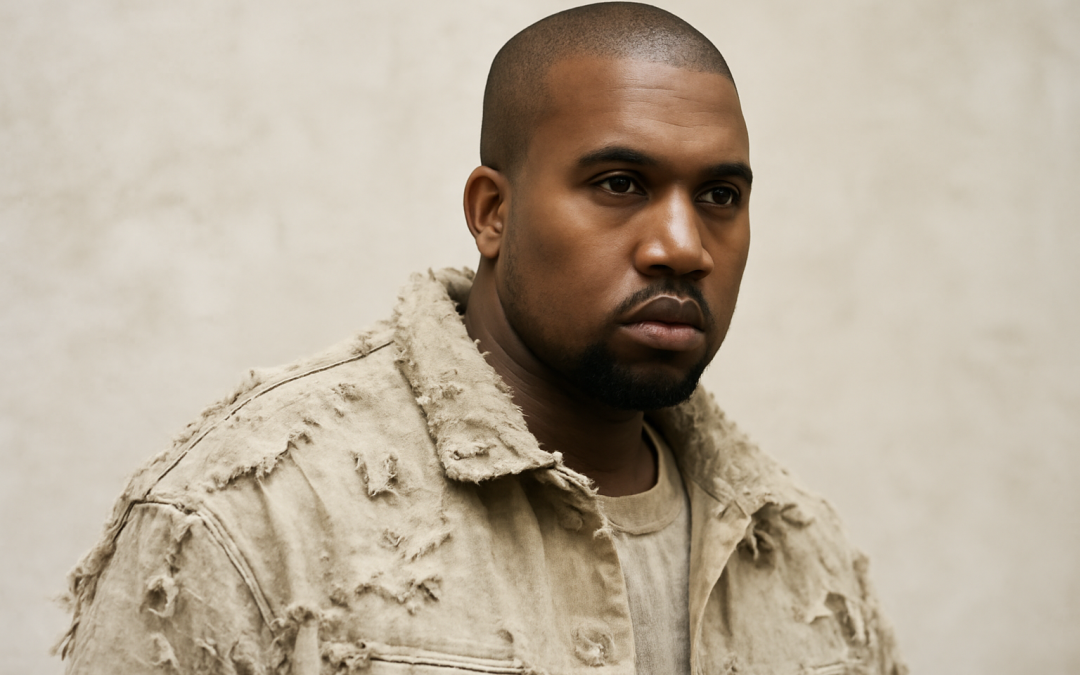
When Kanye West unleashed “Yeezus” in 2013, the album immediately polarized listeners with its abrasive soundscape and confrontational themes. Far from the polished, baroque extravagance of his earlier work, this record offered raw textures, industrial noises, and a jagged sonic palette that challenged conventional hip-hop and mainstream expectations. It was a seismic shift in Kanye’s creative trajectory, a deliberate embrace of discomfort designed to provoke but also to innovate. Rather than a conventional record crafted for radio friendliness, the album felt like a bold statement in auditory expressionism, where abrasion itself became an art form.
From the opening track, the listener is immersed in a landscape where distortion and minimalism intersect. The album’s production is stark and skeletal, stripped down to raw beats, abrasive synths, and eerie mechanical sounds. Songs such as “On Sight” tear through the airwaves with a cold, industrial roar that harkens to post-punk and electronic pioneers rather than typical hip-hop arrangements. This sonic palette was jarring for many fans who had grown accustomed to Kanye’s lush, soulful sampling and orchestral flourishes, but it also redefined what hip-hop could encompass. The use of harsh noise as a foundational element pushes “Yeezus” beyond the comfortable into a realm where music mirrors chaos, conflict, and unfiltered emotion.
Lyrically, the album proceeds with similar ferocity. Kanye’s verses fluctuate between braggadocio, vulnerability, anger, and self-examination. The abrasiveness extends beyond the sound, permeating the thematic core of the record. Kanye confronts issues of race, fame, commercialism, and personal struggle with unflinching bluntness. Tracks like “New Slaves” deliver unapologetic critiques of systemic racism and consumer culture, blending biting social commentary with an aggressive delivery that commands attention. The album refuses to soothe or entertain lightly; it demands that the listener confront tough questions and uncomfortable truths alongside the artist.
An important aspect of the record’s abrasive artistry lies in its embrace of minimalism and repetition. By removing many of the melodic flourishes and lush textures that characterized Kanye’s earlier albums, “Yeezus” opens space for tension and unease. The stripped-down beats leave the listener exposed to the raw power of rhythm and dissonance. Songs often rely on repetitive hooks and chants, which become hypnotic yet unsettling. This additive approach to compositional tension highlights how the album manipulates sound to create emotional responses akin to those evoked by certain modernist art movements—where disjunction and fragmentation are tools to provoke deeper engagement.
Critics initially responded to the album’s extremity with skepticism and discomfort. The jagged edges of the music and the confrontational nature of the lyrics unsettled many listeners who preferred the smoother, more polished productions of Kanye’s previous works. However, as time passed, “Yeezus” has been reevaluated as a visionary piece that pushed boundaries and expanded the possibilities of the genre. Its abrasive qualities are understood now as deliberate artistic choices, emphasizing sound as a medium for expression rather than mere entertainment. In this sense, Kanye reorients the relationship between artist and audience by making listening an active, often challenging process.
In addition to its sonic elements, the album’s artwork and presentation further reinforce the notion of abrasion as a form of art. The minimalist cover, a transparent sleeve featuring only a thin strip of red tape, eschews the typical visual extravagance associated with Kanye’s brand. Here, the absence of traditional adornment reflects the rawness and starkness found throughout the record. This aesthetic choice aligns with the broader artistic ethos of “Yeezus” — a rejection of superficial beauty in favor of something more unsettling but authentic. It is a visual translation of the raw confrontation embodied by the music itself.
Collaborators on the album also contributed to its abrasive edge. Producers like Daft Punk and Hudson Mohawke helped marry gritty industrial elements with modern electronic music sensibilities, creating a soundscape that feels futuristic yet jagged. The inclusion of gospel and punk influences further diversifies the texture, resulting in a hybrid sound that defies simple categorization. This synthesis of genres epitomizes the album’s experimental spirit and its embracing of abrasiveness as a creative tool. It’s a work that rewards repeated listening, revealing new layers of complexity beneath the initial shock.
The cultural impact of the album cannot be understated. “Yeezus” challenged the norms of mainstream hip-hop and forced conversations about what an album could be—both sonically and thematically. It inspired other artists to be more fearless and exploratory in their own work, effectively broadening the definition of popular music. Kanye’s willingness to alienate his own fanbase in pursuit of a deeper artistic vision serves as a testament to the power of creative risk-taking. It set a precedent that success need not come from comfort and familiarity, but can also emerge from chaos and confrontation.
Moreover, the abrasive nature of the album reflects a broader zeitgeist of its time, capturing the uncertainties, frustrations, and contradictions of the early 2010s. With political tensions rising and social discourse becoming increasingly polarized, “Yeezus” feels like an auditory manifestation of societal abrasion—a sonic mirror to a world grinding against itself. Kanye channels this tension with a visceral honesty that makes the album resonate not only as a collection of songs but as a historical document of cultural friction. Listening to it in this context deepens the appreciation for its artistic ambition and emotional relevance.
Despite its challenging nature, the album contains moments of vulnerability that break through the abrasive exterior, revealing a multilayered emotional core. Tracks like “Hold My Liquor” and “I Am a God” embody simultaneous confidence and fragility, showing Kanye’s complex persona navigating fame and personal demons. This interplay adds depth to the abrasive textures, reminding the listener that disruption and tenderness can coexist. The album’s emotional range, wrapped in a rebellious form, makes it both difficult and rewarding to engage with on a more intimate level.
The influence of “Yeezus” extends beyond music into fashion, design, and broader cultural aesthetics. Its stark minimalism and confrontational posture have inspired creatives across disciplines to think differently about how abrasion—whether sonic, visual, or tactile—can be harnessed as an expressive principle. Kanye’s fearless redefinition of his own sound parallels changes in artistic approaches worldwide, where imperfection, roughness, and rawness are increasingly celebrated as authentic and humanizing qualities. This reverberation confirms the album’s role not just as a piece of music but as a cultural artifact that challenges norms across multiple domains.
To fully appreciate this work, the listener must embrace the album’s abrasiveness rather than resist it. Doing so reveals “Yeezus” as a powerful exploration of artistic boundaries, identity, and societal tensions. It defies easy categorization or consumption, requiring a commitment to engaging with its discomfort and complexity. Within this challenge lies the album’s strength—its capacity to transform abrasive noise into an enduring form of art that speaks raw truth about the pressures and contradictions of contemporary life.
In sum, the record stands as a monumental statement on the value of abrasion in art. By intentionally incorporating jarring sounds, confronting difficult themes, and stripping away comfort and ease, Kanye West created a work that disrupts, challenges, and ultimately expands the territory of hip-hop and experimental music. It invites listeners to reconsider their relationship with sound, risk, and expression. Far from being simply an album, it is a bold manifesto asserting that abrasion, in its many forms, is not a flaw to be smoothed over but an essential ingredient in the creation of meaningful and provocative art.