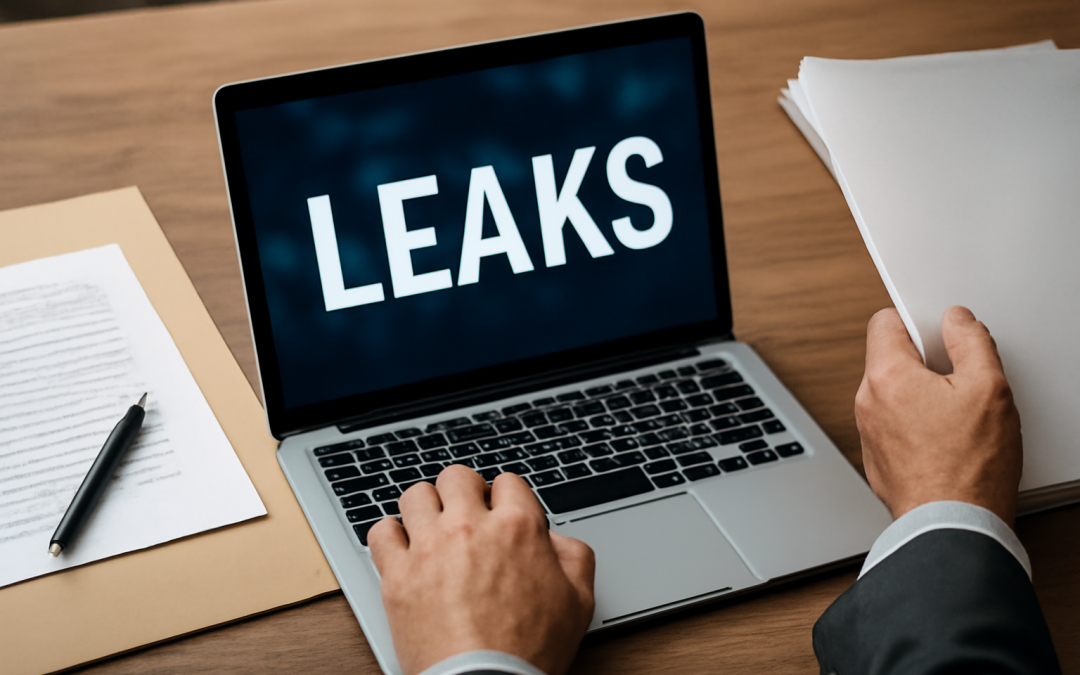
In the complex arena of politics, the pursuit of advantage often leads candidates and their teams to delve deeply into the backgrounds and behaviors of their opponents. Opposition research and media leaks have become instrumental tools in shaping the narratives that frame election campaigns, policy debates, and public opinion. What was once a discreet activity performed in the shadows has evolved into a strategic and sometimes controversial practice with profound implications for democratic processes and the flow of information.
Opposition research, at its core, involves gathering detailed information about political adversaries to identify vulnerabilities or inconsistencies that can be leveraged during an election cycle or legislative battle. This information can range from publicly available data to confidential insights uncovered through investigative means. The goal is to uncover facts or patterns that could influence the electorate’s perception of a candidate, party, or policy stance. While opposition research can be used constructively to hold public figures accountable, it often walks a fine line where ethical considerations arise, especially when tactics become invasive or deceptive.
The evolution of opposition research is closely tied to the changing landscape of media and communications technology. In earlier decades, research was limited by slower communication channels and less sophisticated data collection methods. Today, the expansiveness of the internet, social media platforms, and digital archives has dramatically expanded the scope of what can be discovered and disseminated. Political operatives now have access to troves of digital footprints including social media posts, campaign finance records, court documents, and even personal histories that can be cross-examined to build comprehensive profiles of opponents. This increased accessibility has intensified the competition to uncover damaging material first, creating an environment where speed and secrecy often outweigh thoroughness or fairness.
Media leaks operate as a complementary force to opposition research, serving as the mechanism through which sensitive or hidden information is brought into public view. These leaks can be deliberate exposures by whistleblowers, insiders, or political campaign operatives looking to manipulate public discourse. Sometimes they are accidental, but more often they are strategic moves aimed at controlling the news cycle or undermining an opponent’s credibility at critical moments. The interplay between opposition research and media leaks creates a symbiotic relationship where carefully unearthed material is timed for maximum impact, often flooding the news landscape and forcing responses or damage control from the targeted parties.
The implications of these practices go beyond political maneuvering to affect journalism, governance, and public trust. Journalists increasingly rely on leaked documents and insider information to break significant stories, especially in an era where many traditional sources are less forthcoming. However, the rise of opposition research-driven leaks also complicates journalistic ethics. Reporters must navigate a minefield of verifying the accuracy and motives behind such information while avoiding being manipulated for partisan ends. Furthermore, political actors sometimes weaponize leaks to distract from their own controversies or to cast aspersions without allowing for proper factual scrutiny, which can distort public understanding.
Transparency and accountability are often cited as justifications for the aggressive pursuit and release of opposition research findings through leaks. When conducted ethically, this can illuminate corruption, conflicts of interest, or hypocrisy within the political sphere. Citizens benefit from increased awareness of their leaders’ actions and histories, which empowers informed voting and civic engagement. Yet, there is a darker side where opposition research is used primarily as a tool of character assassination, spreading half-truths or out-of-context details that erode meaningful debate. The line between genuine public interest and politicized smearing can become indistinct, contributing to cynicism and polarization.
In democracies where the media environment is highly competitive and often partisan, opposition research and media leaks contribute to an accelerated news cycle that values sensationalism and immediacy. The drive to be the first to break a story—especially one that damages a political adversary—can sometimes circumvent the traditional careful standards of verification. This rush leads to the widespread dissemination of information before it has been fully vetted, increasing the risk of misinformation and unintended consequences. Social media amplifies this problem by enabling rapid sharing and repetitive exposure to such content, creating echo chambers where opposition research findings can be distorted or weaponized far beyond their original context.
Legal frameworks around opposition research and leaks remain a patchwork in many countries. While freedom of the press and whistleblower protections support the release of vital information for the public good, laws concerning privacy, defamation, and national security impose limits. Political actors often operate in gray areas where they can exploit loopholes, or where the threat of litigation serves as a deterrent against exposing corrupt behavior. The balance between protecting sensitive data and ensuring transparency is delicate and frequently contested, highlighting the need for clear ethical guidelines and legal safeguards.
Campaign strategists increasingly recognize that opposition research and media leaks are not merely reactive tools but integral components of proactive campaign design. Modern campaigns employ teams dedicated to monitoring and analyzing opponents’ communications and activities continuously, looking for potential vulnerabilities before they can be used against them. At the same time, these teams prepare their own opposition research dossiers, ready to deploy strategically when the timing is most advantageous. This preemptive approach reflects a technical and tactical sophistication that turns political campaigns into highly orchestrated battles for public perception.
Public reception to opposition research and the environment of leaks is mixed and often polarized. Some sectors of the electorate view these practices as necessary checks on political figures, enabling democratic engagement through an informed populace. Others see them as cynical ploys that undermine trust in institutions and reduce political discourse to mudslinging and scandal. This skepticism can discourage voter participation and foster disillusionment. Moreover, the focus on personal or scandalous revelations can overshadow substantive policy discussions, frustrating citizens who seek meaningful debates on governance and solutions.
The rise of digital activism and grassroots movements has changed the relationship between opposition research, media leaks, and public participation. These groups often use leaked information to mobilize supporters, expose injustices, or hold elected officials accountable outside traditional media channels. Social media platforms provide direct access to mass audiences without gatekeepers, amplifying the reach and influence of opposition research findings. However, this democratization of information dissemination also poses challenges in terms of verifying credibility, managing the flow of information, and mitigating the spread of disinformation that can arise in unregulated digital spaces.
Ethical dilemmas surrounding opposition research and leaks persist, with ongoing debates about privacy, consent, intent, and the potential for abuse. Political operatives must grapple with questions about how far is too far when pursuing damaging information and the consequences of releasing personally invasive or misleading details to the public. The stakes are particularly high in closely contested elections where one leak or revelation can change momentum or sway voter opinion. Responsible handling and critical assessment of opposition research findings are essential to preserve integrity in political competition and uphold democratic values.
In recent years, there have been notable instances where opposition research combined with strategic media leaks shifted the course of political events. These case studies illustrate how such practices can alter political narratives, expose corruption, or reshape alliances. Simultaneously, they serve as cautionary tales about the risks of misinformation, partisan manipulation, and the erosion of privacy. The lessons learned underscore the importance of transparency not just in political candidates’ records, but also in the methods and motivations of those who conduct and release opposition research.
Looking forward, the role of opposition research and media leaks is likely to continue evolving in response to technological advancements, changes in media consumption patterns, and shifting political dynamics. Artificial intelligence, data analytics, and enhanced surveillance capabilities will further transform how information is gathered, analyzed, and deployed in the political arena. These tools may increase precision and effectiveness but also raise complicated ethical questions about surveillance, consent, and misinformation. Societies will need to develop robust frameworks to manage these complexities, balancing innovation with the protection of democratic processes and individual rights.
Ultimately, opposition research and media leaks remain double-edged swords. They hold the potential to promote accountability and transparency but can equally serve as instruments of division and misinformation. Navigating this landscape requires not only legal and ethical oversight but also an informed and engaged public capable of critically assessing the information presented to them. In this way, opposition research and media leaks, if handled responsibly, can contribute to a healthy democratic environment where truth and accountability prevail over manipulation and deceit.