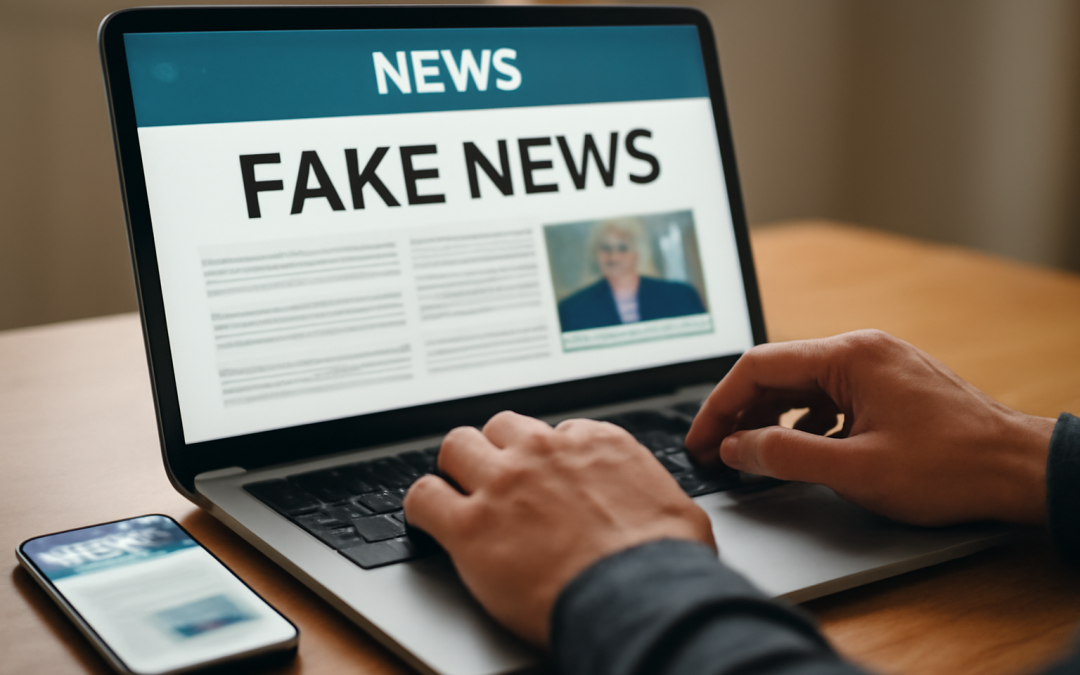
In an era dominated by digital communication and social media, the rapid and relentless spread of false information has become a pressing concern. Misinformation, often mistaken for harmless rumors or simple errors, wields the power to influence public opinion, shape political landscapes, and even endanger lives. Understanding why misinformation spreads requires a multifaceted exploration of human behavior, technological ecosystems, and the structural dynamics of communication networks. It is not merely a problem of incorrect facts but a complex phenomenon shaped by psychological, social, and technological factors.
One of the fundamental reasons misinformation spreads is the innate human cognitive bias toward sensational or emotionally charged content. People are naturally drawn to stories that evoke strong emotions such as fear, anger, or excitement. This emotional engagement triggers a psychological response that compels individuals to share information more readily than neutral or dry facts. Emotional arousal enhances memory and attention, which means that misinformation that taps into fear of danger or hope for a miracle gains traction more quickly than mundane truths. This psychological mechanism explains why controversial or alarming misinformation can rapidly circulate through social networks, gaining viral momentum.
Another significant driver behind the spread of misinformation is the confirmation bias, where individuals seek information that aligns with their preexisting beliefs and dismiss contradictory evidence. When presented with information that resonates with their worldview, people are more likely to accept it uncritically and share it with their communities. This selective acceptance reinforces individual and collective biases, creating echo chambers and filter bubbles, particularly on social media platforms. In such environments, misinformation is not merely passed along; it is amplified and validated through repeated exposure, making it increasingly difficult for accurate information to penetrate and counteract falsehoods.
The structure and algorithms of social media platforms further accelerate the dissemination of misinformation. These platforms prioritize content based on engagement metrics such as likes, shares, and comments rather than accuracy or reliability. As a result, sensational, provocative, and often misleading information is algorithmically promoted because it generates more user interaction, which translates to more advertising revenue for the platforms. This economic incentive creates a feedback loop where misinformation thrives, sometimes unconsciously favored by the very systems designed to keep users connected and informed.
In addition to amplification by technology, misinformation often exploits gaps in media literacy. Not all users have the critical thinking skills or informational tools needed to assess the credibility of sources or verify claims. The lack of rigorous fact-checking from individuals combined with an overabundance of unregulated content creates fertile ground for false information to flourish. When people do not distinguish between trustworthy journalism and opinion pieces, or fail to cross-check data against reliable references, they inadvertently contribute to the cycle of misinformation by sharing unchecked information within their networks.
The social dynamics of communities also play an essential role in why misinformation spreads so effectively. Social identity and group affiliation often determine not only which information individuals are exposed to but also how they interpret and react to it. When misinformation supports a narrative that aligns with group values or identity, members are more likely to endorse and propagate it. This phenomenon is deeply rooted in the human need for belonging and acceptance, where agreeing with the group’s viewpoints—inclusive of misinformation—strengthens social bonds and community coherence, even at the cost of truth.
Furthermore, deliberate manipulation contributes significantly to the widespread diffusion of misinformation. Various actors, including political operatives, interest groups, and even state-sponsored organizations, strategically deploy false information to influence opinions, create confusion, or destabilize rivals. These campaigns often employ sophisticated tactics such as bots, fake accounts, and coordinated messaging to make misinformation appear widespread and credible. Consequently, the public’s ability to discern organic information from intentional propaganda is severely diminished, complicating efforts to counter false narratives.
Economic incentives also cannot be overlooked. The digital advertising economy thrives on clicks and views, which misinformation often attracts more efficiently than factual reporting. Websites and social media accounts can generate substantial revenue by publishing sensational or misleading content that garners mass attention. This financial motivation incentivizes a proliferation of sensationalized or outright fraudulent material designed to draw eyeballs to advertisements or paid content, perpetuating the cycle of misinformation not just among consumers but producers as well.
The fragmented nature of modern information ecosystems means that accurate, nuanced information struggles to compete with simplified and emotionally charged misinformation. Complex issues that require careful explanation and critical analysis are often boiled down into catchy headlines or misleading sound bites that omit crucial context. As readers, individuals are more likely to engage with timely, easy-to-understand summaries that confirm their biases rather than invest effort into digesting detailed, balanced reporting. This preference for simplicity over complexity inadvertently magnifies misinformation that offers a clear, albeit distorted, narrative.
Moreover, the speed at which information travels in digital spaces leaves little room for reflection or skepticism. People often share content impulsively, motivated by urgency or the desire to alert others, especially in crisis situations. This immediacy undermines traditional journalistic verification processes and impedes the ability of fact-checkers to intervene before misinformation becomes widespread. The viral nature of such sharing means that once misinformation is embedded in public consciousness, it can be difficult to retract or correct, even with subsequent factual clarifications.
Trust in institutions and traditional media has also eroded significantly in recent years, contributing to the susceptibility to misinformation. When mainstream sources lose credibility, individuals turn to alternate channels for news and information, where quality control is uneven and facts are not always prioritized. This skepticism towards established authorities creates a vacuum that misinformation fills, offering seemingly authentic or grassroots alternatives that appeal to disillusioned or marginalized audiences. The resulting fragmentation of trust exacerbates polarization and undermines societal consensus on objective reality.
Psychological factors such as cognitive overload in the digital age spur selective attention, where individuals engage only with information that is immediately relevant or gratifying, ignoring broader context or contradictory evidence. Constant exposure to vast quantities of data can overwhelm people’s capacity to process and critically evaluate information, leading to reliance on heuristics or mental shortcuts. These shortcuts make it easier to accept misinformation that feels intuitive or consistent with prior beliefs, further entrenching falsehoods.
Additionally, the role of influential figures cannot be overlooked in the proliferation of misinformation. Celebrities, political leaders, and social media influencers wield enormous reach and authority, and when they share inaccurate information—whether intentionally or inadvertently—they contribute to its widespread acceptance. Their endorsements confer a veneer of legitimacy onto misinformation, which can dramatically accelerate its spread. The persuasive power of these figures underscores how misinformation is not simply a grassroots phenomenon but often propagated from the top down.
In examining why misinformation spreads, it is important to recognize that the phenomenon is not uniform across different cultures and societies. Variations in media environments, political systems, education levels, and cultural attitudes toward authority all influence the nature and extent of misinformation. In places with limited press freedom or authoritarian governance, misinformation may be state-controlled to maintain regime stability, while in more open societies, it may emerge from a chaotic mix of competing interests and social fragmentation. This diversity of contexts means that interventions to combat misinformation must be tailored and contextualized rather than one-size-fits-all.
Addressing the root causes of misinformation spread calls for a comprehensive strategy encompassing education, technological reform, and cultural change. Media literacy education, for instance, empowers individuals to critically analyze and evaluate information sources, reducing vulnerability to falsehoods. Technology companies must recalibrate algorithms to prioritize accuracy and source reliability over sheer engagement metrics, mitigating the economic incentives behind misinformation proliferation. Likewise, rebuilding trust in reliable institutions and fostering critical public discourse can strengthen societal resilience against falsehoods.
Policy interventions should also consider transparency and accountability mechanisms for platforms and content creators. Regulatory frameworks that encourage fact-checking, penalize deliberate misinformation campaigns, and incentivize responsible communication practices can help disrupt the supply side of misinformation flows. However, such measures need careful design to preserve free expression and avoid unintended censorship, highlighting the delicate balance policymakers must strike.
Community-driven initiatives also show promise in combating misinformation. Grassroots fact-checking groups, collaborative verification platforms, and peer-to-peer education can harness social dynamics positively by turning the characteristics that fuel misinformation—such as social sharing and group identity—toward the promotion of truth. Empowering individuals to take active roles in information vetting and dissemination helps develop a culture of shared responsibility and mutual accountability.
Ultimately, the spread of misinformation reflects broader challenges posed by digital transformation and societal change. It exposes vulnerabilities in how people process, produce, and consume information in a hyper-connected world marked by polarization and fragmentation. While misinformation thrives on human psychology and technological design, it also underscores the critical importance of fostering informed and engaged citizenry committed to truth-seeking and dialogue.
Understanding the complex mosaic of factors responsible for misinformation spread reveals that combating it requires not just reactive measures but proactive cultural shifts. Promoting critical thinking, transparency, and empathy can counteract the divisive, fear-driven narratives that misinformation frequently exploits. A society equipped with these qualities stands a better chance of upholding truth, preserving democratic values, and protecting public well-being amidst an ever-shifting information landscape.
In conclusion, the proliferation of false information is not a simple accident of modern communication but a consequence of intertwined psychological, technological, social, and economic forces. It capitalizes on human tendencies, platform mechanics, and fractured trust to embed itself deeply into public discourse. Countering its spread demands sustained effort across multiple dimensions—education, technology, policy, and community engagement—all aimed at nurturing a culture of critical inquiry and responsible information sharing. Only through such a comprehensive approach can the pervasive influence of misinformation be diminished, fostering a healthier and more informed society.